Buying Guides
The Car Buying Process With an Auto Loan: 8 Steps From Budget to Keys
KEY TAKEAWAYS
- Get financing offers before shopping to establish a realistic vehicle budget.
- Account for taxes, fees, and ownership expenses when deciding how much you can afford.
- Compare similar vehicles and request written out-the-door prices from dealerships.
- Evaluate the APR, loan term, and total borrowing cost of each financing offer.
- Confirm that your financing is finalized and insurance is active before taking your vehicle home.
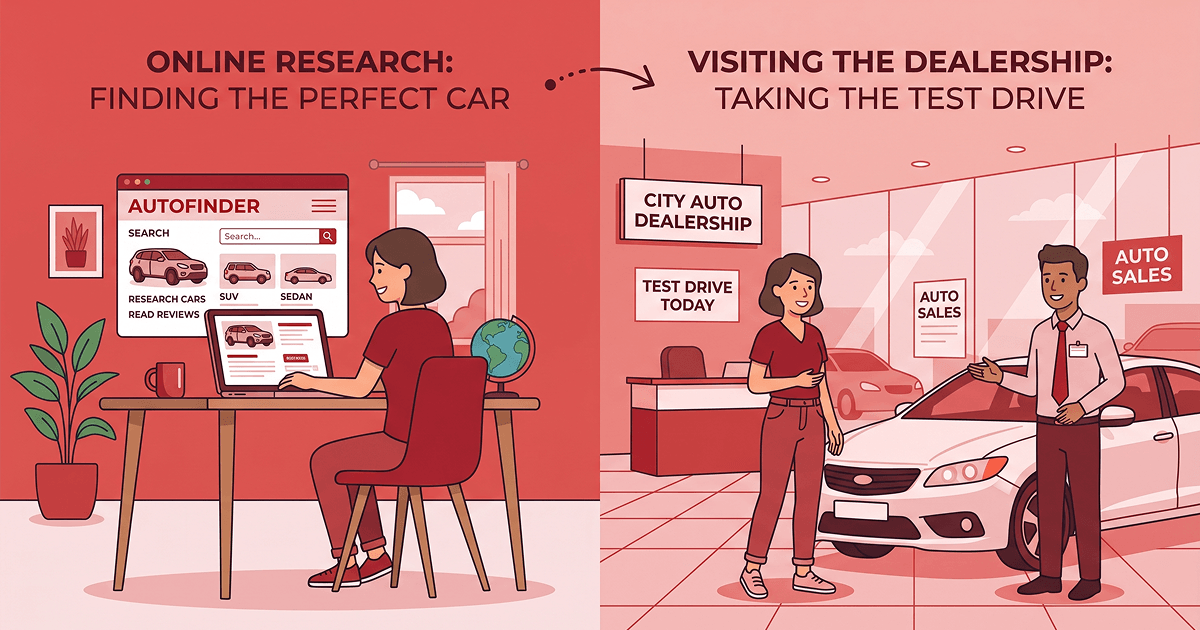
The car-buying process with an auto loan begins with checking your credit, setting a budget, and getting pre-approved for financing. Next, compare vehicles within your budget, research local prices, and negotiate the out-the-door price with your dealership. Compare dealership financing with your preapproved loan before deciding which offer to accept. Once you've agreed on the purchase price and financing terms, review and sign the paperwork, arrange insurance, and complete the registration process.
Getting preapproved before shopping helps you narrow your vehicle search without committing to a particular lender or dealership.
The car buying process with financing typically involves 8 steps:
- Check your credit and set a budget: Determine how much you can comfortably spend on a vehicle.
- Get preapproved for an auto loan: Establish a financing benchmark before shopping.
- Choose a vehicle and compare listings: Find cars that meet your needs, budget, and lender requirements.
- Research market prices: Compare similarly equipped vehicles to evaluate asking prices.
- Negotiate the out-the-door price: Establish the total purchase cost, including taxes and fees.
- Compare financing offers: Evaluate dealership financing against your pre-approved loan.
- Review and sign your paperwork: Confirm the purchase price and financing terms.
- Complete the purchase: Arrange insurance, confirm registration, and set up loan payments.
Step 1: How Much Car Can You Afford?
Before applying for an auto loan, review your credit reports for inaccuracies through AnnualCreditReport.com.
Determine how much you can afford to spend each month on transportation, including insurance, fuel, maintenance, and registration.
For example, if your monthly transportation budget is $650 and you expect to spend $200 on insurance, fuel, and maintenance, you have approximately $450 available for a car payment.
Use AutoFinder's car payment calculator to estimate how different vehicle prices, down payments, and financing terms affect your monthly payment.
Decide how much cash you can contribute upfront without depleting your emergency savings. A lender may approve you for more than you can comfortably afford, so treat your personal budget as your spending limit.
For additional guidance, read our article on how much you should spend on a car based on your salary.
Step 2: How Do You Get Preapproved for an Auto Loan?
Apply for preapproval through a bank, credit union, or online auto lender before visiting a dealership.
Lenders typically request identification and information about your income, employment, housing expenses, existing debts, and desired loan amount. You may also need supporting documents, such as recent pay stubs.
Ask each lender about its estimated interest rate, maximum loan amount, repayment terms, vehicle restrictions, and offer expiration date. Confirm whether you're receiving a preliminary estimate or a conditional preapproval.
According to the Consumer Financial Protection Bureau (CFPB), auto loan inquiries made within approximately 14 to 45 days are generally grouped together for credit scoring purposes, depending on the scoring model. Individual inquiries may still appear on your credit reports.
Preapproval does not guarantee final funding. The lender may still need to verify your information and approve the vehicle.
Read our guide to getting preapproved for a car loan for more information.
Step 3: How Do You Choose a Car That Qualifies for Financing?
Before choosing a car, check which vehicles your lender will finance. Some lenders have restrictions on vehicle age, mileage, title history, and where you purchase the car.
You also need to account for taxes and fees when determining your maximum vehicle selling price.
How Preapproval Affects Your Vehicle Shopping Budget
| Purchase Component | Illustrative Amount |
|---|---|
| Preapproved loan amount | $25,000 |
| Available cash down payment | $3,000 |
| Maximum available purchase funds | $28,000 |
| Estimated taxes and fees | $2,000 |
| Maximum estimated vehicle selling price | $26,000 |
In this example, you could shop for vehicles priced up to approximately $26,000, assuming your lender permits financing the estimated taxes and fees and your personal budget supports the purchase. Your actual limit may be lower depending on the lender's valuation of the vehicle.
On AutoFinder, you can search more than 3 million new and used vehicle listings, compare advertised prices, and connect with dealerships to find a car within your financing budget.
Consider reliability, safety features, passenger space, fuel economy, and insurance costs. When buying used, review the vehicle history, arrange a test drive, and consider an independent inspection before committing to the purchase.
Step 4: How Do You Know If the Car Is Priced Fairly?
Once you've narrowed your search to a particular model, compare listings from several dealerships.
For new vehicles, look at the same model year, trim, drivetrain, and factory equipment. Two cars with identical trim names can have different prices because one includes additional packages or options.
For used vehicles, compare mileage, condition, equipment, age, and ownership history alongside the advertised price.
AutoFinder's vehicle research pages allow you to explore different models, review specifications, and find available vehicles.
Pay attention to advertised discounts. Some manufacturer rebates require specific financing arrangements, vehicle ownership qualifications, or other eligibility requirements.
Before visiting, contact the dealership and ask:
- Is this specific vehicle still available?
- Does the advertised price include conditional incentives?
- Are there additional charges or equipment not reflected in the listing?
- Can you provide an itemized purchase quote?
Advertised prices help you compare current asking prices, but they are not necessarily final transaction prices.
Learn more about the factors that influence car pricing and dealership discounts.
Step 5: How Do You Negotiate the Out-the-Door Price?
The out-the-door price is the total agreed purchase cost before financing charges and, for comparison purposes, before applying your cash down payment or available trade-in equity. It includes the vehicle selling price, applicable taxes, fees, and any agreed additional products.
The Federal Trade Commission (FTC) recommends requesting a written out-the-door price before visiting a dealership.
For example, a vehicle advertised at $24,500 with $2,000 in taxes and fees costs $26,500. A vehicle advertised at $25,000 with $1,000 in taxes and fees costs $26,000. Despite its higher advertised price, the second vehicle costs $500 less.
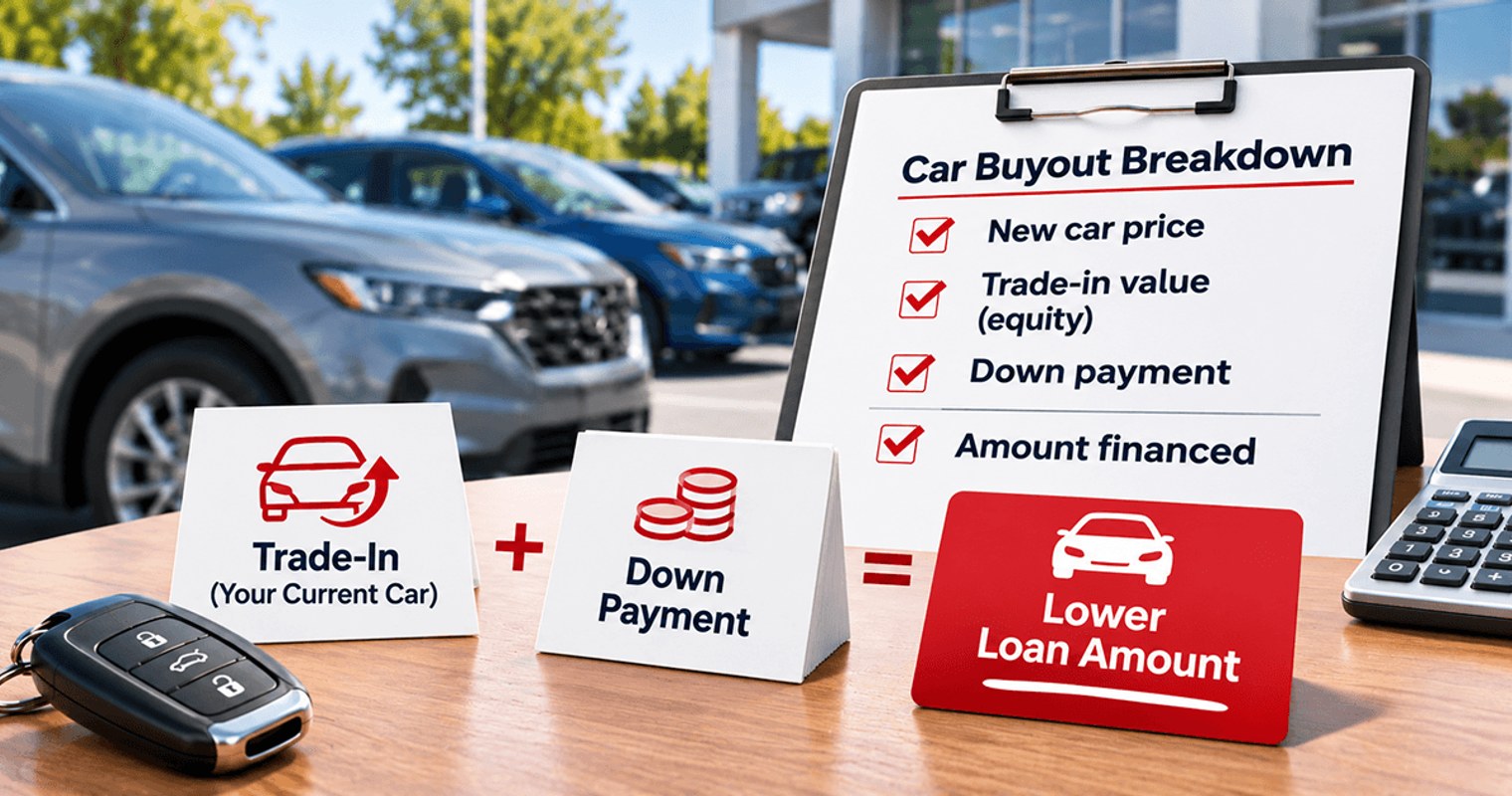
If you're trading in your current car, ask for the trade-in allowance and existing loan payoff to be itemized separately. Positive equity reduces your financing needs, while negative equity may increase them, subject to lender approval.
A qualifying trade-in may also reduce the taxable purchase price, depending on state law.
Use AutoFinder's out-the-door price calculator to estimate your purchase costs. If you're replacing your current vehicle, read our guide to how trading in a car works.
Step 6: Should You Use Your Preapproved Loan or Dealership Financing?
You don't have to use your preapproved loan. Once you've agreed on a vehicle price, ask the dealership whether it has financing options that could offer better terms.
Dealerships often work with multiple banks, credit unions, and automotive finance companies. Manufacturer financing programs may also provide promotional interest rates or cash incentives on qualifying new vehicles.
Compare offers using the same amount financed and repayment term whenever possible. Review the APR, required down payment, financing fees, and total finance charge.
If the dealership offers a lower monthly payment, check whether it requires a longer repayment term.
Also ask whether choosing promotional financing would affect your eligibility for a manufacturer rebate. Accepting a cash rebate and financing through another lender may sometimes result in a lower total purchase cost.
The CFPB's guidance on negotiating auto loan rates explains how comparing offers can help borrowers evaluate financing terms.
Step 7: What Should You Review Before Signing Your Car Loan?
Before signing, compare the purchase agreement and financing documents with the terms you agreed to.
Federal Truth in Lending requirements generally require creditors to disclose important financing costs and repayment terms before you become obligated under a covered consumer auto loan.
The CFPB's guide to Truth in Lending disclosures explains the following important figures:
- Annual percentage rate (APR): The annual cost of credit, including interest and certain financing fees.
- Amount financed: The amount of credit provided to you or on your behalf.
- Finance charge: The disclosed dollar cost of borrowing.
- Total of payments: The combined scheduled loan payments.
- Payment schedule: The number, amount, and timing of your payments.
- Total sale price: Where applicable, the total credit purchase cost, including your down payment.
Check that your purchase price, cash contribution, trade-in equity, incentives, and agreed optional products are correctly reflected in the paperwork.
Review any late payment charges and prepayment penalties. Never sign incomplete documents, and retain copies of every agreement you sign.
Step 8: What Happens After You Sign the Auto Loan?
Before driving home, confirm that your financing is finalized and that no additional approval conditions remain.
Some dealerships allow buyers to take delivery before financing is finalized. This is known as conditional delivery.
The CFPB's guidance on conditional auto financing recommends completing financing before taking the vehicle home. If conditional delivery is offered, review what happens to the vehicle, deposit, and any trade-in if financing is not approved on the agreed terms.
Arrange insurance before driving. Your lender may require comprehensive and collision coverage in addition to coverage required by state law.
Confirm who will handle title and registration paperwork, who will service your loan, and when your first payment is contractually due.
If you traded in a financed vehicle, follow up with your previous lender to confirm the old loan has been paid off. Continue meeting your existing payment obligations until that payoff is confirmed.
How Does an Auto Loan Work When Buying a Car?
An auto loan allows you to purchase a vehicle by borrowing money and repaying it over an agreed period. The vehicle generally serves as collateral for the debt.
Your monthly payment depends primarily on the amount financed, interest rate, and repayment term.
Estimated amount financed = Total purchase cost − Cash down payment − Positive trade-in equity − Unapplied rebates + Financed negative equity
Only include negative equity that your lender has approved for financing, expressed as a positive dollar amount. Do not subtract rebates already included in the purchase price.
The final amount financed may also include eligible financed charges not accounted for in this estimate.
Example: Financing a $25,000 Car
Suppose you purchase a vehicle with an out-the-door price of $25,000. You make a $3,000 down payment and finance the remaining $22,000 over 60 months.
| Loan Component | Illustrative Amount |
|---|---|
| Out-the-door purchase price | $25,000 |
| Cash down payment | $3,000 |
| Amount financed | $22,000 |
| Fixed annual interest rate | 7% |
| APR | 7% |
| Loan term | 60 months |
| Estimated monthly payment | $435.63 |
| Estimated total interest | $4,137.58 |
| Total loan payments | $26,137.58 |
| Total cost including down payment | $29,137.58 |
Illustrative calculations prepared November 25, 2026. Assumes a standard amortizing loan with 60 monthly payments and no additional financing fees. Totals are calculated using unrounded payments. The hypothetical 7% rate is not a current market average or financing offer.
The interest rate and APR are identical in this example because there are no additional fees affecting the APR. Certain financing fees may cause the APR to exceed the stated interest rate in an actual loan.
For a more detailed explanation of borrowing costs and repayment terms, read our guide to how car financing works.
Is It Better to Finance Through a Bank or a Dealership?
Compare the financing offer you obtained before shopping with the terms available through your dealership. Neither financing source is automatically less expensive.
Direct Lending vs. Dealership Financing
| Financing Factor | Direct Lending | Dealership Financing |
|---|---|---|
| Where to apply | Bank, credit union, or another lender | Through the dealership |
| When to apply | Before or during vehicle shopping | Typically during the purchase |
| Available offers | Products offered by the individual lender | May include multiple lending partners |
| Manufacturer promotions | Generally unavailable through independent lenders | May be available on qualifying vehicles |
| Convenience | Financing benchmark established before shopping | Purchase and financing handled together |
| Negotiation | Compare rates and terms among lenders | Ask about available rates, incentives, and terms |
| Final approval | Subject to lender and vehicle requirements | Subject to lender and vehicle requirements |
Dealership financing may include an interest rate markup that compensates the dealership for arranging the financing. Dealerships may also have access to competitive lending programs and manufacturer promotions.
Compare written offers, including any incentives that change based on your financing choice, to determine which provides better overall value.
Our guide to what constitutes a good APR for a car loan explains the factors affecting available rates.
What Fees and Add-Ons Should You Review When Financing a Car?
Your purchase agreement may include government taxes, title and registration charges, dealership documentation fees, and additional products. Applicable charges and regulations vary by state.
Dealerships may also offer optional products such as GAP coverage, vehicle service contracts, prepaid maintenance plans, or tire and wheel protection.
These products can offer useful benefits depending on your existing coverage, vehicle, financing arrangement, and ownership plans. Ask about their price, coverage limits, exclusions, and cancellation terms.
The FTC's financing and leasing guidance explains the importance of understanding optional products and their costs before agreeing to financing.
If you include an optional product in an interest bearing loan, you'll also pay interest on its cost.
For example, adding a $1,500 service contract to a 60 month auto loan at a hypothetical 7% annual interest rate increases the monthly payment by approximately $29.70. Over the loan term, you would pay approximately $1,782 for that product, including $282 in additional interest, assuming no additional taxes or fees.
Ask your dealership to itemize proposed products so you can evaluate their value before deciding which ones to purchase.
Car Buying Checklist: What Do You Need When Financing a Car?
Before Visiting the Dealership
- ☐ Review your credit reports and establish a budget.
- ☐ Obtain financing offers and check vehicle eligibility requirements.
- ☐ Gather identification and requested income documents.
- ☐ Compare vehicle listings and request written purchase quotes.
- ☐ Obtain insurance estimates.
- ☐ Gather trade-in documents and a current loan payoff quote, if applicable.
At the Dealership
- ☐ Confirm vehicle condition, equipment, and availability.
- ☐ Complete a test drive and arrange an inspection if appropriate.
- ☐ Review the itemized out-the-door price and trade-in agreement.
- ☐ Compare financing offers and optional products.
- ☐ Verify the loan disclosures and purchase documents before signing.
Before Driving Home
- ☐ Confirm that financing is finalized.
- ☐ Activate the required insurance coverage.
- ☐ Obtain copies of your signed documents.
- ☐ Confirm title and registration arrangements.
- ☐ Verify your loan servicer and first payment date.
- ☐ Arrange to confirm your previous loan payoff, if applicable.
Find a Car That Fits Your Financing Budget
Have a financing offer and a vehicle budget? You're ready to start comparing cars.
Compare new and used vehicles on AutoFinder, review advertised prices, and connect with local dealerships to confirm availability, request itemized purchase quotes, and discuss financing options for your chosen vehicle.
Want More Car Buying Advice?
Add AutoFinder as a preferred source on Google to help you discover more of our automotive guides and research.