Car Financing
How Does Financing a Car Work?
OVERVIEW
What Does It Mean to Finance a Car?
When you finance a car, a lender provides the money needed to purchase the vehicle. You agree to repay that amount, plus interest and any applicable loan charges, according to the terms of your financing agreement.
Most auto loans are installment loans. That means you make scheduled payments over a set period, commonly 36, 48, 60, 72, or 84 months.
There are 4 important terms to understand before applying:
- Principal: The amount of money you borrow, excluding interest.
- Interest rate: The rate used to calculate interest on your outstanding loan balance.
- Annual percentage rate (APR): The annual cost of borrowing, including certain finance charges when applicable.
- Loan term: The amount of time you have to repay the loan.
The lender generally holds a lien on the vehicle until the loan is paid off. You can drive and use the car while making payments, but the lien gives the lender certain rights if you fail to meet the loan agreement.
Once you've paid off the loan, the lien is released, and you own the vehicle free of that loan obligation.
How Does Financing a Car Work Step by Step?
The process usually involves setting a budget, comparing lenders, choosing a vehicle and finalizing a loan.
Here's what happens at each stage.
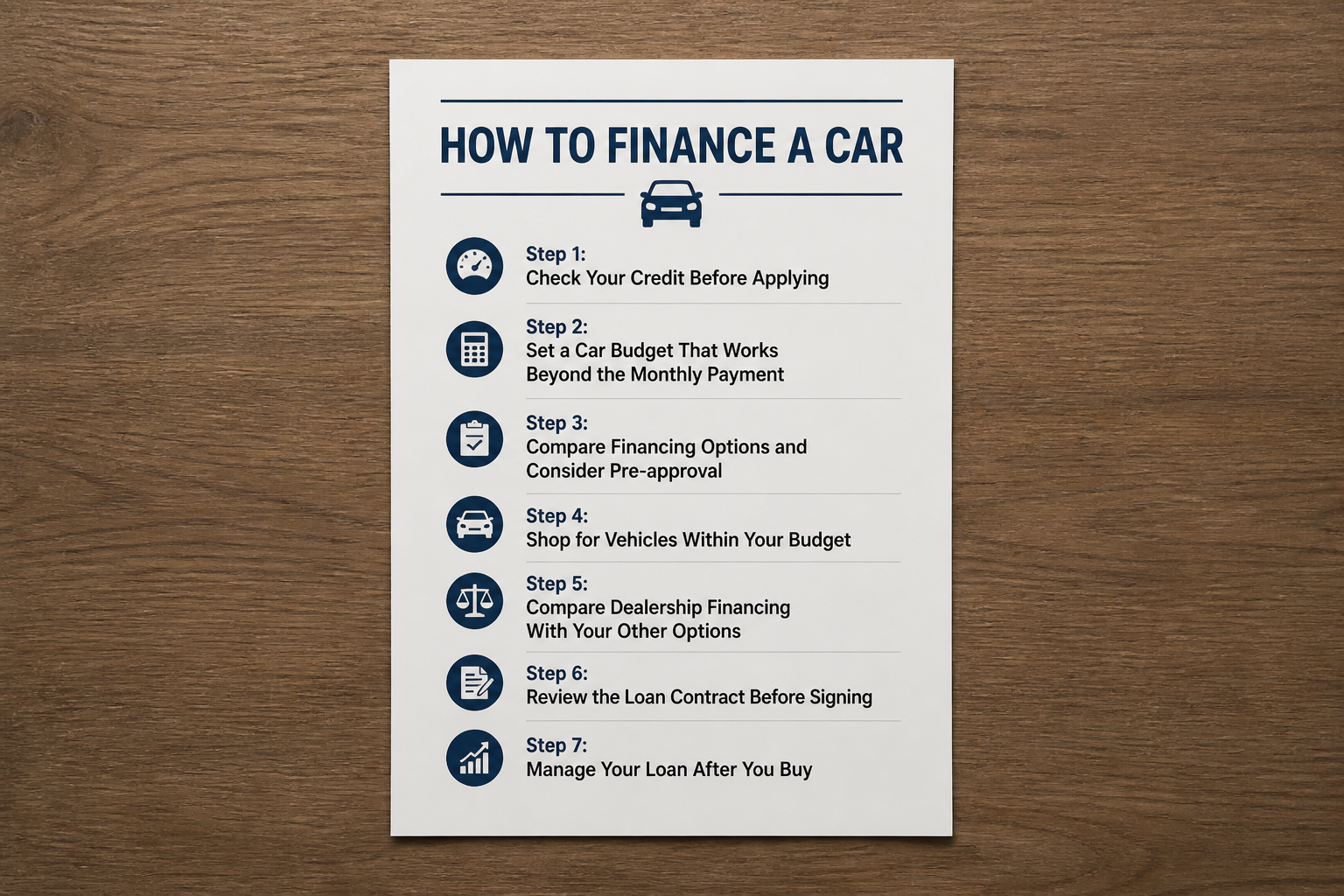
1. Determine How Much You Can Afford
Before shopping for a vehicle, decide how much you're comfortable spending each month.
Your budget should account for more than the loan payment. You'll also need to consider insurance, fuel, maintenance, registration and other ownership expenses.
A $450 monthly car payment might fit comfortably into one person's budget but leave another person with very little room for unexpected expenses.
Start with the amount you can realistically afford rather than choosing a vehicle based only on the maximum loan amount a lender may approve.
2. Check Your Credit
Your credit history is one factor lenders use to evaluate your application.
Generally, borrowers with stronger credit profiles may qualify for more competitive interest rates, although approval and pricing also depend on income, existing debts, loan terms, and the vehicle.
You can review your credit reports through AnnualCreditReport.com before applying.
Checking your reports gives you an opportunity to identify errors or unfamiliar accounts that could affect your application.
You don't need perfect credit to finance a car. Different lenders serve different types of borrowers, and dealerships may have access to financing partners with a range of lending requirements.
3. Compare Financing Options
You can obtain auto financing through several sources.
| Financing Option | How It Works | What to Consider |
|---|---|---|
| Dealership financing | The dealership helps arrange financing through participating lenders | Convenient when purchasing a vehicle and comparing available lender offers |
| Bank financing | You apply directly through a bank | May offer competitive rates and established banking relationships |
| Credit union financing | You apply through a credit union, usually with membership requirements | May offer attractive rates and flexible lending options |
| Online lender | You apply digitally and receive available financing offers | Convenient for comparing terms before visiting a dealership |
Dealership financing can be convenient because the vehicle purchase and financing arrangements can be handled together.
Many dealerships work with multiple lenders, giving shoppers access to different financing programs.
You can also obtain financing offers before visiting a dealership and compare them with the options available at the store.
4. Apply for Preapproval
Getting preapproved can help you understand how much you may qualify to borrow and what interest rate or loan terms may be available.
A lender may review your credit history, income, employment and existing financial obligations.
Depending on the lender, preapproval may involve a hard credit inquiry. A prequalification process may use a soft inquiry instead, so check before submitting your information.
The Consumer Financial Protection Bureau explains that multiple qualifying auto loan inquiries made within a rate shopping window are generally treated as a single inquiry for credit scoring purposes. Depending on the scoring model, that window may range from 14 to 45 days.
Preapproval isn't necessarily a final loan commitment. The lender may still need to verify the specific vehicle, purchase price and other information.
Having an offer in hand can make it easier to compare financing options when you're ready to purchase.
5. Choose Your Vehicle and Review the Total Price
Once you have a financing budget, you can start comparing vehicles.
The amount you finance depends on the full transaction, not just the advertised vehicle price.
Your total purchase cost may include sales tax, title and registration charges, documentation fees and any optional products you choose to purchase.
A trade in or down payment can reduce the amount you need to borrow.
Before agreeing to financing, ask for a breakdown of the vehicle price, taxes, fees, trade in allowance and any additional products.
You can use AutoFinder's Out the Door Price Calculator to estimate the total cost of purchasing a vehicle.
6. Review Your Loan Offer
After selecting a vehicle, review the financing terms carefully.
Pay particular attention to:
- Amount financed
- Annual percentage rate (APR)
- Loan term
- Monthly payment
- Finance charge
- Total of payments
- Total sale price
- Any optional products included in the agreement
Under federal Truth in Lending requirements, covered creditors must disclose important information about the cost and terms of consumer credit before you become obligated on the loan.
The finance charge represents the dollar cost of credit, including interest and certain other charges. The total of payments is the amount you will have paid after making all scheduled payments.
For credit sales, such as a typical dealership retail installment transaction, the total sale price includes the down payment and the total scheduled payments. This disclosure does not necessarily apply to every direct loan obtained through a bank or credit union.
These figures help you understand what the vehicle will cost beyond its advertised price.
Make sure the terms match what you discussed and ask questions about anything you don't understand.
7. Confirm Financing and Make Your Payments
Before leaving the dealership, confirm whether your financing has received final approval.
In some transactions, a buyer may take delivery while financing is still conditional. If the lender doesn't approve the original terms, the dealership may need to discuss alternative financing arrangements.
The Federal Trade Commission recommends confirming that financing is final before completing the transaction.
Once the purchase is finalized, you'll receive information about the lender or company responsible for servicing your loan.
Most lenders offer online payment options, and many allow automatic monthly payments.
Making payments on time helps you meet your loan obligations and can support a positive payment history.
How Does Dealership Financing Actually Work?
Dealership financing generally involves 3 parties: the shopper, the dealership and a lender.
The dealership helps you apply for financing through participating lenders. Depending on the arrangement, you may sign a retail installment sales contract with the dealership, which is then assigned to a bank or finance company.
The lender or loan servicer typically receives your monthly payments after the contract is assigned.
Here's an example of how the transaction might work.
You're buying a $30,000 SUV and making a $5,000 down payment.
The dealership helps arrange a $25,000 loan through a participating lender, assuming taxes and fees are paid separately.
You sign the financing agreement and take delivery once the purchase and financing are finalized.
Over the next 60 months, you make scheduled payments to the lender or servicer.
When the loan is fully repaid, the lien is released according to your state's procedures.
The dealership helps coordinate the purchase and financing, while the lender provides or ultimately holds the financing arrangement.
How Are Car Loan Payments Calculated?
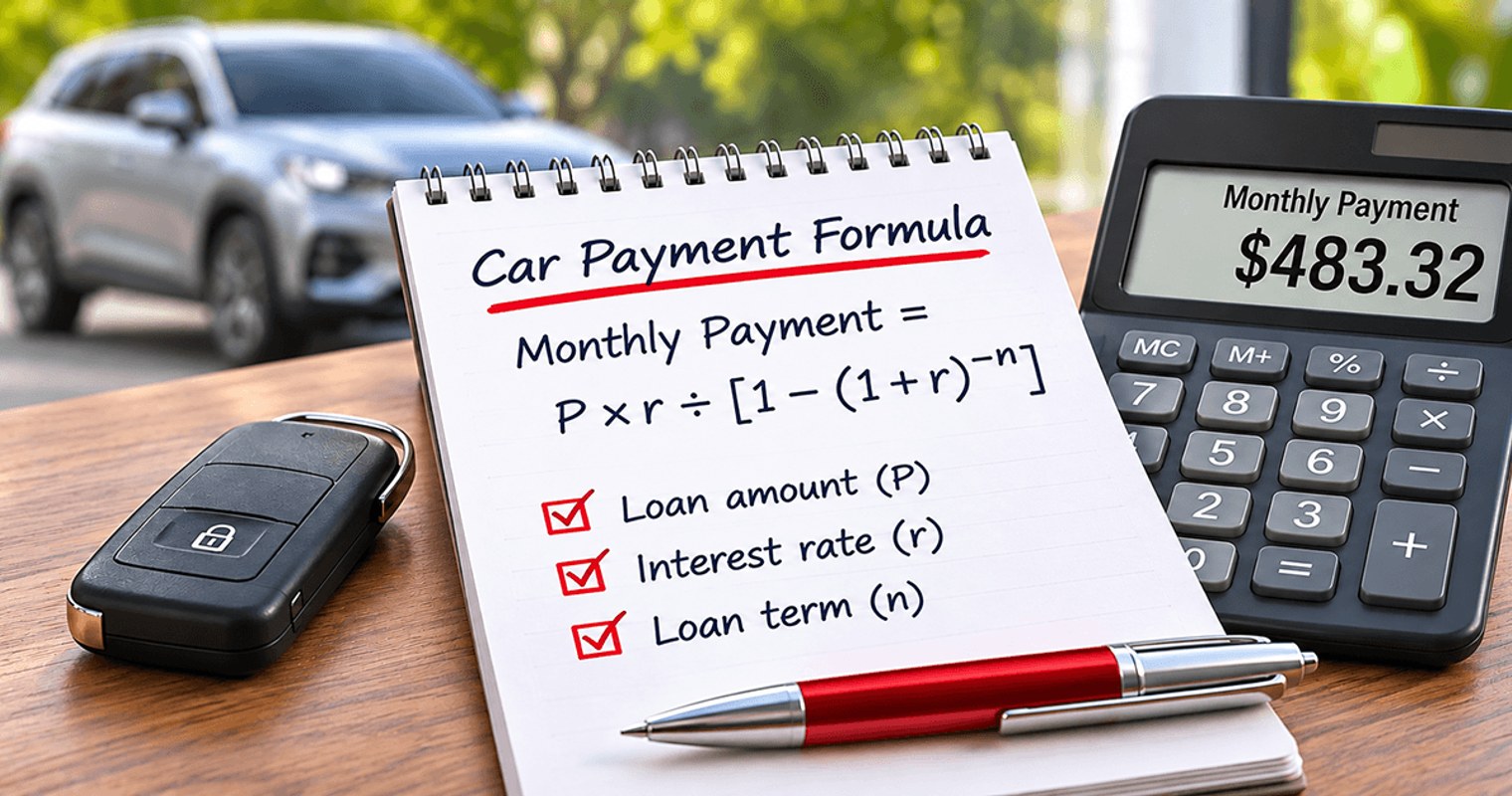
Your monthly payment is primarily determined by 3 factors:
- Loan amount: How much money you borrow.
- Interest rate: The rate used to calculate interest on your outstanding loan balance.
- Loan term: How many months you have to repay the loan.
A larger loan generally produces a higher monthly payment.
A higher interest rate increases borrowing costs.
A longer loan term can reduce your monthly payment, but it usually increases the total interest paid over the life of the loan.
APR remains an important measure when comparing financing offers because it includes the interest rate and certain additional finance charges when applicable.
Example: Financing a $30,000 Car
Let's say you're purchasing a vehicle with the following terms:
| Financing Detail | Amount |
|---|---|
| Vehicle price | $30,000 |
| Down payment | $5,000 |
| Amount financed | $25,000 |
| APR | 7% |
| Loan term | 60 months |
| Estimated monthly payment | $495 |
| Estimated total interest | $4,702 |
| Estimated total loan payments | $29,702 |
This example assumes a fixed rate, fully amortizing loan with monthly payments. The APR equals the interest rate, and no additional finance charges apply. Taxes, fees and optional products are excluded. Figures are rounded.
In this example, you would make approximately 60 monthly payments of $495.
Over the loan term, you would pay approximately $4,702 in interest in addition to repaying the $25,000 borrowed.
Including the original $5,000 down payment, your total vehicle expenditure would be approximately $34,702 before taxes, fees, insurance and other ownership expenses.
This is why comparing the total cost of financing matters just as much as comparing monthly payments.
What Is the Difference Between an Interest Rate and APR?
The interest rate is the rate used to calculate interest on the money you borrow.
APR represents the annual cost of credit and includes the interest rate plus certain financing charges when applicable.
For example, a loan may have a stated interest rate of 6.5% but a higher APR if certain finance charges are included.
When comparing financing offers, APR provides a more consistent way to evaluate borrowing costs.
However, you should also compare the loan term, amount financed, monthly payment and total finance charge.
Two loans with the same APR can still have different total costs if the amounts borrowed or repayment periods differ.
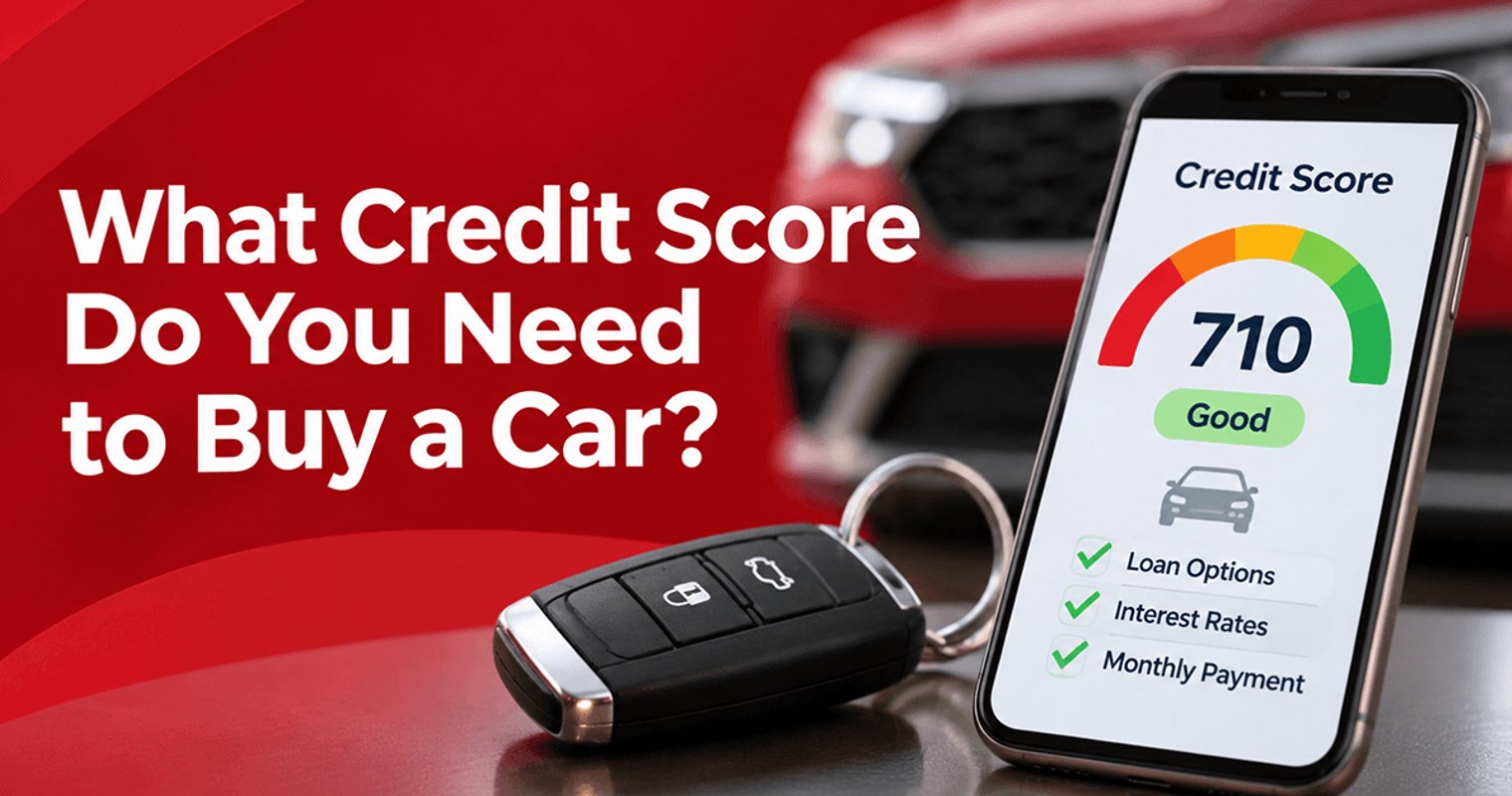
How Does Your Credit Score Affect Car Financing?
Your credit score can influence the interest rate and financing terms available to you.
Lenders may also consider your income, employment history, debt obligations, down payment and the age or mileage of the vehicle.
A higher credit score often helps borrowers qualify for more competitive financing, but it doesn't guarantee the lowest advertised rate.
Likewise, a lower score doesn't automatically mean you cannot obtain financing.
Can You Finance a Car With Bad Credit?
Yes, financing may still be available if your credit history is limited or your score is lower than you'd like.
Some lenders specialize in working with borrowers who have different credit backgrounds.
However, financing may come with a higher APR, which increases the overall cost of the vehicle.
You may be able to strengthen your application by:
- Making a larger down payment
- Choosing a less expensive vehicle
- Reducing existing debt before applying
- Considering a qualified cosigner
- Comparing offers from multiple lenders
A cosigner shares legal responsibility for the loan and can be affected if payments aren't made as agreed.
A dealership's finance department can help explain available financing programs and determine which options may fit your circumstances.
How Much Should You Put Down on a Car?
There isn't one down payment amount that works for everyone.
A larger down payment reduces the amount you need to borrow, which can lower your monthly payment and total interest costs.
It may also help reduce the risk of owing more than the vehicle is worth.
For example, consider a $30,000 vehicle financed for 60 months at 7% APR.
| Down Payment | Amount Financed | Estimated Monthly Payment |
|---|---|---|
| $0 | $30,000 | $594 |
| $3,000 | $27,000 | $535 |
| $6,000 | $24,000 | $475 |
| $9,000 | $21,000 | $416 |
Illustrative estimates using a fixed 7% APR over 60 months. The APR equals the interest rate, and no additional finance charges apply. Taxes, fees and optional products are excluded. Actual offers may vary.
Putting more money down can make financing more affordable, but you should also consider your savings.
Using your entire emergency fund for a down payment could leave you financially vulnerable if an unexpected expense arises.
Choose an amount that balances the loan payment with your overall financial needs.
Is It Better to Finance a Car for 48, 60 or 72 Months?
The right loan term depends on your monthly budget and how much interest you're comfortable paying.
Shorter loans generally have higher monthly payments but lower total interest costs.
Longer loans usually offer smaller monthly payments but increase the total amount paid over time.
Here's how the same $25,000 loan compares at a fixed 7% APR.
| Loan Term | Estimated Monthly Payment | Estimated Total Interest |
|---|---|---|
| 48 months | $599 | $3,735 |
| 60 months | $495 | $4,702 |
| 72 months | $426 | $5,688 |
Estimates assume a fixed APR equal to the interest rate, standard monthly amortization and no additional finance charges. Figures are rounded.
The 72 month loan has the lowest monthly payment, but it costs approximately $1,953 more in interest than the 48 month loan.
Longer terms can also increase the likelihood of negative equity, especially during the early years of ownership.
Negative equity occurs when you owe more on the loan than the vehicle is currently worth.
If you expect to trade in your car after only a few years, consider how quickly your loan balance will decrease.
Is It Better to Finance Through a Dealership or Bank?
Both can be good options.
Dealership financing offers convenience and access to participating lenders. A dealership may also be able to present manufacturer financing promotions on eligible new vehicles.
Banks and credit unions can provide financing offers before you begin shopping, giving you another option to compare.
The best choice depends on the actual terms available to you.
For example, a bank might offer a 6.9% APR while a dealership's financing partners offer 6.5% APR for the same vehicle and loan term.
In that situation, the dealership offer may provide a lower borrowing cost, assuming other terms and charges are comparable.
The reverse can also happen.
Compare written offers rather than assuming one financing source will always be cheaper.
What Is the Difference Between Financing and Leasing a Car?
Financing and leasing are different ways to obtain a vehicle.
When you finance, you're purchasing the vehicle and making payments toward ownership.
When you lease, you're generally paying to use the vehicle for a specified period under a lease agreement.
| Feature | Financing | Leasing |
|---|---|---|
| Ownership | You purchase the vehicle, subject to the lender's lien | Leasing company generally owns the vehicle |
| Monthly payments | Based on loan amount, APR and term | Based on lease structure, depreciation, rent charge and other factors |
| Mileage limits | No contractual mileage limit from a standard auto loan | Usually includes mileage limits |
| End of agreement | Vehicle is yours once the loan is paid off | Return the vehicle or exercise an available purchase option |
| Customization | Generally more flexibility, subject to loan and insurance requirements | Often restricted by the lease agreement |
| Long-term costs | Depends on financing and ownership expenses | Depends on lease terms, fees, and whether you continue leasing |
Leasing may appeal to drivers who prefer changing vehicles regularly.
Financing may be more attractive if you want to keep your car for several years, drive more miles or eventually eliminate your monthly car payment.
Compare the total costs over the same period before deciding.
Can You Pay Off a Car Loan Early?
Many auto loans allow early repayment, but you should review your agreement for any applicable restrictions or prepayment penalties.
Most auto loans use simple interest, meaning interest is calculated based on the outstanding principal balance.
With a simple interest loan, making extra principal payments can reduce the amount of interest you pay over time.
However, some loans use precomputed interest, where the interest cost is calculated differently.
The Consumer Financial Protection Bureau recommends reviewing your contract to understand how interest is calculated and how additional payments are applied.
If you plan to make extra payments, ask your lender whether those payments reduce your principal balance and whether any prepayment charges apply.
You can also request a payoff quote when you're ready to pay the remaining balance.
The payoff amount may differ from the balance shown on your most recent statement because of accrued interest or other applicable charges.
What Happens if You Miss a Car Payment?
Missing a payment can result in late fees, credit reporting consequences and additional collection activity, depending on the loan agreement and applicable law.
If payments remain unpaid, the lender may eventually have the right to repossess the vehicle.
If you anticipate difficulty making a payment, contact your lender as early as possible.
Some lenders offer payment assistance, extensions or other arrangements for eligible borrowers.
Ask how any arrangement affects your loan balance, interest charges and repayment schedule.
Addressing the situation early may give you more options than waiting until multiple payments are overdue.
What Should You Check Before Signing a Car Financing Agreement?
Before signing, make sure you understand the full transaction.
Review the vehicle purchase agreement and financing disclosures together.
Pay attention to the vehicle price, taxes, fees, down payment, trade in details, amount financed, APR, finance charge and total of payments.
Also check whether optional products, such as service contracts or GAP coverage, have been included.
These products can provide benefits in certain situations, but you should understand their cost, coverage and whether they're optional before agreeing to purchase them.
Ask the dealership representative to explain anything that doesn't match your expectations.
A clear financing agreement helps you know exactly what you're paying and what responsibilities you're accepting.
How Can AutoFinder Help You Prepare to Finance a Car?
Before applying for financing, it helps to understand what vehicles are available within your budget.
On AutoFinder, you can browse new and used cars from participating dealerships, compare available vehicles and connect with local dealers.
Start by narrowing your search based on vehicle type, price, mileage and features.
Then estimate the total purchase price, including taxes and fees, using the Out the Door Price Calculator.
If you're trading in a vehicle that still has a loan, review how your existing payoff amount and any remaining equity may affect the next purchase.
Once you've identified a vehicle that fits your needs, the dealership can help you review available financing options and explain the next steps in the purchase process.
The Bottom Line: How Does Financing a Car Work?
Car financing allows you to purchase a vehicle without paying the entire price upfront.
You borrow money from a lender, repay it through scheduled payments and pay interest according to the terms of your loan.
The most important factors to compare are the amount financed, APR, loan term, monthly payment and total cost.
Getting preapproved, comparing offers and understanding your full purchase price can help you make a more informed decision.
Whether you arrange financing through a dealership, bank or credit union, choose terms that fit your budget and long term ownership plans.
Want More Car Buying Advice?
Add AutoFinder as a preferred source on Google to help you discover more of our automotive guides and research.