Car Pricing & Value
How to Finance a Car: From Preapproval to the Dealership
OVERVIEW
Financing can have just as much impact on what you pay for a car as the price on the listing. A difference in interest rate, loan term, or amount financed can add up over several years, which makes financing worth thinking about before you are ready to sign paperwork.
You do not need to have every detail figured out before you start shopping. It helps, though, to know what you can comfortably afford, where your credit stands, and which financing options may be available to you.
Getting preapproved through a bank or credit union can give you one offer to compare. The dealership may have competitive financing options of its own, including manufacturer programs on eligible new vehicles.
Here is how to prepare, compare your options, and choose financing that makes sense for the car you want to buy.
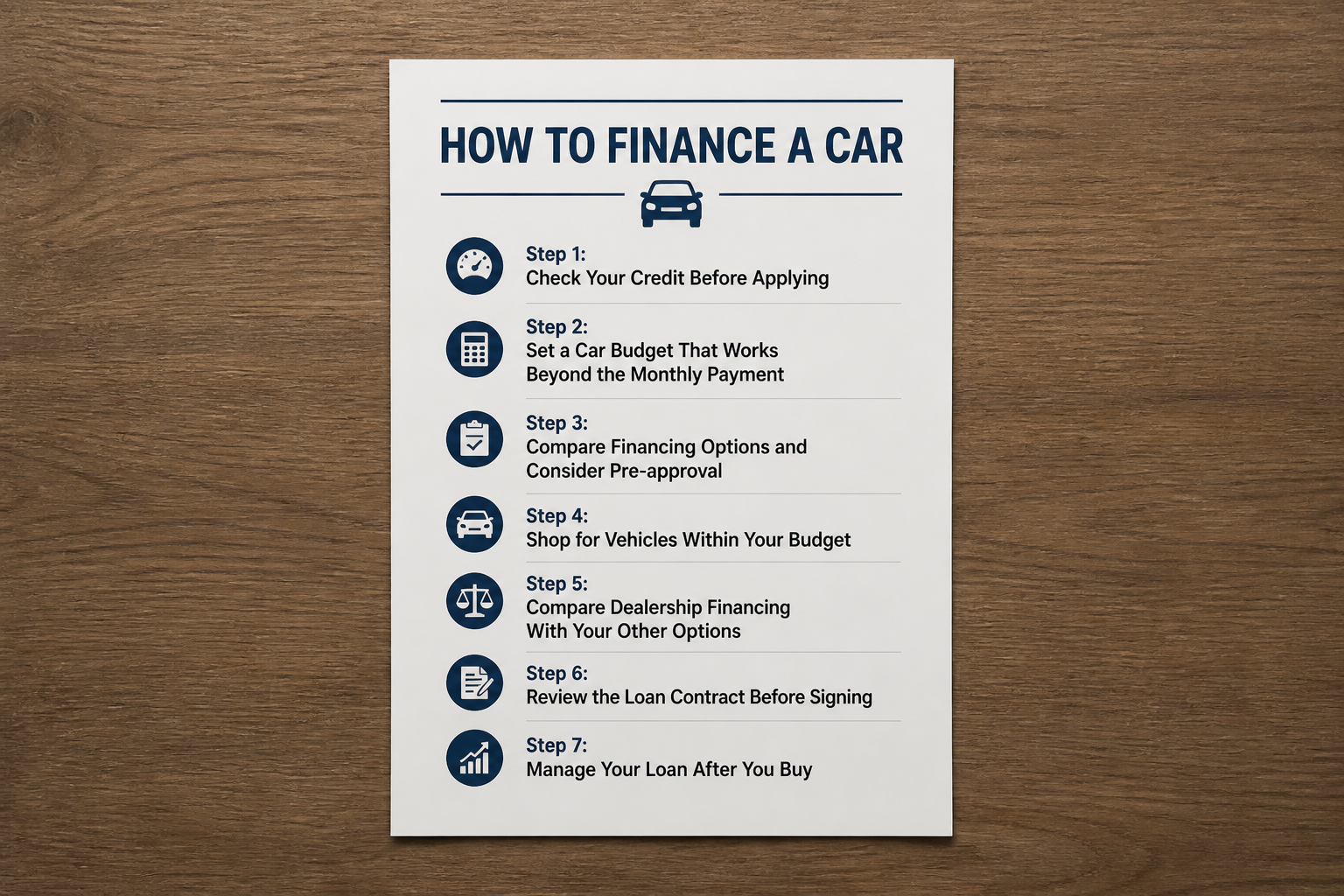
Step 1: Check Your Credit Before Applying
How Your Credit Can Affect Your Auto Loan
Your credit is one of the factors lenders use when determining whether to approve an auto loan and what interest rate to offer.
Generally, stronger credit can help you qualify for more favorable financing terms. Buyers with lower credit scores may still have financing options, but interest rates can be higher.
That difference matters.
On a loan that lasts several years, even a relatively small change in APR can affect both your monthly payment and the total amount of interest you pay.
Before applying, check your credit reports so you know what lenders are likely to see. You can access your credit reports through AnnualCreditReport.com and review them for incorrect account information, payments you do not recognize, or other errors.
If You Have Time to Work on Your Credit
You do not necessarily need perfect credit to finance a car. If your purchase is still a few months away, however, there may be opportunities to strengthen your credit profile before applying.
That could include paying down revolving balances, making upcoming payments on time, correcting errors on your credit reports, and avoiding unnecessary new credit applications shortly before shopping for an auto loan.
Credit improvement takes time, so be cautious of advice promising a specific score increase within a few weeks. The more useful goal is to understand where your credit stands and give yourself the strongest application possible when you are ready to buy.
Step 2: Set a Car Budget That Works Beyond the Monthly Payment
Before you start browsing vehicles, figure out how much room a car realistically has in your budget.
The monthly payment matters, but it is only one expense. Insurance, fuel or charging, maintenance, registration, taxes, and other ownership costs should be part of the calculation too.
Start with your monthly take-home pay and existing expenses. Then consider how much you would be comfortable spending on transportation without making the rest of your budget unnecessarily tight.
There is no single percentage or monthly payment that works for every buyer.
Once you have a comfortable range, experiment with different purchase prices, down payments, interest rates, and loan terms. AutoFinder’s car payment calculator can help you see how changing one number affects the others.
Pay particular attention to the loan term. Extending the term can lower the monthly payment, but it may increase the amount of interest you pay overall and keep you in debt on the vehicle longer.
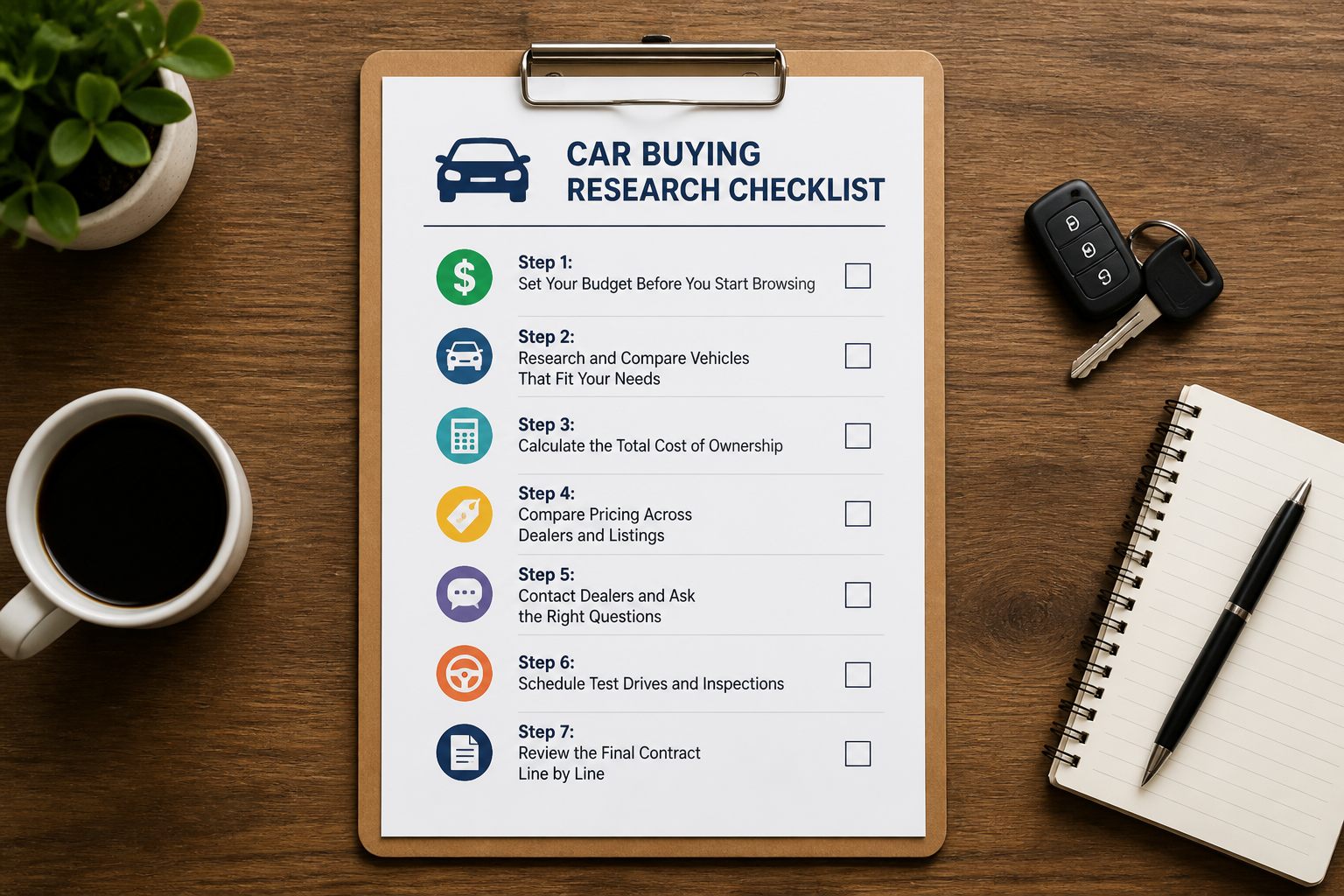
If you are still working through the larger car buying budget, our Car Buying Research Checklist can help you compare vehicle costs alongside financing, insurance, fuel, maintenance, and other expenses.
Step 3: Compare Financing Options and Consider Preapproval
You do not have to wait until you are sitting in the dealership finance office to start looking at auto loans.
Banks, credit unions, and other auto lenders may allow you to apply for financing or preapproval before choosing a specific vehicle.
Banks, Credit Unions, and Other Lenders
Different lenders may offer different rates and terms to the same borrower, which is why comparing more than one option can be worthwhile.
Banks can be convenient, particularly if you already have accounts or an established relationship with one.
Credit unions are another option and may offer competitive auto loan rates to eligible members.
Online and other auto lenders can make it easier to research financing digitally and compare potential offers before visiting a dealership.
When comparing lenders, look beyond the advertised APR. Review the rate you actually qualify for, loan term, amount financed, estimated payment, fees, and total borrowing cost.
What Does Auto Loan Pre-approval Do?
A pre-approval gives you an idea of the financing a lender may be willing to provide based on the information reviewed during the application process.
Depending on the lender, it may show an approved amount, interest rate, loan term, or other conditions.
That information can be useful in two ways.
First, it helps establish the vehicle price range you can realistically shop within. Second, it gives you a financing offer you can compare with options available through a dealership.
Pre-approval does not mean you have to use that lender. If the dealership presents an option that works better for you, you can compare the complete terms before deciding.
Step 4: Shop for Vehicles Within Your Budget
Once you have a clearer picture of your budget and financing options, you can start comparing vehicles that fit both.
AutoFinder lets you explore new and used inventory from dealerships and compare details such as price, model year, trim, mileage, equipment, and photos.
Suppose your budget gives you the choice between a newer base trim and a slightly older, better equipped version of the same vehicle. Looking at real inventory helps you see those tradeoffs instead of relying only on manufacturer starting prices or general pricing estimates.
Pay attention to the complete vehicle rather than price alone.
A lower-priced listing could have more mileage or fewer features. A higher priced vehicle could be a different trim, have lower mileage, or include equipment you were already planning to pay for.
Once you find vehicles that fit, AutoFinder can also help you connect with dealerships to ask about availability, vehicle details, pricing, and financing options.
Step 5: Compare Dealership Financing With Your Other Options
Arriving at the dealership with a pre-approval does not mean your financing decision has already been made.
Dealerships work with lenders and may be able to offer competitive financing. New vehicle buyers may also encounter manufacturer-backed financing programs on eligible models.
That gives you another option to compare.
Compare the Complete Financing Offer
If you already have a pre-approval, you can show the dealership the terms and ask:
Can you beat this rate without changing the vehicle price?
Then compare the offers using the same criteria:
- APR
- Loan term
- Amount financed
- Monthly payment
- Total borrowing cost
- Any conditions attached to the financing
For example, a lower APR may look like the obvious choice until you discover that another offer includes a manufacturer rebate you would have to give up to receive the promotional financing rate.
Compare the complete purchase rather than evaluating one number in isolation.
Understand Optional Products
During the financing process, you may also be offered products such as GAP coverage, a vehicle service contract, appearance protection, or other coverage.
These products are optional unless otherwise stated as a legitimate requirement of a particular financing arrangement.
Rather than automatically accepting or declining them, find out what each product costs and what you receive in return.
Ask about:
- What the product covers
- How long the coverage lasts
- Major exclusions
- Whether you already have similar coverage elsewhere
- The total price
- Whether the cost will be added to your loan
Adding an optional product to the amount financed also means you may pay interest on its cost over the life of the loan.
Step 6: Review the Loan Contract Before Signing
Once you have selected a vehicle and financing option, take time to review the paperwork.
Make sure the written agreement reflects the terms you discussed.
Check the:
- Vehicle purchase price
- Down payment
- Trade in credit, if applicable
- Amount financed
- APR
- Loan term
- Monthly payment
- Taxes and fees
- Optional products you chose
- Total cost information shown in the financing disclosures
If a number looks different from what you expected, ask about it before signing.
There may be a straightforward explanation, but this is the point to make sure everyone is working from the same numbers.
Keep copies of your financing agreement and other purchase documents once the transaction is complete.
Step 7: Manage Your Loan After You Buy
Financing does not require much day to day attention once everything is set up, but a few decisions can affect how smoothly repayment goes.
Set Up Your Payments
Check when your first payment is due and how your lender accepts payments. Automatic payments can be convenient if they work with the way you manage your finances.
Missing a payment can lead to fees and potentially affect your credit, so knowing the due date and payment process from the beginning is worthwhile.
Can You Pay Off a Car Loan Early?
If you want to make additional payments, review your loan agreement and ask the lender how extra money is applied.
Depending on the loan, paying additional principal may reduce the amount of interest you pay and help you finish the loan sooner.
Before making that part of your strategy, confirm whether the loan has any prepayment restrictions or penalties and how the lender handles additional payments.
When Should You Consider Refinancing?
Refinancing means replacing your current auto loan with another loan, usually because the new financing terms are more attractive.
It may be worth investigating if your credit has improved, interest rates have changed, or your original financing carried a relatively high APR.
Compare the remaining cost of your current loan against the complete cost of the new one, including any applicable fees. A lower advertised rate does not automatically mean refinancing will save you money.
Common Car Financing Mistakes to Watch For
Looking Only at the Monthly Payment
A lower monthly payment can be appealing, but check how it was achieved.
If the payment fell because the loan term increased substantially, you could end up paying more interest overall.
Compare the APR, term, amount financed, monthly payment, and total borrowing cost together.
Shopping Without Comparing Financing
Getting pre-approved is not required to buy a car.
Having another financing option available, however, gives you a useful reference point when the dealership presents its financing offers.
Even if you ultimately choose dealership financing, comparing options can help you understand why one offer works better for you.
Rolling Negative Equity Into Your Next Loan Without Understanding the Impact
If you owe more on your current vehicle than its trade-in value, the difference is known as negative equity.
Depending on the financing arrangement, that balance may be included in your next auto loan. That increases the amount you are financing before accounting for the cost of the next vehicle.
If you are in this situation, ask the dealership and lender to show you how the trade-in payoff affects the new loan so you can evaluate the numbers clearly.
Forgetting About Ownership Costs
The car with the lowest payment is not necessarily the one that will cost you the least each month.
Insurance, fuel, maintenance, registration, and other expenses continue after you leave the dealership. Include them when deciding how much vehicle comfortably fits your budget.
Final Thoughts
Car financing becomes easier to compare when you know your numbers before you start reviewing offers.
Check your credit, establish a budget that works for you, explore available financing, and compare the complete terms rather than focusing only on the monthly payment.
A pre-approval can give you a useful reference point, while dealership financing gives you another option to consider. Neither is automatically better. The right choice depends on the APR, loan term, amount financed, incentives, and total cost available for your particular purchase.
AutoFinder can help with the vehicle side of that research by making it easier to compare real dealership inventory, pricing, trims, mileage, and features before connecting with a dealer.