Buying Guides
Best State to Buy a Car: Taxes, Fees and Savings
OVERVIEW
What Is the Best State to Buy a Car?
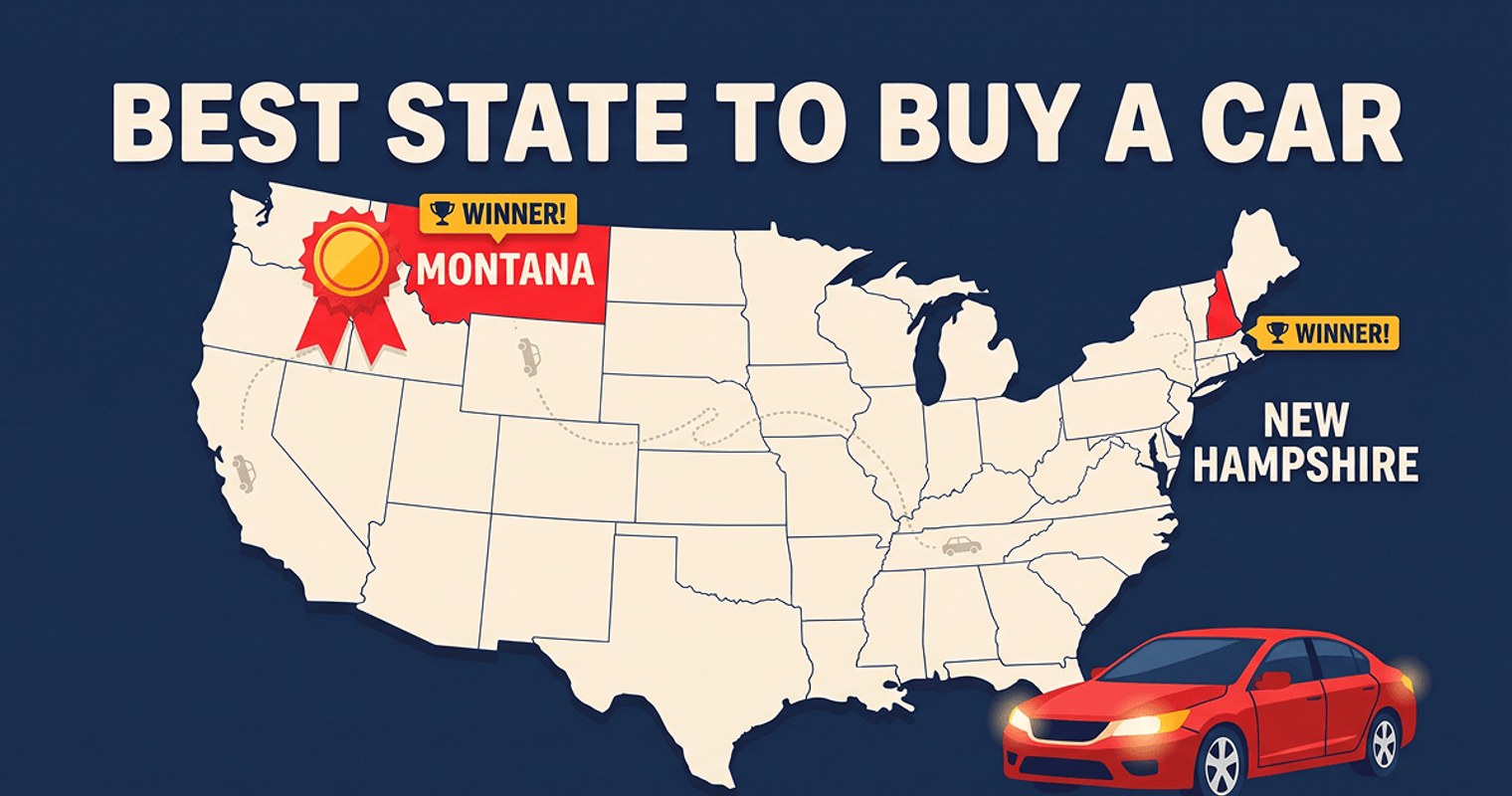
Montana, New Hampshire, Oregon, Delaware, and Alaska are worth examining because none imposes a general statewide sales tax.
But there's a catch. A 0% general sales tax rate doesn't necessarily mean a $0 vehicle tax bill.
Delaware has a substantial vehicle document fee. Oregon taxes certain vehicle transactions. Some Alaska municipalities collect local sales taxes. And New Hampshire residents need to account for municipal vehicle permit fees.
Here's how the 5 states compare.
| State | General State Sales Tax | Important Vehicle Costs |
|---|---|---|
| Montana | 0% | Vehicle registration and applicable local or other fees |
| New Hampshire | 0% | Municipal vehicle permit fees and registration |
| Oregon | 0% | 0.5% tax on qualifying vehicle transactions |
| Delaware | 0% | 5.25% vehicle document fee |
| Alaska | 0% | Local sales taxes in some municipalities |
Rates and general requirements reflect information available as of October 2026. This table compares tax structures, not average dealership prices or total ownership costs.
1. Montana: Best for Residents Avoiding General Sales Tax
Montana is a strong choice for residents because it doesn't impose a general statewide sales tax.
That can make a noticeable difference on an expensive vehicle.
For example, a hypothetical 6% sales tax on a $40,000 car would add $2,400. A qualifying Montana purchase wouldn't have that general statewide sales tax, although registration and other applicable fees still need to be paid.
Montana also gets attention from shoppers interested in registering vehicles through businesses established in the state.
That arrangement deserves caution. Forming a Montana business doesn't automatically eliminate taxes or registration obligations where a vehicle is principally used.
For a Montana resident purchasing and registering a car in Montana, the lack of general sales tax is a meaningful advantage. Someone living elsewhere needs to examine their own state's requirements before expecting similar savings.
2. New Hampshire: Best for Residents Who Want No General Sales Tax
New Hampshire also has no general statewide sales tax.
That's appealing for residents buying new or used vehicles, especially when comparing the purchase price with what a similar transaction might cost in a state that imposes a substantial sales tax.
However, New Hampshire municipalities charge vehicle permit fees as part of the registration process.
Those fees can depend on the vehicle's original list price and age. A newer, more expensive car may therefore cost considerably more to register than an older vehicle.
Before buying, ask your municipality for a registration estimate based on the specific vehicle.
New Hampshire offers a favorable general sales tax environment, but registration expenses belong in the budget from the beginning.
3. Oregon: Best for Low Vehicle Transaction Taxes
Oregon has no general sales tax, although certain vehicle purchases are subject to a separate 0.5% tax.
For qualifying vehicles sold by Oregon dealerships, the state imposes a vehicle privilege tax on the dealer. Dealers may pass that cost to buyers.
Oregon also has a vehicle use tax for qualifying purchases from dealerships outside the state when the vehicles will be titled and registered in Oregon.
The tax generally applies to certain newer vehicles meeting the state's eligibility requirements.
Here's what 0.5% looks like at different vehicle prices.
| Vehicle Price | 0.5% Vehicle Tax |
|---|---|
| $25,000 | $125 |
| $35,000 | $175 |
| $50,000 | $250 |
Illustrative calculations for transactions subject to the 0.5% tax. Oregon's vehicle privilege tax is legally imposed on dealers, although its cost may be passed to buyers.
The amounts may be relatively modest compared with conventional sales taxes, but they aren't the only expenses.
Oregon also has title and registration fees, with registration charges varying by factors including vehicle fuel economy.
For Oregon residents, it's worth comparing the final cost from several dealerships rather than focusing solely on the absence of general sales tax.
4. Delaware: Best for Understanding Why 0% Sales Tax Can Be Misleading
Delaware has no general statewide sales tax, but its vehicle document fee changes the calculation considerably.
As of October 2026, Delaware's document fee is 5.25%, generally calculated using the vehicle's sale price or applicable valuation, subject to state rules.
Consider a vehicle with a $30,000 applicable value.
At 5.25%, the document fee would be approximately $1,575, before other title and registration charges.
That's a meaningful expense, even though Delaware's general sales tax rate is 0%.
It also illustrates why comparing states using general sales tax alone can produce misleading conclusions.
If you're registering a vehicle in Delaware, ask for an itemized estimate of the document fee, title charges, and registration before deciding which offer is less expensive.
5. Alaska: Best for Residents in Areas Without Local Sales Tax
Alaska has no statewide general sales tax, but some municipalities impose their own sales taxes.
That means 2 dealerships in different parts of Alaska may operate under different local tax rules.
Buyers should check whether a local tax applies to the specific vehicle transaction and whether any exemptions or limits are available.
Alaska also presents a practical challenge for shoppers living far away.
A vehicle advertised at an attractive price may be expensive to transport to another state.
For Alaska residents, the lack of statewide sales tax can be beneficial. For buyers outside Alaska, transportation costs and home state registration requirements may outweigh any apparent tax advantage.
Which State Has the Lowest Car Sales Tax?
Montana, New Hampshire, Oregon, Delaware, and Alaska all have a 0% general statewide sales tax rate.
Among states with a general statewide sales tax, Colorado has the lowest nonzero rate at 2.9% in 2026.
However, Colorado's local sales taxes can increase the combined rate substantially.
More importantly, the general sales tax rate isn't always the tax used for motor vehicle purchases.
Georgia is a good example.
Georgia's general state sales tax is 4%, but most vehicle purchases are subject to a separate Title Ad Valorem Tax, commonly called TAVT.
As of October 2026, Georgia's standard TAVT rate is 7% of the vehicle's fair market value, subject to applicable rules and exceptions.
A shopper comparing Georgia's 4% general sales tax with another state's vehicle sales tax would be comparing 2 different tax systems.
The same principle applies when evaluating states that charge vehicle excise taxes, document fees or other purchase-related taxes.
The lowest general sales tax rate doesn't automatically produce the lowest vehicle purchase cost.
Can You Avoid Sales Tax by Buying a Car in Another State?
Generally, no. Buying from a dealership in a state without general sales tax doesn't automatically eliminate taxes owed where you live.
Many states impose sales or use tax when a vehicle is titled or registered.
For example, an Illinois resident who purchases a vehicle from an out-of-state dealership may still owe applicable Illinois vehicle tax when registering it in Illinois.
The amount and payment process depend on the transaction and state rules.
Some dealerships collect the appropriate taxes as part of the sale. Others provide the documents needed for the buyer to complete registration and pay taxes directly.
Before signing, ask the dealership how it handles purchases for customers registering vehicles in your state.
What's the Difference Between Sales Tax and Use Tax?
Sales tax is generally collected on taxable retail purchases.
Use tax commonly applies when taxable property is purchased without the applicable sales tax and is later brought into a state for use, storage, or consumption.
The details vary by state, and motor vehicles often have special rules.
If you're purchasing a vehicle outside your home state, the important question is which taxes apply when you register and use the vehicle at home.
Will You Pay Sales Tax Twice?
Not necessarily.
Some states provide credits for qualifying sales or use taxes paid to another state.
For example, Minnesota allows a credit in certain circumstances when a buyer has already paid vehicle sales tax elsewhere. If the amount paid is lower than Minnesota's applicable tax, the buyer may owe the difference.
Other states have different requirements.
Keep receipts showing any taxes paid, and verify whether a credit applies before completing the purchase.
Is It Cheaper to Buy a Car in Another State?
It can be, particularly when the vehicle itself costs less.
Imagine you're shopping for a new SUV and find 2 dealerships offering the same trim and equipment.
Your local dealership advertises it for $36,500.
A dealership in a neighboring state lists the same vehicle for $34,800.
That's a $1,700 difference in the advertised vehicle price.
But the lower price doesn't tell you how much you'll actually save.
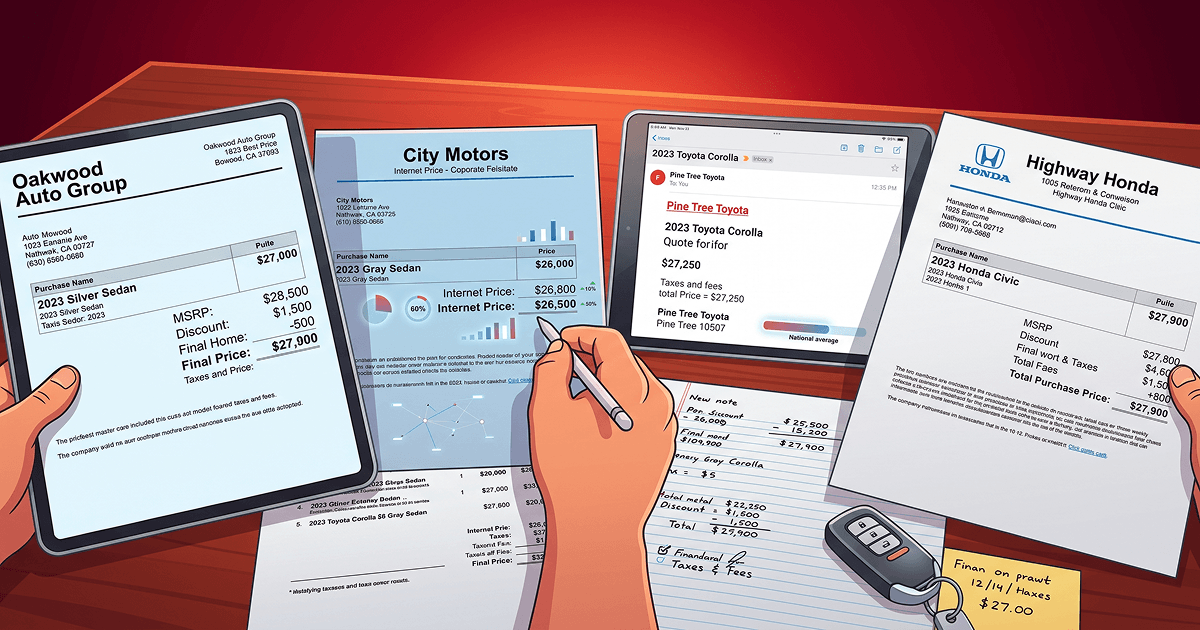
Here's what happens when we include dealer fees and travel.
| Cost | Local Dealer | Out of State Dealer |
|---|---|---|
| Vehicle price | $36,500 | $34,800 |
| Dealer fees | $400 | $700 |
| Travel or transportation | $0 | $500 |
| Subtotal before taxes and registration | $36,900 | $36,000 |
Illustrative comparison only. Taxes, registration, financing, and any additional charges are excluded.
The out-of-state dealership is still $900 less expensive before taxes and registration.
That's a meaningful difference, especially if you're already planning a trip near the dealership.
However, if the distant dealership requires additional purchases or has incentives you don't qualify for, the calculation could change.
The safest approach is to get complete written quotes from both dealerships before traveling.
What Actually Makes a State Cheaper for Buying a Car?
Dealer Inventory and Local Demand
Vehicle prices aren't uniform across the country.
A dealership with several examples of a particular model may offer a more competitive price than one with limited inventory.
Demand also varies by region.
If you're shopping for a specific trim, expanding your search beyond your immediate area can reveal more options.
This is particularly helpful for vehicles with unusual colors, equipment packages or limited local availability.
Dealer Fees
Documentation and other dealership fees vary by location and applicable state rules.
Some states regulate documentation fees more strictly than others.
Instead of assuming a lower vehicle price means a better deal, ask each dealership for a written breakdown of the amount due.
That gives you a clearer comparison and an opportunity to discuss the offer.
Registration and Title Costs
The cost of registering a car can depend on its value, weight, age, fuel economy or other factors.
Some states also require inspections, emissions testing or additional documentation for vehicles purchased elsewhere.
Those expenses can affect the final cost, particularly when buying used.
Transportation and Delivery
A dealership 100 miles away may be easy to visit.
A dealership 1,000 miles away requires more planning.
If you're considering professional shipping, request a delivery estimate before committing.
If you plan to drive the vehicle home, confirm how temporary registration, license plates and insurance will be handled.
Is It Better to Buy a New or Used Car Out of State?
Both can be worthwhile, although the shopping process is different.
Buying a New Car Out of State
New vehicles are generally easier to compare because you can match the model, trim, drivetrain, and equipment.
For example, if you want a specific Toyota Camry configuration, comparing several dealerships across neighboring states may help you find more inventory and better offers.
Before traveling, confirm the vehicle identification number, advertised price, incentive eligibility, and availability.
Also ask whether the dealership can assist with your home state's title and registration requirements.
Buying a Used Car Out of State
Used vehicles require more attention to condition.
Two cars with the same year, model, and mileage may have very different service histories or levels of wear.
An out-of-state search can help you find a particular vehicle that's difficult to locate nearby, but don't let the lower advertised price distract you from the car itself.
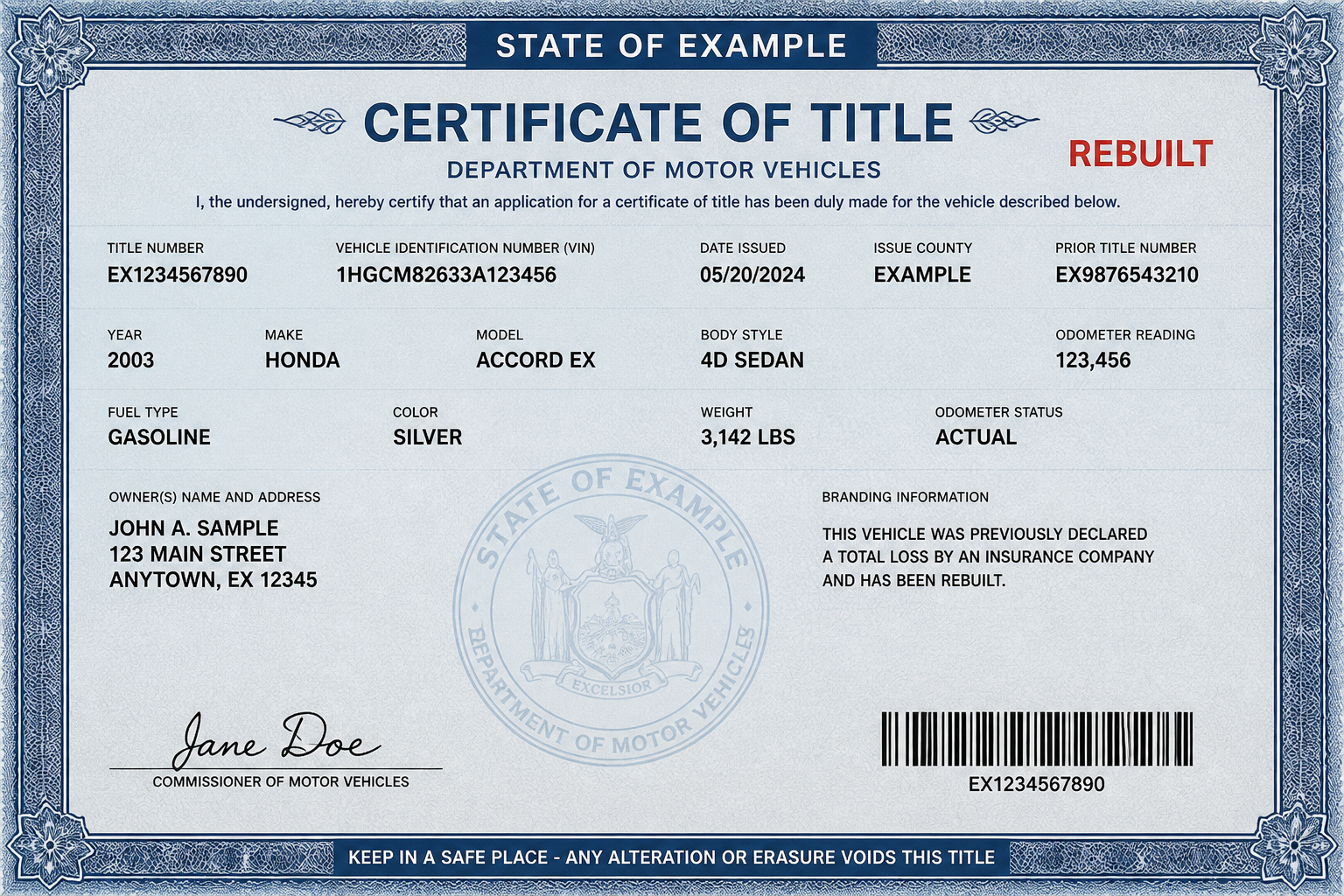
Review its vehicle history, ask about prior damage, and arrange an independent inspection when appropriate.
You'll also want to verify that the vehicle meets your home state's inspection and emissions requirements.
How to Find the Best State to Buy Your Next Car
You don't need to compare all 50 states before shopping. Start with the vehicle and expand your search where it makes sense.
- Choose the exact vehicle. Identify the model, trim, drivetrain, and features you want. For used vehicles, establish acceptable mileage and condition.
- Compare nearby dealerships. Begin locally, then expand into neighboring states to see whether more competitive offers are available.
- Ask for written quotes. Request the vehicle price, dealer fees, applicable incentives, and an explanation of taxes and registration.
- Verify your registration requirements. Check with your home state's motor vehicle or revenue agency about out-of-state purchases.
- Add travel and delivery costs. Include transportation, temporary permits, and any required inspections.
- Confirm the vehicle is available. Contact the dealership before making the trip and verify that the offer applies to your purchase.
AutoFinder helps shoppers explore new and used vehicles and connect with participating dealerships.
You can also use our Out the Door Price Calculator to estimate taxes, fees, and the total amount you may pay.
When Is Buying a Car Out of State Worth It?
Buying outside your home state is worth considering when you find a vehicle that's difficult to locate nearby or a price advantage large enough to justify the extra coordination.
For example, saving $2,000 on an identical new vehicle could make a few hours of travel worthwhile.
Saving $200 probably wouldn't, especially if you need to arrange transportation, take time off work or handle additional paperwork.
The same logic applies to used vehicles. A rare configuration or unusually well-maintained example might justify a longer trip even without a large price difference.
Working with a dealership experienced in out-of-state transactions can make the process easier. Ask what paperwork the dealership handles and what you'll need to complete yourself.
So, What Is the Best State to Buy a Car?
For residents focused on avoiding general sales tax, Montana and New Hampshire stand out. Oregon can also be attractive, although qualifying vehicle taxes and registration fees apply.
Delaware and Alaska belong in the conversation because they have no general statewide sales tax, but their additional costs deserve closer examination.
For everyone else, the best place to buy a car may be much closer to home.
A competitive dealership offer, the right vehicle, and a manageable registration process can be more valuable than shopping in a state with a lower general sales tax.
Compare the full purchase cost, not just the advertised price or the tax rate. That's how you find a deal that actually saves you money.
Want More Car Buying Advice?
Add AutoFinder as a preferred source on Google to help you discover more of our automotive guides and research.