Car Basics
What Does a Rebuilt Title Mean? What Car Buyers Should Know
OVERVIEW
A rebuilt title means a vehicle was previously given a salvage title after being declared a total loss or otherwise meeting a state's definition of a salvage vehicle, then repaired and approved for a rebuilt or equivalent branded title under that state's rules.
The important part is what happened before the rebuilt title was issued.
A vehicle may receive a salvage designation after serious collision damage, flood damage, theft recovery, vandalism, or another type of significant loss. If the vehicle is later repaired and meets the requirements to return to the road, its title can be changed to rebuilt or a similar designation depending on the state. For example, Illinois defines a rebuilt vehicle as one that was previously issued a salvage certificate and was restored to operating condition by a licensed rebuilder while meeting applicable inspection requirements.
A rebuilt title does not automatically mean a vehicle is unsafe or a bad purchase. It does mean you should understand why the vehicle was originally declared salvage, how it was repaired, what inspections were performed, and whether the lower price makes sense for the additional uncertainty.
What Is a Rebuilt Title?
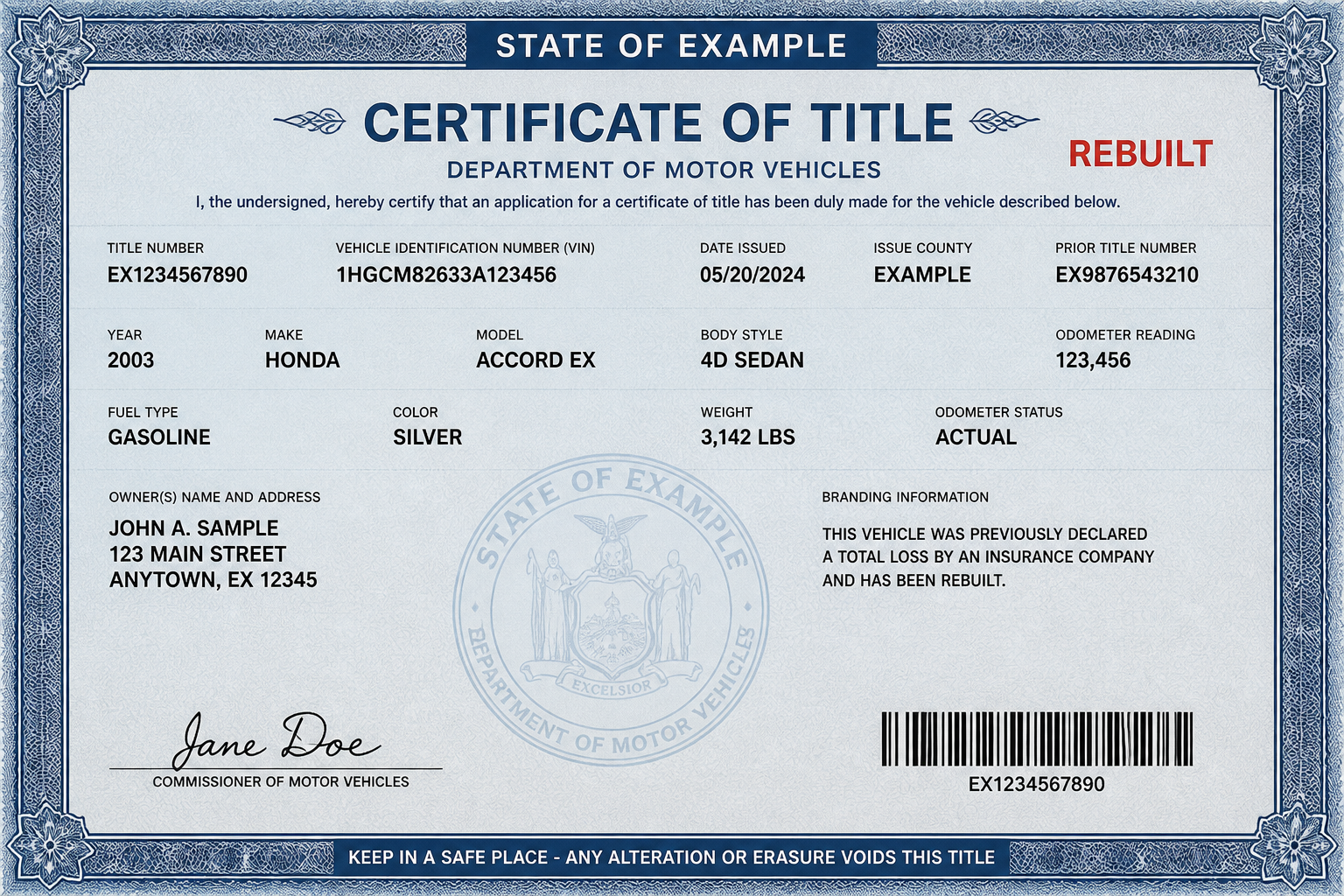
A rebuilt title is a branded vehicle title indicating that the vehicle previously had a salvage history but has since been repaired and returned to legal road use under the applicable state's process.
The terminology varies by state. You may see terms such as:
- Rebuilt
- Reconstructed
- Reconditioned
- Revived salvage
- Prior salvage
California, for example, refers to a vehicle previously reported as a total loss and later restored to operational condition as a revived salvage vehicle.
Because title laws and terminology vary, check the rules in the state where the vehicle is titled rather than assuming every rebuilt title represents the exact same process.
What Is the Difference Between a Clean, Salvage and Rebuilt Title?
These terms describe very different vehicle histories.
A clean title does not guarantee that a vehicle has never been damaged. It means the title does not carry the salvage or rebuilt brand being discussed here.
A salvage vehicle generally cannot simply be repaired and driven without going through the applicable state process. In Illinois, for example, salvaged vehicles cannot legally be driven or receive regular license plates until a rebuilt title has been issued, aside from limited permits for required inspections.
Once the appropriate rebuilding and titling requirements are completed, the vehicle can receive a rebuilt title.
Why Would a Car Have a Rebuilt Title?
A rebuilt title tells you that something significant happened earlier in the vehicle's life, but it does not tell you exactly what happened.
The original salvage designation could be related to:
- Collision damage
- Flood damage
- Theft recovery
- Vandalism
- Severe cosmetic damage
- Another event that resulted in a total loss or salvage classification
The exact circumstances matter.
A vehicle that was stolen and later recovered can have a very different history from one that experienced major structural damage. A flood-damaged vehicle introduces another set of concerns involving corrosion, electronics, wiring, and other components.
This is why seeing the word rebuilt on the title should be the beginning of your research rather than the end of it.
Does a Rebuilt Title Mean the Car Was Totaled?
Often, but the exact definition depends on the state and circumstances.
A vehicle may receive a salvage title after an insurance company determines it is a total loss, but states establish their own rules for when salvage branding is required.
Being declared a total loss also does not necessarily mean the vehicle was physically destroyed.
A total loss decision is influenced by the vehicle's value and the cost or nature of the damage. A relatively inexpensive older vehicle may reach the threshold for a total loss with damage that would be repaired on a much more valuable vehicle.
That is one reason the phrase "the car was totaled" does not give you enough information to evaluate a rebuilt vehicle. You still want to know why it was totaled and what was repaired.
How Does a Salvage Car Become a Rebuilt Car?
The exact process varies by state.
Generally, a salvage vehicle is repaired and then must meet the state's requirements before it can receive a rebuilt or equivalent title.
Illinois provides a useful example. The state requires rebuilt title documentation that can include a salvage certificate, information about essential replacement parts, an IDOT vehicle inspection report, and additional inspection requirements for certain newer vehicles. Only licensed rebuilders can bring a vehicle out of salvage status in Illinois.
That sounds reassuring, but shoppers should understand what an inspection actually covers.
Illinois specifically notes that its Secretary of State Police salvage inspection is intended to identify essential parts and review required documentation. It is not intended to certify the vehicle's safety, roadworthiness, or quality of the rebuilding work. Vehicles subject to that process must separately pass an IDOT safety test before the salvage inspection.
Requirements differ elsewhere, which is why you should not interpret "passed inspection" as meaning the same thing in every state.
Is a Rebuilt Title Bad?
Not automatically.
A rebuilt title is better viewed as an additional layer of history and risk that needs to be evaluated.
There are well-repaired rebuilt vehicles on the road. There are also vehicles where the previous damage, quality of repair, long-term reliability, financing, insurance, or resale value may make buying one less appealing.
That uncertainty is usually part of why rebuilt title vehicles sell for less than comparable clean title vehicles.
The right question is not simply, "Is a rebuilt title bad?"
Ask:
What happened to this particular vehicle, how well was it repaired, and is the price low enough to make the added uncertainty worthwhile?
Pros and Cons of Buying a Rebuilt Title Car
A rebuilt title can create an opportunity to buy a vehicle for less, but the lower price comes with tradeoffs.
Pros
- Lower purchase price
- Potentially more car for your budget
- Legal road use after required process
- Repair records may be available
Cons
- Previous significant damage
- Harder to evaluate repairs
- Financing may be limited
- Insurance can be more complicated
- Lower resale value
- Future problems may be harder to predict
For most shoppers, the biggest advantage is price. The biggest question is whether the savings adequately compensate for the vehicle's history.
Are Rebuilt Title Cars Safe?
A rebuilt title alone cannot tell you whether a vehicle is safe.
The quality and extent of the repair matter considerably.
If a vehicle suffered structural damage, for example, you would want to know what was damaged, which components were replaced, and whether the repairs restored the vehicle correctly.
Flood damage creates different concerns. Water can affect electrical connectors, wiring, control modules, upholstery, corrosion prone areas, and other components that may not reveal problems immediately.
Do not assume that receiving a rebuilt title provides the same reassurance as a comprehensive independent inspection. As Illinois explicitly demonstrates, some state salvage inspections are not intended to certify repair quality or overall roadworthiness.
If you are seriously considering a rebuilt vehicle, an independent inspection by a qualified professional who understands collision and structural repairs can provide much more useful information.
What Should You Check Before Buying a Rebuilt Title Car?
Buying a rebuilt vehicle calls for more research than simply checking the odometer and taking a test drive.
Find Out Why It Received a Salvage Title
This should be one of your first questions.
Was the vehicle involved in a collision? Was it flooded? Was it stolen and recovered? How extensive was the damage?
Do not lump all salvage histories together.
Review the Vehicle History
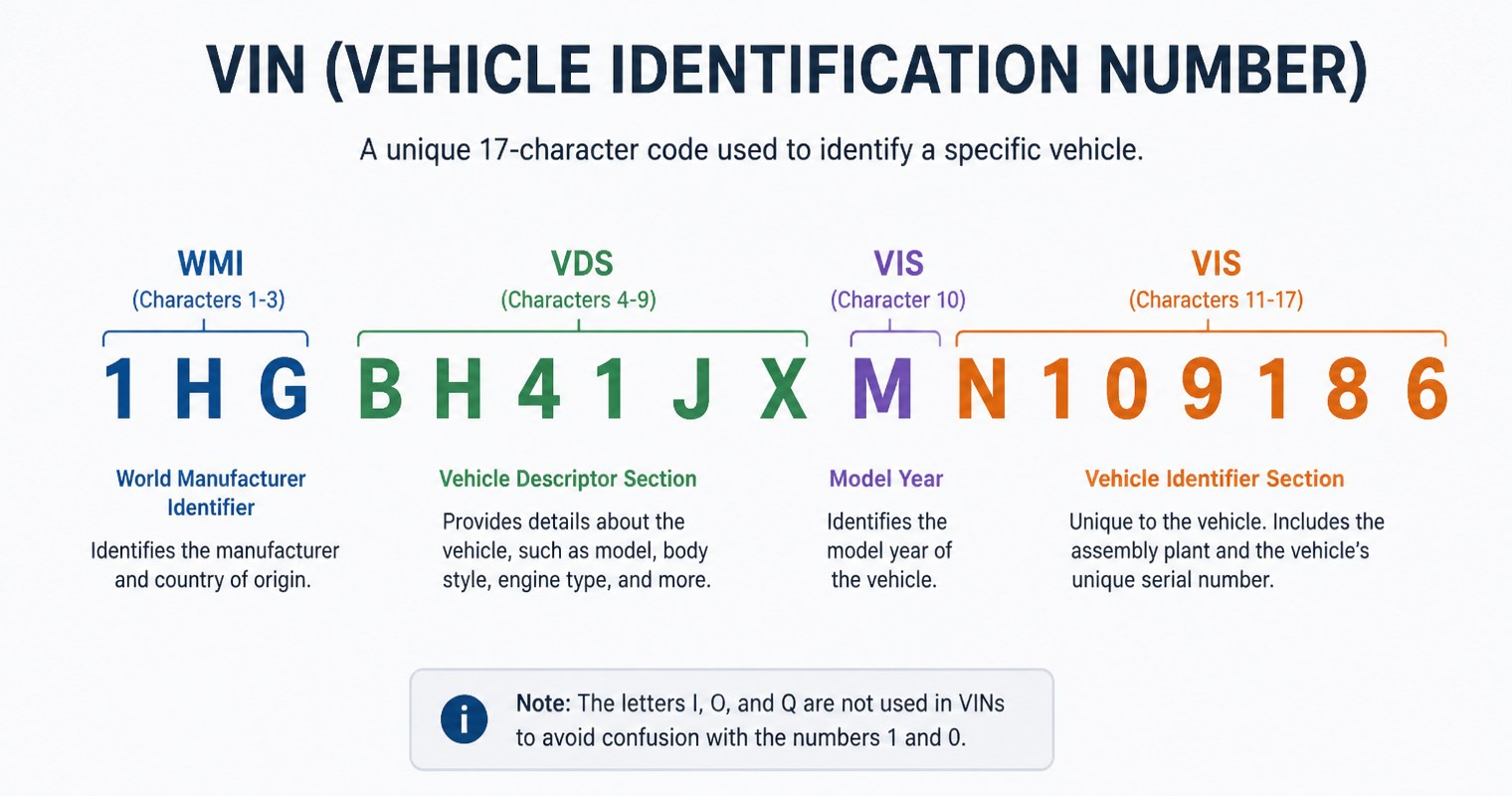
Use the VIN to review available title and vehicle history information.
Look for:
- Previous salvage branding
- Reported accidents
- Flood history
- Ownership history
- Mileage inconsistencies
- Title changes
- Available service history
A history report may not contain every event in a vehicle's life, so use it as one part of your research rather than treating it as a complete record.
Ask for Before and After Photos
If photos from before the repair are available, they can be extremely helpful.
A listing that simply says "rebuilt title due to minor damage" gives you very little information. Photos can show where the vehicle was hit and give you a better sense of the extent of visible damage before repairs.
Ask for Repair Documentation
Receipts and repair records can help show which parts were replaced and what work was completed.
Documentation is particularly valuable if major structural, suspension, electrical, safety, or body components were involved.
Get an Independent Inspection
This is one purchase where I would put a prepurchase inspection high on the priority list.
Tell the inspector that the vehicle has a rebuilt title and, if possible, provide information about the original damage.
The inspection may include:
- Structural condition
- Evidence of previous repairs
- Alignment
- Suspension
- Brakes
- Tires
- Fluid leaks
- Electrical systems
- Warning lights
- Corrosion
- General mechanical condition
Depending on the type of previous damage, you may want someone experienced specifically with collision repair or flood damaged vehicles.
Can You Get Insurance on a Rebuilt Title Car?
Possibly, but coverage can be more complicated.
Insurance companies set their own underwriting rules, and the options available for a rebuilt vehicle may differ from those for a comparable clean title car. Some insurers may offer liability coverage but limit other types of coverage, while others may insure the vehicle more broadly after reviewing its history and condition.
Do not wait until after purchasing the vehicle to find out.
Give the insurer the VIN and disclose the rebuilt title before buying. Ask what coverage is available, what the vehicle would be valued at in a claim, and whether the title brand creates any special requirements.
If you are comparing several vehicles, an insurance quote can become part of the purchase decision.
Can You Finance a Car With a Rebuilt Title?
Financing may be possible, but not every lender finances rebuilt title vehicles.
A lender has to consider the vehicle as collateral for the loan. Because a rebuilt vehicle may have a lower or less predictable resale value, some lenders may have different requirements or decline to finance it altogether.
Before getting serious about a rebuilt vehicle, ask your bank, credit union, dealership, or other lender whether rebuilt titles are eligible.
Compare the full financing terms rather than focusing only on whether you can get approved.
A large discount on the vehicle is less compelling if the financing available to you is significantly more expensive.
Are Rebuilt Title Cars Worth Less?
Generally, a rebuilt title affects resale value because future buyers will have many of the same questions you have now.
Even if the vehicle has been repaired well and gives you years of reliable service, its title history remains relevant when you eventually sell or trade it.
That does not automatically make the vehicle a poor value.
Suppose a rebuilt vehicle is meaningfully less expensive than comparable clean-title examples and passes a thorough inspection. If you plan to keep it for a long time, the lower purchase price may be attractive enough to offset some of the resale disadvantage.
If you expect to trade again relatively soon, resale value may carry more weight in your decision.
Is a Rebuilt Title the Same as a Lemon Title?
No.
A rebuilt or salvage title is generally related to a vehicle's previous salvage history.
A lemon law or manufacturer buyback designation relates to a vehicle that was returned or repurchased under applicable lemon law or manufacturer buyback circumstances.
They represent different types of vehicle history and should not be treated as interchangeable.
Title brands can vary by state, so always identify the exact brand shown on the vehicle's title and research what that designation means where the vehicle is titled.
Can a Rebuilt Title Ever Become a Clean Title Again?
Generally, you should assume that the vehicle's salvage and rebuilt history will remain part of its record.
Do not buy a rebuilt title vehicle based on the expectation that you can eventually turn it into an ordinary clean title vehicle.
Title terminology can change when vehicles move between states, which is another reason to review the vehicle's full history rather than relying only on the appearance of the current paper title.
California DMV specifically warns shoppers to be cautious with revived salvage vehicles and notes the importance of checking title history.
If a seller suggests that the title history can simply be removed, verify that claim directly with the appropriate state motor vehicle agency before purchasing.
Should You Buy a Rebuilt Title Car?
For some shoppers, a rebuilt vehicle can make sense. For others, the uncertainty is not worth the savings.
I would be more comfortable considering one when:
- The reason for the original salvage title is known
- Before repair photos are available
- Repair documentation is thorough
- The vehicle passes an independent inspection
- Insurance is available at an acceptable cost
- Financing works for your budget
- The asking price clearly reflects the title history
I would be much more cautious when the seller cannot explain the original damage, documentation is missing, repairs are difficult to evaluate, or the discount compared with a clean title vehicle is small.
There should be a reason to accept the additional uncertainty. Usually, that reason is value.
How to Compare a Rebuilt Car With a Clean Title Car
Do not compare two vehicles based on price alone.
Start with similar examples of the same model, model year, trim, mileage, and equipment. Then account for the rebuilt vehicle's history and condition.
For example, imagine a rebuilt title SUV is several thousand dollars less than comparable clean title listings. That sounds appealing until you discover it also needs tires, has limited insurance options, and comes with little documentation about the original collision.
Another rebuilt vehicle with complete repair records, a strong inspection, and a much larger price difference may present a very different decision.
Autofinder can help you compare used dealership inventory by model year, mileage, trim, equipment, photos, and price. That gives you a starting point for understanding what comparable vehicles are selling for before deciding whether a rebuilt vehicle offers enough value.
What Does a Rebuilt Title Mean When Buying From a Dealer?
Buying from a dealership does not make the title brand irrelevant.
You should still review the title status, vehicle history, repair information, and current condition before purchasing.
Disclosure requirements vary by state. In Illinois, licensed dealers must disclose rebuilt vehicle status to purchasers, and the state provides a specific disclosure form acknowledging that the vehicle carries a rebuilt title.
Ask the dealership what it knows about the original damage and whether repair documentation or previous photos are available.
A dealer may also be able to help you explore financing, warranty, or service options, but you should still confirm insurance availability and consider an independent inspection when appropriate.
Final Thoughts
A rebuilt title means a vehicle had a significant event earlier in its life, received a salvage designation, and was later repaired and retitled for road use under applicable state requirements.
That history does not automatically make the vehicle unsafe or a bad purchase. It does mean there is more to investigate.
Find out why the vehicle was originally declared salvage. Review its history. Look for repair documentation and photos. Get an independent inspection. Check insurance and financing before you commit.
Then compare the price with similar clean title vehicles.
If the vehicle checks out and the savings are meaningful, a rebuilt title may be a tradeoff you are comfortable making. If the history is unclear or the price difference is small, there may be little reason to take on the additional uncertainty.