Car Basics
Where Is The AC Condenser?
OVERVIEW
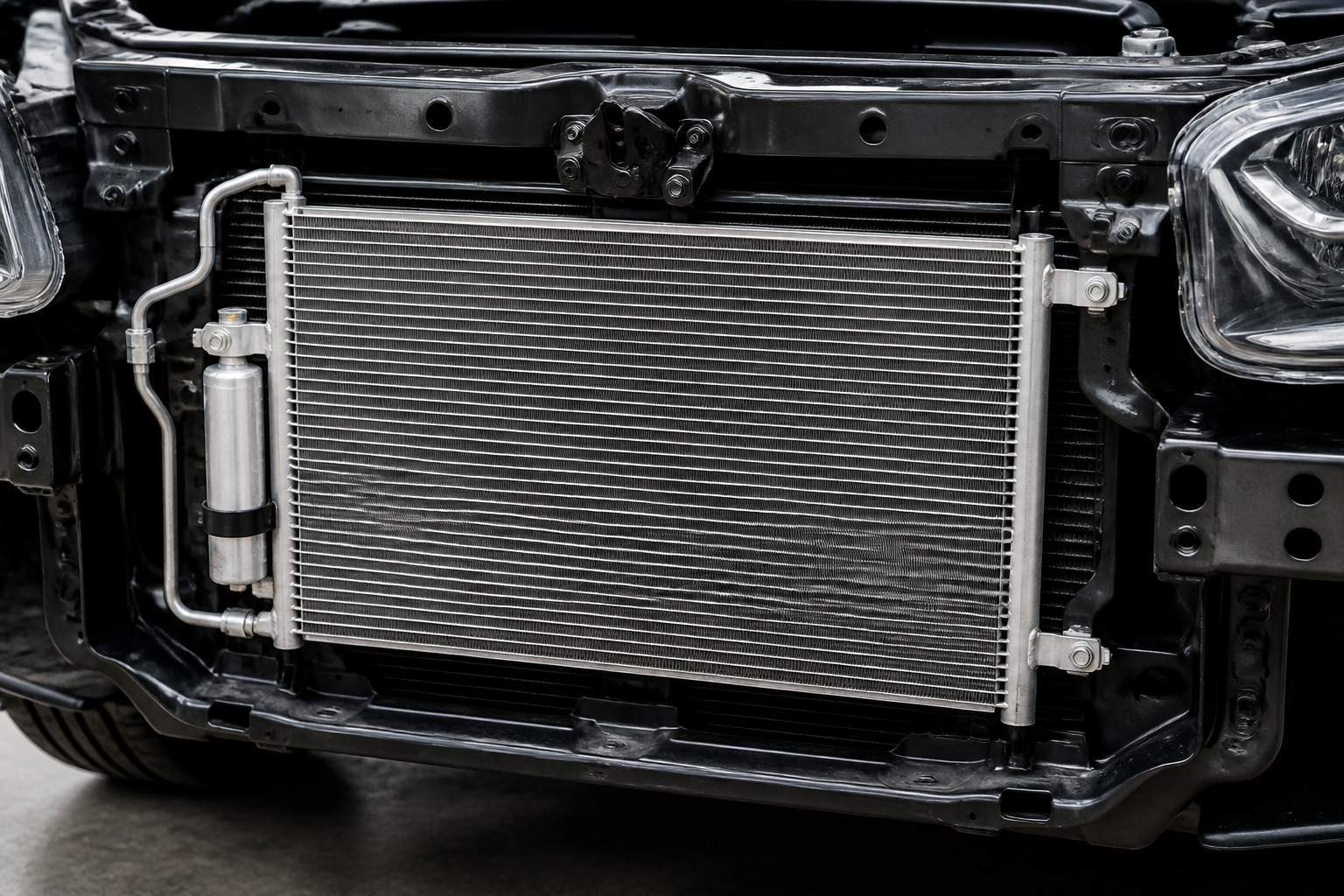
The AC condenser in most cars is located near the front of the vehicle, usually directly in front of the engine radiator and behind the front grille.
This position gives the condenser access to the airflow it needs to remove heat from the refrigerant flowing through the air conditioning system. When you drive, outside air passes through the grille and across the condenser. Cooling fans provide additional airflow when the vehicle is moving slowly or sitting in traffic.
If your air conditioning has stopped blowing cold air, the condenser is one of several components that could be involved. Knowing where it is and how it works can help you understand what may be happening before the system is diagnosed.
Quick Answer: Where Is the AC Condenser?
In most vehicles, the AC condenser sits:
- At the front of the engine compartment
- Behind the front grille
- Directly in front of or very close to the radiator
- Near the cooling fans
The condenser looks similar to a thin radiator because it is made from rows of metal tubes and fins designed to release heat.
Exact placement varies by vehicle. If you need to identify the condenser on a specific make and model, check the owner's manual or appropriate service information.
What Does the AC Condenser Do?
Your car's air conditioning system moves refrigerant through several components that change its pressure and temperature.
The condenser's main job is to remove heat from that refrigerant.
After the AC compressor compresses the refrigerant, it enters the condenser as a hot, high pressure gas. Air moving across the condenser removes heat, allowing the refrigerant to cool and change into a high pressure liquid before continuing through the system.
Placing the condenser at the front of the vehicle gives it direct access to outside airflow, which helps that heat transfer take place.
Why Is the AC Condenser Located Near the Radiator?
The radiator and condenser both release heat, but they serve different systems.
The radiator removes heat from engine coolant, while the condenser removes heat from air conditioning refrigerant. Since both depend on airflow, manufacturers commonly position them near one another at the front of the vehicle.
When the vehicle is moving, outside air enters through the grille and passes across these components. At lower speeds or while the vehicle is stopped, cooling fans help maintain airflow.
This arrangement works well for cooling, although it also puts the condenser in a relatively exposed area behind the front grille.
What Does a Car AC Condenser Look Like?
If you open the hood and look toward the front of the engine compartment, you may see several components with a similar appearance.
The AC condenser usually looks like a thin aluminum radiator. Common features include:
- Rows of small horizontal or vertical tubes
- Thin metal cooling fins
- Refrigerant lines connected near the sides
- A relatively flat, rectangular shape
The engine radiator is typically positioned behind the condenser.
Depending on the vehicle, plastic covers, the grille, bumper components, or other parts may prevent you from seeing the entire condenser from above.
Avoid removing components simply to locate it unless you are familiar with the vehicle. Automotive air conditioning systems operate under pressure, and refrigerant requires proper handling and equipment.
Is the AC Condenser the Same as the Radiator?
No. Although the two components look similar and are often installed next to each other, they serve different purposes.
The radiator is part of the engine cooling system. Coolant circulates through the engine and radiator to help control engine temperature.
The condenser belongs to the air conditioning system. It removes heat from refrigerant after the refrigerant leaves the compressor.
A radiator problem may lead to engine overheating, while a condenser problem is more likely to affect AC performance. Because they sit close together, significant damage to the front of a vehicle can sometimes affect both components.
Where Is the AC Condenser Compared With the Compressor?
The condenser and compressor perform different jobs and are located in different areas.
The condenser is usually positioned at the front of the vehicle near the radiator. The AC compressor is attached to the engine or positioned nearby and may be driven mechanically or electrically depending on the vehicle.
The compressor circulates and pressurizes the refrigerant. The refrigerant then travels to the condenser, where heat is released before it continues through the AC system.
Where Is the AC Evaporator Located?
Unlike the condenser, the evaporator is generally hidden from view.
It is usually located inside the dashboard area within the vehicle's heating and air conditioning housing. The evaporator absorbs heat from cabin air, and the blower moves cooled air through the vents.
The AC system therefore uses heat exchangers in two very different locations. The condenser releases heat near the front of the vehicle, while the evaporator absorbs heat inside the cabin.
Why Can the AC Condenser Get Damaged?
The condenser's position behind the grille provides useful airflow but also exposes it to whatever reaches the front of the vehicle.
Potential sources of damage include:
- Road debris
- Small rocks
- Insects
- Dirt
- Leaves
- Road salt
- Minor front impact damage
- Corrosion
A small stone can bend the thin cooling fins. A harder impact may damage or puncture one of the refrigerant passages, potentially allowing refrigerant to escape.
Because the condenser sits behind exterior bodywork, it is also possible for a relatively minor front impact to cause damage that is not immediately obvious from outside the vehicle.
What Are the Symptoms of a Bad AC Condenser?
Warm air from the vents does not automatically mean the condenser has failed. Several AC problems can produce similar symptoms.
Still, there are a few signs that may point toward the condenser or the airflow around it.
The AC Does Not Blow Cold Air
If the condenser cannot release heat effectively or refrigerant has leaked from the system, the air coming from the vents may feel warm or only slightly cool.
Low refrigerant, compressor problems, electrical faults, and other AC issues can produce the same symptom, so diagnosis is important before replacing anything.
The AC Works Better While Driving
If your AC gets colder while the car is moving but becomes warmer when you stop, airflow across the condenser may be part of the problem.
At road speed, air naturally passes through the grille. When the vehicle stops, the cooling fans become more important. A faulty fan, blocked condenser, or another airflow problem may cause cooling performance to drop at idle.
You Can See Damage to the Condenser
Bent fins are relatively common, especially on a component positioned directly behind the grille.
A few bent fins may have little effect on performance, while extensive fin damage can restrict airflow. A puncture or cracked refrigerant passage is more serious because it may allow refrigerant to escape.
You Notice an AC Refrigerant Leak
Leaks can develop in the condenser itself or around its connections.
Unlike engine coolant, leaking refrigerant may not leave an obvious puddle under the vehicle. Traces of refrigerant oil may sometimes be visible around the damaged area, but finding the exact source often requires professional leak detection equipment.
The AC System Has Trouble Maintaining Correct Pressure
Technicians can measure pressure on different sides of the air conditioning system to help diagnose a cooling problem.
Abnormal readings can provide clues about the condenser, compressor, expansion valve, refrigerant charge, airflow, and other parts of the system.
Can a Dirty AC Condenser Cause Problems?
Yes. The condenser depends on air moving through its fins to release heat.
A heavy buildup of leaves, dirt, insects, or other debris can restrict that airflow and reduce cooling performance, especially during hot weather or low speed driving.
Widespread bent or flattened fins can create a similar problem.
Cleaning accessible debris may help, but condenser fins are delicate. Excessive water pressure or aggressive tools can bend them and further restrict airflow. If the condenser is difficult to access or appears damaged, a technician can inspect it without risking additional damage.
Can You Drive With a Bad AC Condenser?
Whether you can continue driving depends on the problem.
If the condenser has a refrigerant leak and the AC no longer works, the vehicle may still be mechanically drivable. Continuing to operate an AC system with an incorrect refrigerant charge, however, can affect system performance and potentially place additional stress on components such as the compressor.
Significant front damage deserves additional attention because the condenser sits close to the radiator and cooling fans. Damage in this area may affect more than the air conditioning system.
If the engine begins overheating, stop driving and have the cooling system checked. An overheating engine is a more urgent problem than losing cabin air conditioning.
Can You Replace an AC Condenser Yourself?
The condenser itself may appear relatively straightforward to remove on some vehicles, but replacing it involves more than swapping the physical component.
A typical condenser replacement may require:
- Recovering the refrigerant
- Disconnecting refrigerant lines
- Removing surrounding components
- Installing the replacement condenser
- Replacing seals where required
- Evacuating the system
- Checking for leaks
- Recharging the system with the correct type and amount of refrigerant
Refrigerant should not simply be released into the atmosphere. Proper equipment is used to recover and recharge automotive AC systems.
For most vehicle owners, condenser replacement is better handled by a qualified repair shop with the equipment needed to service the refrigerant system correctly.
How Much Does an AC Condenser Cost to Replace?
AC condenser replacement costs vary by vehicle and by how much labor is required to reach the component.
On some vehicles, the condenser is relatively accessible. Others may require removal of the front bumper, grille, cooling components, or surrounding parts before a technician can replace it.
A repair estimate may include:
- Replacement condenser
- Labor
- Refrigerant
- Seals
- Diagnostic work
- Other damaged components
Parts and labor costs can also differ considerably between vehicles, particularly when comparing older mainstream models with newer or more complex AC systems.
Before approving the repair, ask what failed and whether the estimate includes the refrigerant recovery, evacuation, leak testing, and recharge needed to complete the job.
Does a Bad Condenser Always Need to Be Replaced?
Not every condenser related problem requires replacement.
If airflow is restricted by leaves or other surface debris and the condenser itself is undamaged, cleaning may be enough to restore proper airflow.
Replacement is more likely when the condenser:
- Has a refrigerant leak
- Is punctured
- Has serious corrosion
- Is badly crushed
- Has widespread physical damage
The refrigerant passages inside the condenser are thin, and extensive physical damage may not be practical to repair. Confirming the source of the AC problem first can prevent replacing a condenser that is still working properly.
What Else Can Cause Your Car AC to Stop Blowing Cold?
The condenser is only one part of the air conditioning system.
Other possible causes of warm air include:
- Low refrigerant
- A refrigerant leak elsewhere in the system
- Failed compressor
- Faulty compressor clutch
- Cooling fan problem
- Expansion valve problem
- Evaporator issue
- Electrical fault
- Blown fuse
- Cabin temperature sensor problem
- Climate control malfunction
Because so many problems can produce similar symptoms, warm vent air alone is not enough to identify a failed condenser.
A technician can inspect the system, check refrigerant pressures, test for leaks, and evaluate other components to determine what is actually causing the loss of cooling.
How Can You Protect the AC Condenser?
The condenser cannot be completely shielded from the outside environment because it needs airflow to work.
Keeping the grille clear of heavy debris can help maintain airflow. Visible damage around the front of the vehicle is also worth inspecting, especially if AC performance changes after an impact.
In areas where road salt is common, keeping the front of the vehicle reasonably clean may help limit long term buildup and corrosion.
If the AC stops cooling properly, addressing the problem early can also help prevent an issue in one part of the system from affecting other components.
How Autofinder Helps With Vehicle Research
Understanding maintenance and repair needs is one part of researching a vehicle.
If you are shopping for another car, Autofinder can help you compare new and used dealership inventory, including vehicle pricing, model year, trim, mileage, equipment, and other details that may influence your decision.
Researching the vehicles available within your budget can give you more context before you connect with a dealership.
Final Thoughts
In most cars, the AC condenser sits behind the front grille and directly in front of or close to the radiator. Its position allows outside air and the vehicle's cooling fans to remove heat from the refrigerant as it moves through the AC system.
If your AC stops blowing cold, visible condenser damage or poor airflow may offer clues, but several other AC problems can cause the same symptoms. Proper diagnosis can help determine whether the condenser actually needs attention.