Car Basics
What Does BMW Stand For? Meaning, History and Logo Explained
OVERVIEW
BMW stands for Bayerische Motoren Werke, the German name of the company most Americans know simply as BMW. In English, the name translates to Bavarian Motor Works. BMW itself used the English wording “Bavarian Motor Works” when establishing its identity in the United States.
The name makes more sense once you know where BMW came from. The company's roots are in Bavaria, Germany, and its early history was tied to aircraft engines rather than luxury cars. BMW traces its official founding date to 1916, while the Bayerische Motoren Werke name emerged in 1917.
Today, those 3 letters appear on everything from luxury sedans and SUVs to electric vehicles, high-performance M models, and motorcycles. But the name still connects the company to its Bavarian origins.
What Does BMW Mean in English?
Bayerische Motoren Werke translates to Bavarian Motor Works in English.
Breaking the German name down makes it easier to understand:
- Bayerische refers to Bavaria
- Motoren means engines or motors
- Werke refers to works or factory operations
Put it together and you get Bavarian Motor Works.
The name reflects both where the company originated and what it originally produced.
Is BMW German?
Yes. BMW is a German company headquartered in Munich, the capital of Bavaria.
BMW's history is closely tied to the region. The company's main plant and headquarters remain in Munich today, and BMW has operated from its current Munich location since 1922.
That Bavarian identity is also part of BMW's branding, including the familiar blue and white colors used in its logo.
BMW has grown into a global automaker with manufacturing and business operations around the world, but its German and Bavarian roots remain central to the brand.
When Was BMW Founded?
BMW recognizes March 7, 1916 as its official founding date.
The story is slightly more complicated than simply saying BMW opened its doors that day.
BMW's origins involve two aviation related businesses. One became Bayerische Flugzeugwerke, or BFW, in 1916. Rapp Motorenwerke was renamed Bayerische Motoren Werke GmbH in 1917. The BMW name, engine operations, and other assets were later transferred to BFW in 1922. BMW considers the establishment of BFW on March 7, 1916 its official founding date.
It is a little messier than a typical company origin story, but it explains why you may see both 1916 and 1917 mentioned when reading about BMW's history.
Did BMW Originally Make Cars?
No. Cars came later.
BMW's roots were in aviation and engine manufacturing. The company initially produced aircraft engines, and after World War I it moved into other products as restrictions affected aircraft engine production. BMW also produced railway brakes and other engines during this period.
Motorcycles came next.
BMW introduced its first motorcycle, the R 32, in 1923. Cars eventually became a major part of the company, with BMW developing its own automobile models during the 1930s.
That history helps explain the word Motoren in the company's name. BMW was an engine company before it became the luxury car brand we recognize today.
Does BMW Stand for British Motor Works?
No.
BMW does not stand for British Motor Works. It stands for Bayerische Motoren Werke, or Bavarian Motor Works in English.
Interestingly, BMW says this misunderstanding was common enough in the United States that the company addressed it during its early American motorsports efforts.
At the 1975 Twelve Hours of Sebring, the BMW 3.0 CSL carried “Bavarian Motor Works” across the top of its windshield. BMW says the lettering helped clear up confusion among Americans who thought BMW might mean British Motor Works.
So if you have ever assumed the B meant British, you are definitely not the first.
What Does the BMW Logo Mean?
The BMW logo is closely connected to Bavaria too.
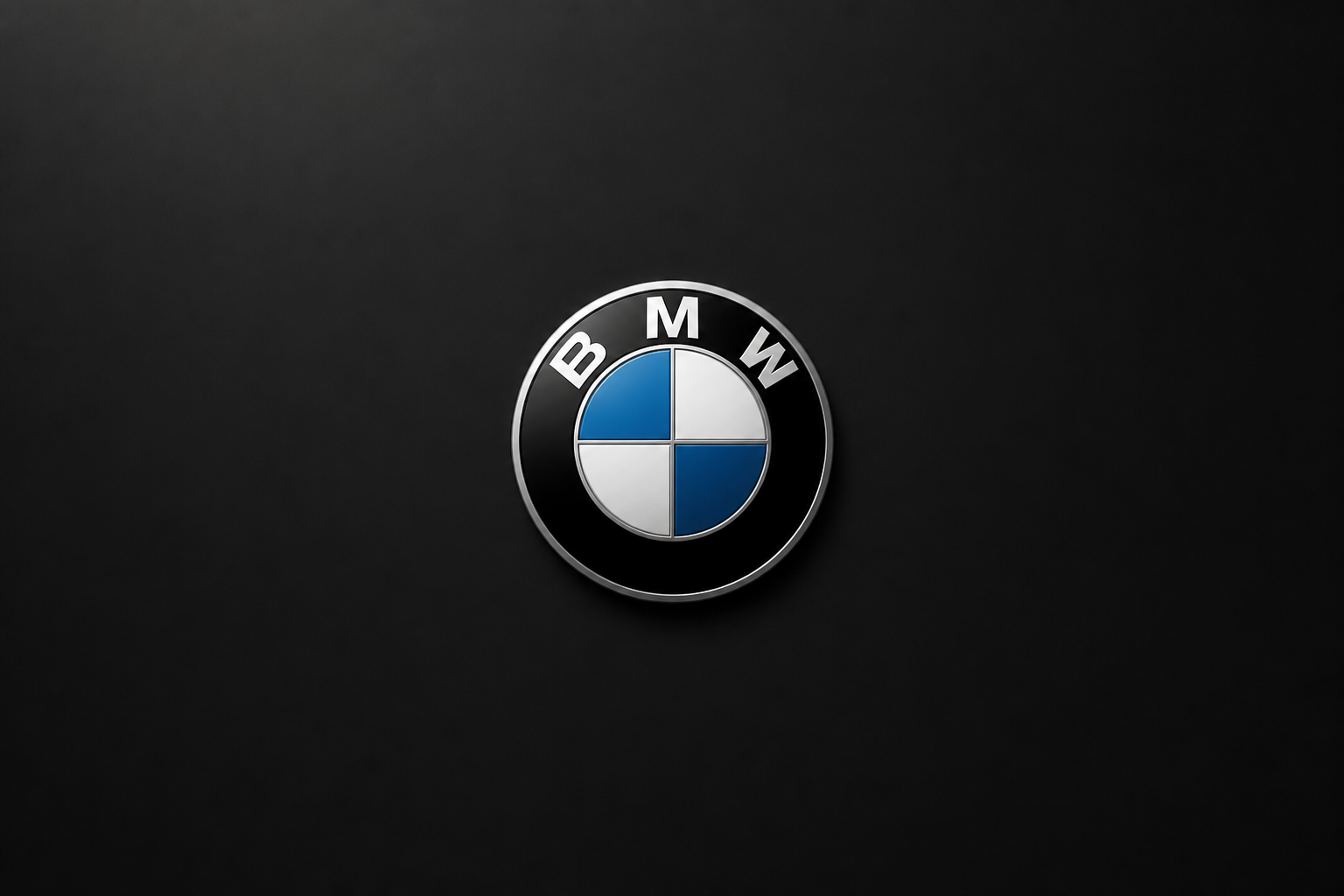
The round BMW emblem first appeared in 1917. Its blue and white sections use the colors associated with Bavaria, where the company was founded.
There is also a long running belief that the logo represents a spinning airplane propeller.
That story is not completely made up, but it is not how the logo originally began.
BMW explains that the propeller interpretation came later. Advertising from the late 1920s depicted the BMW logo as a rotating propeller, helping create an association that has lasted for decades. The original logo already used the Bavarian blue and white colors before those advertisements appeared.
So the simplest explanation is that the logo's blue and white design reflects BMW's Bavarian roots, while the propeller connection grew out of later advertising and the company's aviation history.
Why Are BMW's Colors Blue and White?
Blue and white are strongly associated with Bavaria.
BMW incorporated those colors into its logo in 1917, tying the new company identity to its home region.
That connection is still easy to spot more than a century later. BMW has updated the appearance of its logo over time, but the blue and white sections remain one of its most recognizable features.
For a global company, BMW has kept a surprisingly visible reminder of where it started.
Where Are BMW Cars Made?
BMW is German, but that does not mean every BMW vehicle is built in Germany.
The company operates manufacturing facilities in multiple countries, and where a particular BMW is assembled depends on the model and market.
BMW also has a major manufacturing presence in the United States. Its U.S. operations have expanded considerably since BMW of North America was established in 1975.
If you are shopping for a particular BMW and want to know where that exact vehicle was built, check its VIN and vehicle information rather than assuming the assembly location based solely on the BMW badge.
What Does BMW M Stand For?
If you have spent any time looking at BMW vehicles, you have probably also seen the letter M.
The M refers to BMW's performance division, BMW M. The division has deep roots in motorsports and is responsible for high-performance vehicles such as the M2, M3, M4, and M5.
You will also see M branding on vehicles that are not full BMW M models.
For example, BMW offers M Performance vehicles and M Sport equipment on various models. That means seeing an M badge somewhere on a BMW does not automatically mean you are looking at a full M car.
When shopping, look at the complete model name rather than the badge alone.
What Do BMW Model Numbers Mean?
BMW model names can look confusing until you understand the basic pattern.
Names such as 330i, 540i, and 760i generally start with a number identifying the model series. The additional numbers and letters help distinguish different versions and powertrains.
Historically, BMW's naming system was more directly connected to engine displacement. BMW explained when introducing the first 5 Series in 1972 that the first number represented the model series while the following numbers referred to engine capacity.
Modern BMW naming is not always that literal.
As powertrains have changed and BMW has introduced electric vehicles, plug-in hybrids, and different performance levels, the numbers no longer consistently tell you the exact engine size.
You may also encounter letters and names such as:
- i for certain gasoline models and BMW's electric vehicle family when used at the beginning of a model name
- xDrive for All Wheel Drive
- sDrive on certain two-wheel drive models
- M for performance-focused models and equipment
- e on certain plug-in hybrid models
If you are comparing BMWs, the full model name matters because two vehicles from the same series can have significantly different powertrains, equipment, and performance.
What Is BMW Known for Today?
BMW has come a long way from building aircraft engines.
Today, the brand covers a wide range of luxury vehicles, including sedans, coupes, convertibles, SUVs, electric vehicles, and high-performance models.
BMW is also part of the larger BMW Group, which includes BMW, MINI, Rolls Royce, and BMW Motorrad.
That means shoppers can encounter BMW products at very different price points and with very different purposes.
A BMW 3 Series sport sedan, X7 SUV, i5 electric sedan, and M performance vehicle may all wear the same roundel, but they are built for very different buyers.
Is BMW a Luxury Car Brand?
Yes. BMW competes primarily in the premium and luxury vehicle market.
Its major competitors include brands such as Mercedes-Benz, Audi, Lexus, Porsche, and other premium automakers depending on the vehicle segment.
That does not mean every BMW is equally expensive or luxurious. The lineup ranges from smaller entry points into the brand to larger luxury vehicles and high-performance models that can become considerably more expensive.
If you are shopping for a BMW, it is worth comparing vehicles by model, equipment, powertrain, and price rather than assuming every vehicle carrying the badge provides the same experience.
Is a BMW Worth Buying?
Knowing what BMW stands for is easy. Deciding whether you should buy one takes a little more research.
BMW offers a broad lineup, so the answer depends on which vehicle you are considering and what matters to you.
Before buying, consider:
- Purchase price
- Model and trim
- Engine or electric powertrain
- Rear wheel drive or all wheel drive
- Fuel economy or electric range
- Passenger and cargo space
- Insurance costs
- Maintenance
- Warranty coverage
- Vehicle history if buying used
Used BMW shoppers should pay particular attention to the individual vehicle's maintenance history and condition.
A lower purchase price can make an older luxury vehicle appealing, but maintenance and repair costs still deserve a place in your budget.
What Should You Check When Buying a Used BMW?
A used BMW can give you access to features and performance at a lower initial price than buying new, but the individual vehicle matters.
Check:
- Mileage
- Maintenance records
- Accident and title history
- Tires
- Brakes
- Warning lights
- Electronics
- Fluid leaks
- Interior condition
- Upcoming scheduled maintenance
Research the particular model year and powertrain too. A BMW model can change considerably between generations, and different engines or configurations within the same model family may have different maintenance needs.
A pre-purchase inspection can give you additional information about the condition of a used BMW before you commit.
How to Shop for a BMW on AutoFinder
Once you know which BMW models fit your needs, comparing actual dealership inventory can help narrow the search.
AutoFinder lets you compare new and used vehicles. Pay attention to the complete model designation when comparing BMWs. A 3 Series listing, for example, does not tell you everything you need to know. Powertrain, drivetrain, equipment, and performance can differ significantly between versions.
For used BMWs, compare maintenance history and condition alongside mileage and price. The cheapest listing is not automatically the strongest value if another vehicle has better service records or needs less immediate maintenance.