Car Basics
What Is Leatherette? Leatherette vs. Leather Explained
OVERVIEW
Leatherette is a synthetic upholstery material designed to look and feel similar to real leather without using traditional animal hide. In cars, it is commonly used on seats, door panels, and other interior surfaces.
You may also see leatherette described as synthetic leather, faux leather, imitation leather, or vegan leather. Automakers sometimes give their versions unique brand names, which can make it less obvious that the material is synthetic.
Leatherette has become increasingly common in both mainstream and luxury vehicles. Modern versions can look surprisingly close to real leather, while typically being easier to clean and requiring less maintenance. The tradeoff is that leatherette may not feel quite as soft or breathable as genuine leather.
If you are comparing cars and wondering whether leatherette seats are good, the answer really depends on what you value most in your interior.
What Is Leatherette Made Of?
Unlike genuine leather, leatherette is made from synthetic materials.
The exact construction varies by manufacturer and product. Many leatherette materials use vinyl or other plastic-based materials to create a surface that resembles leather.
Manufacturers can add texture, grain patterns, stitching, and different finishes to make the material look and feel more like genuine leather.
That is one reason today's leatherette can be difficult to identify just by looking at it. Some versions have come a long way from the shiny vinyl seats you might associate with older vehicles.
Is Leatherette Real Leather?
No. Leatherette is not genuine leather.
That is the biggest distinction to understand when you see the term on a vehicle listing or window sticker.
Genuine automotive leather is made using animal hide, most commonly cowhide. Leatherette uses manufactured materials to imitate its appearance and feel.
That does not necessarily make leatherette a lower quality choice.
Some shoppers actually prefer it because it can be easier to maintain, more resistant to everyday messes, and less expensive than genuine leather.
The better question is whether leatherette or leather works better for how you plan to use the vehicle.
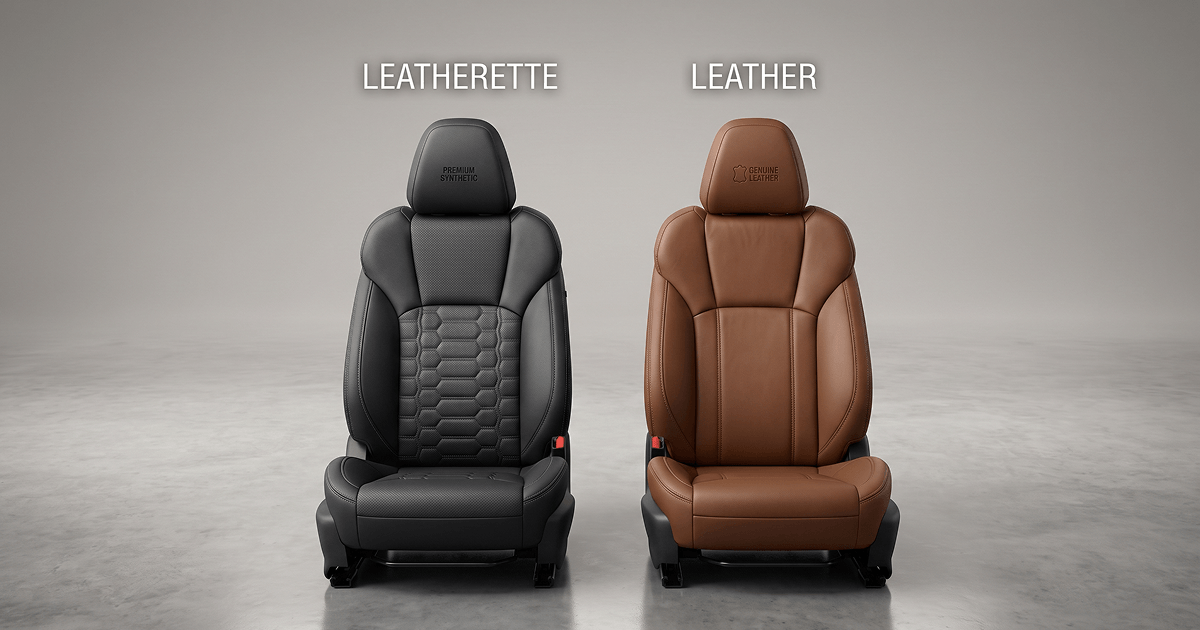
Leatherette vs. Leather: What's the Difference?
At first glance, modern leatherette and genuine leather can look very similar. The differences become clearer when you consider how they feel, age, and handle everyday use.
Quality matters on both sides of the comparison. A high-quality synthetic material can sometimes feel more convincing than inexpensive genuine leather.
That is why it is worth sitting in the actual vehicle instead of making your decision based only on what the specification sheet calls the upholstery.
What Are the Pros and Cons of Leatherette Seats?
Leatherette makes sense for plenty of shoppers, but it has a few drawbacks worth considering.
Leatherette's biggest practical advantage may simply be that it is easy to live with.
If you regularly have kids, pets, drinks, food, or muddy clothes in the car, being able to wipe the seats clean without worrying as much about staining can be useful. Because leatherette is generally less porous than real leather, spills tend to be easier to clean up.
Is Leatherette Better Than Leather?
Neither material is automatically better.
Leather may be the more appealing choice if you value the feel, smell, and appearance of genuine material. High quality leather can feel softer and more supple than leatherette.
Leatherette may make more sense if you want something that looks upscale without requiring as much care.
Think about how you actually use your vehicle.
If you have young children and regularly find mysterious substances in the back seat, easy cleanup may rank pretty high on your list. If you are buying a luxury vehicle and care about the feel of the interior materials, genuine leather may be worth paying more for.
There is no reason to choose leather simply because it is traditionally considered the more premium material.
Is Leatherette Better Than Cloth?
This comparison is a little different.
Cloth seats are generally breathable and can be comfortable in hot and cold weather. Leatherette gives you more of the smooth, upscale appearance associated with leather and can be easier to wipe clean.
Leatherette may be preferable if you want:
- Easier cleanup
- A leather like appearance
- Less concern about liquid spills
- A more upscale looking cabin
Cloth may be preferable if you want:
- Better breathability
- Less heat buildup in summer
- A softer fabric surface
- A simpler interior material
Cars.com notes that cloth tends to provide more air circulation than leather or synthetic leather, which can be useful in hot weather.
If you live somewhere with very hot summers, that difference is worth experiencing yourself during a test drive.
Does Leatherette Get Hot?
It can.
One of the most common drawbacks of leatherette is that it does not breathe as well as genuine leather or cloth. That can make the seats feel hotter and stickier when the cabin has been sitting in the sun.
Interior color also matters. A dark interior sitting in direct sunlight is going to absorb heat regardless of whether the seats are leather, leatherette, or another material.
Ventilated seats can make leatherette much more comfortable in warmer climates.
If you are shopping for a vehicle with leatherette and live somewhere that gets particularly hot, check whether seat ventilation is available on the trim you are considering.
Is Leatherette Waterproof?
It is better to think of leatherette as water-resistant rather than assuming every version is completely waterproof.
Its nonporous surface generally makes liquids easier to wipe away than they would be on cloth or genuine leather.
That can make a noticeable difference in everyday ownership.
Coffee spills, muddy clothes, wet swimsuits, and the occasional overturned water bottle are generally less intimidating when the upholstery can simply be wiped down.
Keep in mind that liquid can still get into seams, perforations, stitching, or other areas of the seat. Clean spills rather than letting them sit just because the upholstery is synthetic.
Is Leatherette Good for Kids?
Leatherette can be a very practical choice for families.
The biggest advantage is cleanup.
Cloth can absorb spills quickly, while leatherette generally gives you more time to wipe them away. Cars.com has also noted that leather or vinyl surfaces can be easier to clean than conventional cloth upholstery.
Anyone who has discovered a forgotten snack mashed into the back seat can probably appreciate the appeal.
You should still protect the upholstery where appropriate, particularly around child seats, and follow the vehicle and child seat manufacturers' instructions.
But for normal family messes, leatherette can be one of the easier interior materials to maintain.
Is Leatherette Good for Dogs?
It can be, particularly because hair, dirt, and many messes are easier to clean from a smooth surface than from cloth.
Leatherette can also offer better scratch resistance than genuine leather in some cases.
That does not make it scratch-proof.
A dog's nails can still damage upholstery, especially over years of climbing in and out of the vehicle. A seat cover is worth considering if your dog rides in the car regularly.
The advantage is that fur generally does not work its way into leatherette the way it can with some cloth upholstery.
Does Leatherette Crack or Peel?
Leatherette can wear, crack, or peel over time, but there is no universal lifespan for the material.
Quality varies significantly. How the vehicle is used and cared for also matters.
Sun exposure, temperature, friction, cleaning products, age, and general wear can all affect upholstery. The driver's seat tends to receive the most abuse because someone slides across the seat every time the vehicle is entered or exited.
When shopping for a used car with leatherette, look closely at:
- Driver seat bolsters
- Seat cushions
- Stitching
- Cracks
- Peeling
- Discoloration
- Areas that feel unusually stiff
- Previous repairs
Do not assume synthetic upholstery will look new forever simply because it requires less maintenance than leather.
How Do You Clean Leatherette Seats?
One of leatherette's biggest advantages is that routine cleaning is usually straightforward.
For normal maintenance, start by removing loose dirt and debris. Then clean the surface using products and methods recommended by the vehicle manufacturer.
Avoid assuming that a cleaner designed for genuine leather is automatically appropriate for leatherette.
They are different materials and can have different care requirements.
You should also avoid harsh chemicals unless the manufacturer specifically says they are safe for the upholstery. The goal is to remove dirt without damaging the surface coating or finish.
Your owner's manual is a good place to check for vehicle specific cleaning recommendations.
Does Leatherette Need Conditioner?
Not necessarily.
Genuine leather may need conditioning to help maintain its softness and prevent drying or cracking. Leatherette does not have the same natural properties because it is a manufactured material.
That means traditional leather conditioner may not provide the same benefit and may not be recommended at all.
Follow the manufacturer's care instructions for the specific upholstery in your vehicle.
This is another reason leatherette can appeal to shoppers who want a lower maintenance interior.
Why Do Luxury Cars Use Leatherette?
It might sound strange that an expensive luxury car would come with synthetic seats, but it is actually fairly common.
Some premium brands use their own branded synthetic materials, particularly on lower trims. Cars.com notes that entry level luxury vehicles commonly use leatherette as standard equipment while offering genuine leather as an upgrade.
Modern leatherette can look and feel convincing while offering durability and easier maintenance.
It can also allow manufacturers to offer a premium looking interior without requiring genuine leather on every vehicle.
For shoppers, the important thing is knowing what you are getting. Do not assume an expensive vehicle automatically has genuine leather seats.
What Are Some Other Names for Leatherette?
Leatherette goes by quite a few names.
You may see terms such as:
- Synthetic leather
- Faux leather
- Imitation leather
- Vegan leather
- Artificial leather
- Pleather
Automakers also use proprietary names for their synthetic upholstery.
This is where vehicle shopping can get confusing. A material may have a premium sounding brand name without making it immediately obvious whether it is genuine leather.
If the type of upholstery matters to you, check the manufacturer's specifications for the exact trim rather than relying on how the material looks in photos.
Is Vegan Leather the Same as Leatherette?
In automotive use, vegan leather generally refers to a synthetic alternative to traditional animal leather and may fall into the same broad category as leatherette.
The exact materials can vary, though.
Not every synthetic upholstery product uses the same construction, and manufacturers continue to develop different materials designed to provide a leather-like appearance and feel.
Rather than assuming every product labeled vegan leather is identical, look at what the manufacturer says the material is made from and how it recommends caring for it.
How Can You Tell if Car Seats Are Real Leather?
It is not always easy by touch alone.
Modern synthetic materials can be surprisingly convincing. Cars.com editors have noted that some high quality leatherette materials can closely resemble genuine leather.
The easiest approach is to check the vehicle's specifications.
Look at:
- Original window sticker
- Manufacturer specifications
- Vehicle brochure
- Trim level details
- Upholstery description
Also pay attention to phrases such as “leather trimmed.”
Leather trimmed does not necessarily mean every part of the seat is covered in genuine leather. Kelley Blue Book notes that leather trimmed seats may use leather on certain portions while other areas use another material.
If genuine leather matters to you, confirm exactly what the manufacturer means.
Should You Choose Leatherette Seats?
Leatherette is worth considering if you like the appearance of leather but care more about easy maintenance and everyday practicality than having genuine animal hide.
It can be especially appealing for:
- Families with children
- Pet owners
- Commuters
- Shoppers who want easier cleanup
- Buyers who prefer non-animal upholstery
- Shoppers trying to avoid the cost of a leather upgrade
If you live somewhere with very hot summers, pay closer attention to breathability and whether ventilated seats are available.
And if you are buying a used vehicle, inspect the condition rather than assuming leatherette automatically wears better than every other material.
How to Compare Car Interiors on AutoFinder
Seat material can seem like a small detail when you are comparing vehicles, but you interact with it every time you get behind the wheel.
When browsing new and used dealership inventory on AutoFinder, look closely at the trim and equipment of each vehicle rather than assuming every version of the same model has the same upholstery.
One trim may come with cloth, another with leatherette, and a higher trim may offer genuine leather.
Photos can give you an idea of how the interior looks, but the specification and equipment details tell you what material you are actually getting.
If upholstery matters to you, confirm the seat material before deciding whether one listing offers more value than another.
Final Thoughts
Leatherette is a synthetic upholstery material designed to provide the appearance and feel of genuine leather without using traditional animal hide.
For many car shoppers, that is not much of a compromise.
Modern leatherette can look upscale, is generally easy to clean, and often requires less maintenance than genuine leather. It can also cost less, which is why you will find it in everything from affordable cars to luxury vehicles.
Its biggest drawback is comfort in hot weather. Leatherette does not breathe as well as cloth or genuine leather, so it can become warm and sticky when temperatures rise.
If you are deciding between leatherette, cloth, and leather, there is no universally best choice. Think about your climate, how you use your vehicle, how much maintenance you want to deal with, and how the material actually feels when you sit in the car.
Sometimes the seat you are happiest wiping down after a spilled coffee is the better luxury.
Want More Car Buying Advice?
Add AutoFinder as a preferred source on Google to help you discover more of our automotive guides and research.