Car Basics
What Does GTO Stand For? Meaning and History Explained
OVERVIEW
GTO stands for Gran Turismo Omologato, an Italian phrase commonly translated as Grand Touring Homologated. The name originally referred to a grand touring car approved, or homologated, to compete under specific racing rules.
For many American car shoppers, though, GTO means one thing: Pontiac.
The Pontiac GTO arrived for 1964 and became one of the defining cars of the American muscle car era. Pontiac borrowed the GTO name from European motorsports, where Ferrari had already made those 3 letters famous with the Ferrari 250 GTO. Unlike the Ferrari, however, Pontiac's GTO was not homologated for international racing. Pontiac used the name because it gave the new performance car exactly the kind of racing-inspired identity the company wanted.
That makes GTO an interesting name because it connects two very different automotive icons: an Italian racing legend and an American muscle car.
What Does GTO Mean?
GTO stands for Gran Turismo Omologato.
Breaking the Italian name down helps explain what it means:
- Gran Turismo refers to grand touring
- Omologato means homologated or approved
In motorsports, homologation is the process of approving a vehicle to compete within a particular racing category or set of regulations.
Ferrari confirms that the GTO designation was tied to FIA homologation requirements for Grand Touring competition.
In simple terms, GTO originally described a grand touring car approved for competition.
The meaning became a little looser when Pontiac adopted the name.
Where Did the GTO Name Come From?
The GTO name was already famous before Pontiac put it on an American muscle car.
Ferrari introduced the 250 GTO in 1962. It was developed for Grand Touring competition, and the O in its name referred to its homologated status. Ferrari describes the 250 GTO as a true racing car that could also be driven on the road.
Then Pontiac came along.
When Pontiac developed its performance package for the 1964 Tempest Le Mans, it chose the GTO name. The letters were the same, but Pontiac's interpretation was much more about image than meeting the same type of racing homologation requirements as Ferrari.
It was a bold choice, especially considering how highly regarded the Ferrari 250 GTO already was.
It also worked.
What Does Pontiac GTO Stand For?
The Pontiac GTO name stands for the same phrase: Gran Turismo Omologato.
There is an important catch, though.
The Pontiac was not actually homologated for FIA racing in the way the Ferrari name suggested. Pontiac borrowed the terminology because it communicated performance and gave the car a connection to European racing culture.
That distinction did not stop the name from becoming legendary in its own right.
Today, mention GTO to a classic American car enthusiast and there is a good chance the Pontiac comes to mind before the Ferrari.
What Is Homologation?
Homologation sounds complicated, but the basic idea is straightforward.
Racing organizations establish rules that determine which vehicles can compete in a particular category. Homologation is the process of confirming that a vehicle meets those requirements.
Historically, certain racing categories required manufacturers to produce road-going versions of their competition vehicles or meet other production requirements.
That is where the O in GTO comes from.
Ferrari's use of GTO had a direct connection to motorsports. The 250 GTO was developed around FIA requirements for Grand Touring competition.
Pontiac's use of the name was different. Its GTO was designed as a high-performance road car, not as an FIA homologation special.
Is GTO Italian?
Yes. Gran Turismo Omologato is Italian.
That may seem a little unusual considering one of the most famous GTOs ever made came from Pontiac, an American automaker.
But Pontiac intentionally borrowed the Italian terminology.
The name gave its new performance car a more exotic identity at a time when European sports cars carried considerable prestige.
It was a clever bit of branding. Pontiac took a name associated with an exclusive Ferrari race car and attached it to a relatively affordable American performance car.
The result ended up creating an entirely different meaning for GTO in American car culture.
What Is the Pontiac GTO?
The Pontiac GTO was a performance car introduced for the 1964 model year.
Initially, it was not technically its own standalone Pontiac model. The GTO began as an option package for the Pontiac Tempest Le Mans.
The formula was wonderfully simple.
Pontiac put a large 389 cubic inch V8 into its midsize platform and paired it with performance-focused equipment. The result delivered the kind of acceleration young buyers wanted without requiring them to buy a larger and more expensive full-size performance car.
The original GTO package cost $295.90. Pontiac sold 32,450 GTOs during the first year, far exceeding early expectations.
That success helped prove there was a major market for affordable American performance cars.
Was the Pontiac GTO the First Muscle Car?
You will frequently hear the 1964 Pontiac GTO described as the first muscle car.
That claim needs a little context.
Putting a large, powerful engine into a smaller car was not a completely new idea in 1964. Other American manufacturers had produced fast cars using similar thinking before the GTO arrived.
What Pontiac did particularly well was turn the formula into a clearly marketed product that captured the attention of younger performance buyers.
The GTO combined a midsize body, a large V8, an attainable price, aggressive marketing, and an identity built almost entirely around performance. Its commercial success helped establish the formula that became closely associated with the muscle car era.
So rather than getting too hung up on whether it was literally the first muscle car ever built, it is more useful to think of the GTO as one of the cars that defined what the American muscle car would become.
Why Was the Original Pontiac GTO So Important?
The original GTO arrived at exactly the right time.
Pontiac had spent years building a stronger performance image, and younger buyers were becoming an increasingly important part of the car market.
The GTO gave them something exciting without requiring exotic car money.
The basic idea was easy to understand: take a relatively manageable midsize car and give it serious V8 power.
That formula soon spread throughout Detroit.
Ford, Chevrolet, Plymouth, Dodge, Oldsmobile, Buick, and others would all become major players in the muscle car era.
The GTO was not responsible for every performance car that followed, but its early success showed manufacturers just how much demand existed for this type of vehicle.
What Engine Did the Original Pontiac GTO Have?
The 1964 Pontiac GTO came standard with a 389 cubic inch V8.
The standard version produced a factory-rated 325 horsepower. Buyers could also choose the famous Tri Power setup with 3 2-barrel carburetors, which increased factory-rated output to 348 horsepower.
Those numbers were substantial for an affordable midsize car in 1964.
Buyers could also pair the engine with manual transmission options, helping give the GTO the personality enthusiasts were looking for.
It was not simply the engine that made the car successful, though. Pontiac wrapped the performance in distinctive styling and marketed the GTO as something exciting and youthful.
The badge became part of the appeal.
What Is the Pontiac GTO Judge?
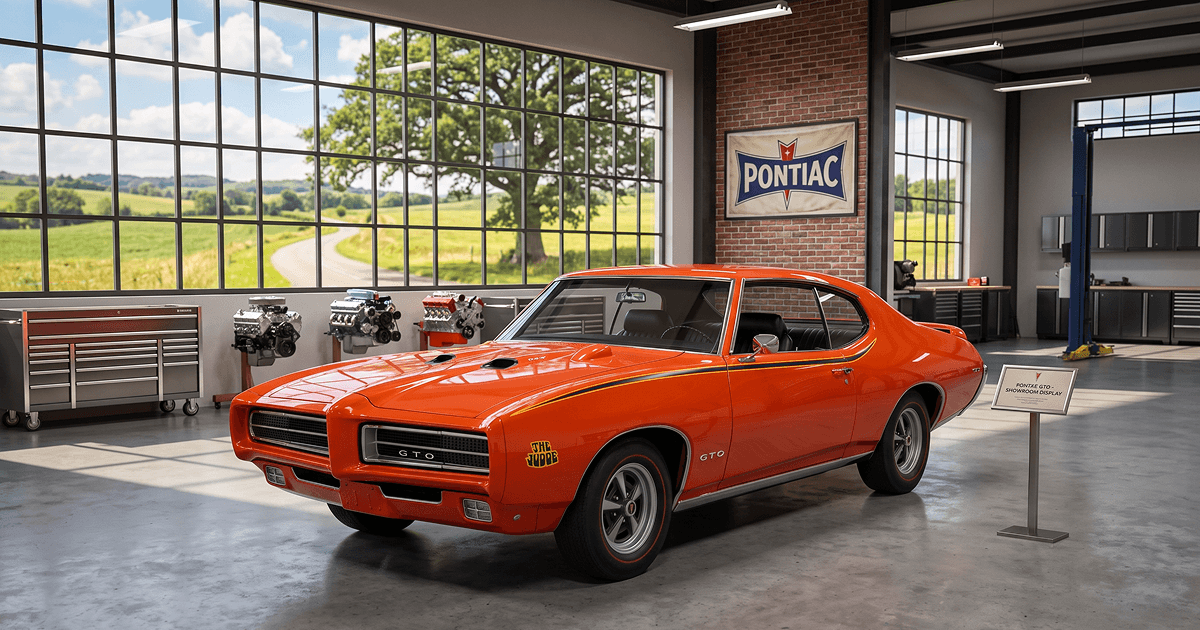
The Judge is one of the most recognizable versions of the classic Pontiac GTO.
Introduced for 1969, the GTO Judge added distinctive styling and performance equipment to the GTO formula.
Even the name had some personality.
"The Judge" was inspired by a popular comedy catchphrase of the era, and Pontiac leaned heavily into the name in its advertising.
Today, original GTO Judge models are among the versions that classic Pontiac enthusiasts tend to pay particularly close attention to.
If you are shopping for one, originality, documentation, engine configuration, condition, and vehicle history can all have a major effect on value.
How Long Did Pontiac Make the GTO?
The original Pontiac GTO era lasted from 1964 through 1974.
The car changed considerably during those years. It evolved from an option package into its own model and went through multiple styling and performance changes as the muscle car market itself changed.
That was not quite the end of the story.
Pontiac revived the GTO name for the 2004 model year. The modern GTO was based on the Australian Holden Monaro and used GM V8 power. It remained available through 2006.
The revival was short-lived, but it gave the GTO name one more appearance before Pontiac itself was discontinued several years later.
Pontiac GTO vs. Ferrari GTO: Are They Related?
Not mechanically.
The Pontiac GTO and Ferrari GTO come from completely different manufacturers, countries, and approaches to performance.
Ferrari's GTO designation had a direct relationship with racing homologation. Pontiac borrowed the name and the performance image that came with it.
The cars themselves could hardly be more different.
The Ferrari 250 GTO was a rare competition focused machine. The Pontiac GTO was designed to bring serious V8 performance to a much broader group of American buyers.
Both became automotive icons, just for very different reasons.
What Does Ferrari GTO Stand For?
Ferrari also uses GTO to mean Gran Turismo Omologata, with the Italian ending sometimes written as Omologato when discussing the acronym more generally.
Ferrari states that the 250 GTO designation reflected its development around FIA homologation standards for Grand Touring competition.
Ferrari later brought the GTO designation back with the 288 GTO in the 1980s and the 599 GTO decades later.
Because Ferrari uses the designation sparingly, a GTO badge carries considerable significance within the brand.
Why Is the Ferrari 250 GTO So Famous?
The Ferrari 250 GTO is one of the most celebrated cars ever built.
It combined competition success, rarity, Ferrari's V12 performance, and a design that has become instantly recognizable.
Only a small number were produced. Ferrari notes that 36 examples were built with the 3.0 liter engine, along with another 3 using a 4.0 liter engine.
That rarity has helped turn surviving examples into some of the most valuable collector cars in the world.
It also explains why Pontiac borrowing the GTO name was such an audacious move. Pontiac was taking a designation associated with one of Europe's most serious competition cars and putting it on an American performance package.
Is the Pontiac GTO Rare?
That depends heavily on the model year and configuration.
Pontiac built many more GTOs than Ferrari ever built GTO models, so simply owning a Pontiac GTO does not automatically mean you have an exceptionally rare vehicle.
Certain combinations can be much harder to find than others, though.
Factors that can affect rarity and collector interest include:
- Model year
- Body style
- Engine
- Transmission
- Factory options
- Special editions
- Original equipment
- Color combination
- Production numbers
A GTO Judge, convertible, unusual engine configuration, or particularly well documented original car may attract considerably more collector interest than a more common version.
What Should You Look for When Buying a Classic Pontiac GTO?
With a classic GTO, confirming what you are actually buying is especially important.
The earliest 1964 GTO was an option package on the Le Mans, which means identification can require more than simply looking at the VIN. Documentation and vehicle-specific records can help establish whether a car was originally built as a GTO.
When considering a classic GTO, check:
- VIN and vehicle documentation
- Original equipment
- Engine identification
- Transmission
- Rust
- Previous body repairs
- Accident history when available
- Restoration quality
- Modifications
- Maintenance records
Classic cars often have decades of repairs, restoration work, and modifications behind them.
A beautifully restored GTO can be an excellent car, but you still want to know what is original, what has been replaced, and whether the vehicle is being represented accurately.
What Should You Know About GTO Clones?
Because genuine Pontiac GTOs are desirable, you may encounter cars that have been modified to look like a GTO.
A Tempest or Le Mans can potentially be fitted with GTO badges, styling components, engines, and other equipment.
There is nothing inherently wrong with owning a tribute or clone if you know what you are buying and the price reflects what the car actually is.
The problem comes when a vehicle is represented as an original GTO when it is not.
If authenticity matters to you, documentation becomes particularly important. Do not rely on badges or appearance alone.
Is a Pontiac GTO Worth Buying Today?
For someone interested in classic American performance cars, the Pontiac GTO deserves a place on the shopping list.
The right one depends on what you want.
Some shoppers want an early GTO that represents the beginning of the muscle car era. Others prefer later styling, a GTO Judge, or even the modern 2004 through 2006 version.
Before buying, consider:
- Purchase price
- Authenticity
- Condition
- Restoration quality
- Parts availability
- Insurance
- Storage
- Maintenance
- How often you plan to drive it
A collector focused buyer may place a premium on originality and documentation. Someone who simply wants a classic muscle car to enjoy on weekends may be perfectly happy with a thoughtfully modified example.
Knowing your goal makes it easier to decide which GTO is worth paying for.
How to Shop for a Pontiac GTO on AutoFinder
When comparing Pontiac GTO listings on AutoFinder, look beyond model year, mileage, photos, and asking price.
Classic vehicles require a little more context.
Pay attention to whether the vehicle is represented as original, restored, modified, or a tribute. Look for documentation supporting major claims about the engine, equipment, and vehicle history.
For the modern 2004 through 2006 GTO, condition, mileage, modifications, maintenance history, and accident history become particularly important.
The lowest priced GTO is not necessarily the best value. A well-documented car in better condition may be worth paying more for, especially when you are dealing with a vehicle that could be several decades old.
Final Thoughts
GTO stands for Gran Turismo Omologato, an Italian phrase that essentially means Grand Touring Homologated.
The name started with a very specific motorsports meaning. Ferrari made it famous with the 250 GTO, a car developed around Grand Touring racing requirements.
Pontiac then gave those same 3 letters an entirely new identity.
The 1964 Pontiac GTO was not an FIA homologation special. It was an American performance car that combined a midsize platform with a powerful V8 and an attention-grabbing name borrowed from European motorsports.
That formula helped shape the muscle car era and turned GTO into one of the most recognizable badges in American automotive history.
So whether you associate GTO with a priceless Ferrari or a tire-smoking Pontiac, the letters trace back to the same Italian phrase. The stories behind them are just very different.