Car Basics
When Were Cars Invented? The History of the Automobile
OVERVIEW
The modern automobile dates back to the late 1800s, but the history of the car started much earlier.
Inventors experimented with self-propelled vehicles for more than a century before gasoline-powered cars became practical. Steam came first, followed by early electric vehicles and eventually gasoline engines.
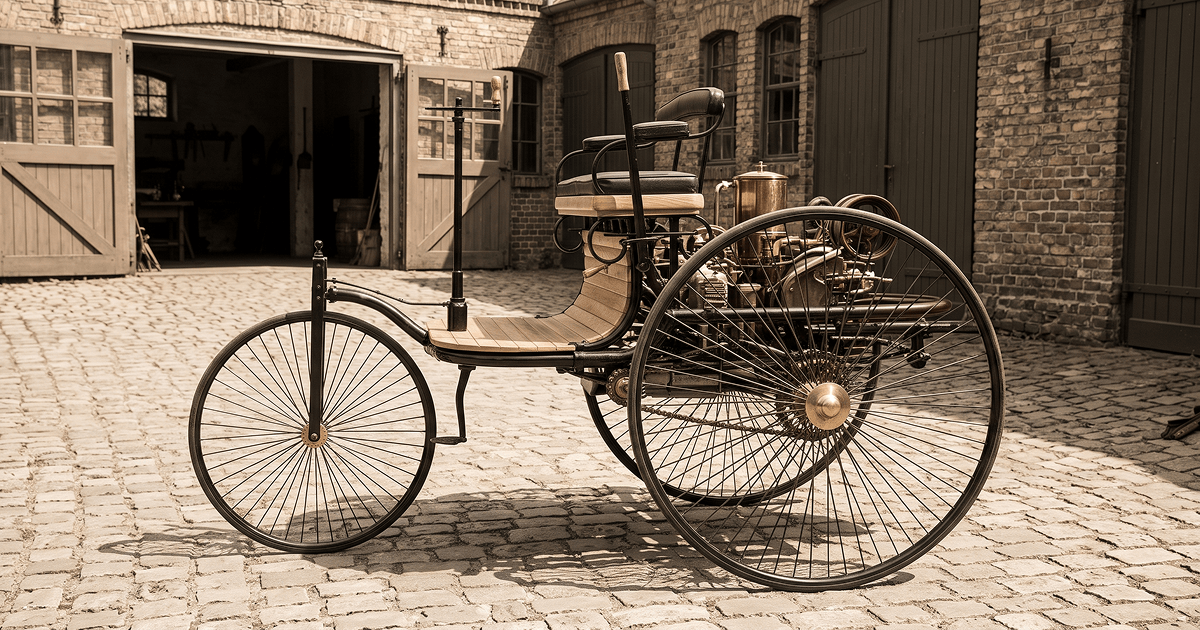
The biggest milestone arrived in 1885 and 1886, when German engineer Karl Benz developed his 3 wheeled Patent Motor Car. Benz completed the vehicle in 1885 and received a patent for it on January 29, 1886. His invention is widely recognized as the first practical automobile powered by an internal combustion engine.
But Benz was only part of the story. Nicolas Joseph Cugnot, Gottlieb Daimler, Wilhelm Maybach, Bertha Benz, Henry Ford, and many others helped turn the automobile from an experiment into everyday transportation.
When Were Cars Invented?
If you are looking for a single year, 1886 is generally considered the birth year of the modern automobile.
Karl Benz applied for a patent for his gasoline-powered vehicle on January 29, 1886. The vehicle itself had been completed the previous year.
The Benz Patent Motor Car looked nothing like a modern car. It had 3 wheels, seating for 2, a steel tube frame, and a single-cylinder 4-stroke gasoline engine producing about 0.75 horsepower.
What made it particularly significant was its design. Rather than simply putting an engine into an existing horse-drawn carriage, Benz developed the vehicle and engine to work together.
That is one reason 1886 has become such an important date in automotive history.
Who Invented the First Car?
Karl Benz is most commonly credited with inventing the first practical gasoline-powered automobile.
There is a little more to the story, though.
The automobile was not created by 1 person working with no previous technology to build on. Earlier inventors had experimented with steam-powered transportation. Others worked with electricity. Engineers were also developing engines, steering systems, brakes, transmissions, and other components.
Benz brought many of those ideas together in a vehicle designed specifically around an internal combustion engine.
So Karl Benz is a good answer to “Who invented the car?” Just remember that the automobile developed through the work of many inventors over a long period.
Were There Cars Before 1886?
Self-propelled road vehicles existed well before the Benz Patent Motor Car.
One of the earliest major examples appeared more than 100 years earlier.
In 1769, French inventor Nicolas Joseph Cugnot built a 3-wheeled steam-powered vehicle. It was developed as a military tractor and could travel at only a few miles per hour.
It was not a car in the modern sense, but it proved something important: a road vehicle could move without being pulled by a horse.
Steam-powered transportation continued developing throughout the 1800s. The machines could be heavy and complicated to operate, however, which encouraged inventors to explore other ways of powering vehicles.
What Powered the Earliest Cars?
Early inventors experimented primarily with 3 sources of power:
- Steam
- Electricity
- Gasoline
There was no obvious winner at first.
Steam technology had a head start because it was already being used for other forms of transportation. Electric vehicles became possible as batteries and electric motors improved. Gasoline-powered vehicles gained momentum as engineers developed smaller and more practical internal combustion engines.
By the end of the 1800s, all 3 technologies were part of the emerging automobile industry.
Gasoline eventually became dominant, but electric cars never completely disappeared from automotive history.
When Was the First 4 Wheel Car Invented?
While Karl Benz was developing his 3-wheeled vehicle, Gottlieb Daimler and Wilhelm Maybach were working on their own engine technology in Germany.
In 1886, Daimler installed an engine developed with Maybach into a 4-wheeled carriage.
The approach differed from Benz's.
Benz designed his automobile specifically around its engine, while Daimler's early vehicle adapted an existing carriage to motor power.
Both helped move automobile development forward, and 4-wheel designs eventually became the standard layout.
Who Was Bertha Benz?
Karl Benz built the Patent Motor Car, but Bertha Benz helped prove that it could actually be useful.
In August 1888, Bertha took an improved Patent Motor Car on a long-distance journey with her sons Eugen and Richard. They traveled from Mannheim to Pforzheim in Germany.
The trip is widely recognized as the first long-distance automobile journey.
It also served as a real-world test.
Traveling beyond short demonstration runs exposed practical issues that needed to be solved and showed that an automobile could potentially become more than an engineering experiment.
That was a major step toward convincing people that motor vehicles could become a practical form of transportation.
When Did People Start Buying Cars?
Inventing a working automobile was only the beginning. Manufacturers also needed to figure out how to build and sell them efficiently.
Benz continued improving his vehicles throughout the late 1800s.
In 1894, the Benz Velo entered production and became one of the earliest automobiles produced in meaningful numbers.
Other manufacturers soon entered the growing automobile business.
Cars were still expensive and unusual, but they were beginning to shift from experimental machines into products people could actually purchase.
The next major transformation would come from producing them at a much larger scale.
Did Henry Ford Invent the Car?
No. Henry Ford did not invent the automobile.
Cars existed for decades before Ford introduced the Model T.
Ford's contribution was different. He helped transform how automobiles were manufactured, making it possible to produce vehicles more efficiently and at a much larger scale.
The Ford Model T arrived in 1908, more than 20 years after the Benz Patent Motor Car.
As Ford improved production methods, the Model T became more affordable to a broader group of Americans.
Karl Benz is closely associated with the invention of the modern automobile.
Henry Ford is closely associated with making automobile ownership accessible to many more people.
When Did Cars Become Common in America?
Cars spread rapidly through the United States during the early 20th century.
Mass production helped lower prices, but the vehicle itself was only part of what had to change.
Roads improved. Gas stations appeared. Repair shops expanded. Automakers built dealer networks. Communities began adapting to increasing numbers of vehicles.
As cars became easier to buy and use, they changed where people could live and work.
Travel that once depended on railroads, horses, or walking became possible on an individual's schedule.
By the middle of the 20th century, automobiles had become a major part of everyday American life.
How Did Cars Change Over Time?
The first automobiles were extremely basic compared with today's vehicles.
Early drivers had little protection from weather, and operating a car required considerably more effort and mechanical knowledge.
Over time, almost every part of the automobile improved.
Engines became more powerful and dependable. Electric starters eliminated the need to manually crank an engine. Enclosed cabins protected passengers from weather. Brakes, transmissions, suspension systems, headlights, and tires became more sophisticated.
Comfort changed too.
Heating, radios, automatic transmissions, air conditioning, power steering, and other features gradually became common.
Safety technology followed. Seat belts, airbags, stronger vehicle structures, electronic stability control, cameras, and driver assistance features continued changing what drivers expected from a car.
Features that would have seemed extraordinary to early motorists eventually became normal equipment.
When Were Electric Cars Invented?
Electric cars are much older than many people realize.
Experiments with electric vehicles date back to the 1800s, although identifying a single first electric car is difficult because several inventors worked on electric transportation as battery and motor technology developed.
By the late 19th and early 20th centuries, electric vehicles were competing with steam and gasoline-powered automobiles.
Gasoline ultimately became the dominant power source for most of the 20th century as internal combustion technology improved and fueling infrastructure expanded.
Today, electric vehicles have returned as a major part of the automotive market.
Modern batteries, powerful electric motors, regenerative braking, sophisticated software, and expanding charging infrastructure make today's EVs dramatically different from their early predecessors.
Still, the basic idea goes back almost as far as the automobile itself.
A Quick Timeline of Car History
Here are some of the biggest milestones in the development of the automobile:
1769: Nicolas Joseph Cugnot builds an early steam-powered road vehicle in France.
1885: Karl Benz completes his 3-wheeled gasoline-powered Patent Motor Car.
1886: Benz receives a patent for his automobile. Gottlieb Daimler also develops an early 4-wheeled motor carriage.
1888: Bertha Benz completes the first long-distance automobile journey.
1894: The Benz Velo becomes one of the earliest production automobiles.
1908: Ford introduces the Model T.
Early 1900s: Mass production helps make automobiles accessible to more consumers.
Mid to late 1900s: Cars gain major improvements in performance, comfort, efficiency, and safety.
2000s: Hybrid vehicles become increasingly common.
Today: Electric vehicles, connected technology, advanced safety systems, and driver assistance features continue the evolution of the automobile.
How Different Was the First Car From a Modern Car?
The difference is enormous.
The original Benz Patent Motor Car produced about 0.75 horsepower. It had 3 wheels, seating for 2, and almost none of the equipment drivers now associate with a car.
Modern vehicles can produce hundreds of horsepower while surrounding passengers with technology.
Depending on the vehicle, today's driver may have automatic climate control, airbags, cameras, navigation, smartphone connectivity, automatic emergency braking, adaptive cruise control, and other driver assistance features.
Powertrains have changed too.
Gasoline and diesel engines now share the road with hybrids, plug-in hybrids, and fully electric vehicles.
Yet the basic idea behind the automobile remains familiar.
It gives people the ability to travel independently using a vehicle powered by something other than an animal.
That idea has survived even as nearly everything else about the car has changed.
How AutoFinder Fits Into the History of Car Shopping
Cars are not the only thing that changed. Shopping for one did too.
Early automobile buyers had very few vehicles to choose from. Today's shoppers can compare hundreds of combinations of makes, models, trims, powertrains, features, and prices.
Much of that research now happens before someone ever visits a dealership.
AutoFinder helps shoppers browse new and used dealership inventory and narrow their choices based on what they need.
The technology is almost unrecognizable compared with the automobile Karl Benz introduced in the 1880s.
The reason people use cars is much more familiar: they need the right vehicle to get where they want to go.
Final Thoughts
So, when were cars invented?
If you want a single date, 1886 is the best answer for the birth of the modern automobile. Karl Benz completed his Patent Motor Car in 1885 and received its patent in January 1886.
But cars did not appear overnight.
Steam-powered road vehicles came earlier. Electric vehicles emerged during the 1800s. Daimler and Maybach developed an early 4-wheeled gasoline vehicle. Bertha Benz demonstrated that automobiles could handle longer journeys. Henry Ford later helped bring car ownership to a much larger audience.
Today's cars look almost nothing like those early machines, but they are part of the same story that began more than a century ago.