Buying Guides
When Should I Move From Online Research to Contacting a Dealership?
OVERVIEW
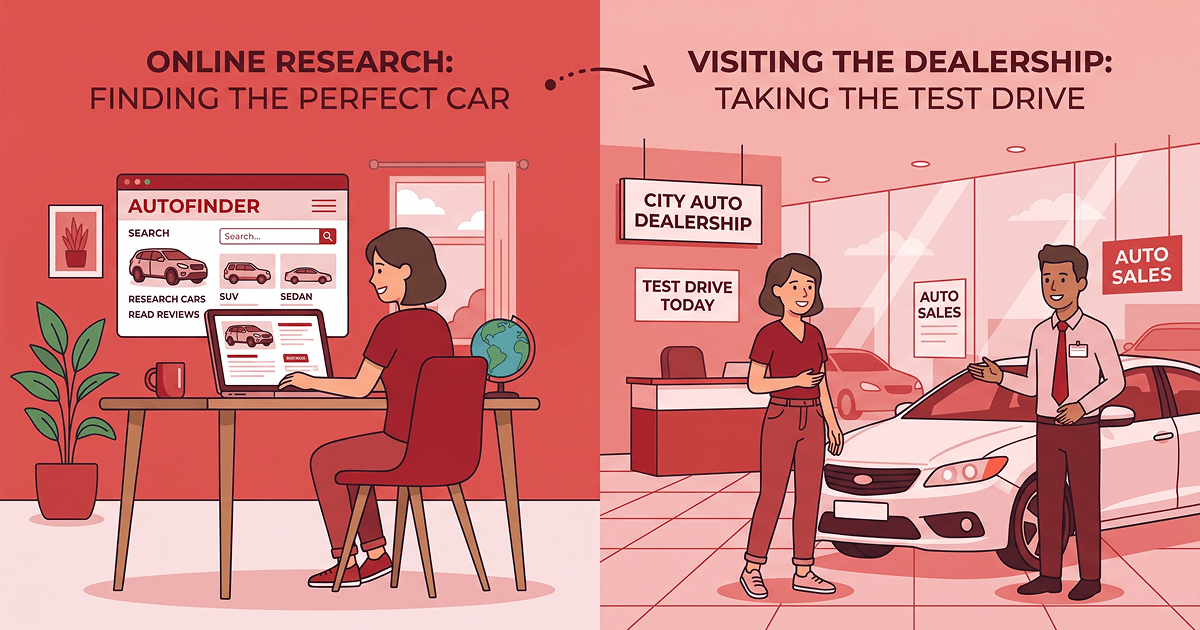
Online research can get you surprisingly far in the car shopping process. You can compare models, narrow down trims, check pricing, explore available inventory, and get a better sense of what fits your budget before talking with anyone.
Eventually, though, more research stops answering the questions that matter most.
Once you have found a vehicle or a short list of vehicles you would realistically consider buying, contacting a dealership is usually the next useful step. The dealer can confirm whether a specific vehicle is available, answer questions about its equipment and condition, explain current offers, discuss financing or leasing options, and help you arrange a test drive.
You do not need to know exactly which car you are going to buy before reaching out. You just need enough information to make the conversation productive.
Quick Answer
It may be time to contact a dealership when:
- You have narrowed your search to a few models or vehicles
- You found a specific vehicle you want to see
- You need to confirm current availability
- You have questions the online listing does not answer
- You want current pricing or offer details
- You are ready to compare financing or leasing options
- You have a trade you want evaluated
- You are ready to schedule a test drive
- You could realistically buy if you find the right vehicle and terms
Online research helps you understand your options. Talking with a dealer helps you turn that research into information about an actual vehicle and purchase.
How Much Research Should I Do Before Contacting a Dealership?
You do not need to become an expert on every vehicle in the segment.
Before reaching out, it helps to understand a few basics:
- The type of vehicle you want
- Your approximate budget
- A few models you are considering
- Features that matter most to you
- Whether you are considering new, used, or both
- Any specific vehicles that caught your attention
That gives you enough context to ask useful questions without spending weeks researching every possible option.
For example, knowing that you want a compact SUV around a certain price with all wheel drive and enough rear seat space for your family is already a productive starting point. You do not necessarily need to decide on the exact trim before talking with a dealer.
The dealer may be able to explain differences between available vehicles that are difficult to understand from specifications alone.
Do I Need to Pick the Exact Car Before Contacting a Dealer?
No. There are 2 reasonable times to reach out.
The first is when you have narrowed your choices but still need help deciding. Maybe you are comparing 2 trims or trying to understand whether a particular feature is worth the price difference.
The second is when you have found a specific vehicle and want to confirm details before visiting.
Both are useful conversations.
If you are still comparing models, tell the dealership what matters to you rather than pretending you have already decided. A salesperson who knows that you care most about cargo space, fuel economy, certain technology, or a particular budget can help you identify relevant options.
If you already found a specific listing, provide the VIN or stock number so the dealer knows exactly which vehicle you mean.
When Does Online Research Stop Being Useful?
Online research does not really stop being useful. It simply reaches a point where some questions are better answered with vehicle specific information.
You can research what a model generally costs, for example, but the dealership can tell you about the price and current offers on the vehicle actually sitting in inventory.
You can compare trim specifications online, but seeing the vehicles may help you decide whether the differences matter to you.
You can estimate your trade value, but an actual appraisal considers the condition, mileage, equipment, history, and local market for your vehicle.
Research gives you context for those conversations. The dealership adds information that becomes available once you start talking about a real vehicle and transaction.
Should I Contact a Dealership as Soon as I Find a Car I Like?
If it is a vehicle you would realistically consider buying, reaching out can make sense.
You do not have to wait until you are ready to sign paperwork.
A simple first conversation can answer whether the vehicle is still available, whether it has the equipment you want, and when you could see it.
This is particularly helpful with used cars because every vehicle is different. Mileage, condition, equipment, history, and availability are tied to that individual car.
For new vehicles, contacting the dealer can help you understand which trims, colors, and configurations are currently available or expected.
If you are not sure how to start that first conversation, our guide on what to say when contacting a car dealer gives you a simple framework.
What Questions Should I Answer Before Contacting a Dealership?
You do not need answers to everything, but think through what matters most to you.
Start with:
What is my comfortable budget?
Consider more than the advertised vehicle price. Taxes, registration, fees, financing, insurance, and your trade or down payment can all affect what the purchase looks like.
Which features actually matter to me?
Separate must-haves from nice-to-haves. That makes it easier to compare trims and available inventory.
How will I use the vehicle?
Think about commuting, passengers, cargo, weather, mileage, towing, parking, and anything else that shapes your everyday driving.
Am I planning to finance, lease, or pay cash?
You do not need a final answer yet. Knowing which options you are considering helps the dealer provide more relevant information.
Do I have a trade?
If so, gather basic information about its mileage, condition, equipment, and loan balance if applicable.
You can also use our questions to ask before contacting a car dealer as a quick check before reaching out.
What Can a Dealership Tell Me That I Cannot Find Online?
This is where contacting a dealership becomes particularly valuable.
A dealer can help with questions tied to current inventory and the specific transaction, including:
- Whether a particular vehicle is currently available
- When an incoming vehicle is expected
- Vehicle-specific equipment
- Used vehicle condition
- Current pricing information
- Available manufacturer incentives
- Financing and leasing options
- Trade appraisal
- Test drive availability
- Purchase process and timing
Some of this information changes frequently, which makes a direct conversation more useful than relying on an article or listing you found earlier.
The salesperson can also answer follow-up questions as your priorities become clearer.
Should I Contact More Than 1 Dealership?
You can, especially when multiple dealerships have vehicles that fit what you are looking for.
The goal does not have to be sending the same generic message to every dealership within 100 miles. Start with the dealers that have vehicles you would genuinely consider.
Comparing a few real options can help you understand availability, vehicle configurations, pricing, and the overall purchase.
A dealer that has the right vehicle and provides clear answers may give you a good reason to move forward with that particular option.
Should I Call or Message the Dealership?
Use whichever method makes the conversation easiest for you.
Calling can be useful when you have several questions or want an answer quickly. Messaging can be convenient when you want to send a VIN, stock number, or specific list of questions and keep the information together.
There is nothing wrong with starting with a message and moving to a phone call later.
The important part is being specific enough for the dealership to help.
Instead of:
“What's your best price?”
Try:
“I'm interested in the 2026 Hyundai Tucson SEL, stock number 12345. Is it still available? I would also like to confirm the current price and whether I can test drive it Saturday morning.”
That tells the dealer what you want and gives them something concrete to respond to.
For a closer look at the differences, see should you call or message a dealership?.
Should I Contact a Dealer If I Am Still Comparing Models?
Yes, if the models you are considering are vehicles you could realistically buy.
Suppose you are comparing 2 SUVs and one dealership has both available. Seeing them back to back may answer questions that specifications cannot.
You might discover that one seat is noticeably more comfortable, one cargo area works better for your needs, or a feature you thought was essential does not matter much once you try it.
Tell the salesperson that you are comparing rather than presenting yourself as committed to one vehicle. That gives them an opportunity to help you understand the differences.
A productive dealership visit can be part of your research rather than something that only happens after the research is finished.
Should I Contact the Dealer Before Visiting?
If you are going to the dealership for a specific vehicle, yes.
Inventory can move quickly, and online listings may not reflect a change at exactly the same moment it happens.
Use the VIN or stock number and ask the dealer to confirm that the vehicle is currently available and physically at the location.
You can also arrange a test drive and let the dealership know when you expect to arrive.
Our guide on how to confirm a car is available before visiting a dealership has a full checklist if you are traveling for a particular vehicle.
A quick confirmation benefits everyone. You have a better idea of what will be waiting when you arrive, and the dealership knows which vehicle you want to see.
What Should I Ask About Price Before Visiting?
You do not have to complete the entire price discussion before setting foot in the dealership.
It is still reasonable to confirm the current advertised price and ask whether there are conditions associated with an offer that matter to your situation.
Manufacturer incentives, financing programs, eligibility requirements, and other offers can affect the numbers.
If you receive a quote, look at what is included rather than focusing only on one figure.
For shoppers trying to understand the complete purchase price, an out the door price calculator can help estimate how taxes and applicable fees may affect the total.
The dealer can then help you work through the actual numbers for the vehicle and your purchase.
What If I Want the Lowest Monthly Payment?
Tell the dealer that monthly budget matters to you, but keep the rest of the transaction visible.
There may be several ways to structure a purchase depending on the vehicle, your credit, down payment, trade, available rates, incentives, and loan term.
If you are considering a new vehicle, leasing may also be an option.
Rather than asking only, “Can you get me to $500 a month?” explain that you want to understand the options that could fit around that budget.
That gives you and the dealer more room to compare the vehicle price, cash due, term, rate, and payment together.
When Should I Bring Up My Trade?
You can mention that you have a trade during the initial conversation, especially if you would like the dealership to appraise it when you visit.
Online valuation tools can give you a starting point, but the dealer needs to evaluate the actual vehicle before making a vehicle-specific appraisal.
Mileage, condition, equipment, history, and current market demand can all affect the offer.
Giving the dealer accurate information about your trade can also make the overall purchase discussion more productive.
Do I Need Financing Arranged Before Contacting a Dealer?
No. It can be useful to research rates and understand your credit before shopping, but you do not need to have financing finalized before contacting a dealership.
Dealerships work with financing sources and may have access to manufacturer financing programs or other options depending on the vehicle and buyer.
If you already have a preapproval, you can still ask what financing is available through the dealership and compare the terms.
Look at the interest rate, loan term, amount financed, monthly payment, and total cost rather than assuming one source will always have the better option.
How Do I Know If I Am Actually Ready for a Test Drive?
You are probably ready once the vehicle has moved from “interesting” to “something I could realistically buy.”
A test drive is not a commitment to purchase.
It is a chance to find out whether the vehicle works for you in ways a specification sheet cannot answer.
Pay attention to seating position, visibility, controls, ride quality, acceleration, braking, noise, technology, and anything else that matters in your everyday driving.
If you are comparing vehicles, try to evaluate them under similar conditions so the differences are easier to notice.
What Happens After I Contact the Dealership?
Usually, the next step depends on what you asked.
The dealership may confirm the vehicle, answer questions, provide additional information, discuss pricing or available offers, or schedule an appointment.
Once you arrive, you can see the vehicle, take a test drive, discuss your trade if you have one, and review purchase or lease options if you decide you are interested.
Our guide to what happens after you contact a dealer walks through that process in more detail.
You remain in control of how quickly you move. Contacting a dealership simply gives you access to the vehicle-specific information you need for the next stage of your research.
What If I Contact a Dealer and Decide I Am Not Ready?
That is okay.
You may learn that the vehicle is outside your budget, does not have a feature you need, or simply is not the right fit once you see it.
The conversation still gave you useful information.
If your needs change, tell the salesperson. They may have another vehicle that fits better, or you can return to your research with a clearer idea of what you want.
Car shopping does not always move in a straight line from research to contact to purchase. Sometimes a dealership conversation sends you back to compare another model, trim, or budget.
That is part of the process.
A Simple Online Research to Dealership Checklist
You are probably ready to make contact when you can answer most of these questions:
- What type of vehicle am I looking for? You have narrowed the field enough to shop actual inventory.
- What is my approximate budget? You have a comfortable range rather than an exact payment you cannot move from.
- Which features matter most? You know what you need and where you have flexibility.
- Have I found real vehicles I would consider? There is at least 1 listing worth asking about.
- What do I still need to know? You have questions that the dealership can help answer.
- Would I test drive the right vehicle? If the answer is yes, there is little reason to keep the entire process online.
- Could I realistically move forward? You do not have to buy today, but the vehicle and timing are realistic for you.
You do not need every detail figured out before reaching out. Once your remaining questions become specific to an actual vehicle, dealership, price, trade, or financing option, contact can move your research forward.
How AutoFinder Helps You Move From Research to Shopping
AutoFinder can help you narrow down vehicles before you contact a dealership.
Research makes, models, trims, pricing, features, and available inventory until you have a clearer idea of what fits your needs. When a particular vehicle catches your attention, the listing gives you the details you need to start a more specific conversation.
From there, the dealer can provide current information about the vehicle, answer questions, help arrange a test drive, discuss available purchase or lease options, and evaluate your trade if you have one.
Online research and dealership expertise are most useful when they work together. One helps you understand the market and narrow your choices. The other helps you evaluate the actual vehicle and transaction in front of you.
Final Thoughts
You do not need to finish researching cars before contacting a dealership.
Once you have narrowed your search to vehicles you would realistically consider and your biggest remaining questions are about availability, price, equipment, condition, financing, a trade, or a test drive, reaching out can be more useful than opening another 10 browser tabs.
Go into the conversation knowing your approximate budget, priorities, and the vehicles that interest you. Then use the dealership as another part of the research process.
The goal is not to arrive knowing everything. It is to arrive informed enough to ask useful questions and work with the dealer to figure out whether the vehicle is right for you.