Car Financing
How Much Should I Spend on a Car Based on My Salary?
OVERVIEW
How Much Should You Spend on a Car Based on Your Income?
Your salary provides a starting point, but the amount you bring home each month is more useful when deciding what to spend.
Take-home pay is the money you receive after taxes and payroll deductions. It's what you actually have available for housing, groceries, transportation, savings, and other expenses.
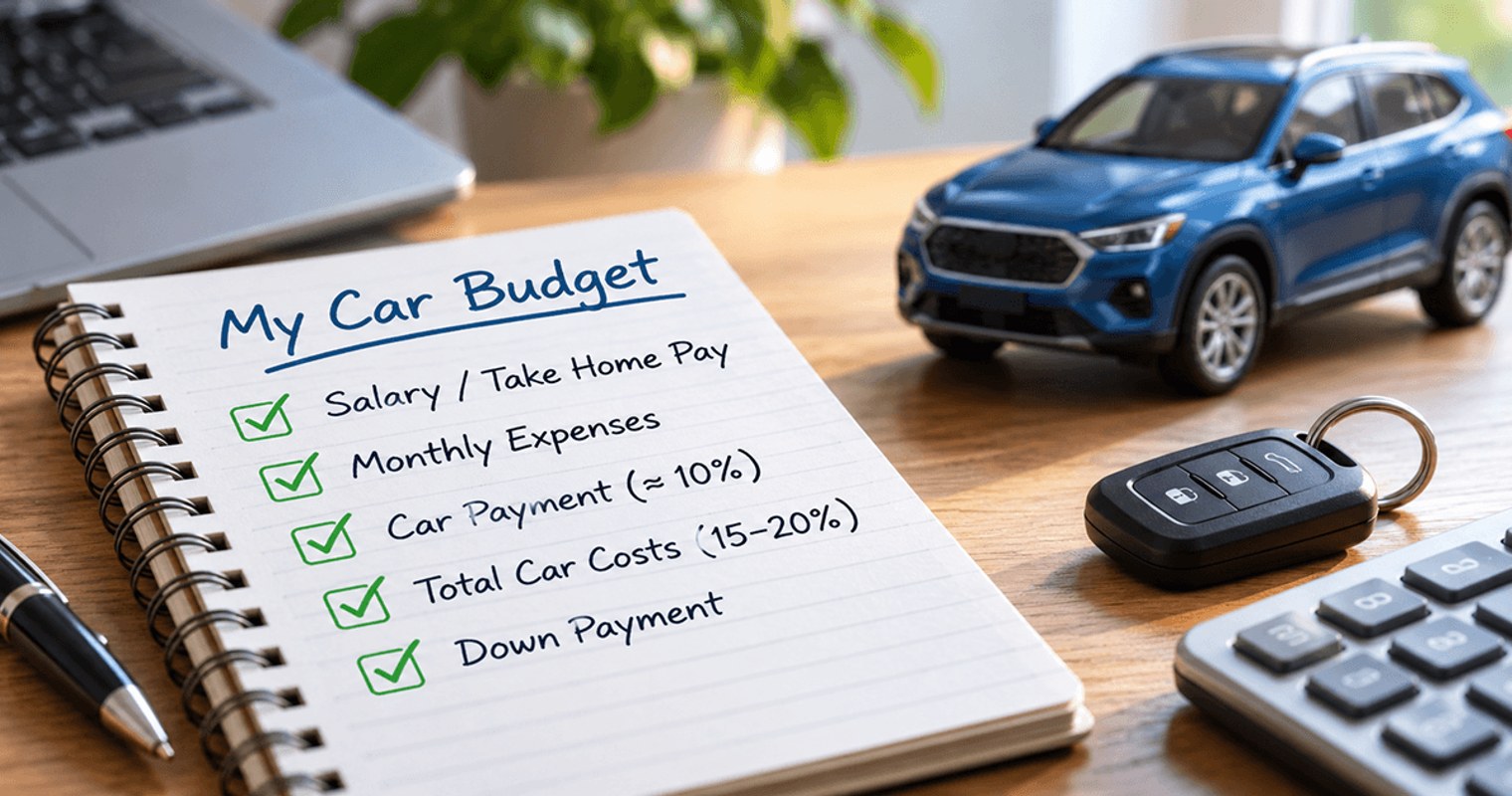
One commonly used budgeting guideline suggests keeping your car payment near 10% of take-home pay. A broader guideline puts total transportation expenses around 15% to 20%.
Neither is an official lending requirement. They're simply ways to begin evaluating affordability.
Here's how those guidelines compare at different income levels.
| Annual Take Home Income | Monthly Take Home Pay | 10% Car Payment Budget | 15% to 20% Total Transportation Budget |
|---|---|---|---|
| $30,000 | $2,500 | $250 | $375 to $500 |
| $40,000 | $3,333 | $333 | $500 to $667 |
| $50,000 | $4,167 | $417 | $625 to $833 |
| $60,000 | $5,000 | $500 | $750 to $1,000 |
| $75,000 | $6,250 | $625 | $938 to $1,250 |
| $100,000 | $8,333 | $833 | $1,250 to $1,667 |
These are illustrative budgeting targets based on income after taxes and deductions, not gross salary or lender approval amounts. Figures are rounded.
For someone earning $60,000 annually in take home pay, the table suggests a starting car payment budget of $500 per month.
However, someone earning a $60,000 gross salary would generally have less than $5,000 available each month after deductions.
For example, if your gross salary is $60,000 and your actual monthly take home pay is $4,000, the 10% guideline suggests starting with a car payment around $400. Your total transportation budget might fall between $600 and $800 per month, depending on your other expenses.
Your actual take home pay could be higher or lower based on taxes, benefits and payroll deductions.
Your other expenses matter just as much as your income. A household with a large mortgage, childcare expenses and existing debt may need a smaller car budget than someone earning less but carrying fewer financial obligations.
Should You Base Your Car Budget on Gross Salary or Take Home Pay?
Take home pay is generally the better number to use when setting your personal car budget.
Gross salary is your income before taxes and deductions. Lenders often consider gross income when evaluating loan applications, along with your credit history and existing debts.
But what a lender is willing to approve and what you can comfortably afford aren't necessarily the same.
Consider someone earning $60,000 annually before taxes.
Their gross monthly income is $5,000. However, their take home pay will be lower after taxes, health insurance, retirement contributions and other deductions.
Using the full $5,000 to calculate a car budget could make a payment look more affordable than it actually is.
Instead, review your recent paychecks and determine how much money you consistently bring home each month.
If your income varies because of commissions, overtime or seasonal work, use a conservative monthly average rather than your highest earning month.
How to Calculate Your Car Budget
You can establish a realistic vehicle budget in 5 steps.
Step 1: Calculate Your Monthly Take Home Pay
Start with the money deposited into your account each month after payroll deductions.
If you're paid every 2 weeks, multiply your typical paycheck by 26 and divide by 12 to estimate your average monthly take home pay.
Step 2: Subtract Your Regular Expenses
Account for the expenses you already have, including:
- Rent or mortgage
- Utilities and groceries
- Credit card and student loan payments
- Childcare and household expenses
- Healthcare costs
- Savings and retirement goals
- Entertainment and personal spending
This gives you a clearer picture of how much money is available for transportation.
Step 3: Estimate the Full Cost of Owning a Car
Your loan payment isn't the only expense to consider.
Insurance, fuel or charging, maintenance, repairs, registration and parking can add significantly to your monthly costs.
Requesting insurance quotes before choosing a vehicle is especially useful. Premiums can vary considerably depending on the vehicle, driver and coverage.
Step 4: Set a Comfortable Monthly Transportation Budget
Suppose you bring home $4,500 per month and decide that $750 is a manageable amount to spend on transportation.
Your budget might look like this:
| Expense | Monthly Budget |
|---|---|
| Car payment | $400 |
| Auto insurance | $175 |
| Fuel | $100 |
| Maintenance savings | $75 |
| Total | $750 |
This is a hypothetical budget. Actual costs vary, and registration, parking and other applicable expenses would need to be included.
In this example, $400 is available for the loan payment after setting aside money for other vehicle expenses.
Step 5: Work Backward to a Vehicle Price
Once you know what monthly payment fits your budget, you can estimate how much you may be able to finance.
Your APR, loan term and down payment all affect that amount.
Remember to include taxes and applicable fees when evaluating the total purchase price.
AutoFinder's Car Payment Calculator can help you explore how different loan amounts, interest rates and repayment periods affect your estimated monthly payment.
You can also use the Out the Door Price Calculator to estimate the complete purchase price, including applicable taxes and fees.
Using both tools can help you compare vehicles based on what they'll actually cost rather than their advertised prices alone.
How Much Can You Afford to Spend on a Car With a $50,000 Salary?
Let's look at a more complete example.
Suppose you earn $50,000 annually before taxes and bring home approximately $3,300 per month. That take home amount is hypothetical. Your actual income after deductions may be different.
Using the 10% payment guideline, you might start with a car payment budget around $330 per month.
Now assume you qualify for a fixed 7% APR over 60 months.
At those terms, a $330 monthly payment supports financing approximately $16,700.
If you have $3,000 available for a down payment, your total purchase budget would be approximately $19,700, including applicable taxes and fees.
Here's how the numbers fit together:
Example budget for a $50,000 gross salary
- Annual gross salary: $50,000
- Assumed monthly take home pay: $3,300
- Target monthly car payment: $330
- Hypothetical APR: 7%
- Loan term: 60 months
- Estimated amount financed: $16,700
- Down payment: $3,000
- Approximate total out the door budget: $19,700
The $19,700 represents the estimated total amount you could spend on the purchase, not necessarily the vehicle's advertised price.
For example, if taxes and fees totaled $1,700, the vehicle itself would need to cost approximately $18,000 or less to remain within that budget.
This doesn't mean everyone earning $50,000 should purchase a vehicle costing nearly $20,000.
If your insurance costs are high, you have significant debt or you're saving for a home, a lower vehicle budget may be more appropriate.
The important takeaway is that your salary helps establish a payment target, but your financing terms and down payment determine how that translates into a purchase budget.
How Does Your Down Payment Affect What You Can Afford?
A down payment reduces the amount you need to finance.
Suppose you're purchasing a vehicle with a total out the door price of $25,000.
With a $5,000 down payment, you would finance $20,000, assuming no trade in credit or other adjustments.
With a $2,000 down payment, you would finance $23,000.
Borrowing less generally results in a smaller monthly payment and lower total interest costs when the APR and loan term remain the same.
A larger down payment can also reduce the risk of negative equity, which occurs when you owe more than your vehicle is worth.
Some lenders may offer more favorable financing terms when you contribute more money upfront, although a larger down payment doesn't guarantee a lower APR.
Don't feel pressured to use every dollar of your savings. Keeping money available for emergencies, repairs and unexpected expenses is important too.
How Do Interest Rates and Loan Terms Affect Your Car Budget?
Your APR and loan term have a direct impact on the monthly payment and total cost of financing.
A lower APR generally reduces borrowing costs. A longer repayment period lowers the required monthly payment but typically increases the total interest paid when other terms remain the same.
Consider a hypothetical $20,000 auto loan at a fixed 7% APR.
| Loan Term | Estimated Monthly Payment | Total Interest |
|---|---|---|
| 48 months | $479 | $2,989 |
| 60 months | $396 | $3,761 |
| 72 months | $341 | $4,551 |
Payments and interest are rounded to the nearest dollar. Estimates assume equal monthly payments and exclude additional financed fees.
The 72 month option has the lowest payment, but it costs approximately $1,562 more in interest than the 48 month loan.
If your budget supports a shorter loan term, you may be able to save money over the life of the loan.
Before choosing financing, compare the APR, repayment period, amount financed and total interest rather than focusing only on the monthly payment.
Getting preapproved through a bank, credit union or other auto lender can help you understand the terms available to you.
You can also compare those offers with financing through a dealership. Dealers often work with multiple lenders, and some manufacturers offer promotional financing for eligible vehicles and buyers.
Is the 20/4/10 Car Buying Rule Worth Following?
The 20/4/10 rule is another traditional guideline for budgeting for a vehicle.
It suggests:
- Making a 20% down payment
- Financing for no more than 4 years
- Keeping total transportation expenses within 10% of gross monthly income
The idea is to limit borrowing costs and avoid taking on an unnecessarily expensive vehicle.
For example, someone earning $60,000 annually before taxes has a gross monthly income of $5,000. Under this rule, their transportation expenses would be limited to approximately $500 per month.
That amount would need to cover more than just the loan payment.
The rule can be useful as a conservative reference, but it may not work for every household.
A 20% down payment may be difficult to save, and a 48 month loan may produce a payment that's too high for some shoppers.
The 20/4/10 rule also uses gross income, while the earlier affordability guidelines use take home pay. These are different approaches and shouldn't be combined without considering that distinction.
Use whichever framework helps you evaluate your finances, but make your final decision based on your actual expenses and savings priorities.
Should You Buy a New or Used Car Based on Your Salary?
Both new and used vehicles can be sensible choices.
A new vehicle may offer a full manufacturer warranty, updated technology and access to promotional financing programs.
A used vehicle may have a lower purchase price, allowing you to borrow less or choose a more affordable monthly payment.
However, the purchase price doesn't tell the entire story.
Compare insurance costs, maintenance expectations, warranty coverage, financing rates and vehicle condition.
For example, a used vehicle with a lower advertised price may come with a higher APR or require repairs sooner than a comparable new vehicle.
A new vehicle with a manufacturer financing incentive could also have a more competitive monthly payment than you initially expected.
Rather than assuming one option is always more affordable, compare the complete cost of ownership for the specific vehicles you're considering.
What If You Can't Afford the Car You Want?
If the vehicle you're interested in falls outside your budget, you still have options.
You could choose a less expensive trim, compare similar models, consider used inventory or save for a larger down payment.
If your credit profile is affecting the financing offers you receive, improving your credit before applying again may help you qualify for more competitive terms.
You might also decide to wait until you've reduced other debt or built additional savings.
Try not to extend your loan term solely to make an expensive vehicle fit a particular monthly payment.
There are vehicles available at many different price points. Comparing several options can help you find one that meets your needs without putting unnecessary pressure on your finances.
How Do You Know If You're Spending Too Much on a Car?
A vehicle may be too expensive for your budget if making the payment leaves you struggling to cover regular expenses or prevents you from saving.
Other warning signs include relying on credit cards for everyday purchases, having little money available for emergencies or being unable to comfortably afford insurance and maintenance.
You should also reconsider the purchase if you need a substantially longer loan term than you originally planned just to reach a manageable payment.
Even if a lender approves you for a higher amount, you can choose a less expensive vehicle.
The right car budget is one that supports your transportation needs while leaving room for the rest of your financial priorities.
Want More Car Buying Advice?
Add AutoFinder as a preferred source on Google to help you discover more of our automotive guides and research.