Car Financing
APR vs Interest Rate on a Car Loan: What's the Difference?
OVERVIEW
If a loan has no additional charges included in its APR calculation, the 2 percentages may be identical. When qualifying financing fees apply, APR is generally higher.
When comparing car loans, start with APR rather than interest rate alone. It helps you compare borrowing costs across lenders, particularly when the loan amounts and repayment terms are similar. You'll also want to look at the monthly payment and total finance charge before making a decision.
What Is the Difference Between APR and Interest Rate on a Car Loan?
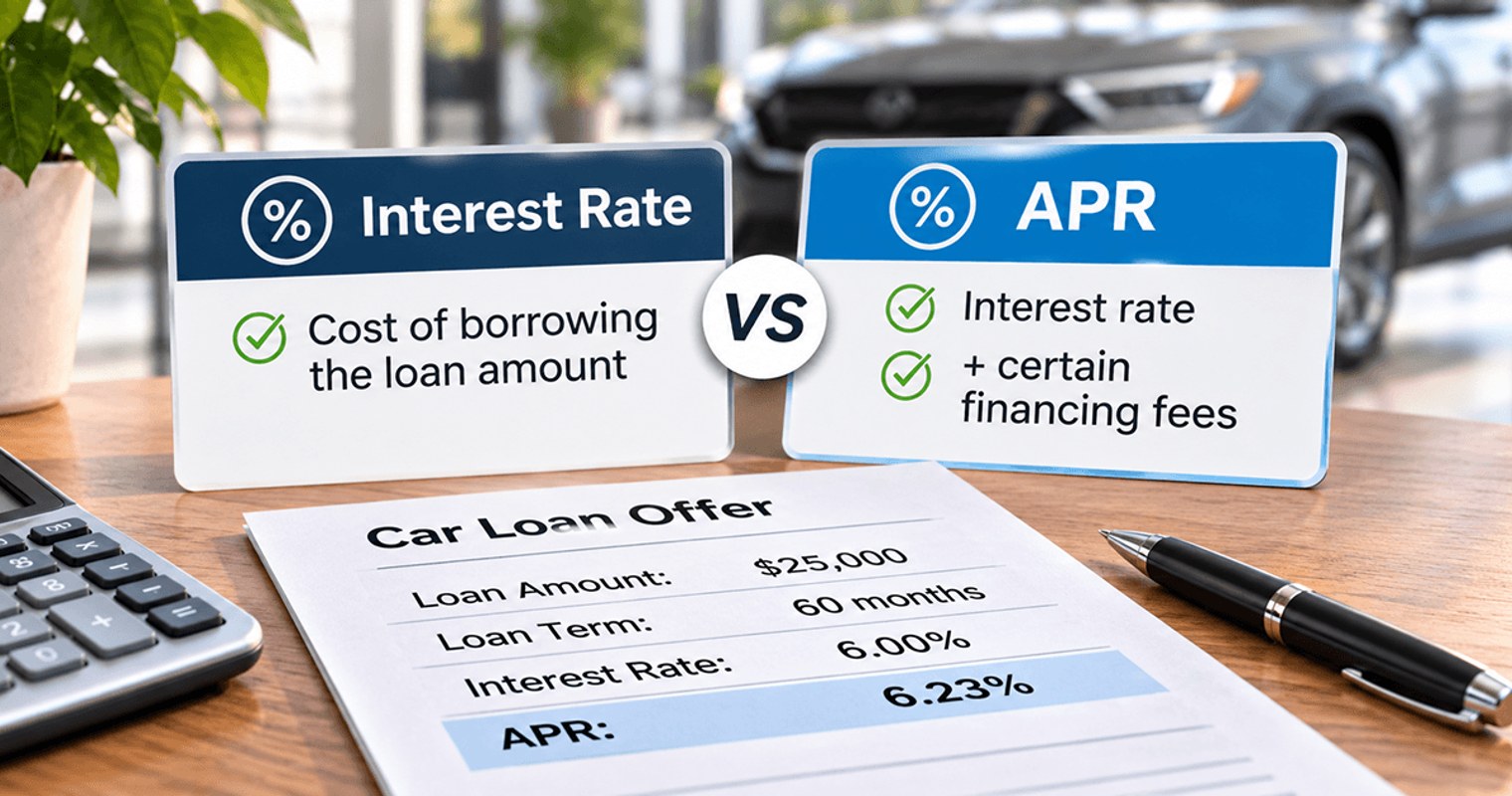
The main difference is that an interest rate measures the cost of borrowing the principal, while APR accounts for certain additional financing costs.
For example, a lender might offer a car loan with a 6% interest rate but charge an upfront financing fee. Depending on how that fee is treated under lending disclosure rules, the loan's APR could be higher than 6%.
Another lender might offer the same interest rate without that additional charge. In that case, the APR could be 6% as well.
Here's how the 2 numbers compare.
| Feature | Interest Rate | APR |
|---|---|---|
| What it measures | Interest charged on the loan balance | Annualized cost of credit |
| Includes interest | Yes | Yes |
| Includes certain financing fees | No | Yes |
| Used to calculate loan interest | Yes | Not directly |
| Best for comparing loan offers | Useful, but incomplete | Usually the better starting point |
| Where you'll find it | Loan quote or agreement | Financing disclosures and agreement |
The interest rate helps explain how your loan balance accumulates interest. APR makes it easier to compare borrowing costs when lenders charge different qualifying fees.
Neither number tells you exactly what you'll pay for the vehicle. The purchase price, down payment, taxes, loan term and optional products also affect the total cost.
How Does the Interest Rate Work on a Car Loan?
Your interest rate determines how much interest you're charged on the money you borrow.
Most auto loans have fixed interest rates, meaning the rate stays the same throughout the repayment period. Your scheduled monthly payment generally stays consistent, too.
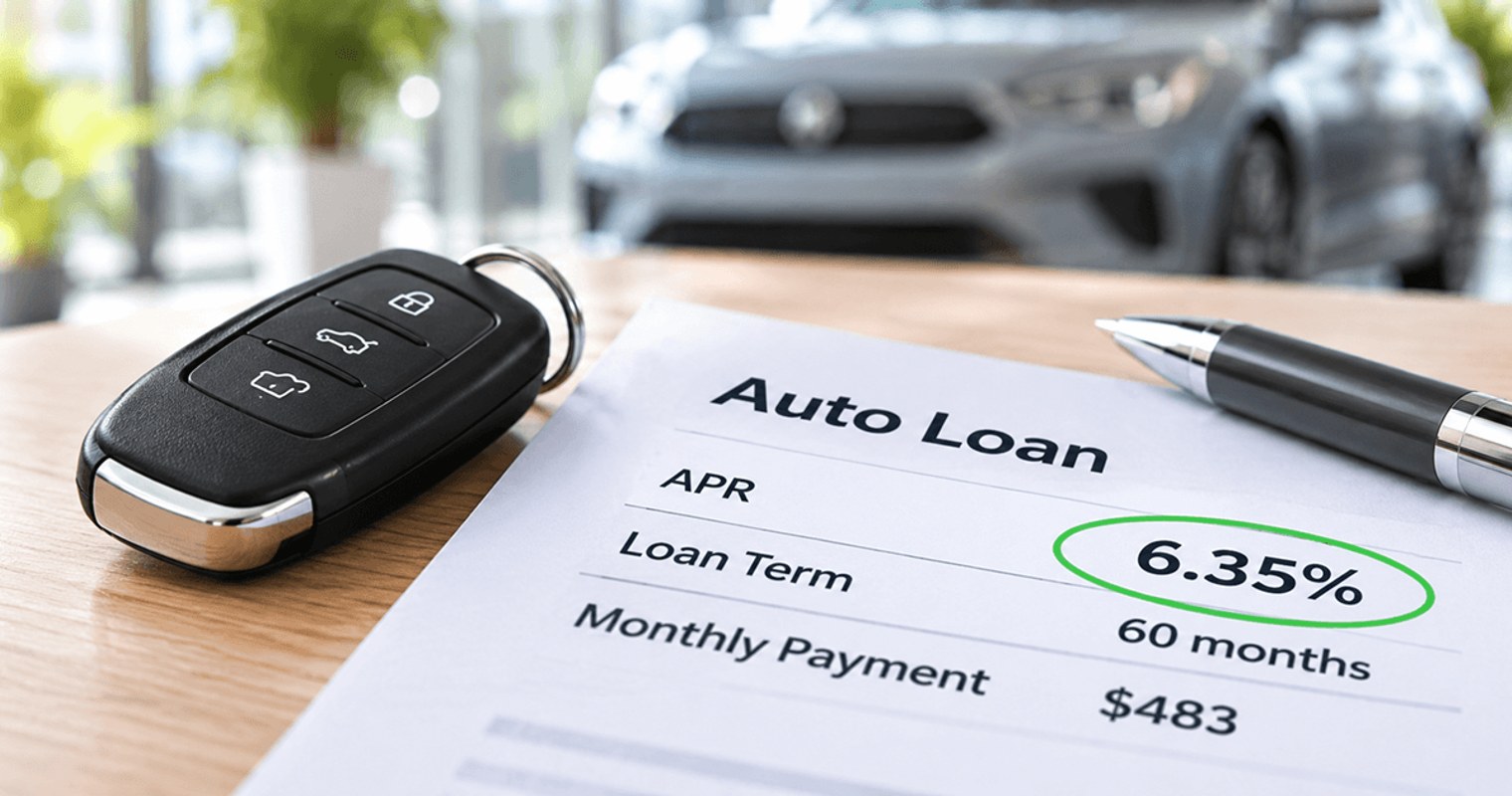
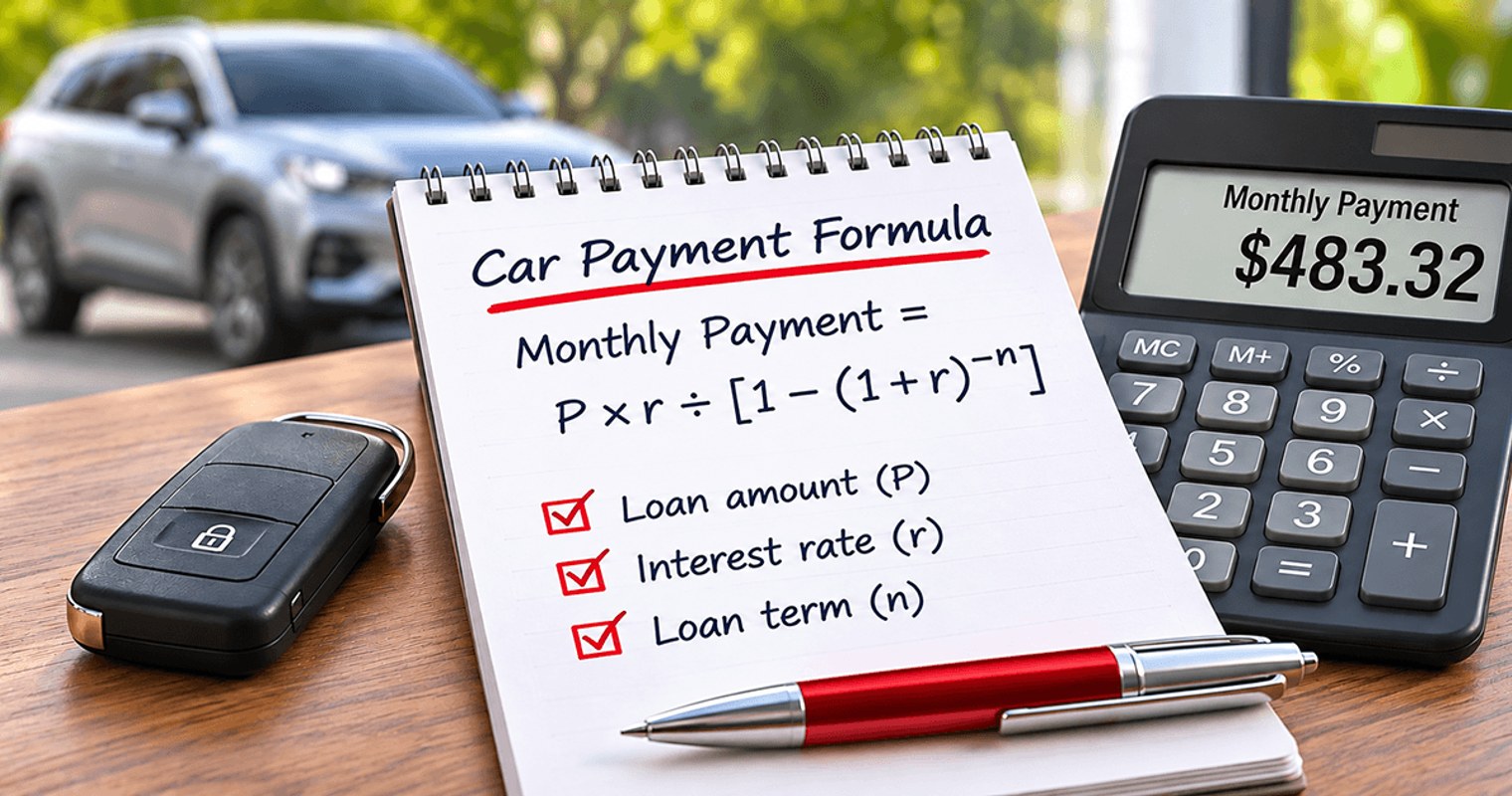
Suppose you borrow $25,000 at a fixed 6% interest rate for 60 months.
Your estimated monthly payment would be about $483, assuming no additional financed charges.
Each payment covers part of the loan principal and part of the interest. With a typical simple interest auto loan, interest is calculated on the outstanding principal balance.
Early payments generally include more interest because you owe more money. As your balance decreases, more of each scheduled payment goes toward principal.
The interest rate affects how quickly those charges accumulate, but it doesn't necessarily account for every cost associated with obtaining the loan.
What Does APR Include on a Car Loan?
APR reflects the annualized cost of credit, including interest and certain financing charges.
Depending on the loan and applicable disclosure rules, those charges may include qualifying origination or processing fees.
For example, suppose a lender offers a $25,000 loan with a 6% interest rate and charges a $500 upfront fee that must be included in the APR calculation.
The borrower has an additional financing cost beyond the interest charged on the loan balance. The disclosed APR accounts for that qualifying charge.
This is why APR can be higher than the interest rate even when the scheduled loan payments are based on the lower interest rate.
However, APR doesn't include every expense associated with buying a vehicle.
Sales tax, registration, title fees and other purchase expenses are generally separate from APR finance charges. If you finance those costs, they increase the amount borrowed and can increase the interest you pay.
Optional products, such as extended service contracts or GAP coverage, can also increase the amount financed. Their treatment as finance charges depends on the product, circumstances and applicable rules.
When comparing offers, ask the lender or dealership to explain any charges you don't recognize.
Why Is My Car Loan APR Higher Than My Interest Rate?
A higher APR usually means the loan includes qualifying financing charges beyond the interest itself.
The difference isn't necessarily a warning sign. It tells you that the cost of obtaining credit is greater than the interest rate alone suggests.
For example, 2 lenders could offer the same interest rate but charge different financing fees. The lender with higher qualifying fees would generally disclose a higher APR.
Before accepting an offer, review the itemized charges and ask which ones affect the APR.
You can also compare the finance charge disclosed in the loan agreement. This shows the dollar cost of credit under the agreement's terms.
If your APR and interest rate are identical, that generally means there are no additional finance charges increasing the APR calculation.
How Much Does APR Affect Your Monthly Car Payment?
The rate you qualify for can make a noticeable difference in both your monthly payment and the total amount of interest you pay.
Consider a $25,000 car loan with a 60 month repayment period and no additional financing fees.
| Interest Rate and APR | Estimated Monthly Payment | Total Interest |
|---|---|---|
| 5% | $472 | $3,307 |
| 6% | $483 | $3,999 |
| 7% | $495 | $4,702 |
| 8% | $507 | $5,415 |
Estimates assume a $25,000 fixed rate loan with equal monthly payments over 60 months and no additional financing charges. Figures are rounded.
At 5%, your estimated payment would be about $472 per month.
At 8%, it increases to approximately $507.
That's roughly $35 more each month and $2,108 more in total interest over the repayment period.
In this example, the interest rate and APR are identical because no additional financing charges apply. When qualifying fees are involved, APR provides information beyond the rate used to calculate interest.
You can use AutoFinder's Car Payment Calculator to see how different rates, loan amounts and repayment periods affect your monthly budget.
Should You Compare Car Loans by APR or Interest Rate?
APR is usually the better starting point because it accounts for more of the borrowing costs.
However, comparing APR alone can be misleading when loans have different repayment periods.
Consider 2 financing offers for a $25,000 loan, both without additional financing fees.
Offer A: Lower APR, Longer Loan
- APR: 6%
- Loan term: 60 months
- Monthly payment: Approximately $483
- Total interest: Approximately $3,999
Offer B: Higher APR, Shorter Loan
- APR: 7%
- Loan term: 48 months
- Monthly payment: Approximately $599
- Total interest: Approximately $3,736
Offer A has the lower APR and monthly payment. However, Offer B costs approximately $264 less in total interest because the loan is paid off 12 months sooner.
That doesn't automatically make Offer B the better option.
Its monthly payment is about $116 higher, which could make it harder to manage alongside your other expenses.
When comparing financing offers, look at these 4 numbers together:
- APR: The annualized cost of credit, including applicable financing charges.
- Monthly payment: What you'll need to pay on your scheduled due dates.
- Loan term: How long you'll be making payments.
- Total finance charge: The total dollar cost of credit under the agreement.
If 2 offers have the same loan amount and repayment period, comparing APR is especially useful. When the terms differ, review the total costs and monthly affordability as well.
What Determines Your Car Loan APR?
Lenders consider several factors when deciding which financing terms to offer.
Your Credit Profile
Your credit history and credit score help lenders evaluate the risk of lending to you.
Borrowers with stronger credit profiles may qualify for lower rates. Those with limited credit history or past payment problems may receive higher offers.
Your score isn't the only consideration, though.
Loan Amount and Repayment Period
The amount you borrow and the length of the loan can affect the rate you're offered.
Some lenders have different rates for 36, 48, 60 or 72 month loans.
A longer repayment period generally lowers your monthly payment, but it can increase the total interest you pay.
New or Used Vehicle
Financing rates may differ between new and used vehicles.
New vehicles sometimes qualify for promotional financing through manufacturer programs. Used vehicle financing may depend on the vehicle's age, mileage and lender requirements.
Down Payment and Existing Debt
A larger down payment reduces the amount you need to borrow and may help you qualify for better terms.
Lenders may also review your income and existing debt payments to determine whether you can reasonably manage the loan.
Your Financing Source
Banks, credit unions and dealership financing programs may offer different terms to the same shopper.
Comparing multiple offers is one of the most practical ways to find out what's available to you.
Is Dealership Financing APR Different From Bank Financing?
APR means the same thing whether your loan comes from a bank, credit union or financing arranged through a dealership.
The difference is how you obtain the financing.
When you apply directly through a bank or credit union, that lender reviews your application and provides an offer.
When you finance through a dealership, the dealer may work with multiple lenders to help you find financing that fits your situation.
Dealerships may also have access to manufacturer promotional financing programs, including special APR offers for qualified buyers.
That means dealership financing can sometimes be more competitive than an offer you've received elsewhere.
Getting preapproved before shopping gives you a useful comparison. You can bring that offer to the dealership and see whether another financing option provides better terms.
There's no need to assume one financing source will always have the lowest APR.
What matters is the actual offer, including its APR, repayment period, monthly payment and financing charges.
Is 0% APR Financing Really Interest Free?
Yes. A genuine 0% APR auto loan means you won't pay interest or APR finance charges under the stated loan terms.
These offers are commonly associated with manufacturer financing programs and may be limited to certain vehicles, repayment periods or qualified buyers.
However, 0% APR doesn't necessarily mean you're getting the lowest total purchase cost.
Some promotional financing offers cannot be combined with certain cash rebates.
For example, you might be offered a choice between 0% APR financing and a cash discount with standard financing.
The better option depends on how much you're borrowing, the size of the available rebate and the total financing costs.
Compare both offers before deciding, including the vehicle's out the door price and total payments.
How Can You Get a Lower APR on a Car Loan?
You may be able to qualify for a more competitive APR by preparing before you apply.
A few steps are worth considering:
- Check your credit reports. Review them for errors and address issues that could affect your financing application.
- Get preapproved. Compare offers from banks, credit unions and other lenders before visiting a dealership.
- Consider a larger down payment. Borrowing less may improve your financing options and reduce your total interest costs.
- Compare repayment periods. Look at how different loan terms affect both the APR and total cost.
- Ask about promotional financing. Manufacturer programs may offer competitive rates on eligible new vehicles.
- Review financing charges. Understand which fees affect your APR and which expenses are included in the amount financed.
You can also ask a dealership whether alternative lender offers are available.
Having a preapproval gives you a reference point, while dealership financing may provide additional options worth comparing.
The goal isn't simply to find the lowest advertised percentage. It's to secure financing that makes sense for your purchase and budget.
What Should You Review Before Signing a Car Loan?
Before signing your financing agreement, review the Truth in Lending disclosures.
These disclosures contain important information about what you're agreeing to pay.
Annual Percentage Rate (APR): The annualized cost of credit, including applicable finance charges.
Finance Charge: The total dollar amount the credit will cost under the disclosed terms.
Amount Financed: The amount of credit provided to you or on your behalf, calculated according to applicable disclosure requirements.
Total of Payments: The total amount you'll have paid after making all scheduled payments.
Also confirm the number of payments, monthly payment amount, due dates and any applicable late payment or prepayment terms.
If you've agreed to optional products, review their costs and whether they're included in the amount financed.
A dealership or lender should be able to explain the agreement and answer questions about the terms before you sign.
Is APR or Monthly Payment More Important When Buying a Car?
Both matter, but they answer different questions.
APR tells you about the cost of borrowing. Your monthly payment tells you whether the financing fits your budget.
A lower APR won't make an expensive vehicle affordable if the payment is too high.
Similarly, a lower monthly payment isn't necessarily a better deal if it requires extending the loan and paying substantially more interest.
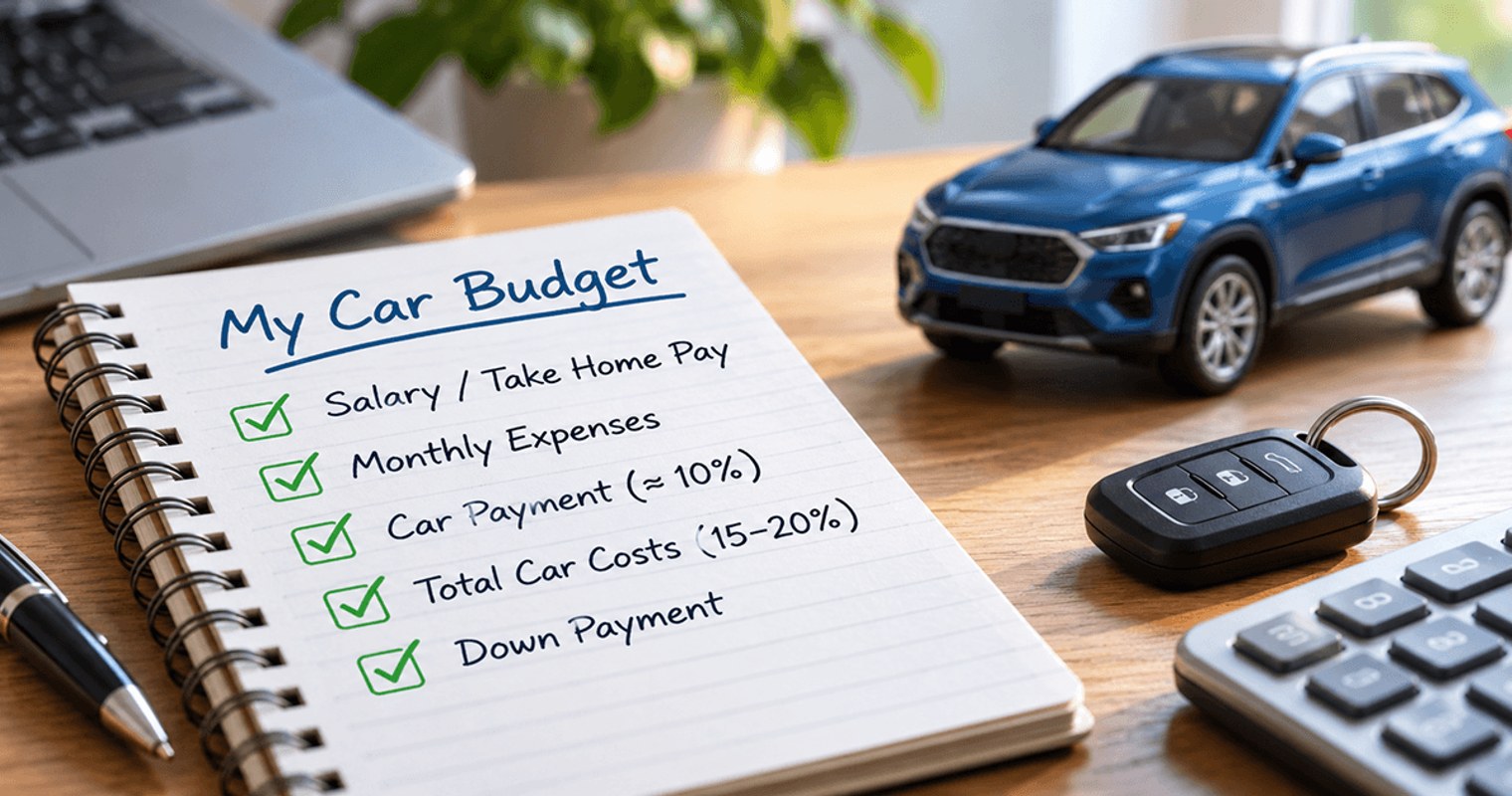
Start with a comfortable monthly budget that includes insurance, fuel and maintenance. Then compare financing offers based on APR, repayment period and total borrowing costs.
A good financing decision should leave you comfortable with both the monthly payment and the overall cost of the vehicle.
Want More Car Buying Advice?
Add AutoFinder as a preferred source on Google to help you discover more of our automotive guides and research.