Car Basics
Hyundai Safety Ratings Explained: What Shoppers Should Know
OVERVIEW
Safety ratings can make car shopping look deceptively simple. One vehicle earns 5 stars. Another is an IIHS Top Safety Pick+. Surely the one with the better badge is safer, right?
Not necessarily.
The 2 major organizations shoppers will encounter are the National Highway Traffic Safety Administration, or NHTSA, and the Insurance Institute for Highway Safety, or IIHS. Both evaluate vehicle safety, but they use different tests, rating systems, and criteria.
Hyundai performs well in both programs. For 2026, models including the Hyundai Tucson, Santa Fe, Palisade, IONIQ 5, IONIQ 9, Kona, Sonata, and Elantra have earned IIHS safety awards. Several 2026 Hyundai models have also received a 5 Star Overall Safety Rating from NHTSA.
Those ratings are useful, but the badge alone does not tell the whole story. Model year, build date, trim, headlights, crash prevention technology, and even vehicle size can affect how you should interpret the results.
Here is what Hyundai shoppers should actually look for.
Who Rates Hyundai Vehicle Safety?
In the United States, you will usually see safety information from 2 organizations.
NHTSA
NHTSA is a federal government agency. Its New Car Assessment Program uses the familiar 5 star rating system.
Vehicles can receive ratings for frontal crashes, side crashes, and rollover resistance, along with an overall safety rating.
A higher number of stars represents better performance within NHTSA's testing program.
IIHS
IIHS is an independent nonprofit organization funded by auto insurers.
Rather than relying on a simple star system, IIHS evaluates vehicles across several crashworthiness and crash avoidance categories.
Its ratings include:
- Good
- Acceptable
- Marginal
- Poor
Vehicles that meet the organization's broader requirements may earn a Top Safety Pick or Top Safety Pick+ award.
The 2 systems are not interchangeable. A Hyundai can earn strong marks from both organizations, but each is looking at safety in a different way.
What Does a 5 Star NHTSA Safety Rating Mean?
NHTSA's 5 Star Safety Ratings program is probably the rating system most shoppers recognize.
The agency evaluates vehicles using frontal crash, side crash, and rollover testing. Those results contribute to an overall rating of up to 5 stars.
For 2026, Hyundai says 8 models have received a 5 Star Overall Safety Rating from NHTSA:
- Elantra, excluding Elantra N
- Elantra Hybrid
- Sonata
- Sonata Hybrid
- IONIQ 6, excluding IONIQ 6 N
- Tucson
- Tucson Hybrid, excluding Plug-in Hybrid
- Santa Cruz
A 5-star overall rating is a strong result, but it should not be interpreted as a guarantee that occupants will avoid injury in a crash.
Real crashes vary enormously. Speed, impact angle, occupant position, seat belt use, vehicle size, and what the vehicle hits can all influence the outcome.
Use the rating as a comparison tool rather than a promise.
What Is an IIHS Top Safety Pick?
IIHS Top Safety Pick awards take a different approach.
For 2026, IIHS evaluates vehicles in areas including crashworthiness, pedestrian crash prevention, and headlights. The requirements have also become tougher over time, which is important when comparing awards from different model years.
Top Safety Pick is the first award level.
Top Safety Pick+ has more demanding requirements.
A vehicle needs strong performance across multiple areas to earn either designation. This means the award looks beyond how the vehicle protects occupants in one type of crash.
For shoppers, that broader view can be especially useful when comparing family vehicles.
What Does IIHS Top Safety Pick+ Mean?
Top Safety Pick+ is IIHS's higher safety award.
For 2026, several Hyundai vehicles qualify, including:
- Tucson
- Kona
- IONIQ 5
- Santa Fe
- IONIQ 9
- Palisade built after November 2025
- Sonata
The 2026 Elantra earns Top Safety Pick rather than Top Safety Pick+.
This is a strong showing across very different types of vehicles. Hyundai has award winners ranging from the Elantra sedan to the larger Palisade and electric IONIQ 9.
Still, pay attention to the details attached to an award. The Palisade is a perfect example.
Why Does a Hyundai's Build Date Matter?
This is one of the easiest details to miss when looking at safety ratings.
Sometimes a manufacturer makes a safety related change during a model year. IIHS may then apply a stronger rating only to vehicles manufactured after that change.
The redesigned 2026 Hyundai Palisade shows why this matters.
IIHS gives the 2026 Palisade a Top Safety Pick+ award, but the award applies only to vehicles built after November 2025. Hyundai made improvements to the rear seat belt buckles that improved rear occupant safety in IIHS's updated moderate overlap front test.
Earlier 2026 Palisades received an Acceptable overall rating in that particular test, while vehicles built after the change received Good.
Same model year. Same model name. Different result based on when the vehicle was built.
If an IIHS rating includes a production date restriction, check the certification label on the vehicle. It is typically located on the driver door or nearby pillar.
How Does the 2026 Hyundai Tucson Perform in Safety Testing?
The 2026 Hyundai Tucson is an IIHS Top Safety Pick+.
It received Good ratings in the small overlap front, updated moderate overlap front, and updated side tests. Its standard front crash prevention systems also earned Good ratings for both vehicle and pedestrian testing.
IIHS lists several standard safety features on the 2026 Tucson, including:
- Blind spot detection
- Lane departure warning and prevention
- Rear automatic braking
Headlight performance varies by trim or equipment, which is another reason to look beyond the overall award when comparing individual Tucsons.
NHTSA also lists the 2026 Tucson among Hyundai models earning a 5 Star Overall Safety Rating.
For compact SUV shoppers, the Tucson's performance in both programs gives it a strong safety record to consider alongside price, space, fuel economy, and features.
How Does the 2026 Hyundai Santa Fe Perform?
The 2026 Hyundai Santa Fe is another IIHS Top Safety Pick+.
IIHS gives it Good ratings in the small overlap front, updated moderate overlap front, and updated side evaluations. Its standard vehicle to vehicle and pedestrian front crash prevention systems also received Good ratings.
There is a production detail worth knowing here too.
The updated moderate overlap rating applies to 2025 and 2026 Santa Fe models built after November 2024. Hyundai made changes to the rear seat belts to improve protection for rear occupants.
That is particularly relevant for families because IIHS's newer moderate overlap testing puts greater emphasis on protection for people riding in the back seat.
Is the 2026 Hyundai Palisade Safe?
The redesigned 2026 Hyundai Palisade has strong IIHS results, particularly for vehicles built after November 2025.
Those later vehicles earned Good ratings in the small overlap front, updated moderate overlap front, and updated side tests. The Palisade also earned Good ratings for its headlights and standard vehicle and pedestrian front crash prevention systems.
Its LATCH ease of use rating is G+, another useful detail for shoppers regularly installing child seats.
The build date deserves extra attention, though. The Top Safety Pick+ designation applies only to 2026 Palisades built after November 2025.
If safety ratings are a major reason you are choosing a Palisade, checking when a particular vehicle was manufactured is worth the extra minute.
How Does the Hyundai IONIQ 5 Perform?
Electric vehicles go through crash testing too.
The 2026 Hyundai IONIQ 5 earns an IIHS Top Safety Pick+ designation.
It received Good ratings in the small overlap front, updated moderate overlap front, updated side, and whiplash prevention evaluations. Its standard pedestrian front crash prevention system also earned a Good rating.
The standard vehicle to vehicle front crash prevention system received an Acceptable rating in IIHS's newer 2.0 evaluation, so this is another case where reading the individual results tells you more than looking at the Top Safety Pick+ badge alone.
IIHS also lists blind spot detection, lane departure warning and prevention, and rear automatic braking as standard safety features.
Is the Hyundai Elantra Safe?
The 2026 Hyundai Elantra earns an IIHS Top Safety Pick.
It received Good ratings in the small overlap front, updated moderate overlap front, and updated side crash tests. Its standard pedestrian front crash prevention system also earned a Good rating.
The updated moderate overlap rating applies to 2025 and 2026 Elantras built after October 2024. Hyundai made changes to the rear seat belts to improve rear passenger protection.
NHTSA also gives the 2026 Elantra, excluding the Elantra N, a 5 Star Overall Safety Rating. The Elantra Hybrid earns the same overall rating.
The Elantra is a useful reminder that you do not necessarily need a large or expensive vehicle to find strong crash test results.
Does Vehicle Size Affect Safety?
Yes, and this is important when comparing ratings across Hyundai's lineup.
IIHS specifically notes that larger, heavier vehicles generally provide more occupant protection than smaller, lighter vehicles. A smaller vehicle can earn a Top Safety Pick or Top Safety Pick+ and still not necessarily provide the same protection in a real world collision with a substantially larger vehicle.
That does not make small cars unsafe.
It means safety awards are most useful when comparing vehicles in similar size categories.
For example, comparing an Elantra with other compact sedans makes sense. Comparing its safety award directly with a Palisade and assuming the badges make them equally protective in every possible crash is less useful.
Vehicle size is only one part of choosing a car, but it should be part of the safety conversation.
What Is Hyundai SmartSense?
Hyundai SmartSense is the name Hyundai uses for its collection of driver assistance and safety technologies.
The exact features vary by model and trim, but the SmartSense family can include systems designed to help with collision avoidance, lane positioning, blind spots, parking, highway driving, and other situations.
Depending on the vehicle, you may encounter features such as:
- Forward Collision Avoidance Assist
- Blind Spot Collision Warning
- Lane Keeping Assist
- Lane Following Assist
- Driver Attention Warning
- Rear Cross Traffic Collision Avoidance Assist
- Smart Cruise Control
- Highway Driving Assist
- Parking Distance Warning
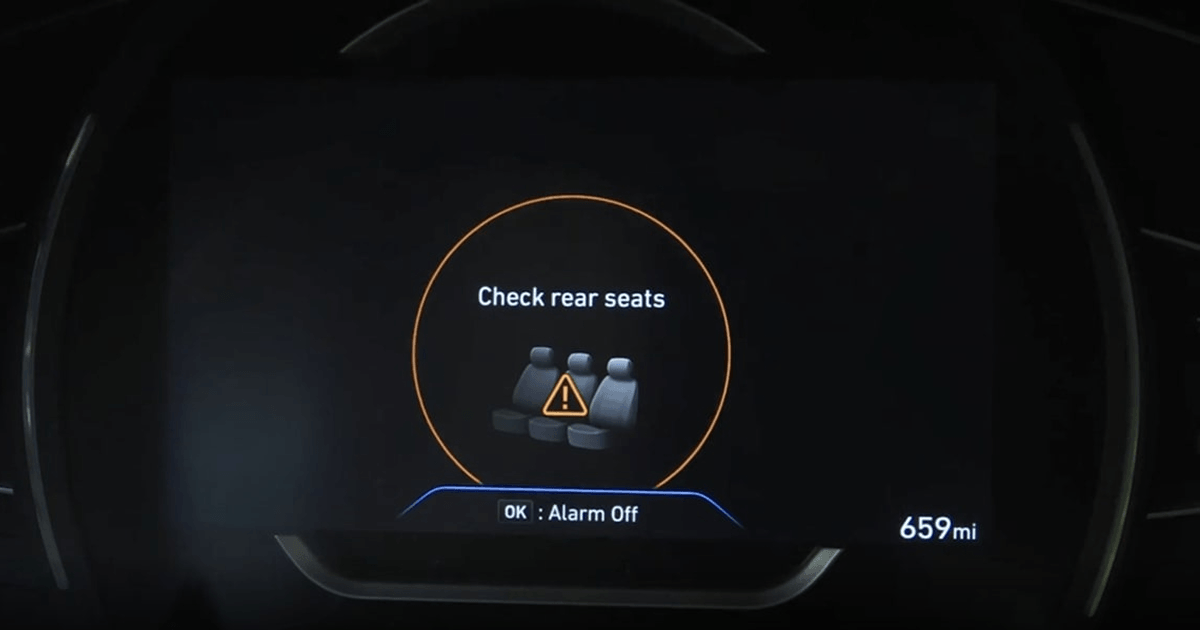
- Rear Occupant Alert
Hyundai notes that these systems are supplemental and are not substitutes for attentive driving. Feature availability also varies by vehicle and trim.
That last part matters when shopping.
Do not assume that because you saw a safety feature advertised for a Tucson or Santa Fe, every version sitting on a dealer lot includes it.
What Does Forward Collision Avoidance Assist Do?
Forward Collision Avoidance Assist is designed to help detect certain potential frontal collisions.
Depending on the Hyundai and version of the system, it may monitor for vehicles, pedestrians, cyclists, or other hazards. The system can warn the driver and may automatically apply braking if it detects an imminent collision and the driver has not responded in time.
Some versions add functionality for situations such as turning at an intersection.
Automatic emergency braking can be valuable, but it has limitations. Weather, visibility, road conditions, sensor obstruction, speed, and the type of object ahead can all affect performance.
It is there to assist the driver, not replace one.
What Do Lane Keeping Assist and Lane Following Assist Do?
The names sound similar, but the functions are slightly different.
Lane Keeping Assist is generally intended to help if the vehicle begins drifting out of its lane.
Lane Following Assist is designed to provide steering assistance to help keep the vehicle centered within a detected lane.
Depending on the Hyundai, these systems can work alongside features such as Smart Cruise Control and Highway Driving Assist.
They can make highway driving less tiring, but they do not make the vehicle self driving. The driver still needs to watch the road and remain in control.
What Does Blind Spot Collision Warning Do?
Blind Spot Collision Warning monitors areas beside and behind the vehicle that can be difficult to see in the mirrors.
If another vehicle is detected in the blind spot, the system can alert the driver.
Some Hyundai models offer more advanced blind spot technology depending on trim, including systems that can display a camera view of the blind spot when the turn signal is activated.
This is a good example of why trim comparisons matter.
The base version of a Hyundai may have strong standard safety equipment, while a higher trim adds convenience technology that gives the driver more information.
Does a Higher Hyundai Trim Mean Better Safety?
Not always.
This is an important distinction.
The structure of the vehicle does not suddenly become safer because you move from an SEL to a Limited. Many important active safety features may also be standard across the lineup.
Higher trims can add more advanced driver assistance or parking technology, though.
Depending on the model, moving up the trim ladder may add features such as:
- Surround view cameras
- Blind spot camera displays
- Parking collision avoidance
- Highway Driving Assist
- More advanced cruise control functionality
- Remote parking features
There can also be differences in headlights, and IIHS specifically evaluates headlight performance as part of its safety program.
If safety technology is high on your priority list, compare the exact equipment by trim rather than assuming the most expensive Hyundai is automatically the safest one.
Should You Choose a Car Based on Safety Ratings Alone?
Probably not.
Safety should be an important part of your decision, but it is one piece of a much larger ownership picture.
You still need to consider:
- Vehicle size
- Price
- Reliability
- Fuel economy or electric range
- Passenger space
- Cargo capacity
- Visibility
- Comfort
- Insurance costs
- Driver assistance features
- How the vehicle actually feels to drive
Fit matters too.
A larger SUV with excellent safety ratings is not necessarily the right vehicle for someone who struggles to comfortably see out of it or maneuver it. A smaller car may fit that driver much better.
The goal is to find a vehicle that performs well in safety testing and works well for the person actually driving it.
What Should Families Look for in Hyundai Safety Ratings?
Families may want to look a little deeper than the headline rating.
Pay particular attention to:
- Rear occupant protection
- LATCH child seat ratings
- Rear seat belt technology
- Automatic emergency braking
- Pedestrian detection
- Blind spot monitoring
- Rear cross traffic systems
- Rear automatic braking
- Rear occupant alerts
IIHS's updated moderate overlap test is especially useful here because it evaluates protection for a rear passenger as well as the driver.
This helps explain why Hyundai has made rear seat belt changes to vehicles such as the Tucson, Santa Fe, Elantra, and Palisade to improve performance in newer testing.
For parents who regularly have children or other passengers in the back, that is information worth paying attention to.
How to Compare Hyundai Safety Ratings Before You Buy
You do not need to become a crash test engineer to make sense of the ratings.
Start with a few basic checks.
Check NHTSA
Look at the overall rating along with frontal, side, and rollover results when available.
Check IIHS
See whether the vehicle earns Top Safety Pick or Top Safety Pick+, then look at the individual test results.
Check the Model Year
Safety results can change from one year to another even when the vehicle looks nearly identical.
Check the Build Date
If IIHS specifies that an award applies only to vehicles built after a certain date, confirm when the specific vehicle was manufactured.
Check the Trim
Find out which driver assistance features and headlights are actually included on the trim you are considering.
Compare Similar Vehicles
A Tucson is better compared with other compact SUVs than with a much larger Palisade.
These extra steps give you a much clearer picture than simply searching for "Hyundai safety rating" and stopping at the first number you see.
How AutoFinder Helps You Compare Hyundai Vehicles
Once you have narrowed down which Hyundai models meet your safety expectations, AutoFinder can help you compare the vehicles that are actually available.
You can research Hyundai models and dealership inventory based on factors such as:
- Model year
- Trim
- Price
- Powertrain
- Mileage
- Features
- New or used condition
- Local availability
Safety ratings can help you build your shortlist. From there, compare the things that will affect your everyday ownership experience.
For example, a Tucson and Santa Fe may both have strong IIHS results, but they serve different needs when it comes to passenger space, cargo room, price, and overall size.
The safest choice on paper still needs to be the right car for you.
Final Thoughts
Hyundai has several vehicles with strong safety ratings for 2026.
Models including the Tucson, Santa Fe, Palisade, IONIQ 5, IONIQ 9, Kona, and Sonata have earned IIHS Top Safety Pick+ recognition, while the Elantra earns Top Safety Pick. The Palisade award applies only to vehicles built after November 2025.
NHTSA has also awarded 5 Star Overall Safety Ratings to multiple 2026 Hyundai models, including the Tucson, Elantra, Sonata, IONIQ 6, Santa Cruz, and certain hybrid versions.
Those awards are useful starting points, not the end of the research.
Look at the individual crash tests. Check the build date when necessary. Compare the safety technology included with the actual trim. And remember that vehicle size can affect real world crash protection even when 2 vehicles have similar awards.
A safety rating becomes much more useful once you understand what went into earning it.