Car Pricing & Value
Car Buying Research Checklist: Compare Cars, Prices & Dealers
OVERVIEW
Buying a car comes with plenty of decisions. New or used? Which model actually fits your needs? What is a reasonable price? Which dealership has the vehicle you want? And when it is time to buy, do the numbers on the paperwork match what you expected?
A little research makes those decisions easier.
According to Cox Automotive's 2024 Car Buyer Journey Study, buyers spent about 14 hours and 39 minutes shopping and researching during the purchase process.
You do not necessarily need to spend more time researching. You need to spend that time answering the right questions.
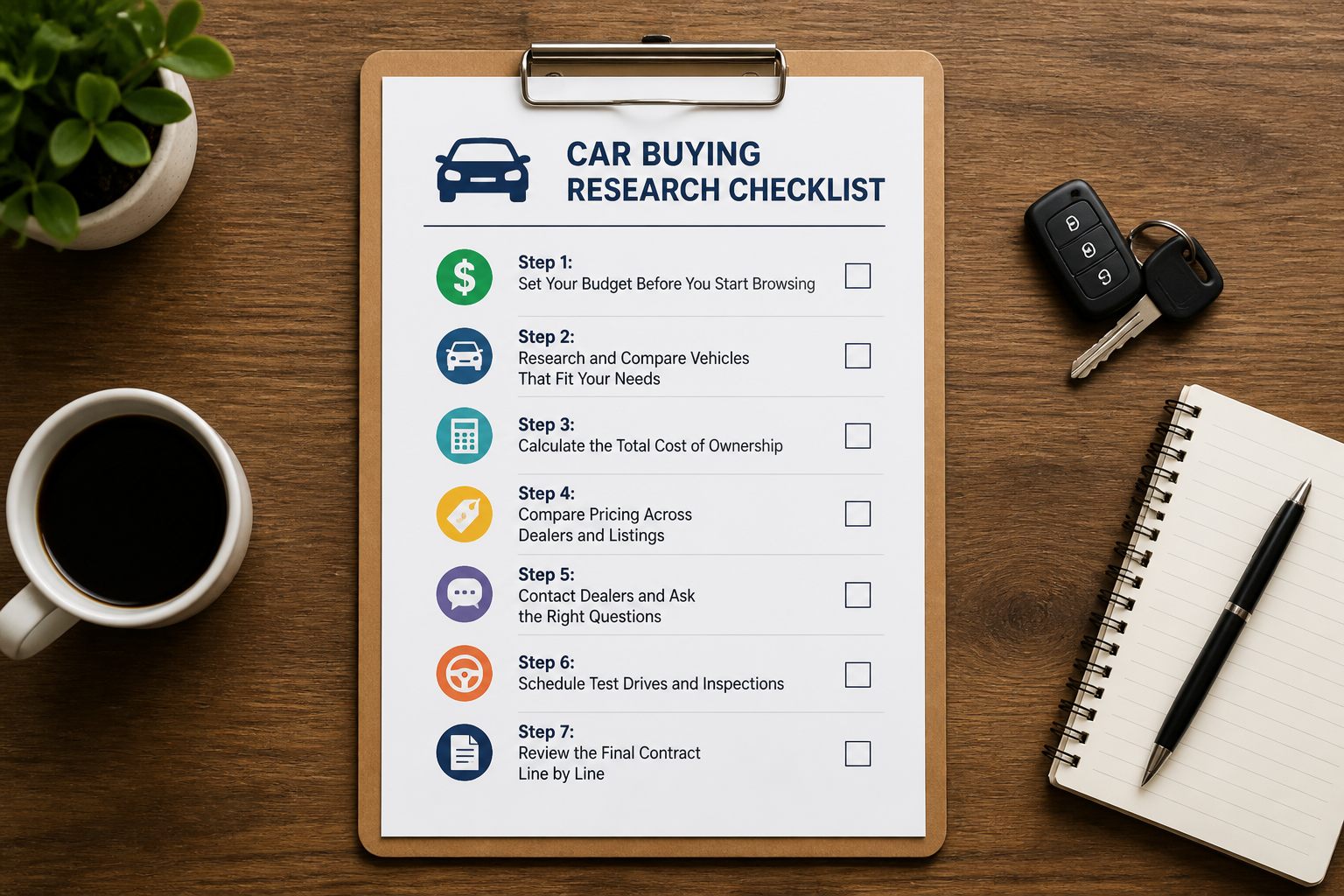
This car buying research checklist takes you through the process from setting a realistic budget to reviewing the final paperwork. Along the way, you will compare vehicles, look at ownership costs, research real inventory, prepare for dealer conversations, and figure out what deserves your attention during a test drive.
Step 1: Set Your Budget Before You Start Browsing
It is easy to start shopping by looking at cars first and numbers second. Setting your budget first gives you a much clearer place to start.
Remember that the advertised price or monthly payment is only part of the cost. Insurance, fuel, maintenance, registration, taxes, financing costs, and your down payment all affect what you will actually spend.
Determine Your Monthly Payment Comfort Zone
Look at your monthly take-home pay and the expenses already competing for it, including housing, utilities, debt payments, savings, and everyday spending. Then consider how much room you have for a vehicle payment plus insurance, fuel, and other ownership expenses.
There is no monthly payment that works for every buyer. The useful number is the one that fits your finances without forcing the rest of your budget to revolve around your car.
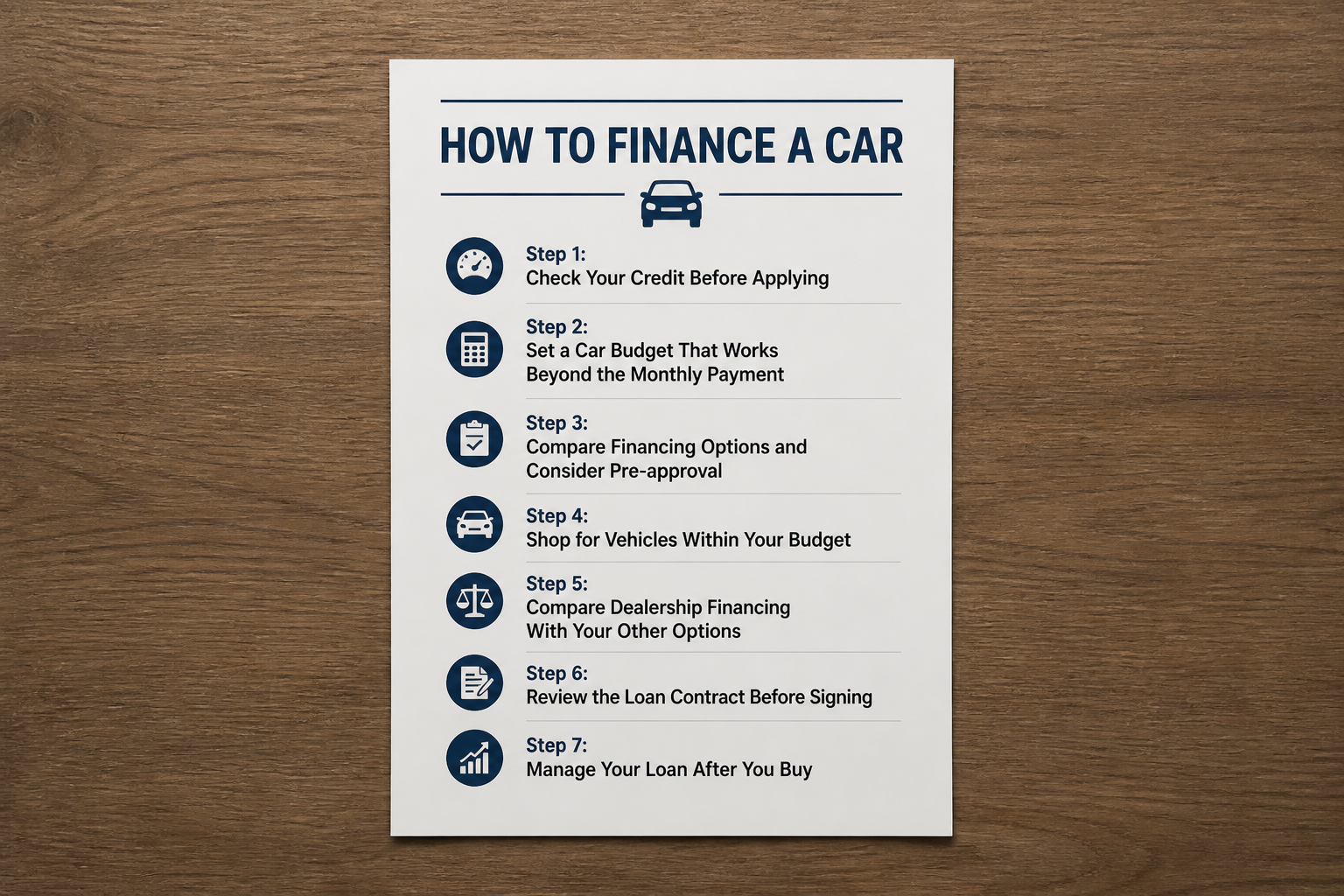
Pay attention to the loan term as well. Extending a loan can bring the monthly payment down, but it generally increases the total interest you will pay. It may also mean spending more time owing more on the vehicle than it is worth.
When comparing financing, look at the vehicle price, interest rate, loan term, amount financed, and total borrowing cost together. A comfortable monthly payment is important, but it should not be the only number driving the decision.
Factor in Your Down Payment, Trade-In, and Financing Options
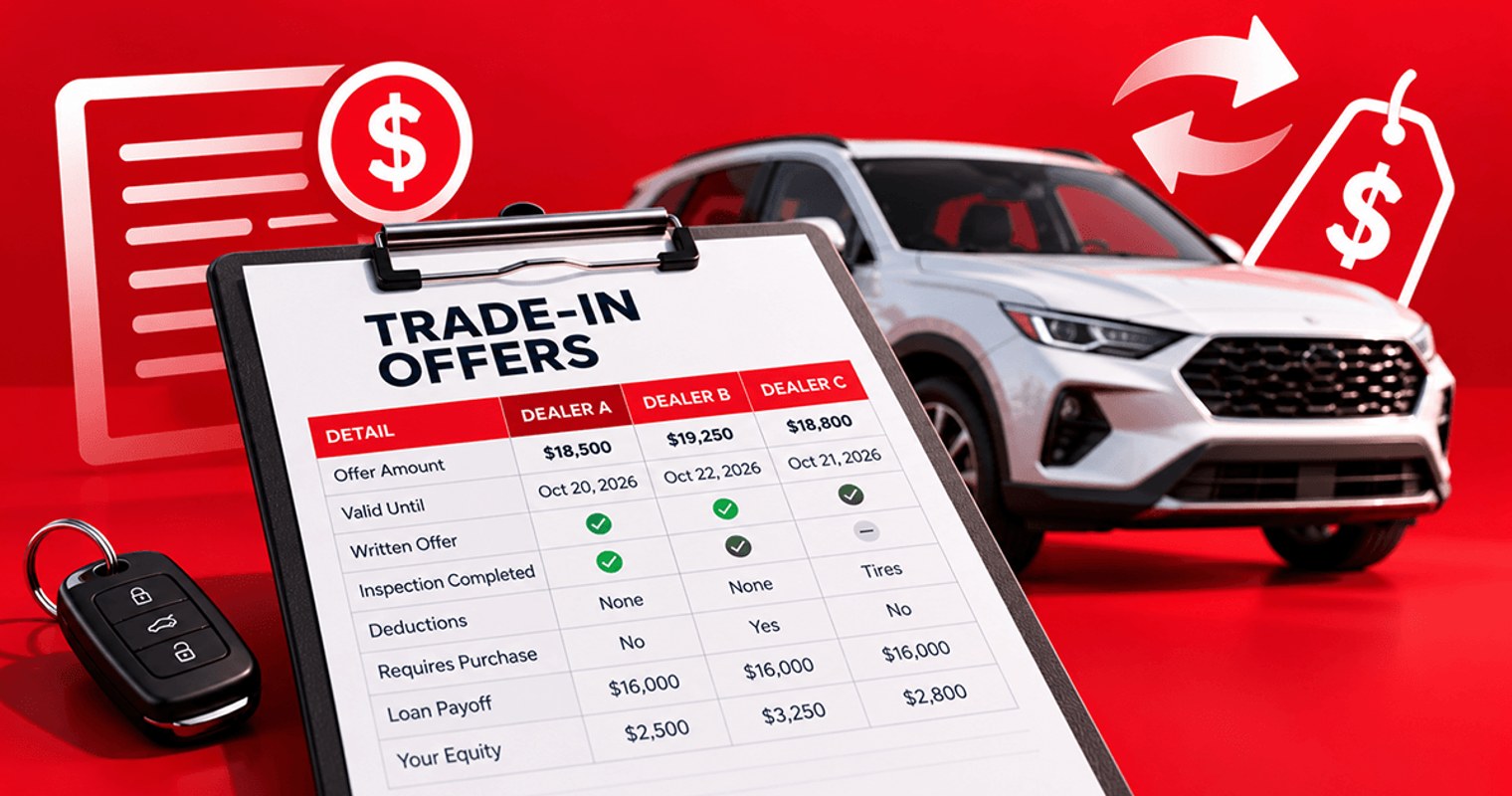
If you plan to make a down payment, that money can reduce how much you need to finance. Have a trade-in? Researching its approximate value ahead of time gives you useful context when you start discussing numbers with a dealership.
You can also consider getting pre-approved through a bank or credit union. A pre-approval gives you a financing offer you can bring into the shopping process and use for comparison.
Dealer financing deserves a look too. Dealerships regularly work with lenders and may have access to competitive rates, manufacturer financing programs, or incentives that change the equation.
Having a few financing options in mind gives you more information to work with when it is time to compare the complete offers available.
Step 2: Research and Compare Vehicles That Fit Your Needs
With a budget in place, start narrowing down the vehicles that make sense for your life.
A vehicle can look great in photos and still be the wrong fit for your commute, family, cargo needs, or budget. This stage is about figuring out what you actually need before getting distracted by everything you could have.
List Your Must-Haves and Nice-to-Haves
Think about what your next vehicle needs to do on an ordinary Tuesday, not just what sounds appealing on a feature list.
Your must haves might include:
- Enough seating for your household
- Cargo space for work, sports, pets, or travel
- Fuel economy that works for your commute
- Towing capacity
- All Wheel Drive
- Specific safety or driver assistance features
- EV range that fits your driving habits
Then separate those requirements from features you would enjoy but could live without.
Maybe you would love a panoramic roof, premium audio, larger wheels, upgraded upholstery, or a specific exterior color. Those features can absolutely influence your final choice. They just do not necessarily need to determine which models make your initial shortlist.
This distinction becomes especially useful when you start comparing trims. You may discover that the vehicle with everything on your wish list costs considerably more than another trim that gives you everything you actually need.
Compare Real Inventory With AutoFinder
Model research can tell you what exists. Real inventory tells you what you can actually buy.
AutoFinder lets shoppers explore new and used dealership inventory and compare details such as trim, mileage, equipment, photos, and pricing.
Say you are deciding between a Honda CR V, Toyota RAV4, and Mazda CX 5. Comparing the models on paper is useful, but checking available inventory gives you a much more practical picture. You might find that one model has several well-equipped options within your budget while another requires moving to a higher price point to get the features you want.
At this stage, try to narrow the field to around three to five serious candidates. That is enough variety to compare without turning every shopping session into an endless scroll through possibilities.
Step 3: Calculate the Total Cost of Ownership
Two cars can have nearly identical asking prices and cost very different amounts to own.
Insurance premiums, fuel use, routine maintenance, registration costs, and depreciation continue long after the purchase is complete. Looking at those expenses can change which vehicle represents the better value for you.
Insurance, Fuel, Maintenance, and Depreciation
Before choosing between your finalists, research some of the expenses that will follow you home.
For fuel economy and efficiency comparisons, EPA fuel economy information provides a consistent reference. Manufacturer maintenance schedules can also give you an idea of what routine service will involve over time.
Actual inventory adds another useful layer. Autofinder listings can help you see how model year, mileage, trim, equipment, and condition affect asking prices in the market.
A bargain upfront can become less appealing if the vehicle costs considerably more to insure, fuel, or maintain.
New vs. Used: Weigh the Tradeoffs
New and used vehicles solve different problems, which is why there is no automatic winner.
Buying new gives you the latest features, full manufacturer warranty coverage, and no previous ownership history. Depending on the vehicle and current programs, manufacturer financing or incentives can also make a new model more competitive than its sticker price initially suggests.
Used vehicles generally open up more possibilities at a given budget. You might be able to afford a higher trim, more features, or a model that would be outside your price range when new. Mileage, condition, maintenance history, and remaining warranty coverage become more important parts of the comparison.
Certified preowned vehicles sit somewhere in between. Manufacturer CPO programs typically add an inspection process and warranty coverage to qualifying used vehicles.
If all three options are available for a model you like, compare the actual vehicles and costs in front of you. The category alone does not tell you which one offers the best value.
Step 4: Compare Pricing Across Dealers and Listings
Once your shortlist is taking shape, start looking closely at actual prices.
The key is comparing similar vehicles.
Imagine two SUVs where one costs $1,500 less. That difference looks meaningful until you notice the cheaper one has considerably more mileage, a lower trim, or is missing a feature you planned to use every day.
Context matters.
Understand MSRP and Market Pricing
For new vehicles, MSRP provides a consistent starting point. The price you actually encounter can vary based on the model, inventory, manufacturer incentives, dealership pricing, equipment, and demand in your area.
Used vehicle pricing has even more variables. Mileage, age, condition, vehicle history, trim, options, location, and local supply can all affect the asking price.
Instead of getting attached to one number that a vehicle is supposed to cost, look at the price range for genuinely comparable vehicles. That gives you a much better sense of what the market looks like.
Use AutoFinder to Evaluate Comparable Listings
AutoFinder can help you look across dealership inventory and compare similar vehicles with more context.
Check the:
- Model year
- Trim
- Mileage
- Major options and packages
- Vehicle condition
- New, used, or certified pre-owned status
A higher-priced listing is not necessarily overpriced. It may have lower mileage, a more desirable equipment package, or other benefits that matter to you.
The useful comparison is between the price and the vehicle you are getting for it.
Step 5: Contact Dealers and Ask the Right Questions
Once you have identified vehicles you are genuinely interested in, dealer conversations can become much more specific.
Instead of asking what the dealership has available, you can ask about the exact vehicle you found, confirm the important details, and decide whether it is worth seeing in person.
Connect With Dealers Through AutoFinder
AutoFinder helps shoppers connect with dealerships based on the vehicles they are interested in. Before making the trip, use that conversation to fill in anything the listing does not answer.
You might ask the dealer to:
- Confirm that the vehicle is still available
- Explain the pricing shown on the listing
- Provide an estimated out-the-door price
- Clarify included equipment or dealer-installed accessories
- Share additional information about a used vehicle's history or condition
- Explain available financing or incentive programs
An estimated out-the-door price can be particularly helpful because it brings the vehicle price, applicable fees, taxes, title, registration, and other charges into one conversation.
Shopping used? Ask about service records, tire condition, vehicle history, remaining warranty coverage, and any known recalls that still need attention.
Look for Clear Communication
Vehicle pricing can involve more than the number shown in an advertisement. Some incentives have eligibility requirements. Taxes depend on location. Optional products, accessories, and equipment can affect the final amount.
If you do not understand a number, ask about it. The dealership should be able to explain what is included, which programs apply to your purchase, and how the final price is being calculated.
Clear communication early in the process can save both you and the dealership time when you arrive to see the vehicle.
Step 6: Schedule Test Drives and Inspections
Specifications can narrow your list. A test drive tells you whether you actually want to live with the vehicle.
If possible, drive two or three finalists relatively close together. Differences in seating, visibility, controls, ride quality, and cabin noise are much easier to notice when the experiences are still fresh.
What to Evaluate During a Test Drive
Do more than make a quick loop around the dealership.
Pay attention to:
- Comfort and visibility: Find a natural driving position and check how well you can see around the vehicle.
- Noise and ride quality: Try different road surfaces and, when practical, highway speeds.
- Technology and controls: Use the infotainment system, climate controls, smartphone integration, cameras, and features you expect to rely on.
- Acceleration and braking: Pay attention to how the vehicle responds in normal traffic, while merging, and during everyday braking.
- Passenger and cargo space: Sit in the rear seats and open up the cargo area if those spaces will matter regularly.
Small annoyances deserve attention. A confusing control layout or uncomfortable seat might not seem like a deal breaker during a 10-minute drive, but you could interact with it every day for years.
Consider a Pre-purchase Inspection for Used Cars
A vehicle history report provides useful background, but it cannot show you everything about a used car's condition today.
An independent pre-purchase inspection adds another source of information. A qualified mechanic may identify worn components, upcoming maintenance, previous repairs, or other issues you should know about before buying.
Ask the dealership how it handles independent inspections since policies can vary.
For a certified preowned vehicle, review the manufacturer's certification process as well. Knowing what the CPO inspection covers helps you decide whether you also want an independent inspection.
Step 7: Review the Final Contract Line by Line
You found the vehicle. You compared prices. You drove it. Now make sure the paperwork reflects the purchase you agreed to.
Review the Numbers and Optional Products
Before signing, check the:
- Vehicle price
- Trade-in value, if applicable
- Down payment
- Amount financed
- Interest rate
- Loan term
- Taxes and fees
- Monthly payment
- Optional products you selected
The finance office may also offer products such as vehicle service contracts, GAP coverage, appearance protection, or other coverage.
Whether those products make sense depends on the vehicle, your financing arrangement, existing insurance, coverage terms, and your own preferences. Ask what each product costs, what it covers, how long the coverage lasts, and what exclusions apply.
Evaluate the product itself rather than judging it only by how much it changes the monthly payment.
Confirm Warranty Coverage and Dealer Policies
Make sure you know which warranty coverage comes with the vehicle.
For a new car, review the manufacturer's warranty. With a certified pre-owned vehicle, check both the remaining original warranty and the additional CPO coverage. If you are buying another type of used vehicle, ask what warranty coverage is included, if any.
You can also ask about the dealership's return or exchange policy. These policies vary by dealership and location, so check the terms that apply to your specific purchase rather than assuming there is an automatic cooling-off period.
Keep copies of your purchase agreement, financing documents, warranty information, and other paperwork after the sale.
Final Thoughts: Good Research Makes Car Buying Easier
Good car research gives you context.
You know what you can afford. You know which vehicles fit your needs. You have seen what comparable vehicles are selling for, understand the ownership costs that matter to you, and know which questions still need answers.
AutoFinder can help bring several pieces of that process together by making it easier to explore inventory, compare vehicles and options, and connect with dealerships.
By the time you walk into a dealership, you should not have to start your search from zero. You can focus on the vehicles that already make sense and work with the dealer to determine whether the one in front of you is the right fit.
| Cost Category | What to Research | Why It Matters |
|---|---|---|
| Insurance | Get quotes for the specific models you are considering | Premiums can vary substantially between vehicles |
| Fuel or Charging | Compare official fuel economy, efficiency, or EV range estimates | Your driving habits can turn efficiency differences into meaningful long term costs |
| Maintenance | Review the manufacturer's recommended service schedule | Service requirements and expected maintenance vary by vehicle |
| Depreciation | Consider how well the vehicle is likely to retain its value | Resale value can affect your overall ownership cost |
| Registration and Taxes | Check the requirements where you live | Taxes and registration costs vary by state and vehicle |
Pros
- New Car: Full manufacturer warranty, latest features, no previous ownership history, potential manufacturer incentives
- Used Car: Lower purchase price, more vehicle or trim for your budget, potentially less depreciation
Cons
- New Car: Typically higher purchase price, potentially greater early depreciation
- Used Car: Condition and maintenance history matter more, less remaining warranty coverage, newer features may not be available