Best Used Cars With Low Maintenance Costs: 10 Smart Picks
Last updated Nov 13th, 2026A used car can look like a bargain until it needs new tires, brake repairs, or an expensive trip to the mechanic. Those costs can add up quickly, especially if you're buying an older vehicle with limited maintenance records.
The good news is that some used cars are easier on your wallet than others. Models such as the Toyota Corolla, Honda Civic, Toyota Camry, and Toyota Prius have established ownership histories, widely available replacement parts, and relatively manageable maintenance expenses.
The best used cars with low maintenance costs aren't necessarily the cheapest vehicles on the lot. They're the ones that offer a reasonable purchase price, predictable service needs, and fewer financial surprises over time.
We selected 10 used cars and SUVs using published maintenance-cost estimates, ownership considerations, and everyday practicality. We'll also cover which model years are worth shopping, what problems to watch for, and how to recognize a well-maintained vehicle.
Find Your Best Price
See what others paid and get upfront pricing from local dealers.

What Are the Best Used Cars With Low Maintenance Costs?
These 10 vehicles are worth comparing if you want to keep maintenance and repair expenses manageable.
- Toyota Corolla: Best overall for low maintenance costs
- Honda Civic: Best compact car for everyday driving
- Toyota Camry: Best midsize sedan
- Mazda3: Best for driving comfort and value
- Toyota Prius: Best hybrid for fuel and maintenance savings
- Honda Accord: Best for passenger space
- Honda Fit: Best affordable used hatchback
- Toyota RAV4: Best used SUV for low maintenance costs
- Honda CR-V: Best compact SUV for practicality
- Hyundai Elantra: Best budget-friendly alternative
Our selections consider published maintenance and repair cost estimates, vehicle practicality, parts availability, and common used-car ownership concerns. This is an editorial shortlist rather than a ranking of the 10 vehicles with the lowest statistically measured repair costs. The recommended model-year ranges are shopping starting points, not guarantees that every vehicle within those years will be equally reliable.
For example, a Corolla with 90,000 miles and complete service records may be a smarter purchase than a newer car that hasn't received regular maintenance.
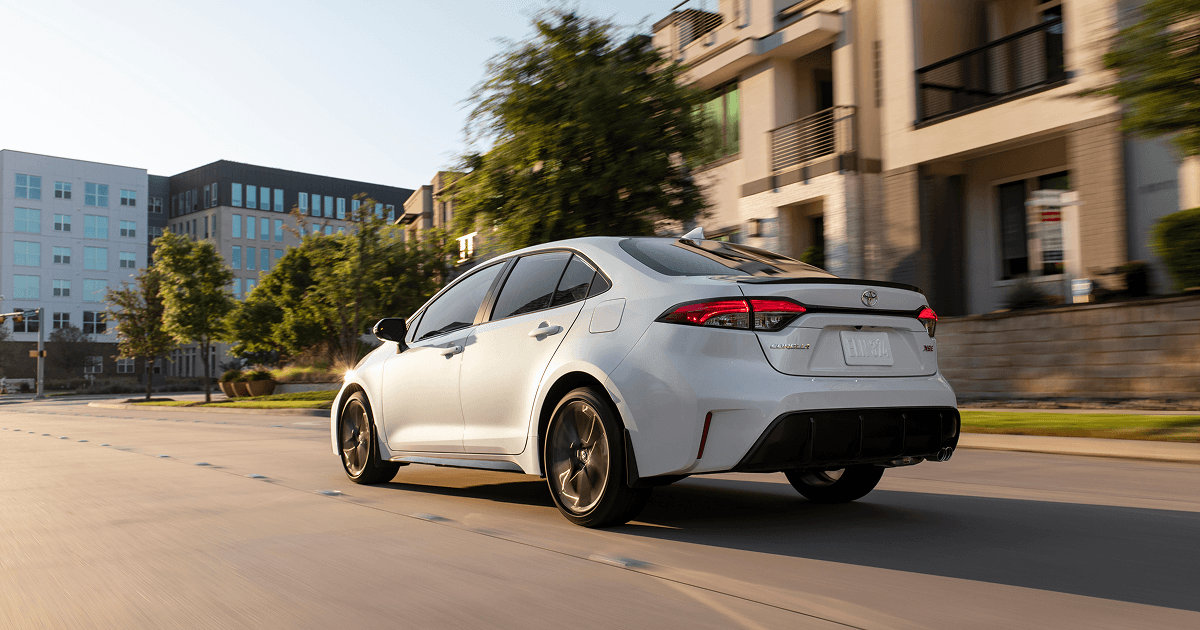
1. Toyota Corolla: Best Overall for Low Maintenance Costs
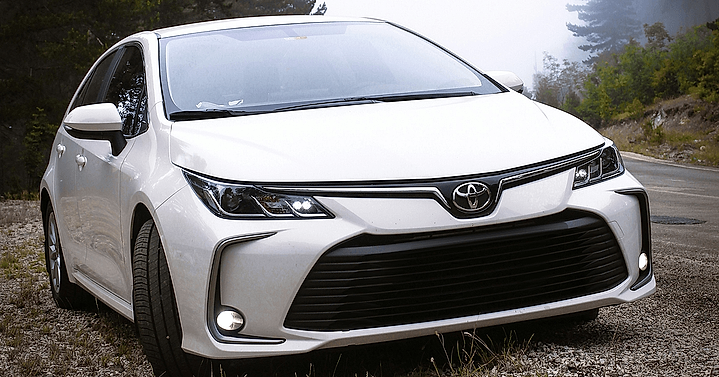
The Toyota Corolla has earned its place on used-car shopping lists for a reason. It's affordable to operate, easy to service, and doesn't require a large budget for routine maintenance.
CarEdge estimates approximately $4,434 in maintenance and repair expenses during the Corolla's first 10 years of service. That figure begins when the vehicle is new, so it shouldn't be interpreted as the amount you'll spend over the next decade after buying a used Corolla.
Still, it provides a useful comparison with other models.
Used Corollas from 2019 through 2023 are a sensible starting point. They offer modern safety features, good fuel economy, and a choice of trims without the higher price of a brand-new vehicle.
The Corolla is particularly appealing for commuters and drivers who want transportation that's straightforward to own. Replacement parts are widely available, and most independent repair shops are familiar with the model.
Its biggest limitation is space. The rear seat and trunk are adequate for daily errands but may feel restrictive for families or anyone who frequently carries bulky equipment.
When comparing Corollas, prioritize documented oil changes, tire condition, brake wear, and smooth transmission operation. A vehicle with consistent maintenance records is generally worth more consideration than one with a lower asking price but an uncertain history.
2. Honda Civic: Best Compact Car for Everyday Driving
The Honda Civic is another compact car that can make long-term ownership relatively affordable, but it offers a different driving experience from the Corolla.
It's comfortable on the highway, efficient around town, and available in sedan and hatchback configurations. The hatchback is particularly useful if you occasionally need to carry larger items without moving into an SUV.
For used shoppers, the 2019 through 2023 model years provide a good range of choices.
The important detail is what's under the hood.
Depending on the year and trim, Civics from this period use naturally aspirated or turbocharged gasoline engines. Those engines have different maintenance requirements and potential repair considerations, so don't assume every Civic will cost the same to own.
Honda previously addressed fuel dilution concerns through service campaigns involving certain earlier 1.5-liter turbocharged Civic models. That history is worth understanding, but it shouldn't be treated as evidence that every newer turbocharged Civic has the same problem.
A mechanic should check for fluid leaks, abnormal engine behavior, transmission issues, and signs of neglected maintenance.
The Civic is a particularly good fit for someone who wants a compact used car that feels comfortable and engaging on a daily commute.
3. Toyota Camry: Best Midsize Sedan
The Toyota Camry offers more room than the Corolla without moving into the higher ownership costs often associated with larger vehicles.
Its spacious rear seat and comfortable highway ride make it useful for commuters, families, and drivers who regularly carry passengers.
CarEdge projects approximately $4,580 in maintenance and repair costs during the Camry's first 10 years of service. Like the Corolla estimate, this is a model-level projection beginning when the vehicle is new, not a forecast for a specific used car.
The 2018 through 2023 Camry is a good place to begin your search. Gasoline and hybrid versions are available, giving buyers different options for balancing purchase price and fuel expenses.
The standard 4-cylinder gasoline model is a straightforward choice for everyday driving. A Camry Hybrid may make more financial sense if you drive frequently, particularly in city traffic.
Pay attention to how the transmission shifts, listen for suspension noises, and check whether scheduled maintenance has been completed.
A high-mileage Camry isn't automatically a poor purchase. Many accumulate substantial mileage through commuting. The more important question is whether the vehicle has been serviced consistently and remains in good mechanical condition.
4. Mazda3: Best for Driving Comfort and Value
Not everyone wants a used car that simply gets them from one place to another. The Mazda3 offers a little more enjoyment behind the wheel while remaining a reasonable choice for cost-conscious shoppers.
Its responsive steering, comfortable front seats, and refined interior help it stand apart from many compact sedans.
Used 2019 through 2023 models are particularly interesting. Mazda redesigned the Mazda3 for 2019, introducing a more upscale cabin and updated styling.
The naturally aspirated gasoline versions are worth comparing if you want to avoid some of the additional components found in turbocharged engines. That doesn't automatically make them cheaper to repair, but it does give shoppers a different powertrain option.
CarEdge's published estimates also place the Mazda3 competitively among mainstream vehicles for maintenance and repair expenses during its early ownership years.
The Mazda3's main compromise is rear-seat space. Taller passengers may find the back seat tighter than expected, especially on longer trips.
Rather than choosing solely by trim level, compare the condition of the tires, brakes, suspension, and interior. A well-kept Mazda3 can offer a more refined driving experience without requiring a luxury-car budget.
5. Toyota Prius: Best Hybrid for Fuel and Maintenance Savings
The Toyota Prius is known for using less gasoline, but its maintenance expenses are another reason to consider one.
CarEdge estimates approximately $4,359 in maintenance and repair costs during the Prius's first 10 years of service. That makes it one of the lower-cost models in its projections.
The Prius also uses regenerative braking, which can reduce wear on conventional brake components. That doesn't eliminate brake maintenance, but it can help extend the life of certain parts.
Used 2019 through 2022 models are worth investigating if you want a hybrid without paying the higher price of a newer redesigned version.
The main concern with an older Prius is the condition of its hybrid system.
High-voltage batteries can be expensive to replace outside warranty coverage, although replacement isn't an inevitable expense for every used Prius. Battery condition depends on age, usage, environmental conditions, and other factors.
Have a technician familiar with Toyota hybrids inspect the vehicle and check for diagnostic trouble codes before purchasing.
The Prius is especially attractive for drivers with long commutes or frequent city driving. Over several years, fuel savings can become a meaningful part of the ownership equation.
6. Honda Accord: Best for Passenger Space
The Honda Accord is worth a look if compact sedans feel too small but you don't want to buy an SUV.
Its roomy cabin provides generous legroom for rear passengers, and the trunk is large enough for luggage, groceries, and other everyday needs.
Used 2018 through 2022 Accords offer several powertrain choices, including turbocharged gasoline engines and a hybrid.
That variety is useful, but it also means shoppers need to research the exact version they're considering.
Because the Accord was offered with different gasoline and hybrid powertrains, maintenance requirements and potential repair concerns vary by configuration. Review the service history, check for applicable recalls or service bulletins, and have a mechanic inspect the engine, cooling system, and transmission before purchasing.
The Accord's larger cabin makes it a practical alternative to a compact SUV, particularly for buyers who spend most of their time driving on paved roads and don't need additional ground clearance.
7. Honda Fit: Best Affordable Used Hatchback
The Honda Fit is one of the most practical small cars you can buy used.
Honda stopped selling the Fit in the United States after the 2020 model year, but its clever interior still makes it useful for shoppers on a tighter budget.
The standout feature is Honda's Magic Seat system. The rear seats can be arranged to accommodate different types of cargo, making the Fit surprisingly versatile for its size.
It also has a small footprint, which helps when parking in crowded areas or navigating narrow streets.
Used 2016 through 2020 examples are worth comparing.
Because these vehicles are getting older, maintenance history becomes particularly important. Look for evidence of regular oil changes, brake service, and transmission maintenance.
If you're considering a Fit equipped with a continuously variable transmission, check whether the correct transmission fluid has been changed according to Honda's recommendations.
Also test the air conditioning, inspect the suspension, and listen for unusual noises over rough pavement.
The Fit won't offer the quietest highway ride or the most powerful acceleration, but its combination of practicality and manageable ownership costs makes it an appealing choice for commuters and budget-conscious drivers.
8. Toyota RAV4: Best Used SUV for Low Maintenance Costs
The Toyota RAV4 is a practical choice for buyers who want more cargo space and a higher seating position without moving into a large SUV.
Used 2019 through 2023 models provide a useful combination of passenger room, available all-wheel drive, and modern safety equipment.
Gasoline and hybrid versions are available. The hybrid can be particularly attractive if you drive frequently in city traffic.
The RAV4 also performs competitively in CarEdge's maintenance-cost projections compared with many other SUVs.
One issue worth researching involves certain fifth-generation RAV4 Hybrids.
Toyota's Customer Support Program 22TE09 addresses high-voltage cable corrosion on certain 2019 through 2024 RAV4 Hybrids. Eligible vehicles may qualify for extended coverage of up to 10 years with unlimited mileage if Limited-Service Campaign 25TD01 is completed by September 30, 2028. Ask a Toyota dealership to check the VIN, confirm eligibility, and review the vehicle's campaign history.
For gasoline and hybrid models alike, inspect the suspension, brakes, tires, and service history.
The RAV4 is a particularly good choice when you need SUV versatility but don't want the additional size and operating expenses of a 3-row vehicle.
9. Honda CR-V: Best Compact SUV for Practicality
The Honda CR-V is one of the more spacious vehicles in the compact SUV category, which makes it useful for families and commuters who regularly carry passengers or equipment.
Its rear seat provides generous room, and the cargo area is large enough for groceries, luggage, and many everyday needs.
Used 2019 through 2022 models are a reasonable starting point, with gasoline and hybrid versions available depending on the year.
Many gasoline CR-Vs from this period use Honda's 1.5-liter turbocharged engine.
Honda previously issued service campaigns addressing fuel dilution concerns in certain earlier CR-V models, particularly vehicles from the 2017 and 2018 model years. Buyers should understand that history without assuming every later CR-V has the same issue.
Check the VIN for outstanding recalls or applicable service information, and have the engine inspected for signs of improper operation or neglected maintenance.
The CR-V Hybrid is another option for buyers who want better fuel economy, although its hybrid system should also be evaluated before purchase.
Because the CR-V is widely available on the used market, shoppers can often compare several examples with different mileage, equipment, and service histories.
That flexibility is valuable. Instead of settling for a vehicle with questionable maintenance, you may be able to find a better-kept example at a similar price.
10. Hyundai Elantra: Best Budget-Friendly Alternative
The Hyundai Elantra deserves consideration for a different reason than the Corolla or Prius.
Its biggest advantage may be the purchase price.
Used Elantras can offer modern technology, good fuel economy, and a comfortable cabin at prices that are competitive with other compact sedans.
The redesigned 2021 through 2023 models are a sensible place to start.
However, shoppers shouldn't assume the Elantra has the lowest maintenance expenses simply because it's affordable to buy.
CarEdge estimates approximately $6,338 in maintenance and repair costs during the Elantra's first 10 years of service. That's higher than its estimates for the Corolla, Camry, and Prius.
The Elantra can still be a good value if its purchase price is lower and the vehicle has been maintained properly.
Pay close attention to the specific engine, transmission, and model year. Hyundai has issued recalls and service campaigns affecting different vehicles, so check the VIN and review the applicable information.
A well-maintained Elantra with a lower asking price may make more financial sense than a more expensive competitor, even if its projected maintenance costs are somewhat higher.
How Much Does It Cost to Maintain a Used Car?
There's no single annual maintenance cost that applies to every used vehicle.
A car with 30,000 miles may need little beyond oil changes, filters, and tire rotations. One approaching 100,000 miles could need tires, brakes, spark plugs, suspension work, or other scheduled services.
CarEdge estimates the following maintenance and repair costs during the first 10 years of service:
- Toyota Prius: approximately $4,359
- Toyota Corolla: approximately $4,434
- Toyota Camry: approximately $4,580
- Hyundai Elantra: approximately $6,338
These figures begin when the vehicles are new. They help compare models but don't predict what you'll spend after purchasing a particular used car.
Consumer Reports also publishes maintenance and repair cost research based on owner-reported expenses. Its findings show that ownership costs can rise substantially as vehicles age and move beyond their original warranty coverage.
The most useful approach is to estimate what the specific vehicle you're considering will need over the next few years.
Ask about upcoming scheduled maintenance, review recent repair invoices, and have a mechanic inspect the vehicle before purchasing.
What's the Difference Between Maintenance and Repair Costs?
Maintenance includes the routine services needed to keep a vehicle operating properly.
Common examples include:
- Oil and filter changes
- Tire rotations and replacements
- Brake inspections and service
- Fluid changes
- Air and cabin filter replacements
- Spark plug replacements
- Scheduled inspections
Repairs involve fixing components that have worn out, malfunctioned, or failed.
That could mean replacing a water pump, repairing an air conditioning system, fixing a transmission problem, or replacing worn suspension components.
A vehicle can have inexpensive routine maintenance and still develop an expensive mechanical issue.
That's why maintenance-cost rankings should be only one part of your used-car research.
How to Find a Used Car That Won't Cost a Fortune to Maintain
Check the Maintenance History
Start by asking for service records.
Regular oil changes, fluid replacements, brake service, and other scheduled maintenance can help show how a vehicle has been cared for.
The work doesn't need to have been completed at a dealership. Records from a reputable independent repair shop can also be useful.
Look for consistent maintenance rather than focusing only on whether the vehicle has a complete set of receipts.
Get a Pre-Purchase Inspection
A qualified mechanic can identify problems that aren't obvious during a short test drive.
An inspection may uncover worn suspension components, fluid leaks, brake issues, accident repairs, or evidence of neglected maintenance.
If a vehicle looks promising but has an incomplete service history, an independent inspection becomes even more valuable.
If you're concerned about a vehicle's past, read our guide on whether you should buy a used car with an accident history.
Research the Exact Model Year and Engine
A manufacturer's reputation doesn't tell the whole story.
Different engines and transmissions can have different service requirements and repair histories, even within the same model.
Research the exact vehicle you're considering, including its model year, powertrain, common problems, and recall history.
Check for Outstanding Recalls
Use the National Highway Traffic Safety Administration's VIN lookup tool to check for open safety recalls.
An outstanding recall doesn't automatically mean you should avoid a vehicle. It does mean you should understand the issue and confirm how it will be addressed.
You can also ask the dealership to review the vehicle's recall status before completing the purchase.
For more guidance, see how to research recalls before buying a used car.
Compare Upcoming Maintenance Costs
The lowest asking price isn't always the best deal.
Imagine you're comparing 2 similar used cars.
One costs $14,000 but needs $1,500 in tires and brake work. The other costs $15,000 and recently received those services.
Assuming both vehicles are otherwise comparable, the first car effectively costs $15,500 once you complete the necessary work.
That makes the $15,000 vehicle the less expensive option in the short term.
This is why maintenance records and inspection results can be useful when evaluating a dealer's asking price or negotiating a purchase.
Are Older Used Cars More Expensive to Maintain?
Maintenance and repair expenses generally increase as vehicles age and accumulate mileage.
Suspension components, seals, cooling system parts, and other mechanical items wear over time. Even a vehicle with relatively low mileage can develop age-related problems.
That doesn't mean an older car is automatically a bad purchase.
A 10-year-old vehicle with consistent maintenance and a recent inspection may be in better condition than a 5-year-old vehicle that hasn't been properly serviced.
The key is understanding what work has already been completed and what expenses may be coming next.
If you're considering a higher-mileage vehicle, keep some money available for repairs rather than spending your entire budget on the purchase.
Is It Cheaper to Maintain a Hybrid or Gasoline Car?
Hybrids can have relatively low routine maintenance costs, but the answer depends on the specific vehicle.
Regenerative braking can reduce wear on conventional brake components. Some hybrid systems also reduce gasoline engine operation under certain driving conditions.
However, hybrids have high-voltage batteries and electrical components that can be expensive to repair outside warranty coverage.
For a used Toyota Prius or Camry Hybrid, fuel savings may be substantial if you drive frequently.
Before buying an older hybrid, have the battery and related systems evaluated by a qualified technician.
A gasoline vehicle may be the more economical choice if you drive relatively few miles or are comparing an older hybrid with uncertain battery condition.
The right choice depends on the purchase price, expected maintenance expenses, fuel savings, and how long you plan to keep the vehicle.
Which Used Car Has the Lowest Maintenance Costs?
For many shoppers, the Toyota Corolla is one of the best places to begin.
Its relatively low projected maintenance expenses, widely available replacement parts, and practical design make it a strong choice for affordable transportation.
The Honda Civic and Mazda3 are good alternatives if you want a compact car with a different driving experience. The Toyota Camry and Honda Accord offer more passenger space, while the Prius is particularly appealing for drivers focused on fuel efficiency.
If you need an SUV, compare the Toyota RAV4 and Honda CR-V.
Still, the best used car isn't necessarily the one with the lowest maintenance-cost estimate.
A vehicle with 80,000 miles and consistent service records may be a better purchase than one with 50,000 miles and a history of neglected maintenance.
Before deciding, compare the vehicle's condition, service history, upcoming maintenance, and total purchase price. Our Car Buying Research Checklist can help you organize those comparisons.
When you're ready to shop, explore used cars on AutoFinder to compare available vehicles and connect with local dealerships. You can also use the Out-the-Door Price Calculator to estimate taxes and fees before purchasing.
Want More Car Buying Advice?
Add AutoFinder as a preferred source on Google to help you discover more of our automotive guides and research.
FAQs
What Is the Cheapest Used Car to Maintain?
The Toyota Corolla is one of the strongest mainstream choices for low maintenance costs. CarEdge estimates approximately $4,434 in maintenance and repair expenses during its first 10 years of service. However, actual costs depend on age, mileage, condition, and maintenance history. A well-maintained Honda Civic or Toyota Camry may be a better purchase than a neglected Corolla.
Which Used Car Brands Have the Lowest Maintenance Costs?
Toyota and Honda are good starting points because many of their mainstream models have relatively manageable maintenance expenses. Mazda also offers competitive choices. However, costs vary by model, engine, and model year. It's more useful to compare specific vehicles and their service histories than to assume every car from one manufacturer will be inexpensive to maintain.
Are Toyota Cars Cheaper to Maintain Than Honda Cars?
Toyota generally performs well in long-term maintenance-cost comparisons, although the difference depends on the vehicles being evaluated. A Toyota Corolla and Honda Civic may have similar routine service requirements, but repair expenses can vary by year and powertrain. Compare maintenance schedules, known issues, and vehicle condition rather than relying solely on brand reputation.
Is It Better to Buy a Used Car With Low Miles or Good Maintenance Records?
Both matter, but maintenance history can be especially valuable. A higher-mileage vehicle that has received regular service may be in better mechanical condition than a lower-mileage car with neglected maintenance. Mileage still affects wear on components, so evaluate both factors and arrange an independent pre-purchase inspection before purchasing.
What Used SUV Has the Lowest Maintenance Costs?
The Toyota RAV4 and Honda CR-V are strong options for shoppers who want a used SUV with manageable maintenance expenses. Both offer practical interiors and widely available replacement parts. However, the lowest-cost choice depends on the model year, powertrain, mileage, and service history. Check for known issues and upcoming maintenance before comparing prices.
Are Used Hybrid Cars Expensive to Maintain?
Not necessarily. Models such as the Toyota Prius can have relatively low routine maintenance costs, partly because regenerative braking reduces wear on conventional brakes. However, an older hybrid may require expensive battery or electrical system repairs. Before purchasing, have the hybrid system inspected and check whether any applicable battery warranty coverage remains.
How Much Should I Budget for Used Car Maintenance?
Your budget should reflect the vehicle's age, mileage, and condition. Routine expenses may include oil changes, tires, brakes, filters, and fluid service, while unexpected repairs require additional savings. Review the manufacturer's maintenance schedule and ask a mechanic about upcoming work. Keeping a separate repair reserve is sensible, particularly for vehicles approaching or exceeding 100,000 miles.
Maintenance and repair costs are estimates and vary by vehicle age, mileage, condition, location, driving habits, and service provider. Past reliability and projected maintenance costs do not guarantee future performance. Always review a used vehicle's history and consider an independent inspection before purchasing.