Most Reliable SUVs in 2026: 5 Models to Consider
Last updated Sep 28th, 2026If reliability is near the top of your SUV shopping list, the Honda CR V, Subaru Forester, Toyota RAV4, Lexus NX, and Toyota Grand Highlander Hybrid are all worth a closer look for 2026.
There is not one SUV that can be proven to be the most reliable choice for every shopper. Some 2026 models have current owner-reported reliability results, while others rely more heavily on predicted reliability and previous model years. A redesign or new powertrain can also make an older reputation less useful.
That is why it helps to look beyond the badge on the grille. The exact model year, powertrain, reliability history, recalls, and condition of the individual vehicle all matter.
Find Your Best Price
See what others paid and get upfront pricing from local dealers.

What Are the Most Reliable SUVs in 2026?
A strong 2026 reliability shortlist includes:
- Honda CR V: Strong current model-specific reliability results with gasoline and hybrid choices.
- Subaru Forester: Strong current reliability results, standard All Wheel Drive, and gasoline and hybrid options.
- Toyota RAV4: Encouraging predicted reliability, but completely redesigned for 2026.
- Lexus NX: Strong current reliability results for shoppers looking for a luxury compact SUV.
- Toyota Grand Highlander Hybrid: Encouraging predicted reliability for shoppers who need more passenger and cargo space.
These SUVs are not ranked from 1 to 5 because the available evidence is not identical for every model. A current owner based reliability score, for example, is different from a prediction based partly on previous model years.
How AutoFinder Evaluated Reliability
AutoFinder reviewed current model-specific reliability results, predicted reliability, recent model history, redesigns, powertrain changes, and known recalls.
Because a 2026 vehicle has not been on the road long enough to establish its long-term durability, we distinguish current owner-reported results from predictions based on previous model years.
Price, inventory volume, fuel economy, safety ratings, and resale value were not used to determine which SUVs belong on this reliability shortlist. Those factors can still matter when deciding which SUV makes the most sense to buy, but they answer a different question.
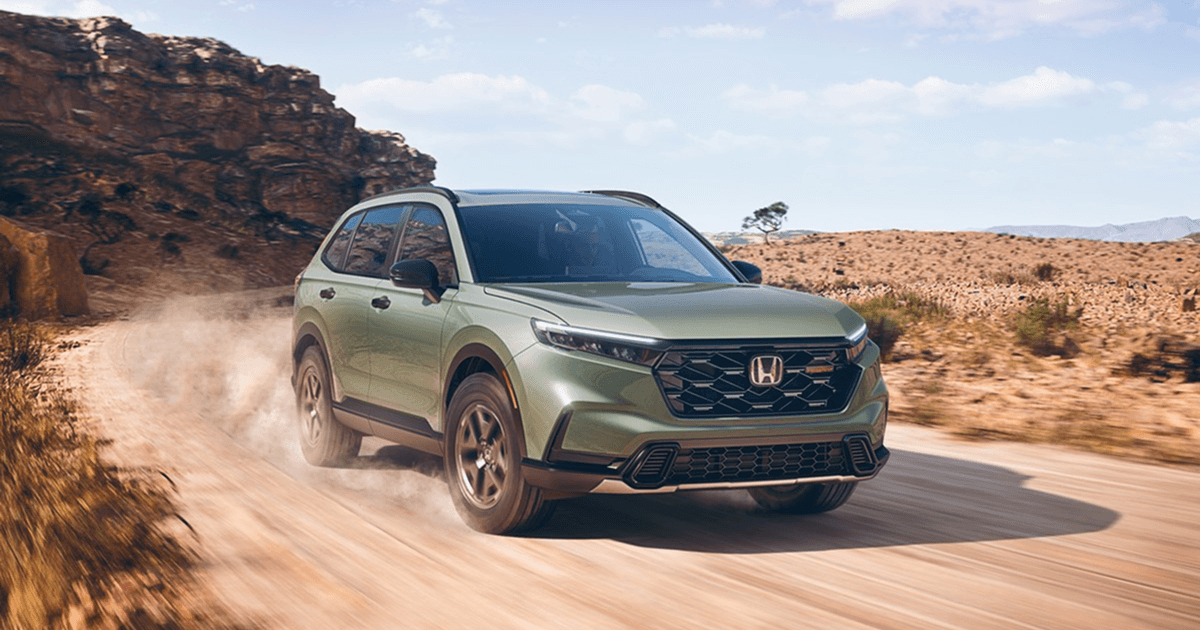
Honda CR-V
The Honda CR-V is a good place to start for shoppers who want a compact SUV with current reliability evidence rather than relying only on brand reputation.
J.D. Power gives the 2026 CR-V an 83 out of 100 Quality & Reliability score. Its measure considers defects, malfunctions, and design problems reported by vehicle owners.
The CR-V also gives shoppers a choice between gasoline and hybrid powertrains. That distinction matters when researching reliability because different powertrains should not automatically be assumed to have identical ownership histories.
For shoppers comparing mainstream compact SUVs, the CR V combines encouraging current reliability results with a relatively accessible advertised price. We will get into the pricing data below.
Subaru Forester
The Subaru Forester is another compact SUV with current model-specific reliability evidence.
J.D. Power gives the 2026 Forester an 81 out of 100 Quality & Reliability score.
The Forester is especially relevant for shoppers who want All Wheel Drive. Every Forester listing included in AutoFinder's recent 2026 marketplace analysis had All Wheel Drive, and both gasoline and hybrid versions appeared in the data.
Those marketplace characteristics do not make the Forester more reliable. They do make it easier to understand what shoppers are actually choosing between once reliability has helped narrow the search.
Toyota RAV4
The Toyota RAV4 requires a little more context.
The RAV4 has a long history in the compact SUV market, but the 2026 RAV4 is redesigned. Consumer Reports expects the 2026 model to be more reliable than the average new vehicle, but its prediction is based on data from the previous generation and Toyota's broader brand performance.
That distinction is important. Previous RAV4 reliability can help inform expectations, but it cannot tell us exactly how a newly redesigned 2026 model will perform after years on the road.
The powertrain lineup has changed too. The redesigned RAV4 uses an electrified lineup rather than offering the previous conventional gasoline configuration.
That makes the 2026 RAV4 an encouraging option, but one where shoppers should understand that predicted reliability is doing more of the work than long term evidence from this specific generation.
Lexus NX
The Lexus NX 350 brings a luxury option into the reliability conversation.
J.D. Power gives the broader 2026 Lexus NX lineup an 85 out of 100 Quality & Reliability score, the highest J.D. Power Quality & Reliability score among the CR V, Forester, and NX models discussed here.
The lineup also includes different powertrains, including the gasoline NX 350, hybrid NX 350h, and plug in hybrid NX 450h+.
That variety makes the NX useful for shoppers who want a premium SUV without treating reliability as an afterthought. It also means shoppers should pay attention to which NX powertrain they are actually considering instead of applying one broad assumption to every version.
Toyota Grand Highlander Hybrid
The Toyota Grand Highlander serves a different shopper than the compact SUVs above. It is a larger three row SUV, so it should not be treated as a direct substitute for a CR V or Forester.
Consumer Reports expects the 2026 Grand Highlander Hybrid to be more reliable than the average new vehicle, based on data from the 2024 and 2025 models.
There is an important caveat. The 2026 Grand Highlander Hybrid has also been affected by NHTSA recalls, including a 2026 rear axle carrier recall. A recall does not automatically mean a vehicle is unreliable, but it is something shoppers should investigate before buying.
For families who need 3 rows, the Grand Highlander Hybrid broadens the shortlist beyond compact SUVs while still bringing encouraging predicted reliability evidence.
How to Compare 2 SUVs for Reliability
Once you have narrowed your search to 2 SUVs, comparing the badges alone will not tell you much. Work through the details in this order.
1. Compare the exact model year
Reliability can change between model years. Check evidence for the vehicle you are actually considering instead of assuming every year of a model performs the same way.
2. Find out whether either SUV was redesigned
A redesign can introduce a different powertrain, electronics, platform, or other major components. It does not mean the vehicle will have problems, but previous generation reliability becomes less conclusive.
The redesigned 2026 RAV4 is a good example.
3. Compare the specific powertrains
Gasoline, hybrid, and plug in hybrid versions may use different components and should not automatically be treated as having identical reliability histories.
This matters even more in 2026 because the RAV4 is now electrified, while models such as the CR V and Forester still give shoppers gasoline and hybrid choices.
4. Separate current results from predictions
Current owner reported reliability results tell you something different from predicted reliability based on previous model years.
Both can be useful. Just know which type of evidence supports the vehicle you are considering.
5. Check recalls and known issues
A recall should prompt more research, not an automatic rejection.
For a used SUV, you can research recalls before buying and confirm whether applicable recall work has been completed.
6. Evaluate the individual vehicle if you are buying used
Model level reliability only gets you so far with a used SUV.
Mileage, maintenance records, previous repairs, condition, and inspection results can all change the equation. A higher mileage vehicle with a documented maintenance history may deserve consideration over a lower mileage example with unanswered questions. Our guide to buying a higher mileage used car with a strong service history explains what to look for.
What Does It Cost to Shop for a Reliable SUV in 2026?
Reliability can narrow your search, but it does not narrow your budget automatically.
AutoFinder analyzed recent 2026 new SUV listings for the models in this comparison. Among the primary versions, median advertised prices ranged from $34,826 for the gasoline Honda CR V to $59,729 for the Toyota Grand Highlander Hybrid. The Lexus NX 350 sat at $53,494, while the Subaru Forester and Toyota RAV4 were closer together at $38,810 and $41,652.
For shoppers trying to stay closer to $40,000, the CR V and Forester had considerably more room to work.
More than half of the gasoline CR V listings analyzed were advertised below $35,000. For the Forester, 62.3% were below $40,000, and nearly all were below $45,000.
The CR V also had a relatively tight typical advertised price range. The middle half of gasoline CR V listings fell between $33,870 and $36,660, which gives shoppers a useful reference point when comparing listings.
Those numbers should not be interpreted as reliability scores. They answer a different question: once you have identified SUVs with encouraging reliability evidence, what might you actually encounter while shopping?
Hybrids can change the price comparison
Be careful when comparing the advertised prices of gasoline and hybrid SUVs.
In AutoFinder's analysis, the gasoline CR-V had a median advertised price of $34,826, compared with $40,705 for the CR-V Hybrid. Those versions do not share the same trim names, however, so the difference should not be treated as the cost of choosing a hybrid alone.
The Grand Highlander illustrates why trim matters. The overall median advertised price difference between gasoline and hybrid listings was $3,224, but comparing the shared XLE trim reduced that difference to $655.
When comparing 2 SUVs, try to match similar trims and equipment instead of comparing the cheapest version of one with a heavily equipped version of another.
All wheel drive is easy to find on this shortlist
Shoppers who want all wheel drive have several options here.
Every Forester listing analyzed had all wheel drive. It was also standard across the NX 350 listings in the analysis and widely represented among the RAV4, CR V, and Grand Highlander Hybrid listings.
Again, that is a shopping consideration rather than evidence of reliability, but it can help narrow the shortlist based on how you plan to use the SUV.
About the data: AutoFinder analyzed recent 2026 new SUV listings for the models included in this comparison with advertised prices as of September 28, 2026. Advertised prices and availability may change. Listing data reflects vehicles included in AutoFinder's analysis and should not be interpreted as total U.S. inventory or vehicle sales. Contact the dealer to confirm current availability, pricing, equipment, and vehicle details.
Does Brand Reputation Tell You Which SUV Will Be Reliable?
Brand reputation can be useful context, but it should not replace model specific research.
A manufacturer can have a strong history and still introduce a redesigned model or new powertrain without much long term ownership data. Different vehicles from the same brand can also use different engines, transmissions, hybrid systems, and technology.
Start with the exact model and model year. Then look at the specific powertrain you are considering.
That approach is more useful than assuming every Toyota, Honda, Subaru, or Lexus will perform the same way simply because of the badge.
Are Hybrid SUVs Reliable?
A hybrid SUV can be a reliable choice, but the word “hybrid” alone does not tell you how dependable a particular model will be.
Hybrid vehicles add components such as an electric motor and high voltage battery, but they can also reduce how often the gasoline engine needs to do all of the work. What matters is the track record of the specific hybrid system and vehicle.
For a new 2026 model, look at available reliability evidence and the history of that particular powertrain. If the system is new or substantially changed, there may simply be less long term evidence available.
Is a Used SUV More of a Reliability Risk?
Not necessarily.
A used SUV gives you something a brand new model cannot: more ownership history. Depending on its age, you may have several years of reliability information, recall history, and owner experience to review.
The condition of the individual vehicle becomes much more important, though.
Before buying, check:
- Maintenance and service records
- Accident and vehicle history
- Open recalls
- Mileage
- Tire and brake condition
- Signs of neglected maintenance
- Warranty or certified coverage
- Results of a prepurchase inspection
If extra coverage matters to you, it is also worth understanding which used car warranties may be worth paying extra for.
A dependable model that has been poorly maintained can still become an expensive vehicle to own.
Does the Most Reliable SUV Have to Be the Most Expensive?
No.
The marketplace data in this comparison makes that especially clear. The luxury Lexus NX costs considerably more than the mainstream compact SUVs, but a higher advertised price is not evidence of better mechanical reliability.
Likewise, a lower priced SUV should not automatically be considered less dependable.
Reliability should help establish your shortlist. Price, features, space, fuel economy, drivetrain, insurance, financing, and ownership costs can then help determine which vehicle on that shortlist makes the most sense for you.
When comparing listings, remember that advertised price is not necessarily the final amount you will pay. Taxes, registration, dealer fees, financing, and other costs can change the total. You can use AutoFinder's out the door price calculator to estimate the complete purchase price.
How to Shop for a Reliable SUV
By the time you start looking at individual vehicles, you should have moved beyond asking whether Honda, Toyota, Subaru, or Lexus is the more reliable brand.
Focus on the actual SUV in front of you.
For a new vehicle, verify the model year, trim, powertrain, warranty coverage, current pricing, and applicable recalls.
For a used vehicle, add maintenance history, mileage, condition, previous repairs, vehicle history, and an independent inspection to that list.
If you find a vehicle you want to see, confirm that the SUV is still available before visiting the dealership. The dealer can also clarify the exact trim and equipment, current advertised price, warranty coverage, recall work, and service history when available.
It also helps to prepare your questions before contacting a car dealer, especially if reliability is one of your main concerns.
Once you have the vehicle details and pricing, look at the complete offer rather than one number. Understanding the signs that you are getting a good car deal can help put the final numbers in context.
Final Thoughts
There is no single reliability number that can tell every shopper which SUV to buy in 2026.
The Honda CR V, Subaru Forester, Toyota RAV4, Lexus NX, and Toyota Grand Highlander Hybrid each have evidence that supports putting them on a reliability shortlist, but the strength and type of that evidence varies. The CR V, Forester, and NX have current model specific reliability results, while the redesigned RAV4 and Grand Highlander Hybrid require more reliance on predicted reliability and recent model history.
From there, the decision becomes more personal. Compare the exact model year and powertrain, check recalls, look closely at the individual vehicle if buying used, and then compare what the SUVs actually cost.
Reliability gets you to a better shortlist. The right SUV is the one on that shortlist that also fits your budget, space needs, driving habits, and ownership plans.
Sources
Reliability research for this article included current model information from J.D. Power and Consumer Reports, along with NHTSA recall information where relevant. AutoFinder marketplace data was analyzed separately to provide pricing, powertrain, and shopping context. Marketplace data was not used to determine mechanical reliability.
- J.D. Power, 2026 Honda CR V Quality & Reliability
- J.D. Power, 2026 Subaru Forester Quality & Reliability
- J.D. Power, 2026 Lexus NX Quality & Reliability
- Consumer Reports, 2026 Toyota RAV4 Reliability
- Consumer Reports, 2026 Toyota Grand Highlander Hybrid Reliability
- National Highway Traffic Safety Administration recall information
Vehicle reliability varies based on model year, powertrain, maintenance, driving conditions, vehicle history, and individual vehicle condition. Reliability ratings and marketplace information can change as additional data becomes available.
FAQs
What SUV has the best reliability in 2026?
There is not enough evidence to name one SUV as objectively the most reliable for every shopper in 2026. The Honda CR V, Subaru Forester, Lexus NX, Toyota RAV4, and Toyota Grand Highlander Hybrid all have reliability evidence worth considering. Some have current model-specific results, while others rely more heavily on predicted reliability and previous model years.
Is the Honda CR-V reliable?
The 2026 Honda CR-V has encouraging current reliability evidence. J.D. Power gives it an 83 out of 100 Quality & Reliability score based on reported defects, malfunctions, and design problems. Shoppers should still consider the exact powertrain, maintenance, recalls, and individual vehicle when evaluating a CR-V.
Is the Toyota RAV4 reliable?
Consumer Reports predicts that the 2026 Toyota RAV4 will be more reliable than the average new vehicle. However, the RAV4 was redesigned for 2026, so that prediction relies partly on the previous generation and Toyota's broader reliability history rather than years of ownership data from the new generation.
Are hybrid SUVs as reliable as gasoline SUVs?
Hybrid SUVs can be reliable, but reliability depends on the specific model, powertrain, and model year. Instead of assuming a hybrid is more or less reliable because of its powertrain, look at reliability evidence for the exact version you are considering and whether that system has a meaningful ownership history.
What should I check when buying a used SUV for reliability?
Review maintenance records, vehicle history, mileage, recalls, previous repairs, warranty coverage, and the SUV's physical condition. A prepurchase inspection can also identify problems that do not appear in a reliability score or vehicle history report. The condition and maintenance of an individual used SUV can matter as much as the model's broader reputation.
Does a recall mean an SUV is unreliable?
Not necessarily. A recall identifies a safety or compliance issue that requires attention, but one recall does not establish the overall reliability of a vehicle. Check what the recall covers, whether your specific VIN is affected, and whether the required repair has been completed.
Featured Articles
Is the BMW X5 Worth Buying? Performance, Comfort and Value
New and Used Car Reviews: Features, Specs, and Insights
Why the Chevrolet Equinox Is Ideal for Florida
New and Used Car Reviews: Features, Specs, and Insights
Mitsubishi is shaking up the Outlander lineup
New and Used Car Reviews: Features, Specs, and Insights
The information provided in this article is for general informational purposes only and may change over time. Vehicle pricing, availability, specifications, incentives, financing terms, interest rates, and other details may vary by vehicle, dealer, lender, location, and individual circumstances. AutoFinder does not guarantee the accuracy or availability of information provided by third parties. Always confirm current vehicle details, pricing, terms, and eligibility directly with the participating dealer or appropriate provider before making a purchase or financial decision.