Hyundai Palisade vs Santa Fe: Is the Palisade Worth the Upgrade?
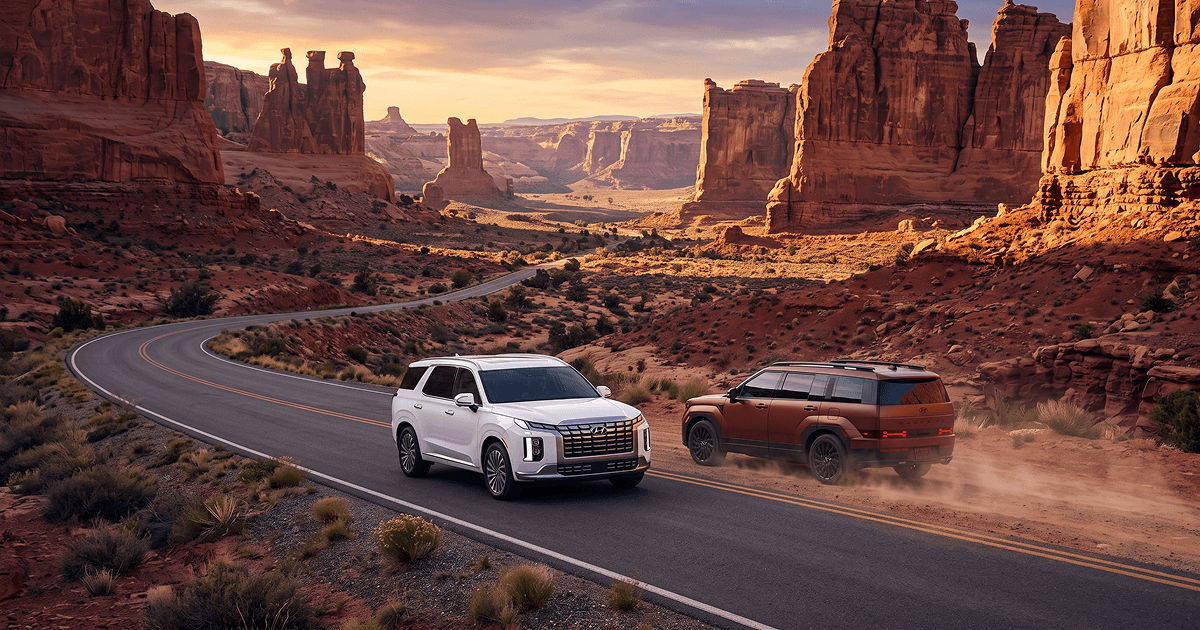
Last updated Sep 15th, 2026The Hyundai Palisade costs more than the Santa Fe, but the upgrade gives you a noticeably larger, more premium SUV with more passenger space and a more comfortable third row.
That does not mean everyone should spend the extra money.
The Santa Fe has grown considerably and now offers 3 rows of seating, strong technology, available hybrid power, and enough room for many families. It is also easier to maneuver and can be more affordable to buy and own.
The Palisade takes that same family-friendly idea and stretches it.
You get more cabin room, a more usable third row, more cargo flexibility, and a more upscale overall experience.
So, is the Palisade worth the upgrade?
For larger families, frequent road trippers, and anyone who regularly uses the third row, yes. If you only need occasional third row seating and want to keep costs lower, the Santa Fe may be the smarter buy.
This comparison is really about how often you will use the Palisade’s extra space.
Find Your Best Price
See what others paid and get upfront pricing from local dealers.

How Much More Does the Hyundai Palisade Cost?
The Palisade sits above the Santa Fe in Hyundai’s SUV lineup, so it comes with a higher starting price.
That difference can grow quickly as you move into higher trims.
The Santa Fe is designed to give shoppers access to 3-row seating and a modern interior without moving into the larger and more expensive Palisade.
The Palisade adds more room, more premium features, and a stronger sense of luxury.
For many shoppers, the real decision is not simply base model versus base model.
It may be a well-equipped Santa Fe versus a lower or midlevel Palisade at a similar price.
That is where the comparison becomes more useful.
Would you rather have more features in the smaller SUV or more space and comfort in the larger one?
What Does the Extra Money Get You?
The main upgrade is size.
The Palisade is longer and more spacious than the Santa Fe, and that difference becomes especially noticeable in the second and third rows.
The Santa Fe has become much more family friendly than older generations. Its boxier shape and third row make it far more versatile than it used to be.
But the third row is still better suited to occasional use.
The Palisade gives passengers more room to settle in, especially when all 3 rows are occupied.
That means the extra cost buys you:
- More passenger space
- A more usable third row
- More cargo flexibility
- A more upscale cabin
- A quieter and more relaxed road trip experience
If you regularly travel with 6 or 7 people, those differences are meaningful.
Which Has the Better Third Row?
The Palisade.
This is probably the clearest reason to spend more.
The Santa Fe technically gives you 3 rows, but the Palisade is designed around carrying more people more often.
Adults can use the Palisade’s third row more comfortably, while the Santa Fe’s rear seats are better suited to children, teenagers, or shorter trips.
That matters if you are buying specifically because you need 3 rows.
There is a big difference between having a third row and having a third row you actually want people to use.
If your rear seats will stay folded most of the year and only come up when grandparents visit, the Santa Fe may be enough.
If your third row will be occupied every week, spend more on the Palisade.
Which Is Better for Large Families?
The Palisade is the better fit for large families.
The extra passenger space helps when every seat is being used, and the cabin feels less crowded once you start adding car seats, backpacks, sports gear, and everything else that comes with family life.
The Palisade is also available with second row captain’s chairs on many trims, which can make third row access easier.
The Santa Fe can still work very well for a family with 2 or 3 children.
In fact, for some households, it may be the better size.
It gives you the flexibility of a third row without forcing you to drive a larger SUV every day.
If your family rarely uses all 3 rows at once, the Santa Fe may give you the better balance.
Which Has More Cargo Space?
The Palisade gives you more flexibility when passengers and cargo need to coexist.
That becomes important on family road trips.
It is relatively easy to find an SUV with a large cargo number when the rear seats are folded.
The harder question is how much room is left when every seat is occupied.
This is where the Palisade’s larger footprint helps.
If you have 6 or 7 passengers and still need to carry luggage, groceries, or sports equipment, the larger SUV makes life easier.
The Santa Fe can handle normal daily cargo just fine.
It becomes more limited when the third row is up.
If you regularly need passengers and cargo at the same time, the Palisade is worth the upgrade.
Which Is Easier to Drive?
The Santa Fe.
This is the tradeoff for choosing the smaller SUV.
The Santa Fe is easier to maneuver in parking lots, garages, and city streets.
The Palisade is not difficult to drive, but you notice its size more.
For suburban families with a driveway and normal parking, that may not matter much.
For someone who spends a lot of time in tighter spaces, the Santa Fe can feel more manageable.
This is another reminder that the larger SUV is not automatically the better one.
The Palisade gives you more room inside.
The Santa Fe asks for less room everywhere else.
Hyundai Palisade vs Santa Fe Performance
The Palisade and Santa Fe are not identical underneath, and they deliver different driving experiences.
The Santa Fe is available with turbocharged gas and hybrid powertrains, giving buyers a good mix of efficiency and everyday performance.
The Palisade traditionally emphasizes smooth power delivery and comfort.
The latest Palisade lineup also includes a hybrid option, which adds another layer of flexibility for shoppers who want a larger SUV without committing entirely to a conventional gas powertrain.
The Santa Fe can feel a little lighter and easier to move around town.
The Palisade feels more substantial and relaxed on the highway.
Neither is meant to be sporty.
The better choice depends on whether you value agility or a more composed large SUV feel.
What If You Want a Hybrid?
Both deserve consideration.
The Santa Fe Hybrid is an especially strong option for shoppers who want 3 rows but are still trying to keep fuel costs under control.
Because the Santa Fe is smaller and lighter, it makes a lot of sense as an efficient family SUV.
The Palisade Hybrid gives you more space while still improving efficiency compared with a traditional large gas SUV.
That may be especially attractive for families with long commutes or frequent road trips.
The question is whether you need the extra room badly enough to pay more for it.
If the Santa Fe Hybrid fits your family comfortably, it can be a very smart choice.
If you need the Palisade’s space and still want hybrid efficiency, the larger model becomes much easier to justify.
Which Gets Better Fuel Economy?
The Santa Fe generally has the advantage, especially when comparing hybrid versions.
That should not be surprising.
It is the smaller vehicle.
If you drive a lot of miles, fuel costs can become an important part of the decision.
A family putting 20,000 miles a year on an SUV may notice the difference more than one driving 8,000.
But fuel economy should not be considered in isolation.
If the Santa Fe feels cramped enough that you replace it sooner, the savings at the pump may not matter much.
Buy the size that works first.
Then compare the most efficient powertrain within that size.
Which Has the Better Interior?
The Palisade feels more premium.
That is one of the biggest differences beyond space.
The Santa Fe has a modern, stylish cabin and offers plenty of technology.
It does not feel cheap.
But the Palisade is positioned as Hyundai’s more upscale family SUV, and that comes through in the materials, seating comfort, quietness, and available features.
Higher Palisade trims can feel surprisingly close to luxury brand territory.
That may matter if the vehicle will be your primary family car for many years.
The Santa Fe is the more practical choice.
The Palisade feels more like the upgrade.
Should You Buy a Loaded Santa Fe or a Lower Trim Palisade?
This is probably the most important decision for many buyers.
The price ranges overlap.
That means you may be choosing between a Santa Fe with more features and a Palisade with more space.
We would approach it like this.
Choose the loaded Santa Fe if you value:
- More technology for the money
- Easier maneuverability
- Better fuel economy
- Premium features without moving into a larger SUV
Choose the Palisade if you value:
- Third row comfort
- Passenger room
- Cargo flexibility
- A quieter and more upscale ride
There is no point paying for a larger SUV if you do not need the room.
There is also no point buying the better-equipped Santa Fe if your family feels cramped every time everyone gets in.
Which Is Better for Road Trips?
The Palisade.
This is where the upgrade becomes easier to appreciate.
Long drives expose space limitations quickly.
Passengers need room to stretch out.
Everyone brings luggage.
Someone needs snacks.
Someone else brings a pillow.
The Palisade handles that kind of trip better because it gives you more room to spread out.
Its larger cabin also tends to feel more relaxed at highway speeds.
The Santa Fe is still a strong road trip vehicle for smaller families.
If you usually travel with 4 or 5 people, it may be all you need.
Start carrying 6 or 7 regularly, and the Palisade makes more sense.
Which Is Better for Daily Commuting?
The Santa Fe gets the edge.
It is easier to park and usually more efficient.
If most of your driving happens alone or with one passenger, the Palisade can feel like a lot of vehicle to carry around every day.
This is especially true if you only need the third row a few times a year.
For a daily commuter who wants family flexibility on weekends, the Santa Fe may be the better compromise.
For a family using every row regularly, the Palisade’s extra size is less of a compromise and more of a necessity.
Which Is Better in Snow?
Both are available with HTRAC all wheel drive, so either can work well in poor weather when properly equipped.
The Palisade’s larger size can feel reassuring on the highway, while the Santa Fe is easier to maneuver in tighter spaces.
Tires still matter more than many shoppers realize.
All wheel drive can help you accelerate on snow and slippery surfaces.
It does not automatically improve braking.
If winter driving is a major concern, budget for appropriate tires regardless of which SUV you choose.
Which Is Better for Towing?
The Palisade is generally the better choice for buyers who plan to tow regularly.
Its larger size and powertrain make it better suited to pulling heavier recreational loads.
That can matter if you have a small camper, boat, or utility trailer.
The Santa Fe can still tow, but it is better suited to lighter duty use.
If towing is one of your main reasons for buying an SUV, compare the exact rating for the trim and powertrain you are considering.
Do not buy based on the maximum number advertised for the lineup.
Which Is Better for Dogs and Outdoor Gear?
The Palisade gives you more room to work with.
That matters if you have large dogs, multiple dogs, or use crates.
It also helps if outdoor trips involve passengers and gear at the same time.
The Santa Fe can still be a great adventure vehicle.
Its boxy cargo area is useful, and the smaller size can make trailhead parking easier.
If your typical trip involves 2 people, a dog, and some camping gear, the Santa Fe may be plenty.
If you are bringing the whole family, 2 dogs, luggage, and camping equipment, the Palisade earns its keep.
Hyundai Palisade vs Santa Fe Safety and Technology
Both offer the modern safety and driver assistance technology shoppers expect from Hyundai.
Available and standard features vary by trim, but both can include systems designed to assist with:
- Forward collision situations
- Blind spot monitoring
- Lane keeping
- Rear cross traffic
- Highway driving
- Parking
The Palisade may offer more premium camera and convenience features at higher trim levels.
The Santa Fe can still be extremely well equipped.
Again, compare the actual trims you are considering.
A high trim Santa Fe may have more technology than a lower trim Palisade.
What About Warranty Coverage?
Both benefit from Hyundai’s strong warranty program, so this is not a major reason to choose one over the other.
That makes the decision easier.
You can focus on space, price, fuel economy, comfort, and features rather than worrying about a major difference in factory coverage.
The more useful question is whether the Palisade’s extra space and refinement are worth paying for every month.
Is the Hyundai Palisade Worth the Upgrade?
For many families, yes.
The Palisade gives you a more usable third row, more cargo flexibility, and a more premium overall experience.
Those are meaningful upgrades if you actually use them.
The Santa Fe makes more sense if you only need occasional third row seating, want better efficiency, or prefer a smaller SUV for everyday driving.
The difference is not about which vehicle is better.
It is about how often you need the Palisade’s additional capability.
If the answer is every week, spend the money.
If the answer is a few times a year, the Santa Fe may be enough.
Who Should Buy the Hyundai Palisade?
The Palisade makes the most sense for:
- Larger families
- Regular third row users
- Frequent road trippers
- Buyers who want a more premium interior
- Drivers who need more cargo space
- Shoppers who tow recreational equipment
If your SUV will spend most of its life full of people and gear, the Palisade is easier to justify.
Who Should Buy the Hyundai Santa Fe?
The Santa Fe makes more sense for:
- Smaller families
- Buyers who only use the third row occasionally
- Daily commuters
- Shoppers focused on fuel economy
- Drivers who want a smaller footprint
- Buyers who would rather spend their budget on features than size
It is not the budget version of the Palisade.
It is simply the more compact choice.
For plenty of households, that is actually better.
How AutoFinder Helps You Compare the Palisade and Santa Fe
Once you know which size fits your family, compare the actual vehicles available.
AutoFinder can help you research:
- Hyundai Palisade inventory
- Hyundai Santa Fe inventory
- Available trims
- Vehicle pricing
- Gas and hybrid options
- Features
- New and used models
- Dealer inventory
This becomes especially useful when the prices overlap.
A higher-trim Santa Fe may be sitting next to a lower-trim Palisade for similar money.
At that point, the better value comes down to what you will actually use.
Final Thoughts
So, is the Hyundai Palisade worth the upgrade over the Santa Fe?
If you regularly use the third row, carry a lot of passengers, or need more cargo space, yes.
The Palisade gives you more room, more comfort, and a more premium family SUV experience.
If you only need occasional third row flexibility, the Santa Fe may be the smarter buy.
It is easier to drive, more efficient, and still gives you enough space for many families.
The best way to decide is to picture the vehicle at its busiest.
Everyone is in the car.
The third row is up.
The cargo area is full.
You are leaving for a weekend trip.
If the Santa Fe still feels comfortable in that situation, save the money.
If it already feels tight, the Palisade is probably worth the upgrade.
FAQs
Is the Hyundai Palisade much bigger than the Santa Fe?
Yes. The Palisade is the larger SUV and offers more passenger room, a more usable third row, and additional cargo flexibility. The Santa Fe still provides 3 rows, but it is better suited to families who only need the third row occasionally rather than carrying 6 or 7 passengers regularly.
Is the Santa Fe or Palisade better for a family of 5?
For a family of 5, either can work. The Santa Fe may be enough if the third row is rarely needed and keeping fuel and purchase costs lower matters. The Palisade becomes more appealing if the family frequently carries extra passengers, takes road trips, or needs more cargo room.
Is the Palisade worth it if I rarely use the third row?
Probably not unless you also value the additional cargo room, premium cabin, and larger overall feel. If the third row stays folded almost all the time, a well-equipped Santa Fe may provide better value while still giving you occasional extra seating when needed.
Which is better for long trips, the Santa Fe or Palisade?
The Palisade is generally better for long trips with several passengers because it provides more cabin space, more comfortable third-row seating, and greater cargo flexibility. The Santa Fe can still be excellent for smaller families and may use less fuel depending on powertrain and configuration.
Should I buy a loaded Santa Fe or a base Palisade?
Choose the loaded Santa Fe if you want more features, easier maneuverability, and lower ownership costs. Choose the Palisade if passenger room, third-row comfort, and cargo flexibility matter more. The better value depends on whether you will use the Palisade’s additional space regularly.
Featured Articles
The information provided in this article is for general informational purposes only and may change over time. Vehicle pricing, availability, specifications, incentives, financing terms, interest rates, and other details may vary by vehicle, dealer, lender, location, and individual circumstances. AutoFinder does not guarantee the accuracy or availability of information provided by third parties. Always confirm current vehicle details, pricing, terms, and eligibility directly with the participating dealer or appropriate provider before making a purchase or financial decision.