Best All Wheel Drive Vehicles
Last updated Sep 16th, 2026All Wheel Drive used to narrow your shopping list pretty quickly. Today, you can find it in compact cars, hybrids, family SUVs, luxury vehicles, and plenty of models in between.
That makes choosing the best AWD vehicle less about finding one that sends power to all 4 wheels and more about finding the right AWD vehicle for the way you drive.
A commuter may want AWD without giving up the efficiency and size of a car. A family may need more passenger and cargo room. Drivers who regularly see snow may put ground clearance higher on the list, while someone living somewhere rainy may care more about traction on wet pavement.
Our picks for the best All Wheel Drive vehicles are:
- Subaru Impreza
- Toyota Camry AWD
- Subaru Crosstrek
- Mazda CX-50
- Subaru Forester
- Toyota RAV4 AWD
- Honda CR-V AWD
- Toyota Grand Highlander AWD
These vehicles do not all use AWD the same way, and they do not solve the same problem. That is exactly why they are worth comparing.
Find Your Best Price
See what others paid and get upfront pricing from local dealers.

What Are the Best All Wheel Drive Vehicles?
Start with what you need from the vehicle before focusing on the drivetrain.
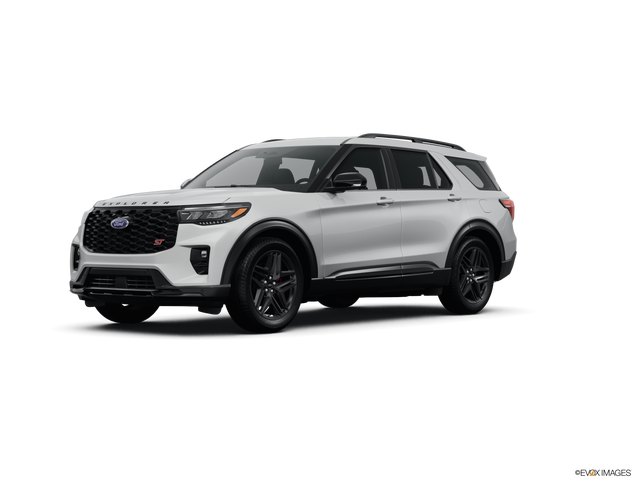
The Subaru Impreza gives shoppers standard AWD without requiring an SUV. The Toyota Camry adds available AWD to a hybrid sedan. The Crosstrek provides more ground clearance in a compact package.
Move into SUVs, and your choices expand further. The Mazda CX 50 and Subaru Forester combine AWD with useful clearance. The Toyota RAV4 and Honda CR V offer AWD within practical compact SUV lineups. The Toyota Grand Highlander gives larger families an AWD option with 3 rows.
AWD is the common thread, but each vehicle makes a different argument for why you should buy it.
1. Subaru Impreza
The Subaru Impreza is a useful starting point because it shows that AWD does not require buying an SUV.
For 2026, Subaru Symmetrical All Wheel Drive is standard across the Impreza lineup. The Impreza Sport is rated at up to 27 mpg city and 33 mpg highway, while the more powerful RS is rated at 26 mpg city and 33 mpg highway.
That combination makes the Impreza particularly interesting for commuters.
You get the smaller footprint and lower driving position of a hatchback while keeping an AWD system that does not require stepping into an optional package.
Cargo flexibility is another advantage of the hatchback shape. Fold the rear seats when you need additional room, then enjoy a vehicle that is still manageable in parking lots and city traffic the rest of the time.
The Impreza is not designed for deep snow or rugged trails. It makes more sense for drivers who stay primarily on paved roads but regularly encounter rain, snow, or changing conditions.
Best for: Commuters who want standard AWD without moving into an SUV.
2. Toyota Camry AWD
The Toyota Camry makes AWD interesting for a completely different reason.
The current Camry lineup is hybrid, and Toyota offers Electronic On Demand All Wheel Drive across its trims. The AWD system adds a rear electric motor to help provide additional traction when needed.
That gives shoppers a combination that was once difficult to find: a mainstream midsize sedan, hybrid efficiency, and available AWD.
For someone with a long commute, that can make much more sense than buying an SUV solely because AWD is on the shopping list.
You give up the additional ground clearance and cargo height of a crossover, so the Camry is better suited to paved roads than deeper snow or rough terrain.
If that describes nearly all of your driving, you may not be giving up anything you actually need.
Best for: Drivers who want hybrid efficiency and available AWD in a comfortable midsize sedan.
3. Subaru Crosstrek
The Subaru Crosstrek bridges the gap between a small car and a traditional SUV.
Standard Symmetrical All Wheel Drive is a big part of that equation, but the Crosstrek also gives you more ground clearance than a typical compact hatchback.
That makes it useful for shoppers who want something small enough for everyday commuting but occasionally deal with snow, gravel roads, trailheads, campsites, or less predictable surfaces.
The Crosstrek also demonstrates why ground clearance and AWD should be considered separately.
AWD helps distribute power when traction is limited. Ground clearance determines how much room you have underneath the vehicle when snow, ruts, rocks, or uneven surfaces enter the picture.
Some shoppers need both. Others do not.
If you like the idea of the Impreza but want additional clearance and a more crossover like driving position, the Crosstrek is the logical vehicle to compare.
Best for: Drivers who want standard AWD and additional ground clearance in a compact package.
4. Mazda CX-50
The Mazda CX-50 is worth considering if AWD is important but you still care about how the vehicle feels during normal driving.
Mazda makes i Activ AWD standard on the gasoline CX-50. Those models also include Mazda Intelligent Drive Select with Sport and Off Road modes. Depending on configuration, gasoline models provide between 8.3 and 8.6 inches of ground clearance.
There is also a CX-50 Hybrid with electronic AWD. Mazda rates it at an EPA-estimated 38 mpg combined, giving shoppers another way to balance AWD with fuel economy.
That variety makes the CX-50 particularly interesting.
You can prioritize a traditional gasoline powertrain, move into a turbocharged version for additional performance, or consider the hybrid if efficiency matters more.
The best choice depends on what you expect from the vehicle beyond the AWD badge.
Best for: Shoppers who want standard AWD in a compact SUV with multiple powertrain choices.
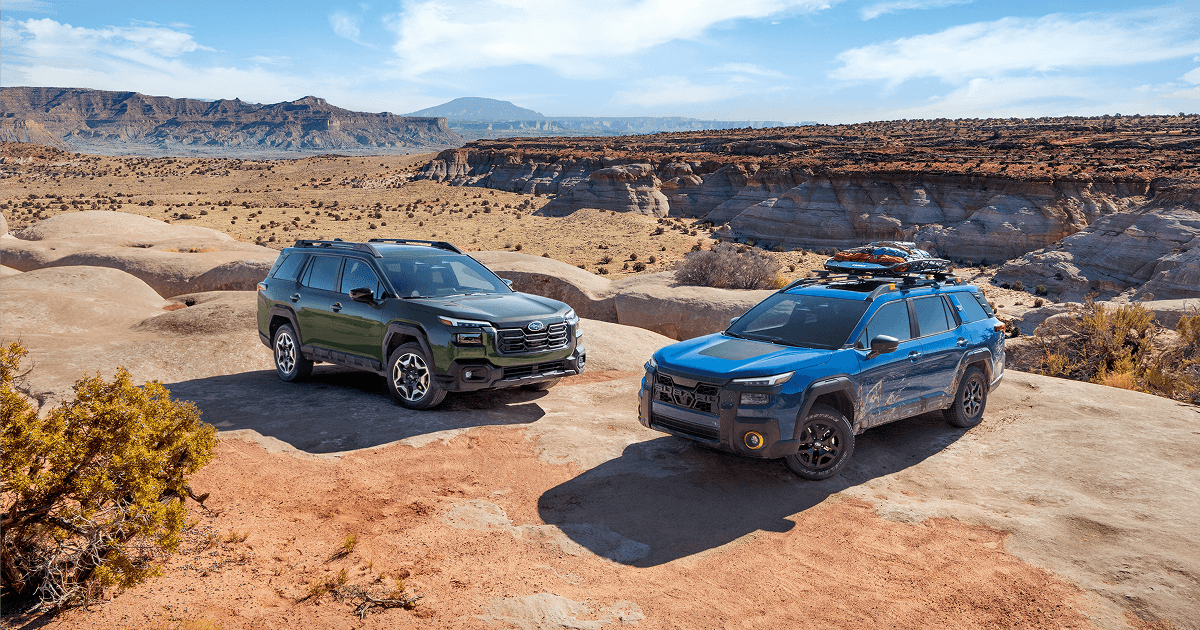
5. Subaru Forester
The Forester makes AWD shopping straightforward because Symmetrical All Wheel Drive is standard.
You do not need to move up a trim or add an AWD option before comparing the rest of the vehicle.
The Forester also provides the kind of ground clearance that can make AWD more useful when roads become snowy or uneven.
That gives it a different mission from the Impreza.
Both offer standard AWD, but the Forester adds a taller seating position, more SUV-like cargo flexibility, and additional clearance underneath the vehicle.
Visibility is another reason shoppers may prefer the Forester. Its upright shape and relatively large glass area can make it easier to see what is happening around the vehicle.
If you know you want AWD and already want a compact SUV, the Forester removes one decision from the shopping process.
Best for: Compact SUV shoppers who want standard AWD, useful ground clearance, and everyday practicality.
6. Toyota RAV4 AWD
The Toyota RAV4 takes a different approach because AWD is part of a broader lineup rather than the starting point for every version.
That can actually be helpful.
Shoppers who want a RAV4 can compare drivetrains and powertrains based on where they live and how they drive instead of automatically paying for capability they may rarely use.
If AWD is important, make sure you compare the exact configuration rather than assuming every RAV4 has it.
This becomes especially relevant when shopping used, where front wheel drive and AWD examples can appear side by side in search results.
The RAV4 works well for shoppers who want the everyday usefulness of a compact SUV first and AWD capability second.
That may sound like a small distinction, but it is how many people actually shop.
Best for: Drivers who want a practical compact SUV with AWD options rather than an AWD focused vehicle.
7. Honda CR-V AWD
The Honda CR-V is another AWD choice that starts with everyday practicality.
Available AWD gives shoppers additional traction without changing what makes the CR-V useful in the first place: passenger room, cargo flexibility, manageable size, and an easy transition between commuting and family use.
That makes it worth comparing against the RAV4, Forester, and CX-50.
They are all compact SUVs, but they approach AWD differently.
The Forester makes it standard. Mazda makes AWD standard on the CX-50. The CR-V lets shoppers choose it based on configuration.
There is no universal advantage to either approach.
If you live somewhere that rarely gives AWD anything to do, paying extra for it may not be a priority. If you regularly encounter snow, rain, hills, or slippery roads, it may move much higher on your list.
Best for: Families and commuters who want compact SUV space with available AWD.
8. Toyota Grand Highlander AWD
AWD becomes a different shopping question when you need 3 rows.
The Toyota Grand Highlander gives larger families room to carry more passengers while offering AWD configurations across its lineup.
That can be especially useful for households that regularly combine family travel with changing weather.
A winter road trip with 6 people, luggage, coats, and gear creates very different requirements from a solo commute.
The Grand Highlander is also a reminder that AWD should not be the only reason you choose a vehicle.
If you rarely use the third row, a smaller SUV may be easier to park, less expensive, and more efficient. If you regularly fill those seats, the extra size starts making sense.
Choose the Grand Highlander because you need the space and want AWD, not because AWD requires buying something large.
Best for: Larger families that need 3 rows and want AWD available alongside that extra passenger space.
How Does All Wheel Drive Work?
AWD systems can send power to both the front and rear wheels rather than relying on only 1 driven axle.
How they accomplish that varies.
Some systems continuously distribute power to all 4 wheels. Others primarily drive 1 axle and send additional power to the other when the vehicle determines it is useful.
Hybrid and electric vehicles can take another approach by using electric motors to power different axles.
The result is that 2 vehicles labeled AWD may behave differently.
For example, Subaru's Symmetrical All Wheel Drive is standard on the 2026 Impreza. Toyota's Camry uses available Electronic On Demand AWD with a separate rear electric motor. Mazda's gasoline CX 50 uses i Activ AWD, while the CX 50 Hybrid uses electronic AWD.
You do not need to become an AWD engineer before buying a car. You should understand that the badge does not describe every detail of how the system works.
Is AWD Worth It?
It can be, especially if the conditions you regularly drive through give it something useful to do.
AWD may be worth prioritizing if you frequently encounter:
- Snow
- Heavy rain
- Slippery roads
- Steep hills
- Gravel roads
- Changing road surfaces
It can also make sense simply because you prefer having the additional traction available when conditions change.
That does not make AWD essential for everyone.
Someone living in a mild climate and driving primarily on maintained roads may get along perfectly well with front wheel drive.
The useful question is not whether AWD is universally better. It is whether you will use what you are paying for.
Is AWD Better Than Front Wheel Drive?
AWD can provide an advantage when accelerating on surfaces where traction is limited because the vehicle can distribute power across more wheels.
Front wheel drive has advantages of its own.
It is mechanically simpler in many applications, and choosing it can reduce the purchase price or improve fuel economy depending on the vehicle.
For normal driving on dry pavement, many shoppers may notice little practical benefit from AWD.
The difference becomes more relevant when traction is limited.
If you are choosing between front wheel drive and AWD versions of the same vehicle, compare the price, fuel economy, and equipment differences before deciding.
AWD should solve a need, not simply become another box you feel obligated to check.
Does AWD Help in Snow?
Yes, AWD can help when accelerating on snowy or slippery roads.
It can be particularly useful when pulling away from a stop, climbing a hill, or moving through changing traction conditions.
But AWD does not make a vehicle immune to winter.
Tires remain critical because they are responsible for the actual contact with the road. Ground clearance also becomes more important as snow gets deeper.
If snow is the main reason AWD is on your shopping list, our guide to the best cars for snow looks more closely at those factors.
SUV shoppers can also see our best SUVs for winter driving for options where clearance, passenger space, and winter equipment play a larger role.
Does AWD Help in Rain?
AWD can help a vehicle manage traction while accelerating on wet pavement, but it does not prevent hydroplaning.
Tire condition, tread depth, speed, standing water, and road conditions remain important.
That is why AWD should not be treated as permission to drive normally when the weather becomes severe.
Reduce speed and leave additional room when conditions call for it.
If rain is a major concern where you live, our guide to the best cars for rain and wet roads focuses specifically on wet weather driving.
Does AWD Help You Stop Faster?
No.
This is one of the most important things to understand about AWD.
AWD can improve traction when the vehicle is applying power, but it does not give the vehicle a special braking advantage simply because all 4 wheels can be driven.
Your tires, brakes, road surface, speed, and vehicle stability systems all affect stopping.
That distinction matters in snow and ice.
An AWD vehicle may pull away from a snowy intersection more easily than a comparable 2 wheel drive vehicle, but you still need enough grip to turn and stop.
AWD can help you get moving. It should not make you overconfident once you are.
Do You Still Need Good Tires With AWD?
Absolutely.
AWD cannot create traction where the tires cannot find it.
Worn tires can reduce grip in rain and snow regardless of which drivetrain sits behind them.
Check tread condition and tire pressure regularly, and make sure the tires fitted to the vehicle suit the conditions you expect to drive through.
Drivers in areas with significant snow and cold temperatures may also want to consider dedicated winter tires.
Think of AWD and tires as doing different jobs.
The AWD system manages how power reaches the road. The tires determine how well the vehicle can connect with that road in the first place.
AWD vs 4WD: What Is the Difference?
AWD and four wheel drive both have the ability to send power to all 4 wheels, but they are commonly used for different types of vehicles and driving.
AWD is widely used in cars and crossovers. Most systems operate automatically and are designed to handle changing traction conditions without requiring much input from the driver.
Four wheel drive is more commonly associated with trucks and rugged SUVs. Depending on the system, it may provide driver selectable modes or additional equipment intended for more demanding terrain.
For commuting, rain, light snow, and normal road use, AWD may be the more natural fit.
For deeper snow, trails, mud, towing on loose surfaces, or serious off pavement driving, 4WD may deserve more attention.
If that sounds closer to what you need, see our guide to the best four wheel drive vehicles.
Are AWD Cars Better Than AWD SUVs?
Neither is automatically better.
An AWD car may be the smarter choice if you want traction without the additional size and height of an SUV.
Vehicles such as the Subaru Impreza and Toyota Camry show how AWD can fit into a daily commuter.
SUVs add different advantages.
A Forester or CX 50 provides additional ground clearance and cargo flexibility. A Grand Highlander adds a third row.
If snow rarely gets deep where you live, you may have little need for SUV clearance. If you regularly carry bulky gear or passengers, the SUV's extra space may matter every day.
Choose the body style first based on how you use the vehicle. Then decide how important AWD is within that category.
Does AWD Use More Gas?
It can.
Adding AWD can increase weight and mechanical drag, which may reduce fuel economy compared with a similar front wheel drive configuration.
The difference varies considerably by vehicle and AWD system.
Hybrid technology is also changing the equation.
The Toyota Camry combines a hybrid powertrain with available electronic AWD, while the Mazda CX 50 Hybrid uses electronic AWD and carries an EPA estimated 38 mpg combined rating.
That means shoppers no longer have to assume AWD automatically comes with poor fuel economy.
Compare the actual EPA estimates for the configurations you are considering instead of judging by drivetrain alone.
Should You Buy AWD if You Rarely See Snow?
Snow is not the only reason to consider AWD.
Drivers may value additional traction in heavy rain, on steep roads, gravel, or other changing surfaces.
But if you live somewhere with mild weather and spend almost all of your time on maintained pavement, AWD may provide less everyday benefit.
That does not make it a bad choice.
It simply means you should compare what it costs.
If AWD adds significantly to the purchase price or reduces fuel economy, decide whether the added traction is worth that tradeoff for your driving.
You may discover it is. You may also discover that front wheel drive gives you everything you need.
Is Standard AWD Better Than Available AWD?
Not necessarily.
Standard AWD makes shopping simpler because every version of the vehicle includes it.
That is useful with models such as the Subaru Impreza, where you can choose a trim without first deciding whether to add AWD.
Available AWD gives shoppers more flexibility.
Someone considering a Camry, RAV4, or CR V can choose whether AWD is worth paying for based on climate, driving conditions, budget, and preferences.
Neither strategy makes the vehicle inherently better.
What matters is whether the configuration you are shopping has the drivetrain you want.
This is especially important when shopping used. Never assume a vehicle has AWD because other versions of the same model offer it.
What Should You Look for When Shopping for an AWD Vehicle?
Start with the same things you would consider for any car.
Think about:
- Price
- Passenger space
- Cargo room
- Fuel economy
- Ride and comfort
- Technology
- Safety features
- Ground clearance
- Tires
- Maintenance costs
Then consider what AWD adds.
Is it standard or optional? Does choosing AWD require a different trim? Does it change fuel economy? Is the system designed primarily for paved roads, or does the vehicle also provide the clearance and driving modes you want for rougher conditions?
For used vehicles, confirm the drivetrain of the specific vehicle rather than relying solely on the model name.
The best AWD vehicle is still the vehicle that works best for the other 99 percent of your driving.
What About the Best AWD Vehicles for 2026?
This guide is intended to be the evergreen starting point for shoppers researching AWD.
If you are specifically comparing current model year vehicles, see our guide to the best 2026 AWD vehicles.
That page can focus more closely on the newest models, current configurations, and what is particularly relevant for the 2026 model year.
Keeping the 2 questions separate gives shoppers a clearer path.
Start here if you are learning which types of AWD vehicles make sense for you. Move to the 2026 guide when your shopping list is focused specifically on new vehicles.
How AutoFinder Helps You Shop for AWD Vehicles
Once you know you want AWD, pay close attention to the actual vehicles in your search results.
Some models include AWD on every trim. Others offer front wheel drive and AWD versions that can look nearly identical in a listing.
AutoFinder helps you browse dealership inventory and compare the vehicles available to you.
Look beyond make and model. Check the trim, drivetrain, powertrain, mileage if you are shopping used, features, and price.
Once you find a specific vehicle you are interested in, the dealership can confirm its drivetrain, equipment, current availability, pricing, financing options, and other details before you visit.
That is particularly helpful with AWD because the same model name does not always mean the same drivetrain.
Final Thoughts
The best all wheel drive vehicle depends on what you want AWD to do for you.
The Subaru Impreza makes sense if you want standard AWD in a smaller commuter. The Toyota Camry adds available AWD to an efficient hybrid sedan. The Crosstrek adds clearance without becoming a large SUV.
For compact SUV shoppers, the Mazda CX 50, Subaru Forester, Toyota RAV4, and Honda CR V give you several different ways to approach AWD. Larger families can move into something like the Toyota Grand Highlander without leaving AWD behind.
Do not shop for the drivetrain in isolation.
Think about where you drive, what you carry, how much space you need, the weather you encounter, fuel economy, tires, and your budget. Then decide which AWD vehicle fits the complete picture.
FAQs
What is the best all wheel drive vehicle?
There is no single best AWD vehicle for every shopper. The Subaru Impreza is worth considering if you want a smaller car with standard AWD, while the Forester and Mazda CX 50 offer AWD with additional SUV space and clearance. Larger families may prefer a 3-row option such as the Toyota Grand Highlander.
Is AWD worth the extra money?
AWD can be worth paying for if you regularly drive in snow, heavy rain, on steep roads, or across other surfaces where additional traction is useful. Drivers in mild climates who spend almost all their time on maintained pavement may get less benefit. Compare the AWD price, fuel economy, and equipment before deciding.
Is AWD better than 4WD?
Neither is universally better. AWD is common in cars and crossovers and typically operates automatically, making it well suited to everyday driving and changing weather. Four Wheel Drive is often found in trucks and more rugged SUVs and can provide additional capability for challenging terrain, deep snow, mud, and off-pavement driving.
Does AWD help on icy roads?
AWD can help a vehicle get moving when traction is limited, but it does not eliminate the risks of ice. Tires, speed, steering, braking, and road conditions remain critical. AWD should not be treated as a substitute for appropriate tires or careful driving when roads are icy.
Does AWD help with braking?
AWD does not automatically shorten braking distances. Its primary advantage is helping distribute power while the vehicle accelerates. Braking grip depends heavily on tires, road conditions, speed, brakes, and vehicle stability systems. This is particularly important to remember when driving an AWD vehicle in snow or ice.
Do AWD vehicles need special tires?
AWD vehicles do not necessarily need special tires, but tire type, condition, tread depth, and pressure are important. Some manufacturers also have specific requirements for replacing tires on AWD vehicles because large differences in tire circumference can affect the drivetrain. Check the owner's manual for the vehicle you are considering.
The information provided in this article is for general informational purposes only and may change over time. Vehicle pricing, availability, specifications, incentives, financing terms, interest rates, and other details may vary by vehicle, dealer, lender, location, and individual circumstances. AutoFinder does not guarantee the accuracy or availability of information provided by third parties. Always confirm current vehicle details, pricing, terms, and eligibility directly with the participating dealer or appropriate provider before making a purchase or financial decision.