Vehicle Reviews
Is the Honda Civic a Good Car to Buy?
OVERVIEW
Yes, the Honda Civic is a good car to consider if you want an efficient compact car that is reasonably priced, practical for everyday driving, and available with either a gasoline or hybrid powertrain.
It makes particular sense for commuters, first-time buyers, small families, and shoppers who want to keep fuel costs manageable without moving into an SUV. The current Civic Hybrid adds another reason to consider it, combining 200 hp with fuel economy as high as 49 mpg combined.
There are trade-offs. The Civic does not offer All Wheel Drive, the least expensive trims are fairly simple, and shoppers who routinely need a lot of passenger or cargo space may be better served by a larger vehicle.
Price matters too. Honda lists the 2026 Civic Sedan LX from $24,695, but AutoFinder's marketplace analysis shows that shoppers rarely encounter a Civic advertised that low. Among 12,305 recent new 2026 Civic listings analyzed by AutoFinder, the median advertised price was $29,212.
So is the Civic a good car to buy? For many shoppers, yes. The more useful question is which Civic makes sense for your budget and how you plan to use it.
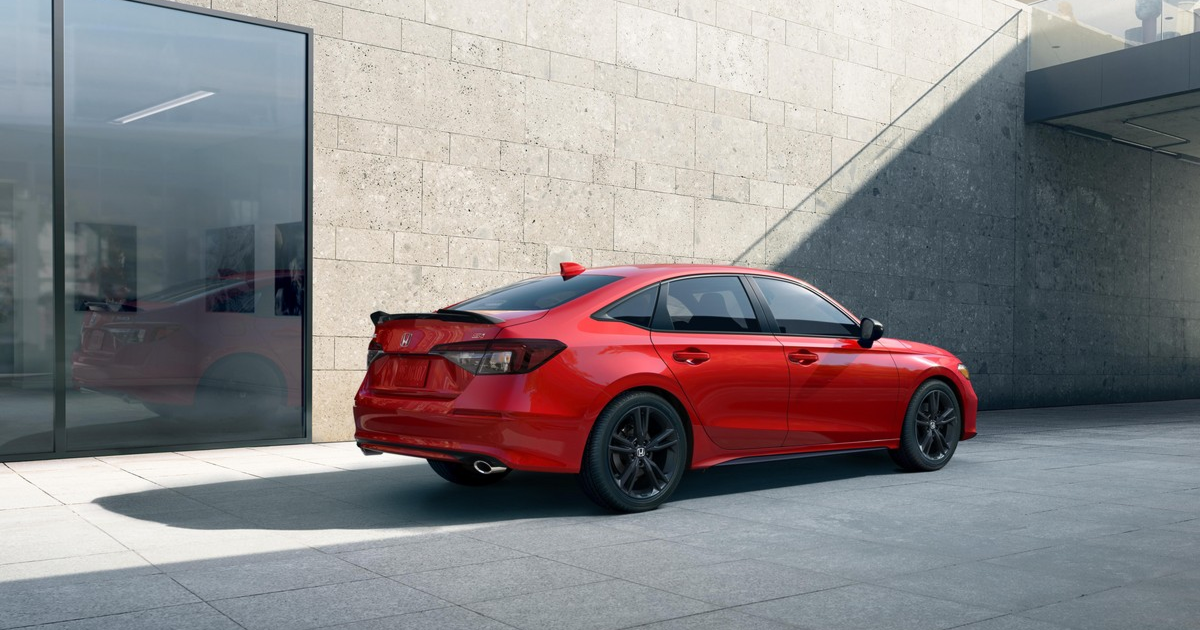
2026 Honda Civic
2026 Honda Civic
Why Is the Honda Civic a Good Car to Buy?
The Civic works well because it gets several important things right at the same time.
It is compact enough to maneuver and park easily, but it still seats 5. The gasoline models provide good fuel economy without requiring a large upfront budget, while the hybrid offers substantially better city mileage along with more power.
You can also choose between sedan and hatchback body styles, giving the Civic more flexibility than a sedan-only lineup.
What makes it less universal is just as important. Every mainstream Civic in AutoFinder's recent analysis was Front Wheel Drive. If AWD is a priority, another vehicle will be a better fit.
How Much Does a New Honda Civic Cost?
For 2026, Honda lists the Civic Sedan at the following starting prices:
| Trim | Powertrain | Starting MSRP |
|---|---|---|
| LX | Gasoline | $24,695 |
| Sport | Gasoline | $26,695 |
| Sport Hybrid | Hybrid | $29,395 |
| Sport Touring Hybrid | Hybrid | $32,395 |
Those figures are useful for comparing trims, but they do not necessarily reflect what a shopper will see advertised.
AutoFinder analyzed 12,305 recent new 2026 Honda Civic listings and found:
Median advertised price: $29,212
25th percentile: $28,077
75th percentile: $31,215
Gasoline median: $28,445
Hybrid median: $33,275
The overall gasoline and hybrid medians should not be used to calculate the cost of choosing the hybrid. The 2 groups contain different trim mixes, including lower priced LX models on the gasoline side and higher priced Sport Touring models on the hybrid side.
The more revealing number is at the bottom of the lineup.
Honda lists the Civic Sedan LX from $24,695. Of the 12,305 recent listings AutoFinder analyzed, only 14 were advertised below $25,000, or about 0.1%.
The LX itself had a median advertised price of $26,345.
That difference should not automatically be interpreted as a dealer markup. A manufacturer's starting price represents the least expensive configuration and does not account for every cost or piece of equipment on an individual vehicle.
For shoppers, the more useful takeaway is that a budget closer to $28,000 to $30,000 opens considerably more choices. Nearly half of the recent Civic listings AutoFinder analyzed were advertised between $27,500 and $29,999.
Is the Honda Civic Fuel Efficient?
Yes. Fuel economy remains one of the Civic's biggest strengths.
For the 2026 Civic Sedan, Honda rates the LX at 32 mpg city, 41 mpg highway, and 36 mpg combined. The gasoline Sport is rated at 31 mpg city, 39 mpg highway, and 34 mpg combined.
The Civic Sport Hybrid and Sport Touring Hybrid are rated at 50 mpg city, 47 mpg highway, and 49 mpg combined.
The hatchback is slightly different. The gasoline Sport is rated at 34 mpg combined, while the Sport Hybrid and Sport Touring Hybrid are rated at 48 mpg combined.
That makes the hybrid particularly appealing to drivers who spend a lot of time commuting or driving around town.
But fuel economy alone does not tell you whether the hybrid is worth buying. You also need to know what it costs compared with a similar gasoline Civic.
Is the Honda Civic Hybrid Worth Considering?
Yes, especially if you want stronger performance along with better fuel economy.
The regular Civic Sport produces 150 hp. The Civic Sport Hybrid produces 200 total system hp, so moving to the hybrid is not simply about using less fuel.
Honda prices the Civic Sedan Sport at $26,695 and the Sport Hybrid at $29,395, a difference of $2,700.
AutoFinder found exactly the same difference in recent advertised prices.
For the sedan:
Gasoline Sport median: $28,345
Sport Hybrid median: $31,045
Difference: $2,700
For the hatchback:
Gasoline Sport median: $29,545
Sport Hybrid median: $32,245
Difference: $2,700
The result held across thousands of recent listings in both body styles.
That makes $2,700 a useful starting point when deciding whether to move from a comparable gasoline Sport to a Sport Hybrid.
You are getting better fuel economy and more power, but the hybrid also includes equipment that differs from the gasoline Sport. Honda equips the Sport Hybrid with features such as heated front seats, a moonroof, and dual-zone automatic climate control.
So the decision is not purely a calculation of gasoline savings against a $2,700 battery or powertrain premium.
About 32% of the recent mainstream Civic listings AutoFinder analyzed were hybrids, so they also represented a meaningful portion of the available selection in the sample.
2026 Honda Civic Hybrid
2026 Honda Civic Hybrid
How Long Could It Take for the Civic Hybrid to Save $2,700 in Fuel?
Fuel savings depend heavily on how much you drive and what gasoline costs, so there is no universal break-even point.
The 2026 Civic Sedan Sport is rated at 34 mpg combined, while the Sport Hybrid is rated at 49 mpg combined.
For a simple illustration, assume:
12,000 miles per year
$3.30 per gallon
34 mpg for the Sport
49 mpg for the Sport Hybrid
At those assumptions, the gasoline Sport would use about 353 gallons per year, while the Sport Hybrid would use about 245 gallons.
That's roughly 108 fewer gallons per year, or about $356 in annual fuel savings at $3.30 per gallon.
Against the $2,700 difference AutoFinder observed between comparable Sport listings, fuel savings alone would take roughly 7.6 years to equal that price difference.
Drive 15,000 miles per year under the same assumptions and the simple fuel only payback falls to roughly 6.1 years.
This is an illustration, not a prediction of actual ownership costs. It does not account for changing fuel prices, financing, maintenance, insurance, resale value, taxes, incentives, or equipment differences between the 2 trims.
The more useful conclusion is that the Civic Hybrid does not need to make sense on fuel savings alone. It also provides substantially more power and additional equipment.
Is the Honda Civic Sedan or Hatchback Better?
The sedan is the more common Civic in AutoFinder's recent listing analysis, accounting for about 65% of the mainstream 2026 Civic sample. Hatchbacks represented about 35%.
The hatchback gives you a larger rear opening and more flexibility for bulky cargo, but it also costs more.
AutoFinder compared configurations with the same trim and powertrain and found a remarkably consistent advertised price difference:
Gasoline Sport hatchback: about $1,200 more than the sedan
Sport Hybrid hatchback: about $1,200 more
Sport Touring Hybrid hatchback: about $1,205 more
That means roughly $1,200 is a useful estimate for what the hatchback body style added in the recent listings analyzed, when trim and powertrain were held constant.
If you rarely carry bulky items, the sedan may be enough. If you regularly load luggage, sports gear, larger purchases, or other awkward cargo, the hatchback's extra flexibility may justify the difference.
Is the Honda Civic Practical for Everyday Driving?
For many shoppers, yes.
The Civic is small enough to work well in crowded parking lots and city traffic without feeling stripped down or overly basic.
Both body styles seat 5. The sedan works well for commuting, errands, and everyday passenger duty, while the hatchback provides more cargo flexibility.
For a small family, rear seat space deserves a real world test.
If you use child seats, install or position them during your test drive if possible and see how much front seat room remains. If adults regularly ride in the back, have them sit there before deciding.
A Civic may technically fit your family while a larger sedan or compact SUV fits your routine better.
What Safety Features Does the Honda Civic Have?
Honda includes several driver assistance features on the 2026 Civic.
Depending on trim, equipment includes Collision Mitigation Braking System, Road Departure Mitigation, Adaptive Cruise Control with Low Speed Follow, Lane Keeping Assist, Traffic Sign Recognition, and Blind Spot Information with Cross Traffic Monitor.
Independent testing adds useful context.
The 2026 Civic hatchback is an IIHS Top Safety Pick. IIHS gives it Good ratings in the small overlap front, updated moderate overlap front, updated side, and headlight evaluations. Its standard vehicle to vehicle and pedestrian front crash prevention systems receive Acceptable ratings.
The sedan's results are not identical across every IIHS evaluation, so shoppers should check the current rating for the specific body style they are considering rather than assuming every Civic receives the same result.
Driver assistance systems can help reduce risk, but they do not replace attentive driving.
Which Honda Civic Trim Is the Best Fit?
The right trim depends on whether you prioritize the lowest purchase price, additional features, or the hybrid powertrain.
Civic LX
Start with the LX if keeping the price down matters most.
It is the least expensive Civic Sedan at $24,695, but it represents a relatively small part of what shoppers are likely to encounter.
AutoFinder found 1,565 recent LX listings, accounting for about 13% of the mainstream Civic sample. The LX appeared only as a sedan and had a median advertised price of $26,345.
Civic Sport
The Sport is much more common.
More than half of the mainstream Civic listings AutoFinder analyzed were gasoline Sport models across the sedan and hatchback body styles.
The sedan starts at $26,695, while the hatchback starts at $27,895. Both use the 150 hp gasoline engine.
For someone who wants a straightforward gasoline Civic without moving to the hybrid, this is likely to be one of the configurations encountered most often while shopping.
Civic Sport Hybrid
The Sport Hybrid is where the Civic changes most substantially.
It brings 200 total system hp and considerably better fuel economy. The sedan starts at $29,395, while the hatchback starts at $30,595.
The $2,700 difference AutoFinder found between comparable gasoline Sport and Sport Hybrid listings gives shoppers a useful number for evaluating whether the additional performance, equipment, and fuel economy are worth the extra upfront cost.
Civic Sport Touring Hybrid
The Sport Touring Hybrid sits at the top of the mainstream Civic lineup.
It starts at $32,395 as a sedan and $33,595 as a hatchback. It adds equipment such as leather trimmed seating, Google built in, a Bose audio system, wireless smartphone integration, and a larger touchscreen.
In AutoFinder's recent listing analysis, Sport Touring appeared only with the hybrid powertrain.
Once your budget reaches this level, compare the equipment carefully. You are no longer choosing simply between an inexpensive Civic and an expensive Civic. You are deciding whether the additional comfort and technology are features you will actually use.
What Are the Pros and Cons of Buying a Honda Civic?
Pros
- Strong fuel economy
- Available 200 hp hybrid
- Reasonable entry price
- Sedan and hatchback choices
- Useful standard driver assistance technology
- Easy size for everyday driving
Cons
- No all wheel drive
- Few listings near the advertised starting price
- Hybrid requires a higher upfront budget
- Less passenger and cargo space than larger vehicles
The importance of those drawbacks depends on what you need.
A commuter may see the Civic's smaller size as an advantage. Someone who regularly carries several adults, wants AWD, or needs SUV levels of cargo room may reach a different conclusion.
Is a New or Used Honda Civic Better to Buy?
Both can make sense.
A used Civic may lower your purchase price, especially if you are comfortable buying an older model with more miles. But age and mileage alone do not tell you whether a particular Civic is a good purchase.
Look at condition, maintenance history, accident history, mileage, warranty coverage, equipment, and asking price together.
The price difference between new and used matters too. If a late model used Civic is priced close to a comparable new one, the new car's full warranty coverage and available financing could change the decision.
For an older Civic, a documented service history can be more informative than simply choosing whichever car has the lowest odometer reading.
Who Should Consider Buying a Honda Civic?
The Civic makes the most sense for shoppers who prioritize:
Fuel economy
Commuting
A manageable purchase price
Easy parking and city driving
A choice between gasoline and hybrid power
Sedan or hatchback practicality
It is less suited to someone who needs all wheel drive, substantial towing capability, or significantly more passenger and cargo room.
That distinction matters because a good car is only a good purchase when it fits what you need it to do.
What Should You Check Before Buying a Honda Civic?
Start by deciding whether you want the sedan or hatchback and whether the hybrid makes sense for your driving.
Then compare actual vehicles rather than shopping by starting MSRP alone.
AutoFinder's marketplace analysis suggests a budget around $27,500 to $30,000 gives shoppers access to the largest concentration of recent Civic listings, while finding one advertised below $25,000 is much less common.
Check the equipment included on individual vehicles, especially when comparing gasoline and hybrid trims.
Then look beyond the advertised price.
Use AutoFinder's out the door price calculator to estimate how taxes and fees affect the total purchase cost.
If you plan to finance, the car payment calculator can show how the vehicle price, down payment, APR, and loan term affect your monthly payment.
Before making a trip for a particular Civic, confirm that the vehicle is still available.
Final Thoughts
The Honda Civic is a good car to buy for shoppers who want strong fuel economy, manageable dimensions, useful technology, and a choice between gasoline and hybrid power.
But the advertised starting price needs context.
AutoFinder analyzed 12,305 recent new 2026 Civic listings and found a median advertised price of $29,212. Fewer than 1% were advertised below $25,000, while nearly half fell between $27,500 and $29,999.
The hybrid decision is more straightforward. In both the sedan and hatchback, AutoFinder found the median Sport Hybrid advertised exactly $2,700 above the comparable gasoline Sport. That matches Honda's starting price difference, while giving the hybrid buyer considerably better fuel economy and 200 hp instead of 150 hp.
If those strengths fit your needs and you do not require AWD or substantially more space, the Civic belongs on your test drive list.
About the AutoFinder Data
AutoFinder analyzed recent new 2026 Honda Civic listings with advertised prices as of September 29, 2026. Advertised prices and availability may change. Listing data reflects vehicles included in AutoFinder's analysis and should not be interpreted as total U.S. inventory or vehicle sales. Contact the dealer to confirm current availability, pricing, equipment, and vehicle details.
Want More Car Buying Advice?
Add AutoFinder as a preferred source on Google to help you discover more of our automotive guides and research.