Is the Toyota Camry a Good Car to Buy?
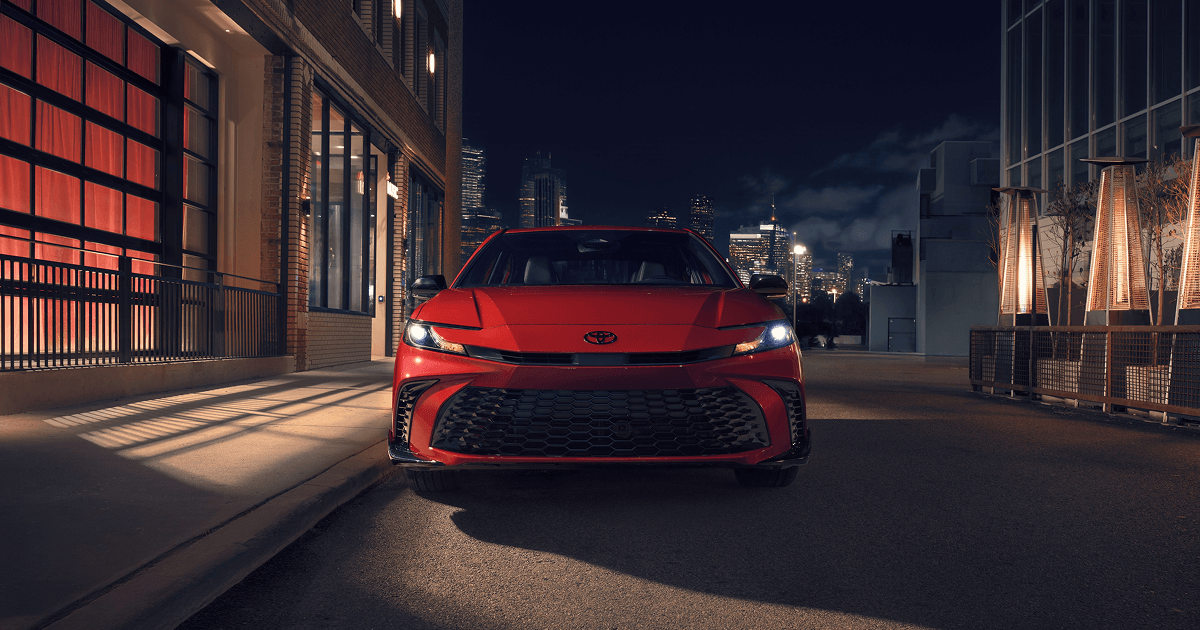
Last updated Sep 30th, 2026If your daily commute involves spending a lot of time behind the wheel, the Toyota Camry makes a very convincing argument for itself.
It is comfortable without feeling oversized, efficient enough to make frequent fuel stops less painful, and backed by one of the most established names in the midsize sedan market.
The 2026 Camry also makes one important decision easier for shoppers.
Every Camry is now a hybrid.
That means you no longer have to choose between a traditional gas model and the more efficient version. Toyota has made the hybrid powertrain the standard setup across the lineup, with Front Wheel Drive and available All Wheel Drive depending on trim. The 2026 Camry LE starts at $29,600 before destination charges, taxes, registration, options, and actual dealer pricing.
For a commuter who prioritizes reliability, fuel economy, comfort, and long-term value, that combination is hard to ignore.
The Camry is not trying to be the fastest sedan or the most dramatic one in the parking lot.
It is trying to be the car you are still happy to drive after several years and thousands of trips to work.
That may be exactly what a commuter needs.
Find Your Best Price
See what others paid and get upfront pricing from local dealers.

Quick Answer: Is the Toyota Camry Good for a Daily Commuter?
Yes.
The Toyota Camry is a strong choice if you want:
- Excellent fuel economy
- A comfortable and quiet highway ride
- Available All Wheel Drive
- Standard hybrid power across the lineup
- Modern safety technology
- A strong long-term ownership reputation
- Useful rear seat room
- Good resale appeal
You may want to consider something else if you want:
- Sports car acceleration
- SUV cargo capacity
- A higher seating position
- Plug-in capability
- Maximum luxury at the same purchase price
For most commuters, though, the Camry gets the important things right.
Fuel Economy Is One of the Biggest Reasons to Buy a Camry
For a commuter, fuel economy is not an abstract specification.
It becomes part of your monthly budget.
Toyota rates the 2026 Camry LE at an estimated 52 mpg in the city, 49 mpg on the highway, and 51 mpg combined. The LE with all wheel drive is rated at 50 mpg city, 49 mpg highway, and 50 mpg combined.
Those are impressive numbers for a midsize sedan.
Even higher trims remain efficient. The SE, XLE, and XSE front wheel drive models are rated at an estimated 46 mpg combined, while the XSE AWD is rated at 43 mpg combined.
That means shoppers do not have to buy the most basic trim to get strong efficiency.
If you drive 15,000 or 20,000 miles a year, those numbers can make a meaningful difference compared with a less efficient SUV or gas only sedan.
The LE is the efficiency champion.
The XLE and XSE trade a little fuel economy for more comfort, technology, and style.
That is a reasonable compromise if you spend enough time commuting to appreciate those features.
The Hybrid Powertrain Fits Commuting Really Well
Hybrid vehicles tend to shine in the kind of driving many commuters do every day.
Traffic.
Stoplights.
Low speed city driving.
Long stretches of highway.
The Camry's hybrid system can use electric assistance during lower load situations and recover energy during braking. That helps improve efficiency without requiring the driver to plug anything in.
You simply drive it like a normal car.
That simplicity is a major advantage for buyers who like the idea of better fuel economy but are not ready to manage charging.
The 2026 Camry produces 225 net combined horsepower in front wheel drive form, while all wheel drive models produce 232 net combined horsepower.
That is enough power for highway merging and passing without turning the Camry into something unnecessarily thirsty.
For a commuter, that balance matters more than a dramatic zero to sixty time.
Comfort Is Where the Camry Earns Its Daily Driver Credentials
Fuel economy may get the headlines, but comfort is what you notice every morning.
The Camry has long been known for a ride that leans toward comfort rather than stiffness, and that continues to work in its favor as a commuter.
The seating position is easy to settle into.
The cabin is roomy enough that you do not feel squeezed during longer drives.
The controls are straightforward.
And the suspension does a good job of keeping rough pavement from becoming the main event.
That may not sound exciting.
After an hour in traffic, exciting is usually not what you want.
The LE keeps things simple, while the XLE moves further toward comfort with features such as upgraded seating materials, heated front seats, and a larger infotainment display. Toyota lists a 12.3 inch touchscreen on the XLE.
For someone with a long commute, the XLE is especially easy to justify because the features you are paying for are the ones you actually use every day.
The Camry Is Easy to Live With in Traffic
A good commuter car should disappear into your routine.
You should not have to fight the controls.
Parking should not feel like a project.
And the car should not feel exhausting after a long day.
The Camry does well here.
It is large enough to feel substantial on the highway but still manageable in parking lots and garages.
Visibility is straightforward.
Steering is light enough for daily driving.
The hybrid system operates quietly at lower speeds.
None of this will make an enthusiast stop reading about sports cars.
That is not the point.
The Camry is designed to make ordinary driving easier.
For a commuter, ordinary driving is most of the ownership experience.
All Wheel Drive Adds Another Layer of Practicality
The Camry is available with Electronic On Demand All Wheel Drive on several trims.
That gives commuters in snowy or wet climates another reason to consider it.
The system can send additional power to the rear wheels when traction is needed, while allowing the car to operate efficiently during normal driving.
The 2026 Camry LE AWD starts at $31,125, while AWD is also available on SE, Nightshade, XLE, and XSE models.
All wheel drive does not replace winter tires or careful driving.
It can, however, make acceleration more confident on slippery roads.
For someone commuting through changing weather, that can be worth the added price.
Reliability Is a Major Part of the Camry's Appeal
The Camry has spent decades building a reputation for dependable ownership.
That matters because commuters tend to put miles on quickly.
A vehicle that feels affordable at 10,000 miles but becomes expensive to maintain at 80,000 miles is not necessarily a good commuter car.
The Camry's long history gives buyers confidence that Toyota understands the model well.
The current generation is hybrid only, so it does include more electrified hardware than older Camrys. No one should assume a new model will behave exactly like one built fifteen years ago.
Still, Toyota has substantial experience with hybrid systems, and the warranty reflects that.
Toyota covers hybrid related components for eight years or 100,000 miles, while the hybrid battery is covered for ten years or 150,000 miles. That battery coverage is transferable to later owners.
For a high mileage commuter, that is meaningful reassurance.
ToyotaCare Helps With Early Ownership Costs
New 2026 Camry models include ToyotaCare.
ToyotaCare covers normal factory-scheduled maintenance for two years or 25,000 miles, whichever comes first. Roadside assistance is also included for two years with unlimited mileage.
The standard new vehicle warranty covers three years or 36,000 miles, while the powertrain is covered for five years or 60,000 miles.
That does not make ownership free.
You will still eventually pay for tires, brakes, filters, fluids, and other wear items.
But the included maintenance gives new buyers a predictable start.
That can be especially helpful if your commute already makes you one of the higher mileage drivers in your household.
The Camry's Safety Technology Makes Commuting Easier
Every 2026 Camry includes Toyota Safety Sense 3.0.
The system includes technologies designed to support the driver during common road situations, including Lane Tracing Assist and Dynamic Radar Cruise Control. Toyota also includes Emergency Drive Stop System functionality with Lane Tracing Assist when certain conditions are met.
For commuters, adaptive cruise control can be one of the most useful features in the car.
It can help maintain distance from traffic ahead and reduce the constant acceleration and braking required on long highway drives.
Lane assistance can also reduce some of the workload during repetitive travel.
These systems do not make the Camry self driving.
You still need to remain attentive and ready to take control at all times.
But used properly, they can make a long commute less tiring.
Which Camry Trim Is Best for a Commuter?
For most commuters, the answer comes down to LE or XLE.
Toyota Camry LE
The LE is the logical choice if fuel economy and affordability matter most.
It starts at $29,600 and delivers the highest efficiency in the lineup at an estimated 51 mpg combined.
You still get the hybrid powertrain, modern safety features, wireless smartphone compatibility, and a comfortable midsize cabin.
For someone driving a lot of miles and trying to keep costs down, the LE is hard to beat.
Toyota Camry XLE
The XLE starts at $34,800 and adds more premium cabin features.
It is not as efficient as the LE, but an estimated 46 mpg combined is still excellent for a comfortable midsize sedan.
For commuters spending an hour or more in the car every day, paying more for better seats, a larger display, and extra comfort can make sense.
Toyota Camry SE
The SE starts at $32,100 and gives the Camry a sportier look and suspension tuning.
It is a good middle ground if you want more personality than the LE without moving into the higher price of the XLE.
Toyota Camry XSE
The XSE starts at $36,000 and adds the sportiest styling and premium features.
It looks sharp, but it is harder to call the value choice for someone whose priorities are fuel costs and long term ownership.
You are paying more for appearance and equipment rather than dramatically improving the commuting fundamentals.
Resale Value Is Another Reason the Camry Makes Sense
A commuter can put a lot of miles on a vehicle.
That makes resale value important.
Kelley Blue Book currently estimates that a 2026 Camry will lose around $11,317 in value over five years in one of its cost to own models, while placing the Camry in the top quarter of midsize cars for overall ownership costs. Actual depreciation varies by trim, mileage, condition, location, and market demand.
That does not mean the Camry avoids depreciation.
No new car does.
The advantage is demand.
The Camry is well known, widely serviced, and easy for used car shoppers to understand.
A clean Camry with complete maintenance records and reasonable mileage is likely to remain appealing in the used market.
For someone planning to trade after several years, that can make the total ownership equation more favorable.
Does the Camry Have Low Ownership Costs?
Relatively speaking, yes.
Kelley Blue Book currently places the 2026 Camry among the lower-cost midsize cars to own over five years. Its model includes fuel, insurance, maintenance, repairs, financing, state fees, and depreciation.
Actual costs can vary substantially.
Insurance depends on the driver.
Maintenance costs depend on mileage and service provider.
Financing depends on your credit and loan.
Fuel costs depend on how far you drive.
But the Camry starts with several advantages.
It is efficient.
It uses a proven hybrid concept.
It has broad parts and service availability.
And its resale demand helps reduce one of the largest hidden ownership expenses.
For a commuter, that combination can matter more than saving a few hundred dollars on the initial purchase price.
Is the Camry Better Than an SUV for Commuting?
For many people, yes.
SUVs offer a higher seating position and more cargo flexibility.
The tradeoff is usually higher purchase prices, more weight, and lower fuel economy.
If your daily routine mostly involves one or two people, a laptop bag, groceries, and the occasional weekend trip, you may not need the extra size of an SUV.
The Camry offers plenty of passenger room while using less fuel than many crossovers.
It is also easier to park and usually costs less to purchase than a similarly equipped midsize SUV.
If you genuinely need the cargo space or seating height, buy the SUV.
If you do not, the Camry can be the smarter commuter tool.
New or Used Camry for a Daily Commuter?
Both can make sense.
Buying new gives you:
- Full warranty coverage
- ToyotaCare
- The latest hybrid system
- Current safety technology
- Known history from the first mile
Buying used can give you:
- A lower purchase price
- Less exposure to early depreciation
- More features for the same budget
- Lower financing needs
A lightly used Camry may be especially appealing for commuters because the model has a strong used market and many examples were purchased as practical daily drivers.
As always, maintenance history matters.
Do not buy a neglected Camry simply because it says Toyota on the trunk.
Who Should Buy a Toyota Camry?
The Camry makes the most sense for:
- Daily commuters
- High mileage drivers
- Professionals who spend significant time on highways
- Drivers who want hybrid fuel economy without charging
- Buyers who value long-term ownership
- Families that do not need an SUV
- Shoppers who care about resale value
It is particularly strong for people who want one car to be comfortable during the week and practical enough for weekends.
Who Should Consider Something Else?
The Camry may not be your best fit if you want a higher seating position, maximum cargo space, or a more performance-focused driving experience.
A compact SUV may suit drivers who carry bulky equipment regularly.
A Honda Civic Hybrid may appeal to shoppers who want something smaller and more engaging.
A Toyota RAV4 may make more sense if you need SUV flexibility while still prioritizing fuel economy.
And if you can charge at home and want to complete most commuting without gasoline, a plug in hybrid or electric vehicle may deserve consideration.
The Camry is very good at its job.
You still need to make sure its job matches yours.
Is the Toyota Camry a Good Car to Buy?
For a daily commuter who prioritizes reliability, fuel economy, comfort, and resale value, yes.
The Camry is one of those vehicles where the strengths become more obvious the longer you own it.
Saving fuel every week matters.
A comfortable seat matters after the thousandth commute.
Reliable transportation matters when you need to be at work at 8 a.m.
And strong resale value matters when you eventually decide it is time for something new.
The Camry does not need one spectacular feature to make its case.
Its value comes from doing nearly everything a commuter needs consistently well.
That is a difficult formula to beat.
How AutoFinder Helps You Shop for a Toyota Camry
The Camry lineup looks simple until you start comparing trims, drivetrains, features, and pricing.
AutoFinder helps you research:
- Camry trims
- Front Wheel Drive and all wheel drive options
- Pricing
- Available features
- Fuel economy
- Local dealer inventory
- New vehicle availability
A commuter shopping for an LE may have very different priorities from someone considering an XLE AWD.
Comparing actual vehicles helps you see which trim gives you the comfort and equipment you want without paying for features you will rarely use.
The goal is not to buy the most expensive Camry you qualify for.
It is to buy the one that makes your commute easier while keeping the rest of your budget healthy.
Final Thoughts
The Toyota Camry has been a commuter favorite for years because it understands what everyday drivers actually need.
The 2026 model strengthens that case by making hybrid power standard across the lineup.
The LE can return an estimated 51 mpg combined.
All wheel drive is available.
Toyota Safety Sense 3.0 comes standard.
ToyotaCare covers the first two years or 25,000 miles of scheduled maintenance.
And the Camry continues to rank well for ownership costs compared with other midsize cars.
It may not be the car you buy because you want everyone in the parking lot to notice you.
It is the car you buy because your commute happens every day.
For someone who wants that routine to be efficient, comfortable, dependable, and financially sensible, the Camry remains an easy car to recommend.
Want More Car Buying Advice?
Add AutoFinder as a preferred source on Google to help you discover more of our automotive guides and research.
FAQs
Is the Toyota Camry a good commuter car?
Yes. The Toyota Camry is a strong commuter because it combines excellent hybrid fuel economy, a comfortable ride, useful driver assistance technology, and a spacious midsize cabin. The 2026 Camry LE is rated at an estimated 51 mpg combined.
How much does a 2026 Toyota Camry cost?
The 2026 Toyota Camry LE starts at $29,600 before destination charges, taxes, registration, options, and actual dealer pricing. The SE starts at $32,100, the XLE at $34,800, and the XSE at $36,000. All Wheel Drive versions cost more.
Is every 2026 Toyota Camry a hybrid?
Yes. The 2026 Camry lineup uses Toyota's hybrid powertrain across every trim. Front Wheel Drive models produce 225 net combined horsepower, while All Wheel Drive models produce 232 net combined horsepower.
Does the Toyota Camry hold its value?
The Camry has strong recognition and used market demand. Kelley Blue Book currently estimates about $11,317 in depreciation over five years for a 2026 Camry in one of its cost-to-own models, although actual resale value depends on mileage, condition, trim, location, and future market demand.
Which Toyota Camry trim is best for commuting?
The LE is the strongest choice for commuters focused on purchase price and maximum fuel economy. The XLE may be worth the added cost for drivers with longer commutes who value upgraded seating, comfort, and technology. Buyers in snowy climates should also compare available All Wheel Drive configurations.
Featured Articles
Is the BMW X5 Worth Buying? Performance, Comfort and Value
New and Used Car Reviews: Features, Specs, and Insights
Why the Chevrolet Equinox Is Ideal for Florida
New and Used Car Reviews: Features, Specs, and Insights
Mitsubishi is shaking up the Outlander lineup
New and Used Car Reviews: Features, Specs, and Insights
The information provided in this article is for general informational purposes only and may change over time. Vehicle pricing, availability, specifications, incentives, financing terms, interest rates, and other details may vary by vehicle, dealer, lender, location, and individual circumstances. AutoFinder does not guarantee the accuracy or availability of information provided by third parties. Always confirm current vehicle details, pricing, terms, and eligibility directly with the participating dealer or appropriate provider before making a purchase or financial decision.