Best Used Cars Under $30,000 in 2026
Last updated Sep 16th, 2026A $30,000 budget gives you plenty of room to be selective when shopping for a used car. Rather than simply looking for the newest vehicle you can afford, you can compare relatively recent sedans and SUVs, different trim levels, available safety technology, fuel economy, mileage, and condition.
Our picks for the best used cars under $30,000 focus on vehicles that give shoppers a useful combination of everyday practicality, features, comfort, and value on the used market.
The right choice still depends heavily on the individual vehicle. Model year, mileage, maintenance, accident history, trim, drivetrain, and condition can matter just as much as the name on the badge.
Here are 7 used vehicles worth putting on your shopping list:
Used vehicle prices and availability vary, so treat $30,000 as a shopping budget rather than a guarantee that every year, trim, or configuration of these vehicles will fall below it.
Find Your Best Price
See what others paid and get upfront pricing from local dealers.

What Are the Best Used Cars Under $30,000?
There is no single best used car for everyone at this price.
A commuter may care most about fuel economy and comfort. A family may put rear seat and cargo space first. Someone who regularly drives in snow may prioritize All Wheel Drive. Another shopper might gladly give up SUV space for a newer or better-equipped sedan.
That is why it makes sense to look beyond a single body style.
The Toyota Camry and Honda Accord give sedan shoppers 2 practical choices. The Honda CR-V, Mazda CX-5, Hyundai Tucson, and Toyota RAV4 offer different takes on the compact SUV. The Subaru Outback adds another option for shoppers who want standard All Wheel Drive and flexible cargo space.
Use these models to build your short list, then compare the actual used vehicles available within your budget.
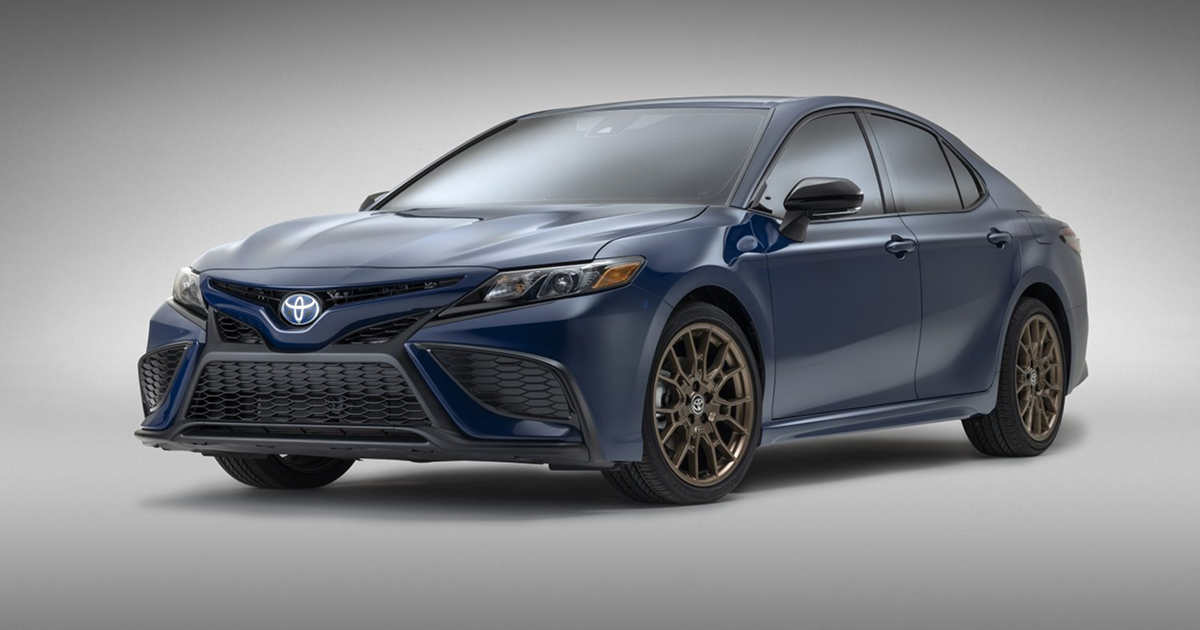
1. Toyota Camry
The Toyota Camry is a natural place to start if you want a used sedan that is comfortable enough for long trips but practical enough for everyday commuting.
Recent Camrys give shoppers several choices. Depending on model year and trim, you may encounter 4-cylinder, V6, hybrid, Front Wheel Drive, and All Wheel Drive configurations.
Fuel economy can be another reason to look at the Camry. For example, the 2023 Camry LE with the standard gasoline engine carried an EPA estimate of 28 mpg city and 39 mpg highway when new, while the LE Hybrid was rated considerably higher.
That gives used shoppers room to decide what matters most. Someone with a long commute might prioritize a 4-cylinder or hybrid. Another shopper may care more about equipment, drivetrain, mileage, or condition.
Why Consider a Used Camry?
- Comfortable sedan layout
- Efficient 4-cylinder options
- Hybrid models available
- AWD available on certain model years and trims
- Plenty of configurations to compare
Do not shop for a Camry based on the model name alone. Compare the model year, engine, trim, mileage, maintenance history, and condition of the specific vehicles available around you.
Best for: Shoppers who want a comfortable sedan for commuting and everyday driving.
2. Honda CR-V
If you want the flexibility of an SUV without moving into something particularly large, the Honda CR-V deserves a look.
Its biggest advantage is how easily it fits into everyday life. There is useful rear seat space, a flexible cargo area, and available All Wheel Drive on many versions.
Newer generations also give used shoppers plenty of technology and driver assistance features to compare.
The 2023 CR-V, for example, introduced a redesigned generation and offered a 190 horsepower turbocharged engine on certain trims along with available Real Time AWD.
That makes model year especially important when shopping used. A CR-V from one generation can look and feel noticeably different from one built only a few years later.
Why Consider a Used CR V?
- Flexible cargo area
- Comfortable 2 row SUV layout
- Available AWD
- Gasoline and hybrid choices depending on year
- Practical size for everyday use
As with any used SUV, look beyond the mileage. Service history, tire condition, previous use, accident history, and how the vehicle drives should all factor into your decision.
Best for: Shoppers who want an easy-to-live-with compact SUV with useful passenger and cargo space.
3. Mazda CX-5
The Mazda CX-5 is worth considering if you want a compact SUV but do not want driving enjoyment to disappear from the equation.
Its cabin and road manners give it a different personality from some of the more utility-focused options in this price range.
Recent CX-5 models can also be particularly interesting for shoppers who want All Wheel Drive. Mazda made its i Activ AWD system standard across the 2023 CX-5 lineup in the United States.
You can find naturally aspirated and turbocharged engine options depending on trim and model year. That means 2 used CX-5s can deliver noticeably different performance even if they look similar in a search result.
Why Consider a Used CX 5?
- Standard AWD on newer model years
- Comfortable, well finished cabin
- Responsive road manners
- Multiple trim levels
- Available turbocharged engine on certain versions
If keeping your purchase comfortably below $30,000 is the priority, compare naturally aspirated versions with higher trim or turbo models. Sometimes the better fit is the simpler vehicle with lower mileage or a stronger maintenance history.
Best for: Shoppers who want SUV practicality with a more engaging driving experience.
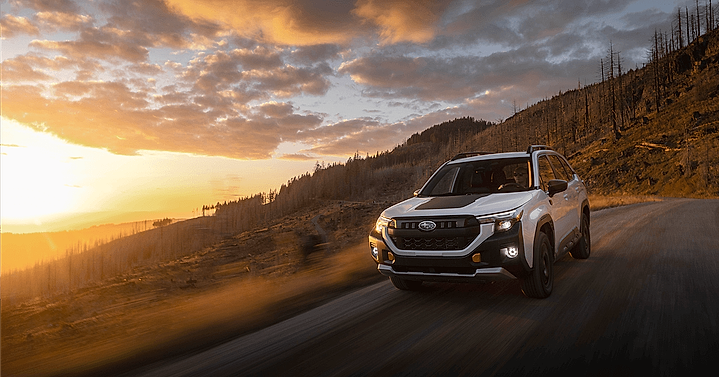
4. Subaru Outback
The Subaru Outback sits somewhere between a traditional wagon and an SUV, which is exactly what makes it appealing.
You get a long, useful cargo area and standard Symmetrical All Wheel Drive without necessarily moving into a taller, bulkier SUV.
For example, the 2023 Outback came standard with Subaru Symmetrical All Wheel Drive, while versions with the 2.5 liter engine were rated at 26 mpg city and 33 mpg highway when new.
The Outback also gives shoppers several versions to consider. Some emphasize comfort and features, while others are designed with more adventurous driving in mind.
If you regularly carry outdoor equipment, take road trips, or deal with changing weather, it can be an especially useful option.
Why Consider a Used Outback?
- Standard AWD
- Flexible cargo area
- Comfortable for longer drives
- Useful ground clearance
- Wide range of trims
Pay attention to the engine and trim when comparing Outbacks. Equipment and performance can vary considerably across the lineup.
Best for: Shoppers who want cargo flexibility and standard AWD for everyday driving and trips.
5. Hyundai Tucson
The Hyundai Tucson can be a particularly interesting used buy because relatively recent examples may fit within a $30,000 budget.
That matters if you care about getting newer cabin technology and features rather than simply buying the oldest version of a more expensive vehicle.
The Tucson was redesigned for the 2022 model year, making 2022 and newer examples especially relevant for shoppers who prefer the more modern design and interior.
Depending on year and trim, you can find front wheel drive, all wheel drive, hybrid, and plug in hybrid versions. Not every version will fit every $30,000 search, but the range gives shoppers plenty to compare.
Why Consider a Used Tucson?
- Modern interior on recent models
- Useful compact SUV space
- Available AWD
- Hybrid options in the broader lineup
- Plenty of features depending on trim
When comparing used Tucsons, look closely at the trim. Moving between versions can change the technology, convenience features, drivetrain, and price enough that it is worth comparing several examples.
Best for: Shoppers who want a relatively recent compact SUV with modern features.
6. Honda Accord
Not every $30,000 shopper needs an SUV.
The Honda Accord is worth considering if you want generous passenger space and a comfortable driving experience while keeping the efficiency and road manners of a sedan.
Because $30,000 reaches into relatively recent used Accord inventory, shoppers may have choices between different generations, trims, and powertrains.
That is important because the Accord has changed significantly over time. Instead of deciding you simply want “an Accord,” identify which generation and powertrain fit your priorities.
An older higher trim vehicle may give you more features, while a newer lower trim example may give you fewer miles and a newer design.
Why Consider a Used Accord?
- Spacious sedan interior
- Comfortable for commuting
- Multiple powertrain choices across recent model years
- Useful rear seat room
- Plenty of trims to compare
The Accord makes a particularly useful comparison against the Camry. If both are on your list, driving them can tell you more than specifications alone.
Best for: Sedan shoppers who prioritize passenger space and everyday comfort.
7. Toyota RAV4
The Toyota RAV4 is another compact SUV that belongs on a $30,000 used car shopping list.
Its popularity means shoppers can often find multiple model years, trims, and configurations to compare on the used market. Depending on what is available near you, that may include front wheel drive, all wheel drive, and hybrid versions.
A RAV4 makes sense for shoppers who want SUV cargo flexibility without stepping up to a 3 row vehicle.
The harder decision may be determining which individual example offers the better value. A newer RAV4 with more miles could sit beside an older vehicle with fewer miles at a similar price.
That is where condition, maintenance, equipment, and how long you plan to keep the vehicle become important.
Why Consider a Used RAV4?
- Practical compact SUV size
- Available AWD
- Hybrid versions available
- Flexible passenger and cargo space
- Broad selection of used configurations
Do not assume the newest RAV4 under your budget is automatically the right one. A well maintained older example with the features you want may make more sense than stretching the budget for a newer vehicle.
Best for: Shoppers looking for a practical compact SUV with plenty of configurations to choose from.
Should You Buy a Sedan or SUV Under $30,000?
At this budget, you do not have to default to an SUV.
Sedans can offer plenty of value on the used market, especially if you do not need the extra cargo height or ground clearance of a crossover.
A Camry or Accord may give you a comfortable cabin, good fuel economy, and plenty of features while leaving more room in the budget for a newer model year or lower mileage.
An SUV such as the CR V, CX 5, Tucson, or RAV4 makes more sense when cargo flexibility, seating position, or available AWD is higher on your priority list.
The Outback offers an interesting middle ground with SUV like versatility in a wagon shaped package.
Start with how you actually use your vehicle rather than which body style happens to be most popular.
Is It Better to Buy a Newer Used Car or an Older Higher Trim Car?
This is one of the more useful questions to ask with a $30,000 budget.
Imagine you are choosing between a newer base or mid-level model and an older top-trim version at roughly the same price.
The older vehicle might have leather seating, a larger screen, premium audio, a more powerful engine, or additional convenience features. The newer vehicle might have fewer miles, newer safety technology, or more remaining factory warranty coverage.
Neither is automatically the better purchase.
Think about what you will notice every day. If heated seats, a better audio system, or a particular engine matter to you, an older higher trim model may be worth considering. If you plan to keep the vehicle for many years, mileage, age, condition, and maintenance history may carry more weight.
How Old of a Used Car Should You Buy for $30,000?
There is no ideal age.
Your $30,000 can buy very different vehicles depending on the segment. It may put you into a fairly recent compact sedan or SUV, while the same budget could require going several years older for a luxury vehicle, large SUV, or truck.
Rather than setting a strict age limit, compare:
- Model year
- Mileage
- Maintenance history
- Accident and title history
- Condition
- Trim and equipment
- Remaining warranty coverage
- Expected ownership costs
A newer model with high mileage is not automatically preferable to an older one that has been driven less and maintained carefully.
Judge the whole vehicle.
How Much of Your $30,000 Budget Should Go Toward the Car?
If $30,000 is your maximum total budget, do not assume you should shop for vehicles advertised at exactly $30,000.
The vehicle price may not be the same as the final amount you pay.
Depending on where you live and the transaction, sales tax, title and registration, documentation fees, and other applicable charges can affect the total.
Financing can also change what the vehicle ultimately costs over time.
Before deciding on your maximum vehicle price, work backward from what you can comfortably afford. AutoFinder's out the door price calculator can help you estimate how the selling price and applicable taxes and fees may come together.
Leaving some room in the budget can also be useful for insurance, maintenance, tires, or other costs that come with buying a used vehicle.
What Should You Check Before Buying a Used Car Under $30,000?
A $30,000 used vehicle is still a major purchase, so the individual car deserves as much attention as the model you choose.
Check the Vehicle History
Review the vehicle's title and available history information. Look for reported accidents, title issues, mileage inconsistencies, and other information that could affect your decision.
Vehicle history reports are useful, but they are not a substitute for inspecting the actual car.
Review Maintenance Records
Service history can give you a better picture of how the vehicle was cared for.
Do not expect every used car to come with a perfect folder containing every receipt. Use whatever records are available alongside the vehicle's mileage, condition, history, and inspection.
Check for Open Recalls
Use the VIN to see whether the vehicle has open safety recalls.
Our guide on how to research recalls before buying a used car explains how to use the NHTSA recall lookup and what to ask about the results.
Take a Real Test Drive
Do more than circle the block.
Drive at the speeds you normally encounter. Pay attention to braking, steering, acceleration, transmission behavior, visibility, comfort, noises, warning lights, and how the technology works.
A car can look perfect in photos and still not feel right from the driver's seat.
Consider an Independent Inspection
For a used vehicle, an inspection by a qualified independent mechanic can give you another perspective on its condition before you buy.
Ask the dealer about arranging an inspection if that is something you want as part of your buying process.
Should You Buy a Certified Used Car Under $30,000?
A manufacturer certified used vehicle can be worth considering, but certification should be one part of the comparison rather than the only reason you choose a car.
Manufacturer certified programs typically have requirements around vehicle age, mileage, inspection, and warranty coverage, but the details vary by brand.
Compare the certified vehicle with similar noncertified options.
Look at the price difference, included warranty coverage, vehicle condition, mileage, maintenance history, and program benefits. The certified option may be worth paying more for in some situations, while another well maintained used vehicle may fit your needs just as well.
Ask the dealer to explain exactly what is included with the certification rather than assuming every program works the same way.
How Can You Compare Used Cars at the Same Price?
Price alone can make 2 vehicles look more similar than they really are.
Suppose 2 compact SUVs both cost around $27,000. One may be 2 years newer but have considerably more mileage. The other may have fewer miles and more features but be from an earlier model year.
Instead of asking which one is cheaper, compare the complete picture:
- Age
- Mileage
- Condition
- Maintenance
- Vehicle history
- Features
- Fuel economy
- Tires and other wear items
- Warranty coverage
- Financing terms
Then decide which combination fits how long you plan to own the vehicle and how you intend to use it.
Should You Compare More Than 1 Used Car Before Buying?
Yes, when possible.
Even 2 examples of the exact same year, model, and trim can have different mileage, histories, condition, equipment, and prices.
Seeing several vehicles gives you context.
You may discover that paying a little more gets you substantially lower mileage. You may also find that a feature you thought you needed does not matter after a test drive.
When you find a vehicle worth seeing, contact the dealership about that specific listing before making the trip. Our guide on how to confirm a car is available before visiting a dealership explains what to verify before you leave home.
The dealer can confirm current availability, answer questions about the vehicle, and help arrange a time to see and drive it.
How AutoFinder Helps You Shop for Used Cars Under $30,000
A list like this can narrow the field, but your next step is comparing the actual vehicles available to you.
AutoFinder helps shoppers browse used inventory from dealerships and move from general research to specific vehicles.
Start with a few models that fit your needs. Then compare year, mileage, trim, drivetrain, features, condition, and price across the available inventory.
Once a particular vehicle stands out, the dealership can help answer the questions that become specific to that car, including current availability, equipment, condition, purchase options, and scheduling a test drive.
That combination of online research and dealer expertise can make a $30,000 budget much easier to put to work.
Final Thoughts
The best used car under $30,000 is not necessarily the newest one, the one with the most features, or the model with the most familiar name.
It is the vehicle that gives you the right balance of condition, mileage, equipment, practicality, and price for the way you drive.
The Toyota Camry and Honda Accord are useful starting points if a sedan fits your life. The Honda CR-V, Mazda CX-5, Hyundai Tucson, and Toyota RAV4 give SUV shoppers several different approaches to everyday practicality. The Subaru Outback deserves a look if standard AWD and flexible cargo space are priorities.
Use this list to narrow the field, then shop the individual vehicles. On the used market, the condition and history of the car in front of you can matter just as much as the model itself.
FAQs
Is $30,000 a good budget for a used car?
A $30,000 budget gives used car shoppers a wide range of relatively recent sedans and SUVs to consider. The exact model years, trims, and mileage available will depend on your local market. If $30,000 is your total purchase budget, remember to account for applicable taxes, registration, fees, insurance, financing, and other ownership costs rather than shopping only by advertised price.
What is the best used car to buy for under $30,000?
There is no single best model for every shopper. The Toyota Camry and Honda Accord are worth considering if you want a sedan, while the Honda CR V, Mazda CX 5, Hyundai Tucson, Toyota RAV4, and Subaru Outback give SUV and crossover shoppers several options. Condition, mileage, maintenance history, and price should influence your final choice.
What is the best used SUV under $30,000?
The Honda CR-V, Mazda CX-5, Hyundai Tucson, Toyota RAV4, and Subaru Outback are all worth comparing under a $30,000 budget. Each fits a slightly different shopper. Consider your priorities around passenger space, cargo room, All Wheel Drive, fuel economy, features, mileage, and condition when narrowing the choices.
Can I find a certified used car for under $30,000?
Yes, depending on the brand, model, age, mileage, and inventory in your area. Manufacturer-certified programs have their own eligibility, inspection, and warranty requirements. Compare the certification benefits and coverage with similar noncertified vehicles rather than assuming certification automatically makes a particular car the better value.
How many miles is too many for a $30,000 used car?
There is no mileage number that automatically makes a used car a bad purchase. Age, maintenance history, previous use, condition, model, and price all matter. A higher-mileage vehicle with documented maintenance may be more appealing than a lower-mileage example with poor maintenance or accident damage. Evaluate mileage as one part of the vehicle's overall history.
Should I spend the full $30,000 on a used car?
Not necessarily. If $30,000 represents your total budget, shopping below that amount can leave room for applicable taxes, registration, fees, insurance, maintenance, or repairs. It also gives you more flexibility when comparing financing. Start with the total amount you are comfortable spending and work backward to determine an appropriate vehicle price.
The information provided in this article is for general informational purposes only and may change over time. Vehicle pricing, availability, specifications, incentives, financing terms, interest rates, and other details may vary by vehicle, dealer, lender, location, and individual circumstances. AutoFinder does not guarantee the accuracy or availability of information provided by third parties. Always confirm current vehicle details, pricing, terms, and eligibility directly with the participating dealer or appropriate provider before making a purchase or financial decision.