Car Basics
What Is a VIN and What Can It Tell You About a Car?
OVERVIEW
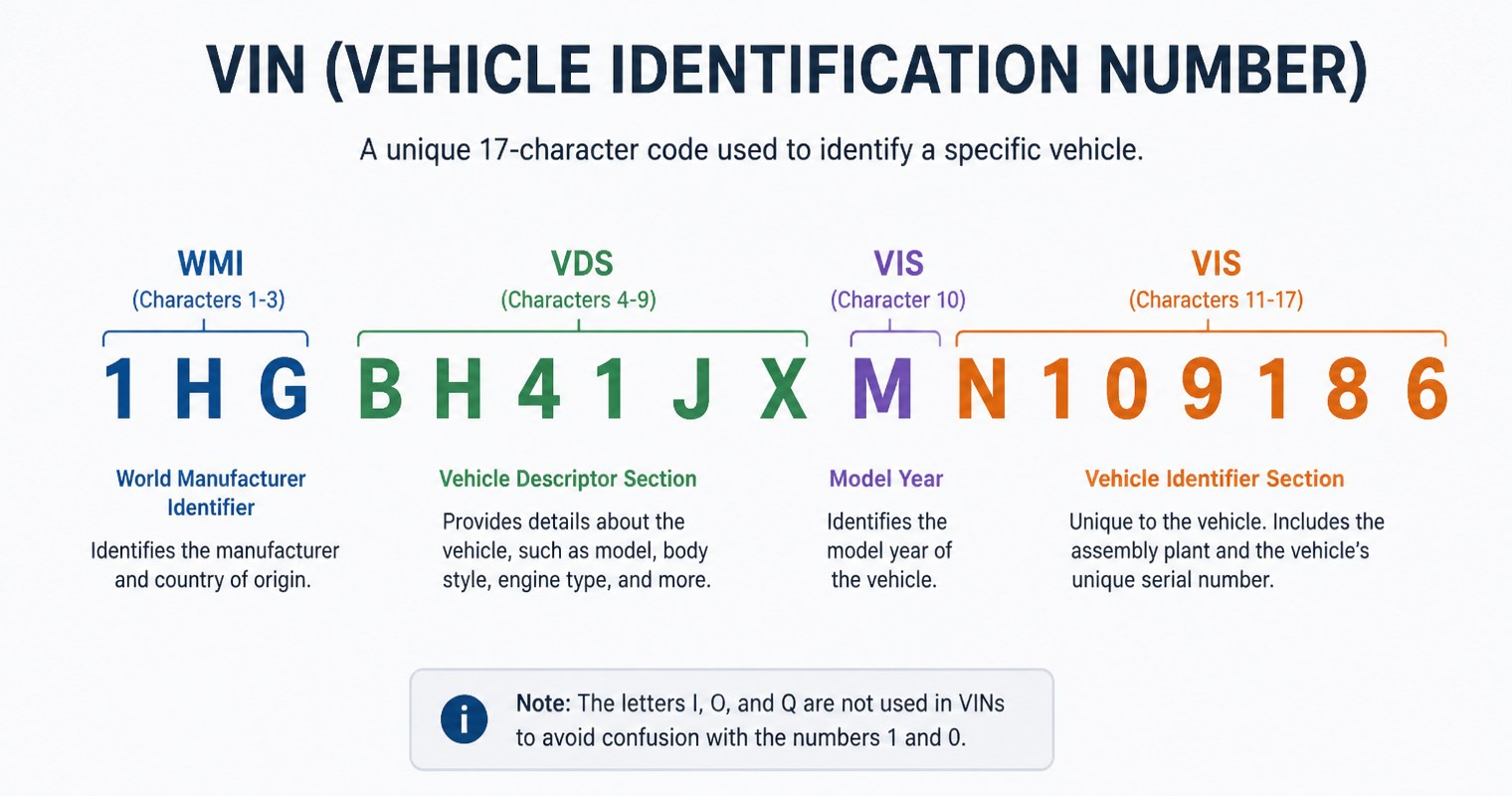
A VIN, short for vehicle identification number, is a unique code used to identify a specific vehicle. For most modern vehicles, it contains 17 characters that provide information about where the vehicle was built, its manufacturer, certain specifications, and its individual production identity.
The VIN becomes especially useful when you are shopping for a used car. It can help you confirm that the vehicle in front of you matches the listing, check for open safety recalls, and pull vehicle history information that may reveal reported accidents, title problems, ownership history, or other details worth knowing before you buy.
Think of the VIN as the starting point for researching a specific car. It can tell you quite a bit, but it does not tell you everything.
What Is a VIN?
VIN stands for vehicle identification number.
Unlike a model name or license plate number, a VIN identifies an individual vehicle. Two vehicles can be the same year, make, model, trim, and color and still have different VINs.
Modern VINs generally contain 17 letters and numbers. The standardized 17-character format has been required for vehicles manufactured for sale in the United States since the 1981 model year.
Those characters are not randomly assigned. Different sections of the VIN identify different pieces of information about the vehicle, while the final portion helps distinguish that particular vehicle from others produced by the manufacturer.
You might need the VIN when:
- Buying or selling a vehicle
- Getting an insurance quote
- Registering or titling a car
- Checking for recalls
- Researching vehicle history
- Ordering certain replacement parts
- Confirming vehicle specifications
- Having a dealership perform service or warranty work
For a car shopper, it is one of the most useful pieces of information attached to the vehicle.
Where Can You Find the VIN on a Car?
The easiest place to look is usually at the bottom of the windshield on the driver's side. The VIN is typically displayed on the dashboard so it can be read from outside the vehicle.
You can also commonly find it:
- On a label inside the driver's side door jamb
- On the vehicle title
- On the registration
- On insurance documents
- In service records
- Within certain manufacturer apps or owner portals
Some vehicles also have the VIN stamped or displayed in additional locations.
When you are buying a used car, compare the VIN displayed on the vehicle with the VIN on its title or other documentation. They should match.
If they do not, stop and find out why before moving forward.
How Many Digits Are in a VIN?
A modern VIN has 17 characters.
Although people often refer to VIN "digits," the code actually contains both numbers and letters.
You will not normally see the letters I, O, or Q in a VIN because they can easily be confused with the numbers 1 and 0.
Vehicles built before the standardized 17-character system took effect can have shorter VINs and different identification formats. That is most relevant when researching classic or older vehicles.
What Do the Numbers and Letters in a VIN Mean?
A VIN can look like a random string at first, but each position has a purpose.
Here is a simplified look at how a standard 17-character VIN is organized.
| VIN Characters | What They Identify | What You Can Learn |
|---|---|---|
| 1 through 3 | World manufacturer identifier | Region or country and manufacturer |
| 4 through 8 | Vehicle description | Certain model, body, engine, restraint, or equipment information |
| 9 | Check digit | Helps verify that the VIN is valid |
| 10 | Model year | Identifies the vehicle's model year code |
| 11 | Assembly plant | Identifies the plant associated with production |
| 12 through 17 | Production sequence | Helps identify the individual vehicle |
The exact information represented by some positions can vary between manufacturers.
That means you should not assume that a particular character always identifies the same feature across every brand. A manufacturer-specific VIN decoder can provide more detailed information for a particular vehicle.
What Can a VIN Tell You About a Car?
The VIN itself can provide basic identifying information. When it is used with manufacturer records, government databases, or vehicle history services, it becomes much more useful.
Depending on the vehicle and the service you use, a VIN can help you research:
- Make and manufacturer
- Model year
- Manufacturing or assembly information
- Certain engine or powertrain details
- Body style or vehicle attributes
- Safety recall information
- Reported title history
- Reported accidents or damage
- Odometer records
- Theft records
- Previous registrations
- Salvage or total loss history
There is an important distinction here.
Not all of that information is literally encoded into the 17 characters. The VIN acts as the identifier that databases use to connect records with a particular vehicle.
That is why running a VIN through a vehicle history service can reveal much more than simply decoding the VIN itself.
Can a VIN Tell You the Exact Trim?
Sometimes, but not always.
A VIN decoder may provide trim information or enough vehicle specifications to narrow down the configuration. Manufacturer systems can sometimes provide even more detailed build information.
The problem is that trim structures can be complicated. Options may have been ordered individually, packages can overlap between trims, and equipment can change during a model year.
Vehicles can also be modified after leaving the factory.
If a particular feature or trim level matters to you, verify it on the actual vehicle rather than relying entirely on a VIN decoder.
For example, if a used vehicle is advertised as having a premium driver assistance package, confirm that the equipment is actually present and functioning.
Can a VIN Tell You Who Owns a Car?
A VIN is not a public shortcut for finding the name and personal information of a vehicle owner.
Privacy laws restrict access to personal information contained in motor vehicle records.
Vehicle history services may show information such as the number of reported owners, states where a vehicle was registered, or whether it was used as a rental or commercial vehicle. That is different from giving you the identity or personal details of those owners.
For a shopper, the important information is usually the vehicle's history rather than the identity of the people who previously owned it.
Can You Check a VIN for Accidents?
A VIN can be used to search vehicle history databases for reported accident or damage records.
That can be very useful, but there is a limitation worth understanding: a clean vehicle history report does not prove that a car has never been damaged.
History reports depend on information being reported to the databases they use. An accident or repair that was never reported may not appear.
That is why a VIN check and a physical inspection work better together.
If you are seriously considering a used car, look for signs of previous repairs such as inconsistent paint, unusual panel gaps, overspray, mismatched body panels, or uneven tire wear. A pre-purchase inspection can provide another layer of protection, particularly on an older or more expensive vehicle.
Can You Check a VIN for a Salvage or Rebuilt Title?
Yes. VIN-based title research can help identify reported title brands, including salvage and rebuilt history.
A salvage title generally indicates that a vehicle was declared a total loss or met the applicable state's criteria for salvage status. A rebuilt title generally means a previously salvaged vehicle was repaired and met the requirements necessary to return to the road in that state.
Title terminology and requirements vary by state, so the details matter.
The National Motor Vehicle Title Information System, or NMVTIS, is a federal system designed to provide information about vehicle title, odometer, salvage, and certain total loss records.
If you are considering a vehicle with unusual title history, understand exactly what the title means before buying. It can affect value, financing, insurance, and eventually your ability to resell the car.
Can You Check for Recalls With a VIN?
Yes, and this is one of the easiest VIN checks to perform.
The National Highway Traffic Safety Administration allows vehicle owners and shoppers to enter a VIN to check for unrepaired safety recalls associated with a particular vehicle.
That is more useful than checking recalls based only on year and model.
A recall may apply to some vehicles produced during a certain period but not others. Checking the actual VIN helps determine whether the specific vehicle is affected by an open recall.
Recall repairs are generally performed by the manufacturer at no cost to the vehicle owner.
If you are considering a used vehicle with an open recall, ask whether the repair can be completed before purchase or contact an authorized dealership to learn what is involved.
Can a VIN Tell You the Vehicle's Mileage?
The VIN itself does not contain a running record of the vehicle's current mileage.
It can, however, be used to connect the vehicle with mileage records from sources such as title transactions, inspections, service visits, auctions, or other reported events.
That history can help you spot inconsistencies.
For example, if a vehicle is currently advertised with 75,000 miles but a previous record shows 110,000 miles, that deserves an explanation before you buy.
Mileage discrepancies do not always mean odometer fraud. Clerical mistakes can happen. But a significant inconsistency should be investigated rather than ignored.
What Is a VIN Decoder?
A VIN decoder is a tool that takes the 17-character VIN and translates some of its encoded information into a more readable format.
Depending on the decoder, you may see information about the vehicle's:
- Manufacturer
- Model year
- Vehicle type
- Engine
- Body style
- Manufacturing plant
- Other manufacturer-specific attributes
NHTSA provides a VIN decoder that draws from information manufacturers submit to the agency.
Manufacturer specific systems and third party services may provide additional details.
A VIN decoder is useful for confirming basic information, but it should not be confused with a vehicle history report. Decoding tells you what the vehicle is. A history report attempts to tell you what has happened to it.
VIN Decoder vs Vehicle History Report
These tools are related, but they answer different questions.
When shopping for a used car, there is no reason to choose only one. Each can tell you something different about the vehicle.
What Should You Check With the VIN Before Buying a Used Car?
Start by making sure you have the correct VIN.
Compare the VIN on the listing with the number displayed on the vehicle and its documentation. A typo can cause you to research an entirely different car.
Once you have confirmed it, use the VIN to check the areas that matter most.
Confirm the vehicle
Make sure the year, make, model, and available specifications match the vehicle being advertised.
Review title history
Look for salvage, rebuilt, flood, or other title brands that could affect the vehicle's value and ownership experience.
Look for reported accidents
Pay attention to the severity and location of reported damage, but remember that a clean report is not a substitute for inspecting the car.
Check mileage history
Review available odometer records for unexplained changes or inconsistencies.
Look for open recalls
Use the VIN to check whether the vehicle has unrepaired safety recalls.
Review the overall history
A long list of records is not automatically bad. Consistent service and mileage records can actually give you more information about how a vehicle was used and maintained.
What matters is whether the history makes sense when compared with the vehicle's current condition and asking price.
What Can't a VIN Tell You?
A VIN can uncover useful information, but it cannot tell you whether a particular used car is a good buy.
It cannot reliably show you:
- How the previous owner drove the car
- Every repair ever performed
- Every accident or instance of damage
- The current condition of the engine or transmission
- Whether the car has developing mechanical problems
- How well every previous repair was completed
- Whether the asking price is reasonable for its current condition
This is why VIN research should be one part of evaluating a used vehicle.
The history may look excellent while the car itself has mechanical problems. Another vehicle may have an accident on its history report but show evidence of a professional repair and years of trouble-free use afterward.
The VIN gives you information to investigate. It does not make the decision for you.
What If the VIN Does Not Match the Car?
Take a mismatch seriously.
The VIN displayed on the vehicle should match its title and registration documentation.
A simple listing typo is possible, especially if you noticed the difference before seeing the vehicle. But if VINs on the vehicle itself or its official paperwork do not match, do not move forward until the discrepancy has been properly explained.
Also pay attention to the physical VIN plate and labels. Anything that appears altered, removed, damaged, or inconsistent deserves further investigation.
When buying from a dealership, ask the dealer to clarify the discrepancy. With a private sale, verify the vehicle and ownership documentation before exchanging money or signing paperwork.
Do You Need the VIN Before Buying a Car?
You should have access to it before completing the purchase.
A VIN allows you to research the specific vehicle rather than relying entirely on the description in a listing.
For used cars in particular, checking the VIN gives you an opportunity to identify issues that could affect whether you want the vehicle and how much you are willing to pay for it.
A seller being unwilling to provide the VIN for a vehicle you are seriously considering is a reason to ask more questions.
The Bottom Line
A VIN is more than a 17-character number on the dashboard. It is the unique identifier that connects a specific vehicle with information that can help you understand what it is and what has been reported about its past.
Start by decoding the VIN to confirm basic vehicle information. Then use it to research title history, reported accidents, mileage records, and open recalls when those checks are relevant.
Just do not treat a clean VIN search as proof that a car is in perfect condition.
If you are buying used, combine VIN research with the vehicle's maintenance records, a careful test drive, its current condition, and, when appropriate, a pre-purchase inspection. That gives you a much clearer picture than the VIN alone.