Car Basics
Why Is Hyundai So Popular? How the Brand Is Growing in America
OVERVIEW
Hyundai’s position in the American car market looks very different today than it did even a decade ago.
The brand has moved beyond competing primarily on affordability. Today, Hyundai offers everything from practical compact cars and family SUVs to hybrids, electric vehicles, performance models, and larger three-row SUVs.
Shoppers appear to be responding. Hyundai sold a record 901,686 vehicles in the United States in 2025, up 8 percent from 2024. It was the company’s third consecutive year of record total sales and fifth consecutive year of record retail sales.
That growth is not coming from one breakout model. Vehicles such as the Hyundai Tucson, Santa Fe, Palisade, Elantra, and IONIQ 5 have all played a role.
So what changed?
Hyundai has become much better at giving shoppers choices where they actually want them, while continuing to compete on price, features, warranty coverage, design, and technology.
How Fast Is Hyundai Growing in the U.S.?
Hyundai has been on a strong run in the United States.
The company sold 836,802 vehicles in 2024, which at the time was its highest annual sales total ever. Retail sales also reached a record 742,009 vehicles.
Then Hyundai broke the record again.
In 2025:
- Total U.S. sales reached 901,686 vehicles
- Total sales increased 8 percent from 2024
- Retail sales reached 772,712 vehicles
- Hyundai recorded its fifth consecutive year of record retail sales
- Elantra, Tucson, Santa Fe, Palisade, IONIQ 5, and Venue all set annual sales records
Hyundai also crossed another major milestone in 2025 when it surpassed 17 million vehicles sold in the United States since entering the market in 1986.
The pace has not been perfectly linear. Individual models and months move up and down, as they do for every automaker. But Hyundai’s longer term direction has been hard to miss.
Hyundai Has a Car for Almost Every Type of Shopper
One of Hyundai’s biggest strengths right now is the breadth of its lineup.
Think about how different 2 Hyundai shoppers can be.
Someone looking at a Hyundai Venue may want a small, affordable SUV for commuting and city driving.
A Hyundai Tucson shopper might need more passenger and cargo space without moving into a large SUV.
The Hyundai Santa Fe and Hyundai Palisade move farther into family SUV territory.
Then there are shoppers interested in electric vehicles such as the Hyundai IONIQ 5, IONIQ 6, and IONIQ 9.
Hyundai even has the Santa Cruz for buyers who want an open bed but do not necessarily want a traditional pickup.
That range gives Hyundai more opportunities to keep shoppers within the brand as their needs change.
SUVs Have Become a Major Part of Hyundai’s Success
It is difficult to talk about Hyundai’s U.S. growth without talking about SUVs.
The Tucson has become especially important.
Hyundai sold 234,230 Tucsons in the United States during 2025, up 14 percent from the previous year. The Santa Fe climbed 20 percent to 142,404 vehicles, while Palisade sales increased 13 percent to 123,929.
Together, those 3 SUVs give Hyundai strong coverage across some of the most important parts of the American market.
The Tucson competes in the crowded compact SUV segment. The Santa Fe provides more family flexibility and available three-row seating. The Palisade moves into larger three-row SUV territory.
Instead of relying on one SUV to cover several types of buyers, Hyundai has distinct choices at different sizes and prices.
That matters when shoppers increasingly want an SUV but do not all want the same SUV.
The Tucson Has Become a Key Hyundai Model
The Hyundai Tucson deserves a closer look because it shows several reasons the brand has gained ground.
It competes in a segment filled with familiar names, including the Toyota RAV4, Honda CR-V, Nissan Rogue, Chevrolet Equinox, and Kia Sportage.
Standing out in that group is not easy.
Hyundai gives Tucson shoppers multiple ways to configure the vehicle, including different trim levels and electrified powertrains. Buyers can prioritize affordability, features, efficiency, or a more premium cabin without necessarily leaving the Tucson lineup.
The results have been strong. Tucson set an annual U.S. sales record in 2025, with sales rising 14 percent.
For shoppers deciding whether Hyundai has truly become a mainstream competitor, the Tucson is probably one of the clearest places to see the change.
Hyundai Has Improved Its Approach to Design
Hyundai vehicles have become much harder to mistake for generic transportation.
The current lineup includes some genuinely distinctive designs.
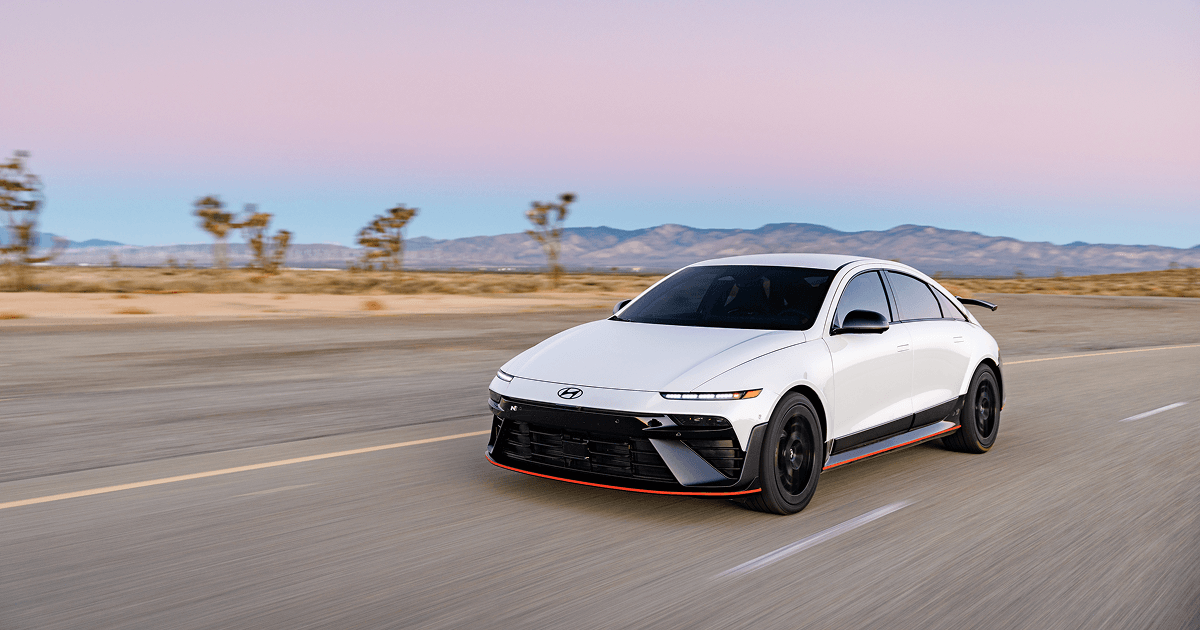
The Santa Fe takes a boxier approach than many family SUVs. The IONIQ 5 uses retro inspired proportions and pixel style lighting. The Sonata has adopted a much more dramatic front end. The Palisade leans into the upright look many buyers expect from a larger SUV.
Not everyone will like every design, and that is probably fine.
A vehicle that tries to offend absolutely no one can also become very easy to ignore.
Hyundai has been willing to give individual models more personality rather than making every vehicle look like a slightly larger or smaller version of the same design.
That gives shoppers another reason to notice the brand before they ever compare a specification sheet.
Hyundai Still Competes Hard on Value
Hyundai’s vehicles have become more sophisticated, but value remains an important part of the brand.
The difference is that Hyundai’s value argument is no longer simply about having the lowest price.
Shoppers now have to look at what is included for that price.
Depending on the model and trim, Hyundai vehicles can offer features such as:
- Large digital displays
- Smartphone connectivity
- Heated and ventilated seats
- Surround view cameras
- Driver assistance technology
- Premium audio
- Power liftgates
- Digital Key functionality
- Hybrid powertrains
- All wheel drive
This is also why comparing Hyundai trim levels matters.
A base model may already have enough equipment for one shopper, while another may find that moving into an SEL or another middle trim adds several everyday features for a relatively manageable increase in price.
Value is not about buying the cheapest car. It is about what you are getting for what you spend.
Hyundai’s Warranty Still Gets Shoppers’ Attention
Warranty coverage has been part of Hyundai’s value proposition for years.
Hyundai advertises a 10 year or 100,000 mile powertrain limited warranty for qualifying original owners, along with other factory warranty coverage.
That can give shoppers additional confidence when comparing Hyundai with another vehicle at a similar price.
Warranty coverage should not be confused with guaranteed reliability. Every vehicle can require maintenance or repairs, and warranty terms have conditions and exclusions.
Still, factory coverage is part of the ownership equation.
If 2 vehicles are close on price, features, and driving experience, stronger warranty coverage may be enough to move the decision in Hyundai’s direction for some buyers.
Hyundai Gives Shoppers More Than One Path to Better Fuel Economy
One of Hyundai’s smartest moves has been avoiding an all or nothing approach to electrification.
Not every shopper is ready for a fully electric vehicle.
Hyundai does not require them to be.
Depending on the model, shoppers can choose among gasoline, hybrid, plug in hybrid, and fully electric powertrains.
That flexibility has become increasingly important.
In 2025, electrified vehicles accounted for 30 percent of Hyundai’s U.S. retail sales. Hybrid sales increased 36 percent for the year, while EV sales rose 7 percent.
Hyundai’s hybrid momentum has continued to stand out. In February 2026, its total hybrid sales were up 79 percent compared with the previous February.
For a shopper who wants better fuel economy but does not want to plug in, a Tucson Hybrid or Santa Fe Hybrid provides an option. Someone ready for a fully electric vehicle can move into the IONIQ lineup.
Hyundai gets to compete for both buyers.
The IONIQ Lineup Changed How People Look at Hyundai EVs
Hyundai could have approached electric vehicles by simply converting familiar gasoline models.
Instead, the IONIQ lineup gave the company a chance to do something different.
The IONIQ 5 became one of Hyundai’s most recognizable electric vehicles, combining distinctive styling with a dedicated electric vehicle platform and fast charging capability.
The IONIQ 6 took the same broader EV strategy in a lower, sedan-shaped direction, while the newer IONIQ 9 gives Hyundai an electric option for shoppers who need substantially more passenger space.
IONIQ 5 sales reached a record 47,039 vehicles in the United States in 2025, up 6 percent from 2024.
That is still much smaller than Tucson volume, but EVs do something else for Hyundai too. They give the brand a place to show off technology and design that can influence how shoppers view the rest of the lineup.
Hybrids May Be Even More Important Than EVs
Electric vehicles get plenty of attention, but Hyundai’s hybrid growth may be even more relevant to the average shopper right now.
A hybrid asks for very little change in driving habits.
You fill it with gasoline. You drive it. The vehicle handles the electric portion of the powertrain on its own.
That makes hybrids an easier step for buyers who want better efficiency but are not ready to think about home charging or public charging availability.
Hyundai offers hybrid versions of high volume vehicles including the Tucson and Santa Fe, rather than limiting hybrid technology to niche products.
That puts electrification directly into the models shoppers are already considering.
The sales numbers suggest that approach is connecting. Hyundai’s hybrid sales increased 36 percent in 2025, and several monthly periods have produced much larger gains.
Hyundai Has Moved Beyond Its Old Reputation
Brand perception does not change overnight.
For shoppers who remember Hyundai primarily from its earlier years in the U.S. market, the current lineup can be surprising.
Hyundai entered the United States in 1986 with the Excel. Four decades later, the company has sold more than 17 million vehicles here and operates through more than 855 independent dealers.
More importantly, shoppers now encounter Hyundai in very different conversations.
A Tucson might be compared with a RAV4 or CR-V.
A Palisade might sit on the same shopping list as a Honda Pilot, Toyota Grand Highlander, or Kia Telluride.
An IONIQ 5 might be compared with EVs from Tesla, Ford, Volkswagen, or other dedicated electric models.
Hyundai no longer needs to win solely by being cheaper. It can compete on the vehicle itself.
Hyundai Has Put More Emphasis on the American Market
Hyundai’s growth in the U.S. is also being supported by a larger physical presence here.
The company already operates Hyundai Motor Manufacturing Alabama, along with research and development facilities and its North American headquarters in California.
More recently, Hyundai Motor Group Metaplant America in Georgia has expanded the group’s U.S. manufacturing footprint.
Hyundai Motor Group has also announced plans to invest $26 billion in the United States from 2025 through 2028.
Local production does not automatically make a vehicle better, but it can matter strategically. It gives Hyundai additional manufacturing capacity in one of its most important markets and supports its plans for both conventional and electrified vehicles.
More Choice Has Helped Hyundai Reach More Buyers
A few years ago, choosing a powertrain was fairly simple for most car shoppers.
Today, the decision can involve gasoline, hybrid, plug in hybrid, or electric.
Hyundai has embraced that complexity rather than betting entirely on one option.
That gives the company a broad reach.
A buyer who wants a traditional gasoline SUV can find one.
A commuter focused on fuel economy can look at a hybrid.
Someone who wants to occasionally drive on electric power while keeping a gasoline engine can consider a plug in hybrid where offered.
A shopper ready to go fully electric has the IONIQ lineup.
This strategy allows Hyundai to respond to changing demand without requiring every customer to make the same transition at the same time.
Is Hyundai Growing Faster Than Other Car Brands?
Hyundai has been one of the stronger performers in the U.S. market, although calling any brand the single fastest growing automaker depends heavily on the time period and how growth is measured.
A better way to describe Hyundai is as one of the major automotive brands that has been consistently gaining ground.
Cox Automotive data for 2025 showed Hyundai Motor Group sales increasing 7.9 percent, with U.S. market share rising from 10.7 percent to 11.3 percent.
Hyundai Motor America itself increased total sales 8 percent in 2025 after setting a record in 2024.
The important part is the consistency. Hyundai is not coming off one unusually strong month. It has put together several years of record retail performance.
What Are Hyundai’s Biggest Strengths Right Now?
There is no single reason Hyundai has grown.
The brand has several things working in its favor at the same time:
- A strong SUV lineup
- Competitive pricing
- Generous feature content
- Long factory warranty coverage
- Growing hybrid availability
- A dedicated EV lineup
- Distinctive vehicle design
- More U.S. manufacturing
- Broad coverage across vehicle sizes and prices
That combination makes Hyundai difficult to dismiss in many shopping categories.
A shopper may initially come for the price and stay for the features. Someone else may notice the design first. Another buyer may be specifically looking for a hybrid.
Different models give Hyundai different ways into the consideration set.
Are There Any Downsides to Buying a Hyundai?
Hyundai’s recent growth does not mean every Hyundai is automatically the right choice.
Shoppers should still compare:
- Purchase price
- Dealer pricing
- Insurance costs
- Fuel economy
- Reliability for the specific model and year
- Expected depreciation
- Passenger and cargo space
- Ride and handling
- Warranty terms
- Features by trim
Some shoppers may prefer the driving experience, resale history, interior layout, or dealer network of a competing brand.
There can also be meaningful differences within Hyundai’s own lineup.
The Tucson that makes sense for one buyer may be completely wrong for someone who needs the third row of a Palisade. An IONIQ 5 can be a great EV, but it still needs to fit your charging situation.
The badge should get a vehicle onto your shopping list, not make the decision for you.
Should You Consider a Hyundai in 2026?
For many shoppers, yes.
Hyundai now competes seriously in some of the most popular parts of the American vehicle market. Its lineup covers small cars, compact SUVs, family SUVs, hybrids, electric vehicles, and even the unconventional Santa Cruz.
It may be especially worth considering if you want:
- Strong features for the price
- Multiple powertrain choices
- Long warranty coverage
- Modern technology
- Distinctive styling
- Several SUV sizes to choose from
- Hybrid or electric options
The strongest reason to consider Hyundai, though, is simply that the vehicles have become competitive enough to deserve comparison on their own merits.
How AutoFinder Helps You Shop Hyundai Models
Hyundai’s larger lineup gives shoppers more choices, but more choices can also make narrowing things down harder.
AutoFinder can help you compare Hyundai vehicles based on factors such as:
- Model
- Trim
- Price
- Powertrain
- Mileage
- Features
- New or used inventory
- Local availability
Start with the type of vehicle you need rather than the trim or powertrain.
If you need a compact SUV, compare Tucson options. If you need more family space, look at Santa Fe and Palisade. If you are ready for an EV, the IONIQ lineup gives you several different sizes and body styles to research.
From there, comparing actual vehicles and prices can tell you much more than looking at a starting MSRP alone.
Final Thoughts
Hyundai’s growth in America did not happen because of one model, one technology, or one particularly good sales year.
The company has spent years expanding its lineup, improving design, adding technology, growing its SUV business, investing in hybrids and EVs, and maintaining a strong focus on value.
The sales results show how much that work has changed Hyundai’s position in the market.
After setting a U.S. sales record in 2024, Hyundai did it again in 2025 with 901,686 vehicles sold. Retail sales also reached a record for the fifth consecutive year.
For shoppers, the bigger takeaway is not that Hyundai is growing. It is why.
The brand now gives buyers credible choices across many of the categories Americans shop most, and it does so without asking everyone to prioritize the same thing.
You can shop Hyundai for value, an SUV, a hybrid, an EV, technology, warranty coverage, or simply because you like the vehicle.
That is a much stronger position than competing on price alone.