Car Basics
What Is a Catalytic Converter? What It Does, Why It Matters, and Signs It May Be Failing
OVERVIEW
If you drive a gas-powered vehicle, there is a good chance a catalytic converter is working underneath it every time the engine is running. You usually will not see it or think about it until a warning light comes on, the vehicle starts behaving differently, or a mechanic tells you there is a problem.
The catalytic converter is part of a vehicle's exhaust and emissions system. Its job is to help reduce harmful pollutants in the exhaust before those gases leave the tailpipe.
Understanding what a catalytic converter does can be especially useful when you are maintaining a vehicle or considering a used car. A failing or missing converter can affect emissions, performance, and potentially the cost of getting the vehicle back into proper working condition.
Here is what car owners and shoppers should know.
What Is a Catalytic Converter?
A catalytic converter is an emissions control component located in a vehicle's exhaust system.
As exhaust gases leave the engine, they travel through the exhaust system and pass through the catalytic converter. Inside the converter are materials that help trigger chemical reactions that turn certain harmful exhaust pollutants into less harmful gases.
According to the U.S. Environmental Protection Agency, modern vehicle emissions control systems are designed to reduce pollutants produced by vehicle operation.
Catalytic converters became an important part of vehicle emissions systems as emissions standards became more stringent. Today, they are standard equipment on gasoline-powered vehicles and are also used in some hybrid applications.
What Does a Catalytic Converter Do?
An internal combustion engine creates exhaust gases as it burns fuel. Some of those gases contain pollutants that should not simply be released directly into the air.
The catalytic converter helps reduce three major pollutants:
- Carbon monoxide: A poisonous gas produced during combustion
- Hydrocarbons: Unburned or partially burned fuel compounds
- Nitrogen oxides: Pollutants produced during combustion that contribute to smog and air quality problems
The converter changes these pollutants through chemical reactions before the exhaust leaves the vehicle.
A properly operating catalytic converter helps the vehicle's emissions system do what it was designed to do without requiring any action from the driver.
How Does a Catalytic Converter Work?
A catalytic converter may look relatively simple from the outside, but what happens inside is more interesting.
Most converters contain a ceramic or metallic structure with many small passages. That structure is coated with catalyst materials that can include precious metals such as platinum, palladium, and rhodium.
As hot exhaust passes through, those catalyst materials help create chemical reactions.
The process converts carbon monoxide and hydrocarbons primarily into carbon dioxide and water, while nitrogen oxides are converted primarily into nitrogen and oxygen.
The catalyst itself is not meant to be consumed during these reactions. Instead, it helps the reactions occur more efficiently.
That is also where the name comes from: the component uses catalysts to convert exhaust pollutants into less harmful substances.
Where Is the Catalytic Converter Located?
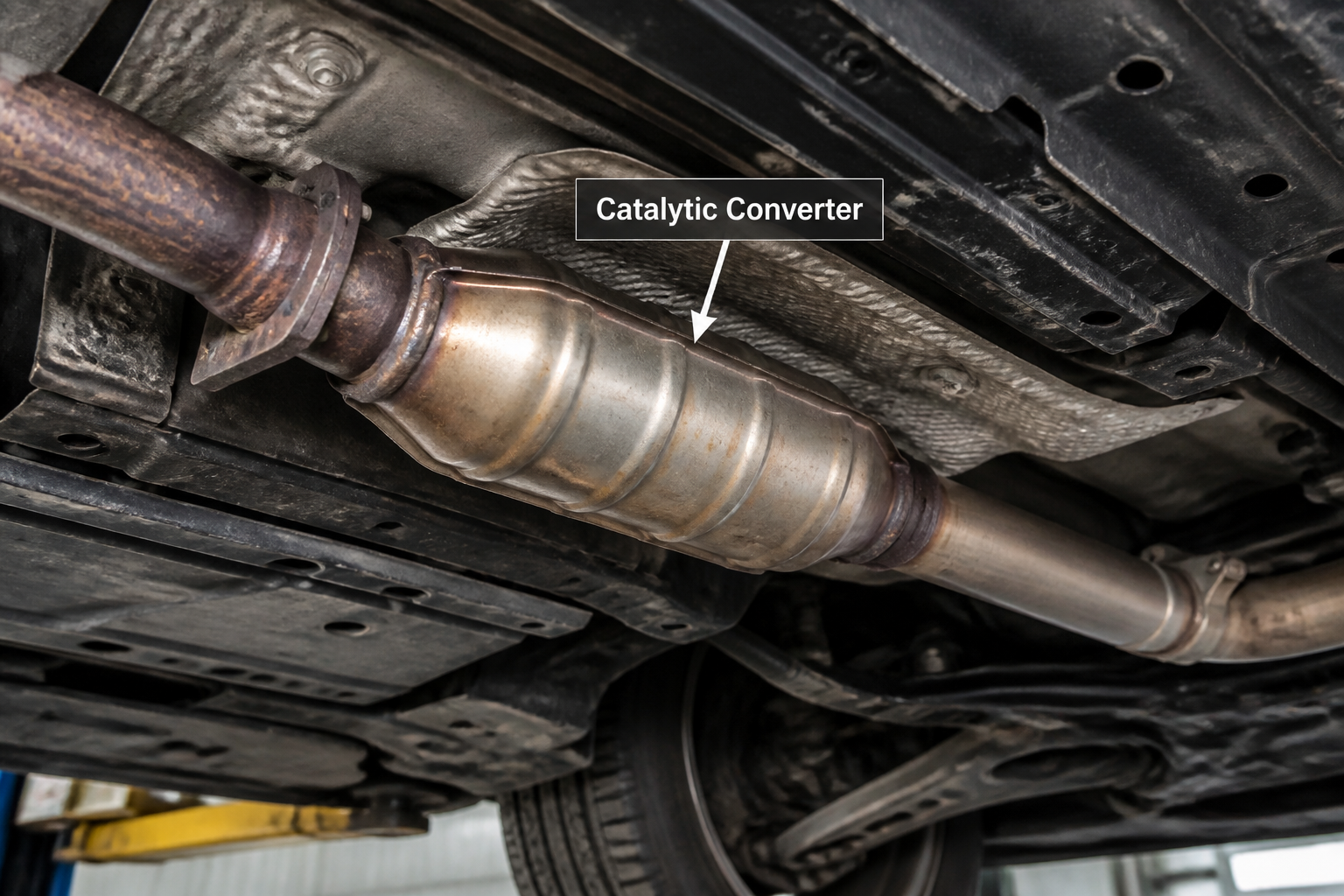
The catalytic converter is part of the exhaust system and is generally located underneath the vehicle between the engine and the muffler.
The exact location depends on the vehicle.
Some converters are positioned relatively close to the engine so they can reach their effective operating temperature more quickly. Other vehicles may have more than one converter depending on the engine configuration and emissions system.
If you are shopping for a used vehicle, you do not necessarily need to crawl underneath it to find the converter. A qualified technician can inspect the exhaust and emissions system if you have concerns about its condition or whether components are missing.
How Long Does a Catalytic Converter Last?
There is no single replacement interval that applies to every catalytic converter.
Unlike engine oil, filters, or other routine maintenance items, a catalytic converter is generally designed to remain in service for a long time rather than being replaced according to a regular schedule.
Its lifespan can be affected by the condition of the engine and emissions system.
Problems such as misfires, improper fuel mixture, oil consumption, coolant entering the combustion process, or physical damage can shorten converter life. A converter can also become contaminated, damaged internally, or restricted over time.
That is why a catalytic converter problem should not always be treated as an isolated exhaust repair. If a converter has failed, identifying what caused the failure can be just as important as replacing the component.
Signs of a Bad Catalytic Converter
A catalytic converter problem does not always produce the same symptoms. Some vehicles continue to drive relatively normally, while others develop noticeable performance problems.
Here are several signs worth paying attention to.
Check Engine Light
A check engine light is one of the more common ways a driver discovers a potential catalytic converter or emissions problem.
The vehicle's onboard diagnostic system monitors emissions related components, including information from oxygen sensors positioned around the catalytic converter.
A check engine light does not automatically mean the converter itself has failed. Many different problems can trigger the light, so the diagnostic trouble code and underlying cause need to be evaluated.
Reduced Engine Performance
A damaged or restricted catalytic converter can interfere with exhaust flow.
When that happens, the vehicle may feel sluggish or have difficulty accelerating normally. In more serious cases, engine performance can become noticeably limited.
Because many mechanical problems can cause poor acceleration, the symptom alone is not enough to diagnose the converter.
Unusual Exhaust Smell
Changes in exhaust odor can sometimes accompany an emissions or catalytic converter problem.
An unusual smell should be investigated rather than used as a diagnosis by itself. Fuel system, engine, and other exhaust problems can produce similar symptoms.
Poor Fuel Economy
A vehicle experiencing engine or emissions problems may also use more fuel than expected.
Again, fuel economy can change for many reasons. If a noticeable decrease appears alongside a check engine light or performance problem, it is worth having the vehicle inspected.
Rattling From Under the Vehicle
The material inside a catalytic converter can become damaged and break apart.
If that happens, you may hear a rattling sound from underneath the vehicle, particularly during startup or changes in engine speed.
A technician can help determine whether the sound is coming from the converter or another exhaust component.
What Causes a Catalytic Converter to Fail?
Catalytic converters can fail because of age or physical damage, but problems elsewhere in the vehicle can also damage them.
Common contributing factors include:
- Engine misfires
- Fuel mixture problems
- Oil entering the combustion process
- Coolant entering the combustion process
- Damage from road debris or an impact
- Excessive heat
- Contamination of the catalyst material
This is an important distinction for vehicle owners.
Replacing a damaged converter without addressing an underlying engine problem can potentially lead to another failure. A proper diagnosis should look at why the converter stopped working rather than focusing only on the converter itself.
Why Are Catalytic Converters Stolen?
Catalytic converter theft received considerable attention in recent years because converters contain valuable metals, including platinum, palladium, and rhodium.
Their location underneath many vehicles can also make them accessible. A thief with the right tools may be able to remove an exposed converter relatively quickly.
Some vehicles may be more attractive targets because of the location, size, or precious metal content of their converters.
How Can You Tell If Your Catalytic Converter Was Stolen?
One of the most obvious signs is a sudden, extremely loud exhaust sound when you start the vehicle.
Without the converter connecting portions of the exhaust system, the engine can sound dramatically louder than normal.
You might also notice a check engine light or visible missing exhaust components underneath the vehicle.
If you suspect a converter has been stolen, avoid assuming the vehicle is safe to drive simply because the engine starts. Have the vehicle inspected so you know what was removed or damaged.
How Much Does a Catalytic Converter Cost to Replace?
Catalytic converter replacement costs vary significantly.
The vehicle itself is one of the biggest factors. Converter design, location, labor requirements, emissions specifications, and whether an original equipment or compatible replacement part is used can all affect the final cost.
Some vehicles also use multiple catalytic converters.
For that reason, a single average replacement price is not especially useful when evaluating a specific car. If your vehicle needs a converter, ask for an itemized repair estimate that identifies the affected component, parts, labor, and any related repairs.
If you are considering a used vehicle with a known catalytic converter problem, get an estimate for that particular vehicle before deciding whether the purchase price still makes sense.
Can You Drive With a Bad Catalytic Converter?
A vehicle may still run with a catalytic converter problem, but that does not mean the issue should be ignored.
The answer depends on what has failed.
A converter that is no longer controlling emissions properly may trigger the check engine light and cause the vehicle to fail an applicable emissions inspection. A converter that is physically damaged or severely restricted can potentially create more significant drivability problems.
If the vehicle is losing power, running poorly, overheating, or showing other serious symptoms, it should be inspected promptly.
It is also important to remember that emissions requirements vary by location. Removing or tampering with required emissions equipment can violate federal law and applicable state requirements.
What Should You Check When Buying a Used Car?
A catalytic converter is not usually the first component shoppers think about when looking at a used vehicle, and it does not need to be.
What matters is evaluating the vehicle as a complete package.
During a test drive, pay attention to the check engine light, unusual exhaust sounds, unexpected odors, and changes in acceleration. Review available maintenance and vehicle history information, and ask about known mechanical or emissions issues.
For a used vehicle, an independent prepurchase inspection can provide additional information about the condition of the exhaust system along with the engine, brakes, suspension, tires, and other major components.
The presence of a replacement catalytic converter does not automatically make a used vehicle a bad purchase. What matters is understanding why it was replaced, whether the repair was completed correctly, and whether there are other unresolved problems.
Autofinder can help you compare used vehicles from dealerships based on factors such as price, mileage, model year, trim, equipment, and other listing details. Once you find a vehicle that fits what you are looking for, you can focus on confirming its individual condition before making a decision.
Final Thoughts: A Small Part With an Important Job
You may rarely think about your catalytic converter when everything is working correctly. That is exactly how it should be.
Its job is to operate in the background, helping the emissions system reduce harmful pollutants as exhaust leaves the engine.
If a check engine light, unusual exhaust noise, performance problem, or inspection identifies a possible converter issue, getting the cause properly diagnosed matters. The converter may be the problem, or another issue with the engine or emissions system may have contributed to its failure.
For used car shoppers, the same principle applies. You do not need to become an exhaust expert before buying a vehicle. You just need enough information to recognize when something deserves a closer look and to make the condition of the vehicle part of your overall buying decision.