Car Pricing & Value
Should I Lease or Buy an Electric Vehicle?
OVERVIEW
Deciding whether to lease or buy gets a little more interesting when the car is electric.
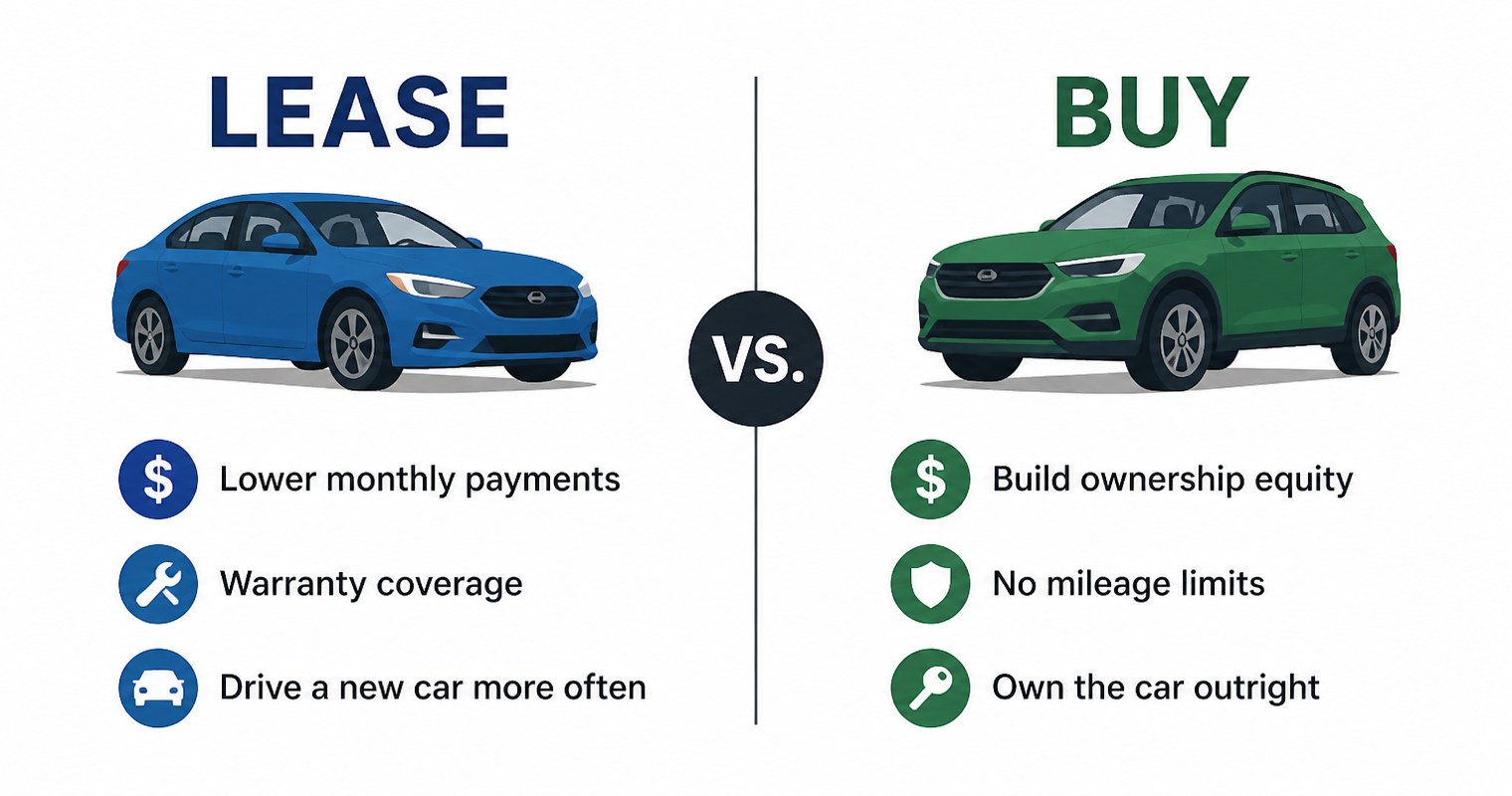
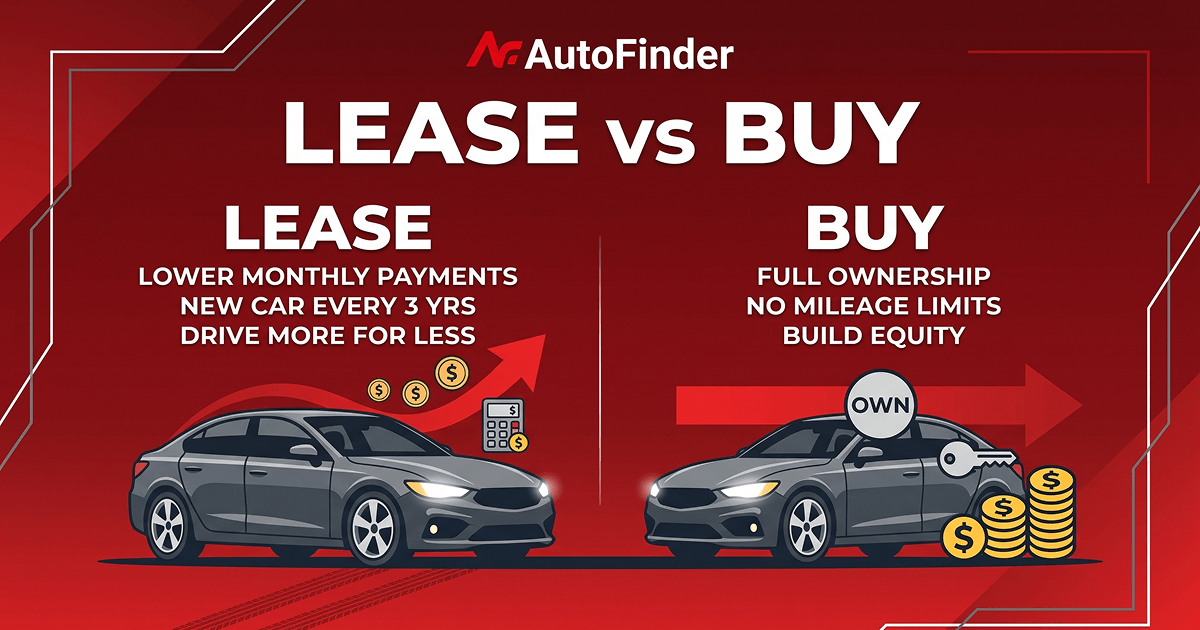
The usual trade-offs still apply. Leasing can mean a lower monthly payment and gives you a natural opportunity to change vehicles after a few years. Buying gives you ownership, freedom from mileage limits, and the possibility of building equity.
EVs add a few wrinkles.
Range and charging technology continue to improve. Resale values can be harder to predict. If this is your first EV, you may not know yet how electric driving will fit your routine 3 or 4 years from now.
Those unknowns can make leasing appealing. You get to experience an EV without committing to owning that particular model for the long haul.
Buying starts to look better when the unknowns are not really unknown anymore. If you have reliable home charging, know how much range you need, drive a lot of miles, and can see yourself keeping the EV for years, ownership has some clear advantages.
Is It Better to Lease or Buy an Electric Car?
For a first EV or a vehicle you expect to replace within a few years, leasing is worth considering.
A typical lease lasts 2 to 4 years. When it ends, you can return the vehicle and shop again or explore a purchase option if your agreement allows one.
Buying asks you to think further ahead. Instead of paying to use the vehicle for a defined period, you are working toward owning it. There is no contractual mileage allowance, and you decide when it is time to sell, trade, or keep driving.
Here is the basic difference:
| Factor | Leasing an EV | Buying an EV |
|---|---|---|
| Commitment | Usually 2 to 4 years | As long as you want |
| Monthly payment | Often lower | Often higher |
| Mileage | Limits usually apply | No contractual limit |
| Ownership | Generally no | Yes |
| Resale value risk | Less direct exposure | You take the risk |
| Long-term ownership | Requires purchase option | Keep it as long as you want |
That last point matters more than it may seem.
If you tend to replace cars every 3 years anyway, you may not get much benefit from owning the vehicle. If your goal is to keep your next EV for 8 or 10 years, buying gives you the opportunity to eventually reach years when the loan is gone but the car is still in your driveway.
Why Leasing an EV Can Make Sense
EVs are still changing quickly enough that some shoppers hesitate to commit to one vehicle for the long term.
That hesitation is understandable.
Maybe you are happy with 280 miles of range today but expect to want more later. Maybe fast charging is important because you take frequent road trips. Or maybe you simply want to see where the EV market goes before deciding what you would want to own for many years.
A lease gives you a scheduled point to reconsider.
When the term ends, you can look at the market again. If newer EVs offer something that would actually improve your driving experience, you can make a change.
There is another practical advantage for first-time EV drivers: you get to find out what living with one is really like.
Research can tell you a lot about range and charging speeds. It cannot tell you exactly how often you will plug in at home, whether public charging fits your road trips, or whether you will care about having another 50 miles of range.
After a few years, you will know.
Why Buying an EV Can Be the Better Move
Buying becomes more compelling when you are confident that the EV in front of you will work for a long time.
You may have already owned an EV. You have charging at home. The vehicle offers more than enough range for your commute and longer trips. You like it enough that you can imagine keeping it well after the loan is paid off.
At that point, a short lease may solve a problem you do not actually have.
Ownership also gives you freedom.
Drive 8,000 miles this year and 22,000 next year. Keep the vehicle for 4 years or 12. Sell it when you want. Trade it if your needs change.
And unlike a lease, financing gives you the opportunity to build equity as you pay down the loan.
The longer you plan to keep the EV, the more important those ownership benefits become.
Does Changing EV Technology Make Leasing Smarter?
Sometimes, but do not let the pace of technology scare you away from buying an EV that already works for you.
Electric vehicles continue to improve. Manufacturers are working on range, charging performance, battery management, software, efficiency, and new vehicle choices.
That does not mean a good EV purchased today suddenly becomes a bad car when something newer arrives.
Think about smartphones. A newer model may have a better camera or faster processor, but that does not make the phone in your pocket stop doing its job.
EV range works much the same way.
If your vehicle comfortably handles your commute, errands, weekend driving, and occasional longer trips, another 75 miles of range on a future model may be nice without being necessary.
The technology argument for leasing is strongest when you already know you care about staying current. If you regularly replace vehicles because you want the newest features and capabilities, a shorter commitment fits that habit.
If you tend to buy cars and keep them, future improvements matter less than whether today's vehicle meets your needs.
How Does EV Depreciation Affect Leasing vs. Buying?
Resale value deserves more attention with an EV because it affects the 2 options differently.
When you buy, you own the vehicle and therefore take on the risk that its market value may change.
Say you finance an EV and decide to trade it after 4 years. What matters is the relationship between its trade value and your remaining loan balance.
If the EV is worth $25,000 and you owe $19,000, you have positive equity.
If you still owe $28,000, the situation looks very different.
A lease handles depreciation differently. The vehicle's expected depreciation is built into the lease calculation, along with other costs and charges. A residual value is established as part of the agreement.
You are still paying for depreciation. It has not disappeared.
The difference is that when the lease ends, you generally have the ability to return the vehicle under the terms of the agreement instead of needing to sell or trade a vehicle whose market value may have changed more than expected.
That can make leasing attractive to someone who does not want as much exposure to long-term EV resale values.
Is Leasing a Good Idea for Your First EV?
This may be one of the best reasons to consider it.
There is a difference between liking the idea of an EV and knowing that you like living with one.
Your first year of electric driving will answer questions that are difficult to settle from a specification sheet.
How often do you actually need a public charger? Do you plug in every night or only once or twice a week? Does winter range affect your routine? Are long trips easy with the charging options along the routes you normally drive?
You might discover that you never want to go back to gasoline.
You might also discover that your next EV needs faster charging, a larger battery, more cargo space, or simply a different body style.
Leasing gives you room to learn without requiring you to decide today what you will want many years from now.
There is one catch: a lease is still a commitment. Do not treat it like an extended test drive that you can walk away from whenever you want. Ending a lease early can be expensive.
Does Mileage Make Buying an EV Better?
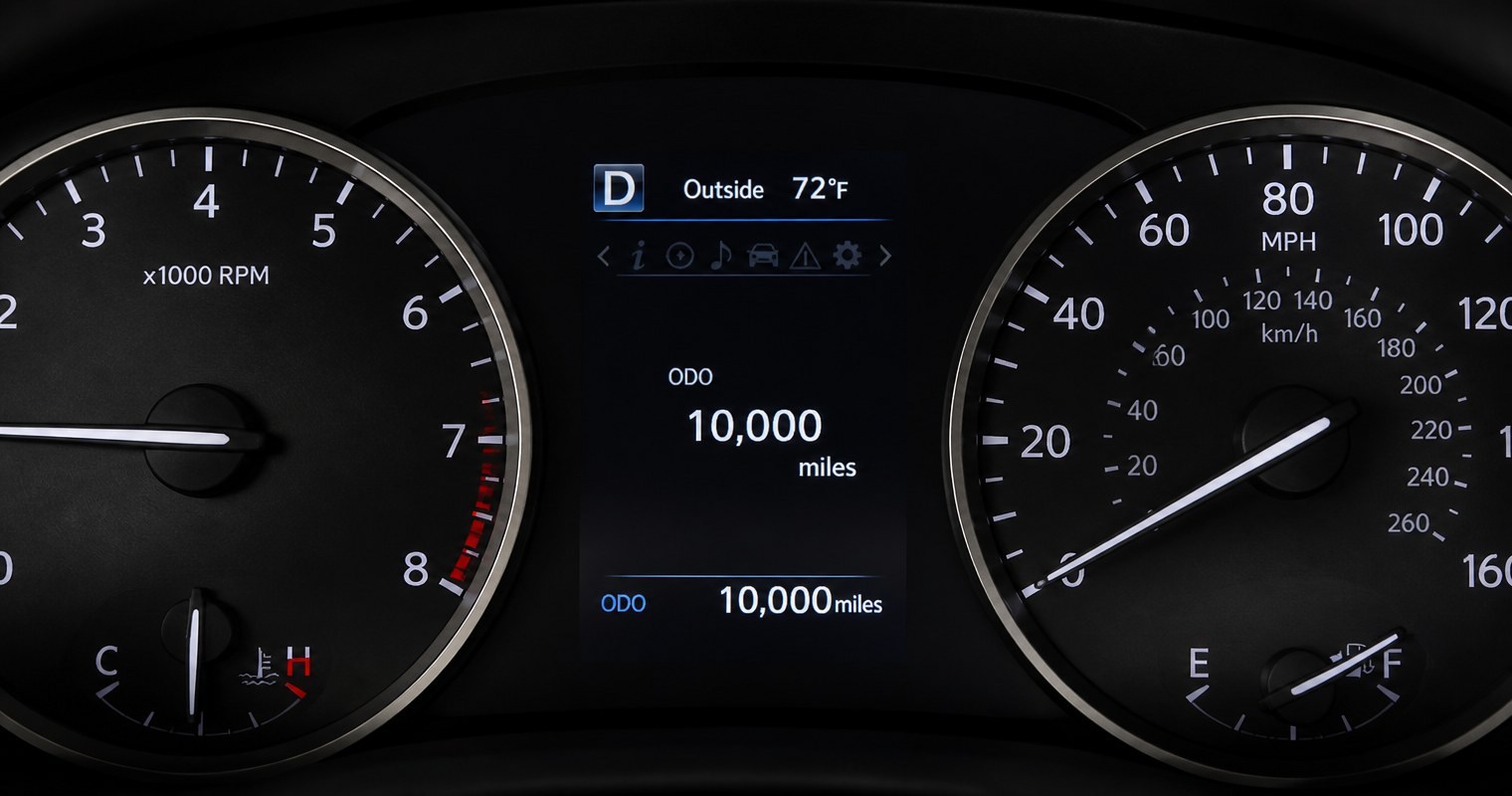
Take a look at your odometer before answering this one.
Vehicle leases commonly include annual mileage limits. The CFPB notes that standard leases often allow around 10,000 to 15,000 miles per year, although the exact allowance depends on the agreement.
That may be plenty for someone who works from home or has a short commute.
A driver covering 20,000 miles every year has more to think about.
Higher mileage leases may be available, but additional mileage can affect the cost. Exceed the amount allowed in your agreement and you may owe an excess mileage charge when you return the vehicle.
Buying eliminates the contractual mileage limit.
High mileage can still reduce what your EV is worth when you eventually sell it, so those extra miles are not financially invisible. You simply do not have a lease agreement telling you how many miles you can drive each year.
What About EV Battery Life?
The battery tends to loom large in conversations about buying an EV, sometimes larger than it needs to.
EV batteries are designed for long term use. Like other batteries, however, their capacity can gradually change with age and use.
That matters more to a long term owner than someone leasing for a few years.
If you plan to buy an EV and keep it, read the battery warranty before signing anything. Look at the time limit, mileage limit, and the manufacturer's terms around battery capacity.
Then consider how much range you actually need.
A battery does not need to perform exactly as it did on day 1 for the vehicle to remain useful. An EV that started with plenty of extra range may still comfortably handle your driving years later.
Battery concerns alone are not a reason to lease, but they belong in the long-term ownership calculation.
Does an EV Already Fit Your Life?
Before deciding how to pay for an EV, make sure you actually want to live with one.
Charging is the first place to look.
Drivers with convenient home charging often have a very different experience from those who depend entirely on public chargers. If you can plug in overnight and start most mornings with the range you need, EV ownership can become remarkably routine.
Think about your less routine driving too.
Where do you go on road trips? What charging options are available along those routes? How quickly can the EV you are considering add useful range?
Climate deserves some thought as well. Cold temperatures can reduce EV range, so shoppers in colder areas should leave themselves enough breathing room rather than choosing a vehicle whose estimated range barely covers their needs.
None of these questions point automatically toward leasing or buying.
They tell you whether the EV itself is right.
If you already know the vehicle fits comfortably into your life, buying it becomes easier to justify. If you are still uncertain about range, charging, or how your driving may change, a shorter commitment may feel more comfortable.
What EV Tax Credits Are Available in 2026?
Be careful with older EV buying advice here.
The federal New Clean Vehicle Credit is no longer available for vehicles acquired after September 30, 2025.
That means someone shopping for a new EV in 2026 should not automatically subtract the previous federal consumer credit from the purchase price when comparing leasing and buying.
Other incentives may still exist.
Depending on where you live and which EV you choose, you may find state, local, utility, dealer, or manufacturer programs. Lease offers can also include manufacturer incentives that are different from what is available with financing.
These offers change frequently, so check what is available on the actual vehicle when you are ready to shop.
An EV with a stronger lease program this month could produce a very different answer from another model with attractive financing.
Pros and Cons of Leasing an EV
Pros
- Shorter commitment
- Often lower monthly payment
- Easier access to newer EVs
- Less long term resale uncertainty
- Good option for a first EV
- Often within factory warranty
Cons
- Mileage limits
- No long-term ownership
- Possible wear charges
- Early exit can be costly
- Lease end fees may apply
- No payment free ownership years
The strongest case for leasing is not simply that EVs are changing.
It is that you expect your needs or preferences to change with them.
If you already know you will want to shop again in a few years, there is less reason to take on the responsibilities of long term ownership.
Pros and Cons of Buying an EV
Pros
- Opportunity to build equity
- No contractual mileage limit
- Freedom to sell or trade
- Can keep it after loan payoff
- Better suited to long term ownership
- No lease return requirements
Cons
- Payments may be higher
- Resale value affects you directly
- Long-term battery health matters more
- Negative equity is possible
- Larger financial commitment
- Newer technology will arrive
The last con needs some perspective.
Newer technology is always going to arrive. Waiting for EV development to stop before buying one could mean waiting for a very long time.
Buy based on whether the vehicle in front of you meets your needs, not whether a better EV might exist someday.
Can You Buy Your EV at the End of the Lease?
Depending on the lease, you may have a purchase option.
That can be useful if you reach the end of 3 years and realize the EV has worked better than expected.
Do not make the decision purely because you already know the car.
Look at the purchase price in your lease agreement and compare it with what similar vehicles are selling for at the time. Consider mileage, condition, battery performance, remaining warranty coverage, and the financing rate available if you need a loan.
Sometimes keeping the EV will make sense. Other times, returning it and shopping again will be the better move.
The nice part is that you have a few years of firsthand experience with the exact vehicle before making that call.
How to Compare an EV Lease With Financing
This is where the decision should become less theoretical.
Pick an EV you would actually buy, then get the numbers for both options.
For the lease, check:
- Amount due at signing
- Monthly payment
- Lease term
- Mileage allowance
- Excess mileage charge
- Applicable fees
- Purchase option
- Lease end costs
For financing, look at:
- Purchase price
- Down payment
- Interest rate
- Loan term
- Monthly payment
- Total interest
- Expected ownership period
If you think you may sell the purchased EV after 3 or 4 years, estimate its future value and compare that with your projected loan balance.
Do not simply put a $399 lease payment next to a $599 finance payment and declare leasing $200 cheaper.
The buyer is paying toward ownership. The lessee generally is not.
Compare what each path costs over the period you realistically expect to drive the vehicle.
When Should You Lease an Electric Vehicle?
Leasing is particularly worth considering when this is your first EV, or you already know you change cars frequently.
It also fits shoppers who want access to newer EV technology without making a long-term commitment to one vehicle.
Your driving habits need to cooperate. Mileage should fit comfortably within the lease agreement, and you should be reasonably confident you can keep the vehicle through the full term.
For that shopper, a lease can be a very practical way to go electric.
When Should You Buy an Electric Vehicle?
Buying makes a stronger case when the EV already feels like a long-term fit.
You have convenient charging. Its real-world range gives you enough breathing room. You are comfortable with how it handles longer trips, and you do not expect to want something different 3 years from now.
High mileage can push the decision toward buying as well.
Most importantly, you want to keep the car.
Ownership has more time to work in your favor when you continue driving the EV after the loan is paid off instead of restarting the payment cycle every few years.
How AutoFinder Helps You Shop for an EV
Start with the EV itself rather than deciding in advance that you are going to lease or buy.
AutoFinder can help you compare available electric vehicles from dealers by model, price, features, and other factors that matter to your search.
Narrow the choices based on the things you will actually notice once you own the car: range, charging capability, passenger space, cargo room, comfort, and the equipment included on the specific trim.
Then look at the numbers.
Lease programs, financing rates, and manufacturer offers can vary considerably between vehicles. An EV that looks expensive based on MSRP alone may have an attractive lease offer, while another may make more sense to finance.
Find the right EV first. Then figure out the smartest way to put it in your driveway.
Final Thoughts
Leasing has a compelling case for EV shoppers who still have some unanswered questions.
Maybe this is your first electric car. Maybe you change vehicles every few years anyway. Or maybe you like today's EVs but would rather revisit the market after another few years of improvements in range and charging.
A lease gives you that exit point.
Buying makes more sense when you do not really need one.
If electric driving already fits your routine, you have reliable charging, your mileage is high, and you have found an EV you would happily keep well beyond the loan term, ownership gives you freedom that a lease cannot.
Do not lease solely because you are worried today's EV will become outdated. And do not buy simply because ownership sounds like the financially responsible choice.
Start with a much more useful question: How long do I realistically want to drive this particular EV?
If the answer is a few years, look closely at the lease.
If the answer is as long as possible, buying deserves the stronger look.