Vehicle Comparisons
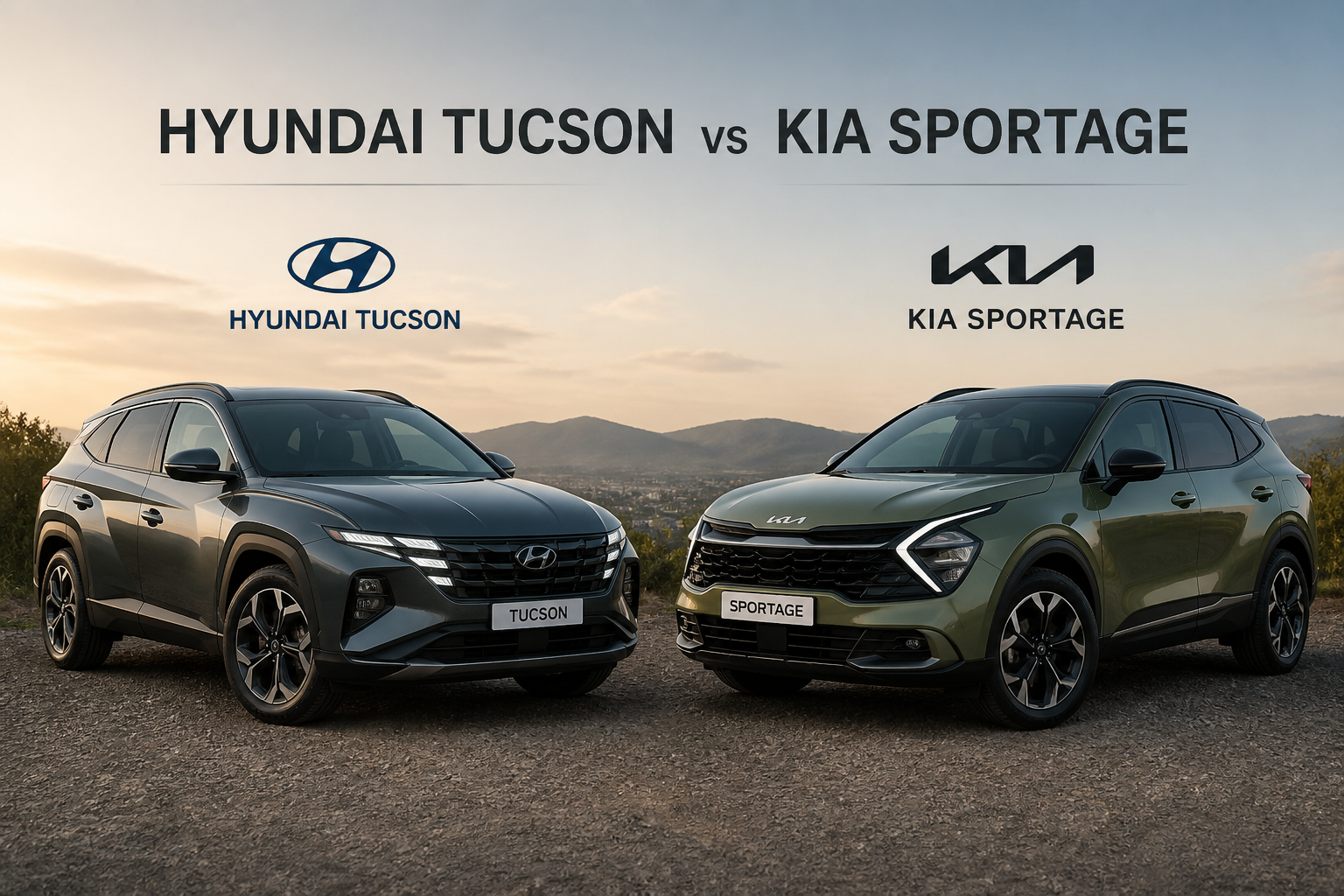
Hyundai Tucson vs Kia Sportage: In-Depth Comparison
OVERVIEW
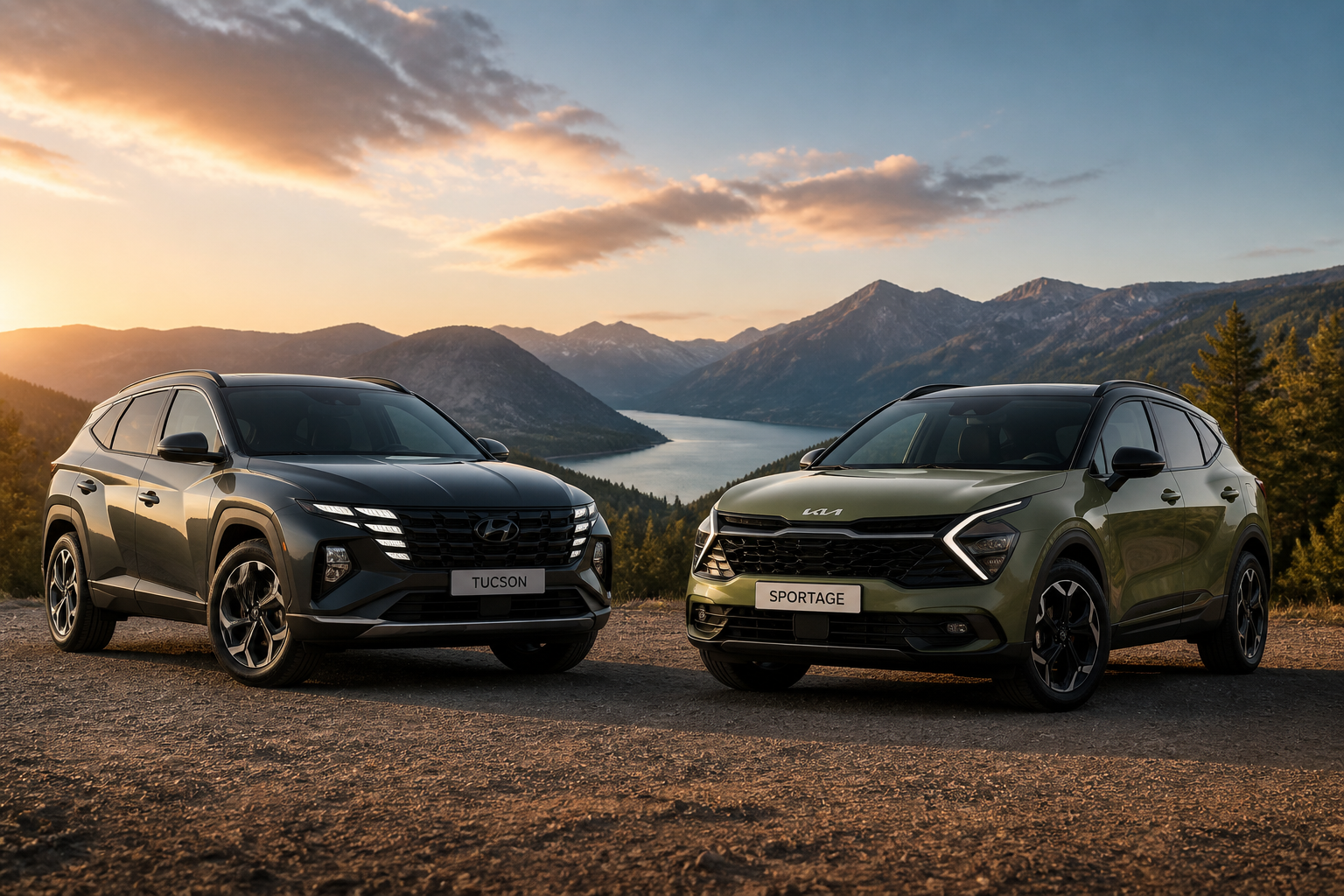
The Hyundai Tucson and Kia Sportage are 2 of the closest competitors in the compact SUV market. They come from related automakers, offer similar dimensions and powertrains, and give shoppers gas, hybrid, and plug-in hybrid options. On paper, there is plenty of overlap.
The differences become clearer once you start looking at price, interior design, cargo space, fuel economy, features, and which version of each SUV you actually want.
For 2026, the gas-powered Tucson and Sportage both use a 187-horsepower 2.5-liter 4-cylinder engine with an 8-speed automatic transmission. The Sportage starts at $28,790, while the Tucson starts at $29,700. The Sportage also has a slight cargo space advantage behind the rear seats, while the Tucson offers a clean interior design and a broad trim lineup.
The comparison gets even more interesting with the hybrids. The 2026 Kia Sportage Hybrid produces 232 horsepower, while the 2026 Hyundai Tucson Hybrid produces 231 horsepower. Those numbers are close enough that horsepower alone should not make the decision.
So which should you buy? There is no runaway winner here. The Sportage makes a strong case on starting price and cargo space, while the Tucson remains an appealing all-around choice with competitive efficiency, technology, and a slightly different approach to design.
2026 Hyundai Tucson vs. Kia Sportage at a Glance
| Category | Hyundai Tucson | Kia Sportage |
|---|---|---|
| Gas engine | 187 hp 2.5L 4 cylinder | 187 hp 2.5L 4 cylinder |
| Starting MSRP | $29,700 | $28,790 |
| Gas FWD combined MPG | 28 | 28 |
| Cargo behind rear seats | 38.7 cu. ft. | 39.6 cu. ft. |
| Hybrid output | 231 hp | 232 hp |
| AWD available | Yes | Yes |
Pricing and specifications are for 2026 models and can vary by trim and configuration.
The table makes one thing obvious: these SUVs are close.
If you only compare horsepower or fuel economy, you will not find much separation. The better choice depends more on which trim and powertrain fit your budget and how you feel about the design and features of each SUV.
Hyundai Tucson vs. Kia Sportage Price
The 2026 Kia Sportage has the lower starting price.
AutoFinder lists the 2026 Sportage LX at a starting MSRP of $28,790. The lineup extends through the AWD X Pro Prestige at $39,690 before options.
The 2026 Hyundai Tucson starts at $29,700 for the SE. AutoFinder currently lists 12 gas configurations, with pricing reaching $41,175 for the AWD Limited before options.
That gives the Sportage a $910 advantage at the entry point.
Do not stop at base price, though. The better value depends on which features you want. Once you start adding AWD, upgraded interior materials, larger displays, driver assistance technology, or other equipment, comparing similarly equipped trims becomes much more useful than simply looking at the cheapest version of each SUV.
Hyundai Tucson vs. Kia Sportage Performance
There is very little separating the standard gas powertrains.
Both SUVs use a 2.5 liter 4 cylinder engine producing 187 horsepower and 178 pound feet of torque. Both pair that engine with an 8 speed automatic transmission.
Front wheel drive is available, and shoppers who want additional traction can choose AWD.
Neither gas model is trying to be a performance SUV. The powertrain is better suited to commuting, errands, family driving, and road trips than anything particularly sporty.
If you want noticeably more power, the hybrid versions are worth a look.
The Tucson Hybrid produces a combined 231 horsepower from a turbocharged 1.6 liter engine and electric motor system. The Sportage Hybrid uses a similar turbocharged 1.6 liter hybrid setup and produces 232 horsepower and 271 pound feet of combined torque.
A 1 horsepower difference is not a reason to choose one over the other. Both hybrids offer a meaningful power increase over their gas counterparts.
You can compare current Hyundai Tucson Hybrid models and Kia Sportage Hybrid models if the extra power and improved efficiency make more sense for your driving.
Tucson vs. Sportage Fuel Economy
The gas versions are essentially tied when comparing front wheel drive models.
The 2026 Tucson with FWD is EPA rated at 25 MPG city, 33 MPG highway, and 28 MPG combined. With AWD, those figures drop to 24 MPG city, 30 MPG highway, and 26 MPG combined.
Kia lists the 2026 Sportage LX FWD at 25 MPG city, 33 MPG highway, and 28 MPG combined.
For shoppers putting a lot of miles on their SUV, the hybrid comparison is more interesting.
The 2026 Tucson Hybrid can reach an EPA estimated 38 MPG combined in certain FWD and AWD configurations, although other AWD trims are rated at 36 MPG combined.
Kia lists the Sportage Hybrid LX FWD at 42 MPG combined, while AWD versions are rated at 35 MPG combined.
That means the Sportage Hybrid has the stronger peak fuel economy figure if you want FWD. For AWD shoppers, the Tucson Hybrid can have the advantage depending on trim.
This is one comparison where checking the exact configuration matters. The word "hybrid" alone does not tell you what fuel economy you will get.
Hyundai Tucson vs. Kia Sportage Interior
Interior design is one of the easier ways to separate these 2 SUVs.
The Tucson takes a fairly clean approach, particularly in higher trims where the cabin feels more streamlined and technology focused. Hyundai offers features such as a 12.3 inch touchscreen, available 12.3 inch digital instrument cluster, leather trimmed seating on higher trims, and available panoramic sunroof.
Kia takes a somewhat bolder approach to the Sportage cabin. Even the 2026 LX includes a 12.3 inch instrument display and 12.3 inch touchscreen, along with wireless Apple CarPlay and Android Auto.
Neither interior is an obvious downgrade from the other.
The Tucson may appeal more if you prefer a cleaner, less busy cabin. The Sportage has a more distinctive dashboard treatment and makes a strong first impression with its screen layout.
This is one of the areas where sitting in both vehicles is more useful than comparing specifications online.
Which Has More Passenger Space?
Both are roomy compact SUVs, especially for shoppers who regularly use the back seat.
The Sportage provides 41.3 inches of rear legroom according to Kia, which is generous for the segment.
The Tucson also offers a spacious second row and works well for adults, teenagers, or families using child seats.
Unless you are regularly carrying very tall passengers, neither SUV should feel particularly cramped. Seat shape, driving position, visibility, and how easily you can install a child seat may matter more than a small difference on a specification sheet.
If passenger space is a priority, bring the people who will actually ride in the vehicle when you test drive it. That tells you more than a fraction of an inch ever will.
Tucson vs. Sportage Cargo Space
The Sportage takes a small win here.
Kia lists 39.6 cubic feet of cargo space behind the rear seats. With the rear seats folded, capacity reaches 74.1 cubic feet on the gas model.
The 2026 Tucson provides 38.7 cubic feet behind the rear seats and up to 74.8 cubic feet with them folded, according to AutoFinder vehicle data.
So the Sportage has slightly more room with the second row in use, while the Tucson edges ahead in maximum cargo capacity.
In real life, the difference is small.
Both have enough room for groceries, luggage, strollers, sports equipment, and the usual collection of things that somehow ends up living in the back of a family SUV.
If cargo space is one of your biggest priorities, look at the shape of the cargo area as well as the published volume. A wide opening and usable floor can matter just as much as the final cubic foot number.
Hyundai Tucson Hybrid vs. Kia Sportage Hybrid
The hybrid versions are arguably the most interesting models in both lineups.
The 2026 Tucson Hybrid uses a turbocharged 1.6 liter 4 cylinder hybrid system producing 231 combined horsepower. Hyundai offers both FWD and HTRAC AWD configurations for 2026.
The 2026 Sportage Hybrid also uses a turbocharged 1.6 liter engine and hybrid system, producing 232 horsepower and 271 pound feet of combined torque.
The power difference is effectively meaningless in normal shopping terms.
Fuel economy provides more separation. A FWD Sportage Hybrid LX can reach 42 MPG combined, while Hyundai lists the Tucson Hybrid at up to 38 MPG combined. AWD changes the comparison, with certain Tucson Hybrid configurations reaching 38 MPG combined while Kia lists its AWD Sportage Hybrid models at 35 MPG combined.
For someone who wants a compact SUV but does not want to plug in, either hybrid deserves serious consideration.
Tucson Plug In Hybrid vs. Sportage Plug In Hybrid
Both lineups also give shoppers the option to plug in and handle shorter drives on electricity.
The 2026 Hyundai Tucson Plug In Hybrid produces 268 combined horsepower and offers an EPA estimated 32 miles of electric range on a full charge.
Kia also offers the 2026 Sportage Plug In Hybrid. The Sportage PHEV uses a turbocharged plug in hybrid powertrain and sits above the regular hybrid in price.
A plug in hybrid makes the most sense if you can charge regularly.
If your daily commute falls within the vehicle's electric range and you plug in at home, you may be able to handle much of your routine driving without using much gasoline. If you rarely charge, you are carrying around a larger battery and paying more for a capability you are not really using.
Shoppers who are open to used or other model years can also compare the broader Tucson Plug In Hybrid and Sportage Plug In Hybrid lineups.
Which SUV Has Better Technology?
Both Hyundai and Kia have become very competitive on in cabin technology, so this is less about one being dramatically more advanced than the other.
For 2026, the Tucson offers a 12.3 inch touchscreen, wireless Apple CarPlay and Android Auto, and available features such as a 12.3 inch digital instrument cluster, Surround View Monitor, Blind Spot View Monitor, and Remote Smart Parking Assist depending on trim.
The Sportage LX already includes 12.3 inch instrument and touchscreen displays, wireless Apple CarPlay and Android Auto, Smart Cruise Control with Stop and Go, and several driver assistance features. Higher trims add more premium technology.
This is another area where trim selection matters.
A well equipped Sportage may have features a lower Tucson trim does not, and the reverse can also be true. Decide which technology you actually care about before comparing prices.
A long feature list is not much of a deal if half of it is stuff you will never use.
Hyundai Tucson vs. Kia Sportage Safety Features
Both SUVs offer a strong selection of driver assistance technology.
Kia includes features such as automatic emergency braking technology with pedestrian, cyclist, and junction turning detection, Driver Attention Warning, Lane Keeping and Following Technology, High Beam Assist, and front and rear parking sensors on the 2026 Sportage LX.
Hyundai offers its own suite of driver assistance systems across the Tucson lineup, with more advanced equipment available as you move through the trims.
Features such as Blind Spot View Monitor, Surround View Monitor, Safe Exit Warning, and Remote Smart Parking Assist are available on certain Tucson configurations.
When comparing safety technology, pay attention to what is standard on the trim you are considering. A feature being "available" does not mean it comes on every vehicle.
Which Is Better for Bad Weather?
Both the Tucson and Sportage are available with AWD.
For shoppers dealing with snow, rain, gravel roads, or other poor conditions, that gives either SUV an advantage over a FWD configuration when extra traction is useful.
Hyundai calls its system HTRAC AWD. Certain Tucson AWD trims also include terrain or Snow drive settings.
Kia offers AWD with Terrain Mode on certain Sportage configurations, including settings intended for conditions such as snow, mud, and sand.
Neither should be confused with a dedicated off road SUV.
If winter driving is the concern, tires matter enormously too. A FWD SUV on appropriate winter tires can sometimes be a better snow setup than an AWD SUV running tires poorly suited to the conditions.
Which Has the Better Warranty?
Hyundai and Kia both offer warranty coverage that is among the stronger offerings in the mainstream vehicle market.
Because warranty terms can vary by component, model year, ownership status, and powertrain, shoppers should review the current warranty information for the exact vehicle they are considering.
This becomes especially important if you are comparing used versions of the Hyundai Tucson and Kia Sportage, since some warranty coverage may depend on whether you are the original owner.
For a new vehicle, the warranty difference is unlikely to be the deciding factor for most shoppers. Both brands make warranty coverage a meaningful part of their value proposition.
Hyundai Tucson Pros and Cons
Pros
- Comfortable and spacious cabin
- Gas, hybrid, and plug in hybrid options
- Strong available technology
- Competitive hybrid efficiency
- Useful cargo space
- Available AWD
Cons
- Higher base price than Sportage
- Gas engine is not especially powerful
- Some desirable features require higher trims
- Styling may not appeal to everyone
Kia Sportage Pros and Cons
Pros
- Lower starting price
- Excellent cargo space
- Roomy rear seat
- Gas, hybrid, and plug in hybrid options
- Strong standard technology
- Efficient FWD hybrid
Cons
- Gas engine is not especially powerful
- AWD hybrid fuel economy trails some Tucson Hybrid trims
- Higher trims can get considerably more expensive
- Bold interior and exterior styling may not suit everyone
Which Is the Better Value?
For the gas models, the Sportage has an early advantage because it starts $910 below the Tucson and still comes with a solid list of standard technology.
But value changes quickly once you move beyond the base trims.
Maybe you want AWD. Maybe you care about a panoramic sunroof, upgraded seating, parking cameras, or a specific driver assistance feature. Perhaps the hybrid will save enough fuel over your ownership period to justify paying more up front.
Those decisions can change which SUV gives you more for your money.
Instead of asking which model has the lowest MSRP, compare the Tucson and Sportage at the equipment level you would actually buy.
That is where the useful price comparison starts.
Should You Buy the Hyundai Tucson or Kia Sportage?
The Sportage is likely to make more sense if you prioritize a lower starting price, slightly more cargo room behind the second row, a roomy back seat, or maximum fuel economy from a FWD hybrid.
The Tucson deserves a closer look if you prefer Hyundai's interior and exterior design, want the fuel economy available from certain AWD hybrid configurations, or find that a Tucson trim packages the features you want at a better price.
For many shoppers, neither vehicle wins because of one specification.
They are simply too close for that.
If you are shopping the gas versions, drive both. The engines are nearly identical on paper, so seating comfort, controls, visibility, ride quality, and price may end up deciding it.
If you are considering a hybrid, compare the Tucson Hybrid and Sportage Hybrid separately. Their fuel economy differences can be more meaningful than the differences between the gas models.
The same goes for plug in hybrids. Charging access and how many miles you drive each day should play a bigger role in that decision than the badge on the grille.
How to Compare the Tucson and Sportage on AutoFinder
Once you know which powertrain makes sense, compare actual vehicles rather than stopping at manufacturer specifications.
AutoFinder lets you research the Hyundai Tucson and Kia Sportage, then narrow things down by model year, trim, drivetrain, equipment, and price.
For 2026 shoppers, start with the 2026 Tucson and 2026 Sportage. If fuel economy is a bigger priority, move over to the 2026 Tucson Hybrid and 2026 Sportage Hybrid.
You can do the same with the 2026 Tucson Plug-In Hybrid and 2026 Sportage Plug-In Hybrid if charging at home is realistic for you.
Comparing dealer inventory can also reveal something specifications cannot: what you can actually buy for your budget.
Final Thoughts
The Hyundai Tucson and Kia Sportage are closely matched for a reason. Both give compact SUV shoppers plenty of passenger space, useful cargo capacity, available AWD, modern technology, and a choice of gas, hybrid, or plug in hybrid power.
The 2026 Sportage starts for less and has a slight cargo advantage behind the rear seats. Its FWD hybrid also delivers particularly strong fuel economy.
The Tucson counters with its own roomy interior, competitive technology, slightly greater maximum cargo capacity, and strong fuel economy from certain AWD hybrid configurations.
If you are expecting one of these SUVs to crush the other on paper, it probably will not happen.
The better choice is the one that gives you the powertrain, features, space, and price you want without paying extra for things you do not.
For gas models, the Sportage's lower starting price makes it especially compelling. For hybrid shoppers, drivetrain choice matters enough that it is worth comparing FWD and AWD separately. And for anyone still stuck between the 2 after looking at the numbers, a back to back test drive is probably going to settle the argument faster than another hour staring at specifications.