Vehicle Reviews
Hyundai Santa Cruz Buying Guide: Truck or SUV Alternative?
OVERVIEW
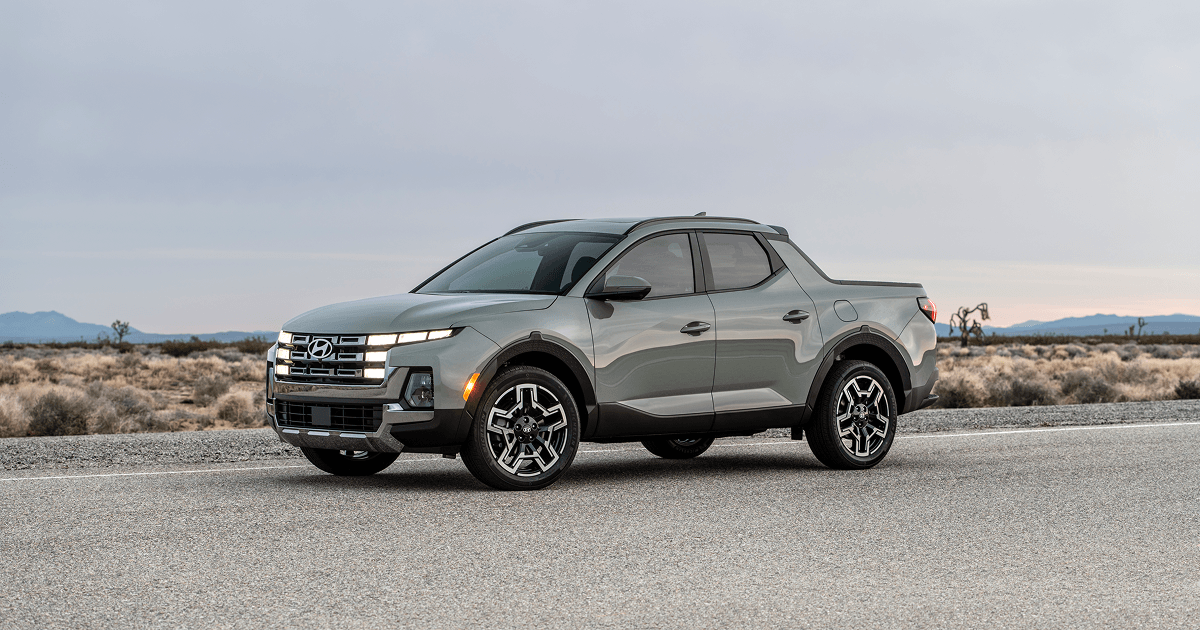
The Hyundai Santa Cruz sits in an unusual part of the vehicle market. It has an open bed and useful towing capability like a pickup, but its size, independent suspension, four-door cabin, and everyday driving manners make it feel closer to a compact SUV.
That combination is the main reason to consider one.
For 2026, the Santa Cruz comes in five trims: SE, SEL, SEL Activity, XRT, and Limited. Buyers can choose between a 191 horsepower 2.5 liter four cylinder and a 281 horsepower turbocharged 2.5-liter engine. Depending on configuration, towing capacity reaches up to 5,000 pounds.
The Santa Cruz will not replace a traditional pickup for every buyer. Its 52.1-inch bed is considerably shorter than what you will find on many trucks, and shoppers who regularly tow or haul heavy loads may want something larger. But if you mostly want an SUV and occasionally wish it had an open cargo bed, the Santa Cruz starts to make a lot of sense.
Is the Hyundai Santa Cruz a Truck or an SUV?
Technically, the Santa Cruz gives you a pickup-style bed, but deciding whether to shop it as a truck or SUV matters less than understanding what it is designed to do.
It combines a four-door passenger cabin with a 52.1-inch bed that provides 27 cubic feet of volume. The bed also includes a lockable storage compartment underneath, sidewall storage, tie-down points, and an assisted tailgate. SEL Activity and higher trims add features including an integrated tonneau cover and utility track system.
Inside, the Santa Cruz offers seating for five and 101.8 cubic feet of passenger volume. Rear legroom measures 36.5 inches.
That makes it a good middle ground for shoppers who need more cargo flexibility than a typical SUV provides but do not need the size or capability of a traditional midsize or full-size pickup.
Hyundai Santa Cruz vs. SUV: What Is the Difference?
If you are cross-shopping the Santa Cruz with compact SUVs, the biggest difference is what happens behind the second row.
| Santa Cruz | Compact SUV | What It Means |
|---|---|---|
| Open 52.1 inch bed | Enclosed cargo area | Santa Cruz handles dirty or bulky gear more easily |
| Cargo separate from cabin | Cargo inside vehicle | SUV offers better weather protection without a cover |
| Up to 5,000 pounds towing | Varies by model | Santa Cruz can handle useful recreational towing |
| Five passenger cabin | Usually five passengers | Both can work as everyday family vehicles |
| No enclosed rear cargo area | Foldable rear seats | SUV is usually more flexible for interior cargo |
The Santa Cruz has an advantage when you regularly carry things you would rather keep outside the cabin. Bikes, landscaping supplies, muddy camping equipment, home improvement materials, and other awkward cargo can go directly into the bed.
An SUV has its own advantages. Groceries, luggage, strollers, and everyday belongings stay enclosed and accessible from the cabin. Folding rear seats can also provide considerably more protected cargo length than the Santa Cruz bed.
Think about what you actually carry most weeks. The open bed is useful, but only if it solves a problem you really have.
Hyundai Santa Cruz vs. Traditional Pickup: What Do You Give Up?
Someone considering a Santa Cruz may also be looking at midsize trucks.
This is where understanding the Santa Cruz's priorities becomes important.
At 195.7 inches long on most trims, the Santa Cruz is relatively compact. Its independent front and rear suspension also contributes to the SUV-like approach Hyundai has taken with the vehicle.
A traditional pickup may be a better choice if you regularly need a longer bed, greater towing capability, more specialized truck configurations, or a vehicle intended primarily around work and hauling.
The Santa Cruz is easier to justify when those needs are occasional.
The last point may matter to shoppers coming from the compact SUV market. Hyundai says there is currently no Santa Cruz hybrid.
Which 2026 Hyundai Santa Cruz Engine Should You Choose?
There are two engine choices, and the difference between them is significant.
2.5 Liter Four Cylinder
The SE, SEL, and SEL Activity use a naturally aspirated 2.5-liter four-cylinder producing 191 horsepower and 181 pound-feet of torque. Front Wheel Drive is standard, while Hyundai's HTRAC All Wheel Drive is available.
This engine makes the most sense if your Santa Cruz will primarily handle commuting, errands, and lighter recreational use.
Fuel economy is another advantage. Hyundai lists 2026 models with this engine at an EPA estimated 22 mpg city, 30 highway, and 25 combined with front wheel drive. All Wheel Drive versions are rated at 21 city, 29 highway, and 24 combined.
Turbocharged 2.5 Liter Four Cylinder
The XRT and Limited get the turbocharged 2.5 liter engine with 281 horsepower and 311 pound-feet of torque. HTRAC All Wheel Drive is standard.
The additional torque is particularly relevant if you plan to tow, regularly carry heavier loads, or simply want stronger acceleration.
The tradeoff is fuel economy. Hyundai lists XRT and Limited models at an EPA estimated 18 mpg city, 25 highway, and 20 combined.
If you do not need the additional performance or towing capability, the standard engine may be the more practical choice.
How Much Can the Hyundai Santa Cruz Tow?
Towing capacity depends on configuration.
The SE and SEL can tow up to 3,500 pounds with trailer brakes. The turbocharged XRT and Limited can tow up to 5,000 pounds with trailer brakes. Hyundai notes that achieving the 5,000-pound maximum requires the appropriate configuration and aftermarket towing equipment.
That gives the Santa Cruz useful capability for things such as some small campers, utility trailers, personal watercraft, and other recreational equipment, provided the trailer and load stay within the limits of the specific vehicle.
Do not shop based on the maximum number alone. Trailer weight, passengers, cargo, accessories, and tongue weight all matter when determining whether a particular setup is appropriate.
If towing will be a frequent part of ownership, the turbocharged XRT or Limited deserves much more consideration than the standard engine.
How Useful Is the Hyundai Santa Cruz Bed?
The bed is one of the Santa Cruz's defining features, but buyers coming from larger pickups should pay close attention to its dimensions.
Hyundai lists the bed at:
- 52.1 inches long
- 53.9 inches wide at its widest point
- 42.7 inches wide between the wheel wells
- 19.2 inches deep
- 27 cubic feet of volume
That 52.1-inch length is a little over four feet.
For recreational equipment, plants, tools, coolers, camping gear, or messy cargo, that can be plenty. Longer building materials and larger items may require more planning.
The bed also makes good use of the available space. All trims include a lockable storage compartment beneath the bed and sidewall storage. Higher trims add features such as the integrated tonneau cover, utility tracks, bed lighting, and a 115-volt outlet.
If the bed is the reason you are considering a Santa Cruz, bring measurements of the equipment you routinely carry when you test drive one. That will tell you more than cargo volume alone.
Which 2026 Hyundai Santa Cruz Trim Should You Buy?
The lineup ranges from a relatively simple Front Wheel Drive SE to the turbocharged Limited.
Hyundai lists starting MSRPs of $29,750 for the SE and $31,400 for the SEL before freight, taxes, title, license fees, and options. Prices rise as equipment and powertrain capability increase.
Santa Cruz SE
The SE gives you the basic Santa Cruz formula without paying for equipment you may not need.
It uses the 191 horsepower engine and comes standard with front wheel drive, with all wheel drive available. The lockable under bed storage, sidewall bed storage, tailgate, bumper steps, and core bed functionality are already included.
Consider it if price matters more than added convenience features.
Santa Cruz SEL
The SEL keeps the standard engine but adds useful everyday equipment, including heated side mirrors and roof side rails.
For shoppers who mainly want the Santa Cruz as a daily driver, this is a logical trim to compare closely with the SE.
Santa Cruz SEL Activity
The SEL Activity is particularly interesting because it adds more of the equipment that makes the bed useful.
The integrated tonneau cover, utility track system, bed lights, and 115 volt bed outlet are standard.
If you want the standard engine but expect to use the bed regularly, the SEL Activity may hit a useful middle ground.
Santa Cruz XRT
The XRT changes the character of the Santa Cruz.
It gets the 281 horsepower turbo engine, standard all wheel drive, Tow Mode, XRT exterior details, and up to 5,000 pounds of towing capacity when properly equipped.
This is the trim to consider when capability matters more than maximizing fuel economy.
Santa Cruz Limited
The Limited pairs the turbo engine and standard all wheel drive with the most upscale equipment in the lineup.
It retains the 5,000 pound maximum towing capability while adding comfort and technology above the lower trims.
The question here is whether you want your Santa Cruz to feel more like a premium compact SUV with a bed. If so, the Limited makes the strongest case.
Should You Get Front Wheel Drive or All Wheel Drive?
Front wheel drive is available on the SE, SEL, and SEL Activity. HTRAC all wheel drive is available on those trims and standard on the XRT and Limited.
Front wheel drive can make sense for shoppers who primarily drive on paved roads and want to keep purchase price and fuel consumption lower.
All wheel drive may be worth the additional cost if you regularly encounter snow, unpaved roads, steep terrain, or other conditions where additional traction would be useful.
Remember that all wheel drive does not replace appropriate tires. Tires have a major effect on acceleration, braking, and cornering grip regardless of drivetrain.
Is the Hyundai Santa Cruz Good for Families?
It can be, but this is an area where a test drive matters.
The Santa Cruz has four doors, seating for five, and 36.5 inches of rear legroom. Passenger volume is 101.8 cubic feet.
For a couple, small family, or driver who only occasionally uses the rear seats, that may be enough.
Families should sit in the back before buying, especially if adults regularly ride there or you use rear facing child seats. The Santa Cruz's cabin has to share its overall footprint with an exterior bed, so a compact SUV may offer a more useful passenger and interior cargo arrangement for some households.
The bed also changes how you carry everyday family gear. Luggage and groceries are protected inside an SUV. In a Santa Cruz, a tonneau cover can make the bed more useful for those items, but the experience is still different.
What Should You Look for When Buying a Used Hyundai Santa Cruz?
The Santa Cruz first arrived for the 2022 model year, so used examples are now another way into the vehicle.
As with any used vehicle, start with its individual history rather than assuming every Santa Cruz of the same age will be in similar condition.
Check:
- Mileage
- Maintenance records
- Accident and title history
- Tire and brake condition
- Bed condition
- Tonneau cover operation, if equipped
- Under bed storage and drain condition
- Electronics and cameras
- All wheel drive operation, if equipped
- Evidence of towing or heavy cargo use
If the vehicle has a trailer hitch, that does not automatically mean it was abused. It is simply worth understanding how the previous owner used it and whether maintenance reflects that use.
Warranty coverage also deserves attention when shopping used. Hyundai's 10 year or 100,000 mile powertrain limited warranty applies to the original owner under the program's terms. Hyundai states that subsequent owners receive powertrain coverage under the 5 year or 60,000 mile New Vehicle Limited Warranty rather than the original owner's full powertrain term.
Hyundai Santa Cruz Pros and Cons
Pros
- Compact exterior size
- Useful open cargo bed
- Five passenger cabin
- Up to 5,000 pounds towing
- Available all wheel drive
- SUV like everyday usability
Cons
- Short 52.1 inch bed
- Less capability than larger trucks
- Rear seat space may feel tight
- Turbo trims use more fuel
- No hybrid option for 2026
Who Should Buy a Hyundai Santa Cruz?
The Santa Cruz makes the strongest case for someone who keeps finding themselves between an SUV and a pickup.
It may fit particularly well if you:
- Want an open bed for recreational or messy cargo
- Prefer a smaller vehicle than a traditional truck
- Need five passenger seating
- Occasionally tow a trailer
- Want available all wheel drive
- Mostly use your vehicle for everyday driving
- Do not need a long pickup bed
It becomes less convincing if your needs consistently push toward the limits of what it can do.
If you routinely carry long or heavy cargo, tow near the maximum capacity, need a spacious rear seat, or use your vehicle primarily as a work truck, a more traditional pickup may serve you better.
Likewise, if you rarely carry anything that benefits from an open bed, a compact SUV may provide more useful enclosed cargo space.
How to Shop for a Hyundai Santa Cruz on AutoFinder
The Santa Cruz lineup can look straightforward until you start comparing powertrains, drivetrains, and bed equipment.
AutoFinder can help you compare dealership inventory by details such as model year, trim, mileage, equipment, photos, and price.
Pay particular attention to the trim when comparing listings. Moving from SEL Activity to XRT, for example, is not simply an appearance change. It also means moving from the standard 191 horsepower engine to the 281 horsepower turbo engine and standard All Wheel Drive.
For used models, compare mileage and condition alongside price. For new models, look at the actual equipment installed rather than assuming every vehicle of the same trim is configured identically.
Final Thoughts
The Hyundai Santa Cruz works best when you stop trying to fit it neatly into either the truck or SUV category.
It gives you the open cargo flexibility and useful towing capability of a small pickup while keeping a relatively compact footprint and a cabin designed around everyday passenger use.
The tradeoffs are equally clear. The bed is short compared with many pickups, rear seat space deserves a test drive, and buyers who need the maximum towing capability will need one of the turbocharged configurations.
For shoppers who spend most of their time commuting, running errands, or carrying passengers but regularly have bikes, camping gear, home improvement supplies, or other bulky items to move, those compromises may be exactly what makes the Santa Cruz useful.
Want More Car Buying Advice?
Add AutoFinder as a preferred source on Google to help you discover more of our automotive guides and research.