Best SUVs for Families of 5 in 2026 and 2027
Last updated Nov 13th, 2026A family of 5 can fit in almost any SUV with a back seat. Finding one that keeps everyone comfortable is another story.
Three children sharing a second row might be perfectly happy on a short drive to school. Add car seats, backpacks, sports equipment, or a few hours on the highway, and that same SUV can start to feel cramped. Even a third row doesn't guarantee more room for your belongings once every seat is occupied.
The best SUVs for families of 5 balance passenger space, cargo capacity, safety, fuel economy, and price. Some families will be better off with a compact hybrid, while others will appreciate having a third row even if they rarely carry more than 5 people.
We've selected 10 SUVs from the 2026 and 2027 model years that address different family needs, from affordable daily transportation to larger vehicles built for road trips.
Find Your Best Price
See what others paid and get upfront pricing from local dealers.

What Are the Best SUVs for Families of 5?
Our top picks are:
- Honda CR-V: Best compact SUV for everyday family driving
- Toyota RAV4: Best for fuel efficiency
- Honda Pilot: Best for families with 3 young children
- Kia Telluride: Best overall 3-row SUV
- Hyundai Palisade: Best for passenger comfort
- Toyota Grand Highlander: Best for cargo space and road trips
- Hyundai Santa Fe: Best smaller 3-row SUV
- Subaru Forester: Best for families wanting standard AWD
- Mazda CX-90: Best for driving comfort and refinement
- Chevrolet Traverse: Best for maximum interior space
These aren't necessarily the 10 largest SUVs or the 10 least expensive. Each offers something useful for a household with 3 children, and the right choice depends heavily on their ages.
A family with 3 teenagers has different seating needs than one with a toddler, a preschooler, and a child in a booster seat. Keep that distinction in mind as you compare vehicles.
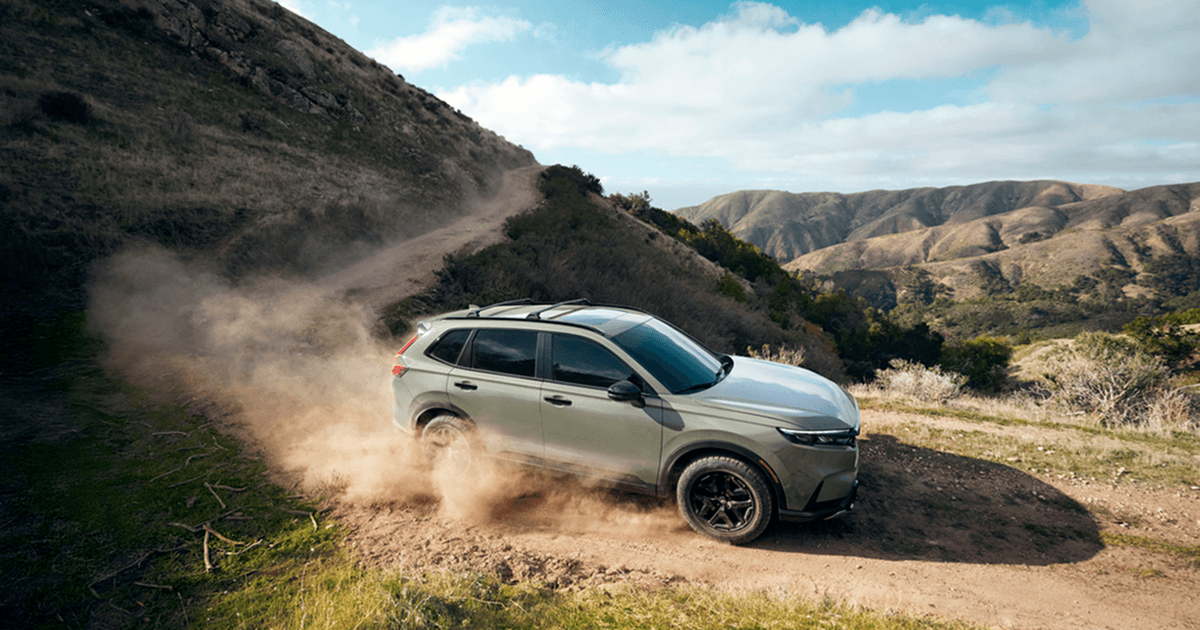
1. Honda CR-V: Best Compact SUV for Everyday Family Driving
The Honda CR-V is a sensible choice for families who want a comfortable SUV without paying for a third row they may never use.
It seats 5, with a second row that's spacious by compact SUV standards. The rear doors open wide, making it easier to help younger children into their seats. There's also a generous cargo area for groceries, backpacks, and a stroller.
The 2026 CR-V offers gasoline and hybrid powertrains. The hybrid is particularly useful if much of your driving involves school drop-offs, commuting, and errands around town.
One reason the CR-V works so well as a family vehicle is that it doesn't feel unnecessarily large. It's easy to maneuver in parking lots and residential neighborhoods, yet there's enough cargo space for most daily activities.
The limitation is the second-row bench. If all 3 children use car seats or boosters, the CR-V may not have enough usable width for your particular combination.
For families with older children who can comfortably share the rear seat, the CR-V offers a good balance of passenger room, efficiency, and everyday convenience.
2. Toyota RAV4: Best for Fuel Efficiency
If your family spends a lot of time driving, the Toyota RAV4 could help keep fuel expenses manageable.
The redesigned 2026 RAV4 comes with a hybrid powertrain across the lineup, while a plug-in hybrid version offers additional electric driving capability. That makes it a practical alternative to a traditional gasoline SUV, especially for parents who regularly drive in stop-and-go traffic.
Like the CR-V, the RAV4 seats 5 and offers a useful cargo area for everyday family needs. Available all-wheel drive also gives shoppers an option for driving in regions with frequent rain or snow.
The RAV4 makes the most sense when you don't need to separate children across multiple rows. Three older children may fit comfortably enough for routine trips, but parents with multiple bulky car seats should check the second-row dimensions carefully.
The decision between the CR-V and RAV4 may come down to the driving experience, seating comfort, and which vehicle offers the equipment you want at a price that fits your budget.
Families who want to reduce fuel consumption without moving into a larger SUV should put the RAV4 near the top of their shopping list.
3. Honda Pilot: Best for Families With 3 Young Children
Three children in car seats can quickly change what you need from a vehicle. That's where the Honda Pilot becomes especially useful.
The 2026 Pilot offers 3 rows and seating for 7 or 8 passengers, depending on the trim. Instead of trying to fit every child across one bench, parents have more options for arranging passengers and child restraints.
One of the Pilot's most useful features is its available removable second-row center seat. On equipped trims, you can use the full bench when you need an extra seating position or remove the center seat to create a passage to the third row. Honda also provides a storage location for the removable seat.
That flexibility matters as your children grow. You might need a full bench today but prefer easier third-row access a few years from now.
The Pilot also has a comfortable ride, available all-wheel drive, and a cargo area that becomes considerably larger when the third row is folded.
The trade-off is fuel consumption. The 2026 Pilot uses a gasoline V6, so families focused primarily on efficiency may prefer a hybrid alternative.
For parents juggling 3 young children, the Pilot's adaptable seating arrangements can be more valuable than an extra screen or a long list of convenience features.
4. Kia Telluride: Best Overall 3-Row SUV
The redesigned 2027 Kia Telluride is one of the strongest all-around choices for a family of 5, particularly if you expect to keep the vehicle for several years.
The gasoline Telluride offers seating for up to 8 passengers, while the new Telluride Hybrid seats up to 7. Both provide the flexibility of a third row, which can be useful even when your family doesn't need every seat.
With 3 children, the biggest advantage is being able to spread passengers out. One child can sit in the third row while the others use the second, reducing the need to squeeze everyone together.
Kia has also improved the redesigned Telluride's interior packaging and third-row access. On the hybrid, the second-row seats can tilt and slide to provide easier access to the third row. Parents should confirm the correct procedure and child restraint compatibility before moving a seat with a child restraint installed.
The new hybrid is another reason to consider the 2027 model. It produces 329 horsepower, and the EX front-wheel-drive version earns an EPA-estimated 35 mpg combined. Fuel economy varies by trim and drivetrain.
The Telluride isn't a small vehicle, and higher trims can become expensive. Still, its combination of passenger space, available hybrid efficiency, and flexible seating makes it a well-rounded choice for families who need 3 rows.
5. Hyundai Palisade: Best for Passenger Comfort
If your family regularly spends several hours at a time in the car, the Hyundai Palisade deserves a test drive.
The redesigned 2026 Palisade offers a spacious 3-row cabin with seating configurations designed to accommodate different passenger needs. Depending on the version, shoppers can choose a second-row bench or captain's chairs.
Captain's chairs can be useful when older children regularly sit in the third row. They create a more open second-row layout, although the exact ease of access depends on the seating configuration.
The Palisade also offers an available hybrid powertrain. That's an important addition for families who want a larger SUV but are concerned about fuel expenses.
Comfort is where this Hyundai makes its strongest case. The cabin provides room for passengers to spread out, and available comfort and convenience equipment varies by trim.
Before selecting a version, consider how often you'll need all 3 second-row seating positions. Captain's chairs may feel more comfortable for individual passengers, but a bench provides greater flexibility when transporting additional people.
For families who regularly take longer trips, the Palisade's roomy cabin and choice of seating arrangements make it a vehicle worth comparing with the Telluride and Grand Highlander.
6. Toyota Grand Highlander: Best for Cargo Space and Road Trips
Picture a family vacation with 5 passengers, several suitcases, a cooler, and a stroller. That's the kind of situation where the Toyota Grand Highlander starts to make sense.
The Grand Highlander offers a larger cabin than the standard Highlander, including a more accommodating third row and substantial cargo space.
Toyota lists up to 20.6 cubic feet of cargo capacity behind the third row and up to 97.5 cubic feet with the rear seats folded. That gives families room for luggage even when all 3 rows are in use, along with the flexibility to carry larger items when fewer passengers are aboard.
Toyota offers gasoline and hybrid powertrain choices, including the more powerful Hybrid MAX configuration. Families focused on fuel expenses will want to compare the regular hybrid with the gasoline and Hybrid MAX versions, since their efficiency differs considerably.
The Grand Highlander's size is worth considering before purchasing. It's a substantial vehicle, so checking garage clearance and parking-space dimensions is sensible.
For families who regularly travel with luggage, sports equipment, or extra passengers, the Grand Highlander provides the kind of cargo flexibility that can be difficult to find in smaller SUVs.
7. Hyundai Santa Fe: Best Smaller 3-Row SUV
The Hyundai Santa Fe offers an interesting middle ground for families who want 3 rows but aren't ready to move into a larger SUV.
Its boxy exterior creates a practical cabin, and the third row gives parents another place to seat passengers when needed.
For everyday driving with 5 people, the Santa Fe can work particularly well when the third row is folded down. That leaves more room for groceries, luggage, and other belongings.
The third row is less spacious than those in larger SUVs such as the Palisade or Grand Highlander. It's better viewed as extra flexibility rather than a replacement for the generous passenger room of a larger vehicle.
The Santa Fe is available with gasoline and hybrid powertrains, giving families options when balancing purchase price and fuel consumption.
Its upright shape and large rear cargo opening also make loading bulky items convenient, although shoppers should test their own equipment to confirm it fits.
If your family only occasionally needs the third row, the Santa Fe offers a practical alternative to buying a substantially larger vehicle.
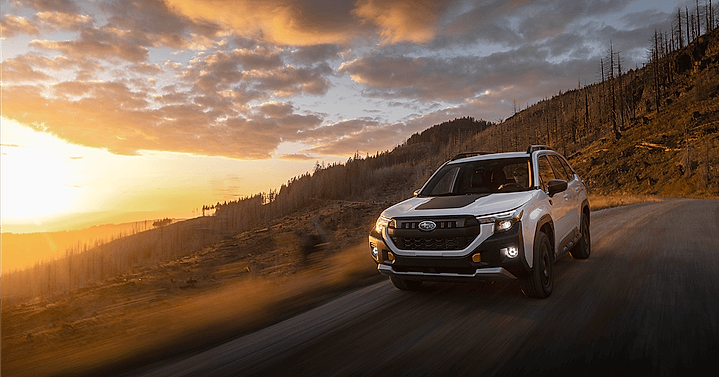
8. Subaru Forester: Best for Families Wanting Standard AWD
For families who regularly drive through snow, heavy rain, or changing weather conditions, the Subaru Forester offers a useful combination of standard all-wheel drive and good visibility.
Unlike SUVs that require upgrading to a more expensive trim or drivetrain, the Forester includes Subaru's Symmetrical All-Wheel Drive system as standard equipment.
All-wheel drive can help a vehicle maintain traction when accelerating on slippery surfaces. It doesn't shorten stopping distances or eliminate the need for appropriate tires, but it can be a useful feature in regions with difficult weather.
The Forester also has an upright cabin with generous headroom and large windows. Good outward visibility is especially welcome when navigating crowded school parking lots or backing out of a driveway.
The 2026 lineup includes gasoline and hybrid options, allowing families to compare fuel efficiency and purchase costs.
Like the CR-V and RAV4, the Forester has only 2 rows. Its rear bench accommodates 3 passengers, but families with multiple child restraints should verify that their seats fit correctly.
For families who don't need a third row, the Forester combines everyday practicality with the reassurance of standard AWD.
9. Mazda CX-90: Best for Driving Comfort and Refinement
Parents who enjoy driving may find the Mazda CX-90 more rewarding than a typical 3-row family SUV.
The CX-90 combines an upscale cabin with responsive handling and a comfortable highway ride. It places more emphasis on the driving experience than some of the larger SUVs on this list.
Seating capacity depends on the powertrain and configuration. The 2026 CX-90 Plug-in Hybrid accommodates up to 7 passengers, while gasoline-powered versions offer configurations with seating for up to 8.
Mazda also offers second-row captain's chairs or bench seating on certain configurations, giving families different ways to arrange passengers.
The plug-in hybrid may appeal to households that can charge at home and complete many of their daily trips using electric power. Families should compare its purchase price and electric range with the gasoline versions before deciding whether the added cost makes sense.
Where the Mazda requires more consideration is cargo space and third-row practicality. Families who regularly carry 5 passengers and several large bags should compare it directly with the Pilot, Grand Highlander, and Traverse.
The CX-90 isn't the roomiest SUV here, but it offers a more refined driving experience for parents who want 3-row flexibility without giving up the enjoyment of being behind the wheel.
10. Chevrolet Traverse: Best for Maximum Interior Space
The Chevrolet Traverse is a good place to start if space is the main reason you're shopping for an SUV.
The 2026 Traverse offers seating for 7 or 8 passengers, depending on the configuration, and has a particularly roomy cargo area.
Chevrolet lists 22.9 cubic feet of cargo space behind the third row and 56.6 cubic feet behind the second row. Fold both rear rows, and maximum cargo capacity reaches 98 cubic feet.
Those measurements are useful because they show how much space is available in different seating arrangements. A family of 5 that uses only the first 2 rows can keep the third row folded for a substantial amount of storage.
The Traverse also makes sense for families whose children frequently bring friends along. Its larger cabin gives everyone more room than a typical compact SUV.
Available driver assistance and camera features can help with maneuvering, although they don't replace careful driving.
The main drawback is its size. The Traverse takes up more space in a garage or parking lot than smaller SUVs, and its gasoline powertrain may be less appealing to shoppers who prioritize fuel efficiency.
For families who regularly carry bulky equipment, take long vacations, or transport additional passengers, the Traverse provides generous interior room without requiring a move to a traditional full-size SUV.
Is a 2-Row or 3-Row SUV Better for a Family of 5?
The answer depends less on the number of family members and more on how much room those passengers need.
A 2-row SUV may be perfectly adequate for 2 adults and 3 older children. But if you're trying to fit a rear-facing infant seat, a forward-facing car seat, and a booster across the same bench, your options become more limited.
When a 2-Row SUV Makes Sense
A compact or midsize 2-row SUV is worth considering when:
- All 3 children can sit comfortably across the second row.
- You rarely transport more than 5 people.
- You want lower fuel costs and a manageable vehicle size.
- You don't regularly carry large amounts of luggage.
- Your child restraints fit correctly in the available seating positions.
For these families, buying a larger SUV may add expense without providing much everyday benefit.
When a 3-Row SUV Is the Better Choice
A third row becomes more useful when children need additional personal space or you frequently transport friends and relatives.
It's also helpful when you want flexibility in how passengers are arranged. Rather than having all 3 children share one bench, you can use the second and third rows.
However, think about access to the third row before purchasing. Some vehicles require moving a second-row seat forward, which may be difficult when a child restraint is installed.
Also remember that children must use appropriate restraints and seating positions. The third row isn't automatically suitable for every child seat.
What Should You Look for in an SUV for 3 Kids?
1. Rear Seat Width and Car Seat Compatibility
This should be one of your first considerations if your children still use car seats or boosters.
An SUV with 3 rear seating positions doesn't necessarily accommodate 3 child restraints side by side. Seat width, belt buckle locations, and the design of the child restraints all affect compatibility.
Bring your actual seats to the dealership and check whether they can be installed correctly according to both the vehicle and restraint manufacturers' instructions.
Don't assume every seating position has lower LATCH anchors. Some vehicles require seat belt installation in certain positions, and tether anchor availability also varies.
2. Cargo Space With Passengers Seated
Maximum cargo capacity isn't always the most useful number for a family.
A 3-row SUV may advertise a large cargo area, but much of that space could require folding the second or third row.
Think about how you normally arrange passengers. If 1 child regularly sits in the third row, you may not be able to fold every rear seat when carrying luggage.
It's worth bringing a stroller, sports bag, or other bulky item to a test drive to see how easily it fits.
3. Safety Ratings and Equipment
Safety should be a priority, but don't choose a vehicle based solely on the number of driver assistance features it advertises.
Review crash-test results from the Insurance Institute for Highway Safety and the National Highway Traffic Safety Administration for the specific model year you're considering.
Automatic emergency braking, blind spot monitoring, and rear cross traffic alerts can be useful, but availability and performance vary by vehicle.
Proper child restraint installation, appropriate tires, and safe driving habits remain essential.
4. Fuel Economy and Ownership Costs
Larger SUVs typically require more fuel than compact alternatives, although hybrid powertrains can narrow the difference.
If you drive 15,000 miles per year, a vehicle averaging 35 mpg would use approximately 429 gallons of gasoline annually. One averaging 22 mpg would use about 682 gallons.
At $3.50 per gallon, that's a difference of roughly $886 per year.
This is an illustrative comparison rather than a claim about any 2 specific SUVs. Your actual costs will depend on driving conditions, fuel prices, and vehicle efficiency.
Insurance, maintenance, financing, and registration costs should also factor into your decision.
5. Comfort as Your Children Grow
The SUV that works for your family today should ideally still work several years from now.
Young children may need bulky car seats, while teenagers need more legroom and personal space. If you plan to keep your vehicle for 7 or 8 years, consider how those needs will change.
A third row can provide flexibility as children grow, but a spacious 2-row SUV may still be the more practical choice if your family rarely carries extra passengers.
Which SUV Should a Family of 5 Buy?
For families with older children who can comfortably share a rear bench, the Honda CR-V and Toyota RAV4 are excellent starting points. They're practical, manageable in size, and offer fuel-efficient options.
If you have 3 younger children, the Honda Pilot deserves particular attention. Its flexible second-row arrangements and available removable center seat can make it easier to adapt the cabin as your family grows.
The Kia Telluride is our best overall 3-row pick because it combines passenger comfort, versatile seating, and an available hybrid powertrain. Families who place a greater emphasis on luggage space should also consider the Toyota Grand Highlander and Chevrolet Traverse.
You don't necessarily need the biggest SUV to get the best family vehicle. What matters is having enough usable space for your passengers and belongings without spending more than you need to.
Before deciding, test-drive at least 2 or 3 vehicles with your family. Have everyone sit where they normally would, check how easily children can enter and exit, and make sure the cargo area handles your everyday equipment.
When you're ready to shop, explore new and used SUVs on AutoFinder to compare available vehicles and connect with local dealerships. You can also use the Out-the-Door Price Calculator to estimate purchase costs before visiting a dealer.
Want More Car Buying Advice?
Add AutoFinder as a preferred source on Google to help you discover more of our automotive guides and research.
FAQs
What Is the Best SUV for a Family of 5?
The Honda CR-V is a strong choice for families who don't need a third row, while the Kia Telluride and Honda Pilot offer more seating flexibility. Families with 3 younger children may benefit most from a 3-row SUV, especially when multiple car seats are involved. The best choice depends on passenger ages, cargo needs, and budget.
Does a Family of 5 Need a 3-Row SUV?
Not necessarily. Many 2-row SUVs comfortably seat 5 people, especially when the children are older. A third row becomes more useful when you have multiple child restraints, frequently carry extra passengers, or want to spread children across different seating positions. Consider how often you'll actually use the additional seats before paying for a larger SUV.
Which SUV Is Best for 3 Car Seats?
Larger SUVs such as the Honda Pilot, Kia Telluride, and Chevrolet Traverse are good vehicles to investigate when you need multiple car seats. However, no vehicle should be assumed to fit your particular combination of restraints without checking. Bring your car seats to the dealership and verify compatibility with the owner's manual and child restraint instructions.
What Is the Most Affordable SUV for a Family of 5?
Compact SUVs such as the Honda CR-V, Toyota RAV4, and Subaru Forester are worth comparing if affordability is a priority. They generally have lower starting prices than larger 3-row SUVs and may cost less to operate. Compare actual dealer prices, financing, insurance, and fuel expenses rather than focusing only on the manufacturer's suggested retail price.
Which SUV Has the Most Cargo Space for a Family of 5?
The Chevrolet Traverse and Toyota Grand Highlander are strong choices for families who regularly carry substantial luggage or equipment. The Traverse offers up to 98 cubic feet of maximum cargo space with its rear seats folded. However, families should compare cargo capacity with the seats they plan to use, since maximum figures don't reflect every passenger arrangement.
Is a Hybrid SUV Better for a Family of 5?
A hybrid can be a smart choice for families who drive frequently, especially in city traffic. The Toyota RAV4, Honda CR-V Hybrid, and larger hybrid SUVs can help reduce gasoline consumption. Whether a hybrid saves money overall depends on the purchase price difference, annual mileage, fuel costs, and how long you plan to keep the vehicle.
What Is the Safest SUV for a Family of 5?
No single SUV is automatically the safest choice for every family. Check current IIHS crash-test evaluations and NHTSA safety ratings for the exact model year you're considering. Also evaluate child seat compatibility, visibility, and available driver assistance features. Properly installed restraints and seat belts are especially important when transporting children of different ages.
The information provided in this article is for general informational purposes only and may change over time. Vehicle pricing, availability, specifications, incentives, financing terms, interest rates, and other details may vary by vehicle, dealer, lender, location, and individual circumstances. AutoFinder does not guarantee the accuracy or availability of information provided by third parties. Always confirm current vehicle details, pricing, terms, and eligibility directly with the participating dealer or appropriate provider before making a purchase or financial decision.