Buying Guides
Hyundai Venue Buying Guide: Is It Right for You?
OVERVIEW
The Hyundai Venue is the smallest SUV in Hyundai's U.S. lineup, and that compact size is a big part of its appeal. At just 159.1 inches long, it is easy to maneuver and park, while still giving you an upright seating position, four doors, and more cargo flexibility than a typical small sedan.
For 2026, every Venue uses a 121 horsepower engine, Front Wheel Drive, and an intelligent variable transmission. Hyundai rates it at an EPA estimated 29 mpg city, 33 mpg highway, and 31 mpg combined. The lineup starts at $20,550 before freight, taxes, title, license fees, and options.
Those numbers make the Venue an interesting option for shoppers who want an affordable new SUV without moving into a larger vehicle. The compromises are just as important to understand. There is no available All Wheel Drive, performance is modest, and buyers who regularly carry adults in the back or need substantial cargo room may be happier with something larger.
So, is the Venue enough SUV for you? That depends much more on how you plan to use it than its small footprint might suggest.
How Small Is the Hyundai Venue?
The Venue measures 159.1 inches long and 69.7 inches wide, with a 99.2-inch wheelbase. Ground clearance is 6.69 inches.
Those dimensions are useful if you spend a lot of time in crowded areas. A shorter vehicle is easier to fit into tight parking spaces, maneuver through parking garages, and place on narrow streets.
Inside, the Venue has seating for five, although the rear seat is better suited to smaller passengers or occasional adult use than what you would find in a larger SUV. Hyundai lists 41.3 inches of front legroom and 34.3 inches in the rear.
That makes the Venue particularly easy to understand as an alternative to a small car. You get the shape and seating position of an SUV without taking on the exterior dimensions of a larger crossover.
Hyundai Venue Pros and Cons
The Venue's strengths and limitations are closely connected to its size and price.
Pros
- Low starting price
- Easy to park
- 31 mpg combined
- Useful hatchback cargo area
- Wireless smartphone connectivity
- Strong warranty coverage
Cons
- No all wheel drive
- Modest 121 horsepower
- Limited rear legroom
- Less cargo space than larger SUVs
- No hybrid option
The Venue makes the most sense when affordability, efficiency, and compact dimensions rank higher on your list than power, passenger space, or maximum versatility.
How Much Cargo Space Does the Hyundai Venue Have?
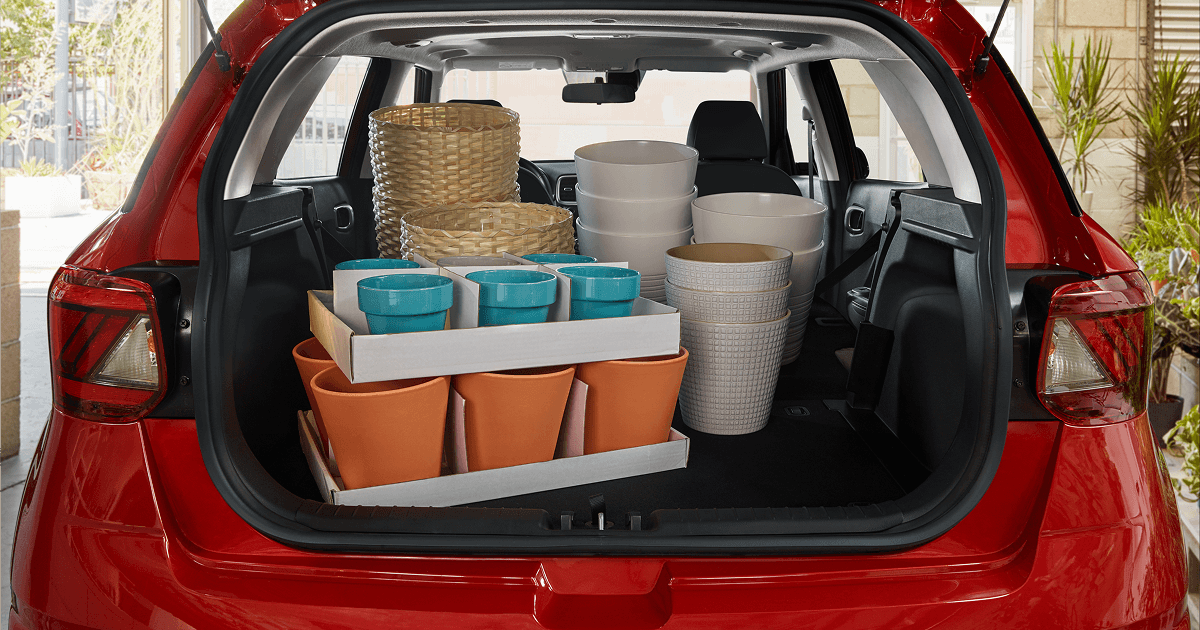
The Venue provides 18.7 cubic feet of cargo volume behind the rear seats and 31.9 cubic feet when the rear seats are folded. A 60/40 split folding rear seatback is standard.
That gives you more flexibility than a conventional trunk.
Groceries, luggage, gym bags, and normal everyday cargo should be straightforward. Folding one or both sides of the rear seat also makes room for longer items when you do not need all of the passenger seating.
The limitation becomes more apparent if you routinely carry several people and their belongings at the same time. With the rear seats occupied, you only have the 18.7 cubic feet behind them.
If cargo space is high on your priority list, bring the things you regularly carry when you test drive one. A stroller, large suitcase, golf clubs, or other bulky item can tell you more about whether the Venue works for you than the cargo volume number alone.
What Engine Does the 2026 Hyundai Venue Have?
Every 2026 Venue uses the same basic powertrain.
Hyundai lists a 121 horsepower engine paired with its Smartstream Intelligent Variable Transmission. Front Wheel Drive is standard across the lineup.
That keeps the buying decision simple. You do not have to choose between several engines or decide whether paying for a higher trim is worthwhile just to get more power.
It also means there is no performance upgrade if 121 horsepower feels insufficient during your test drive.
For commuting, errands, and typical urban driving, the Venue's powertrain is designed around efficiency and everyday usability. If you frequently merge onto fast highways, drive through steep terrain, or regularly carry several passengers and cargo, pay particular attention to acceleration during your test drive.
Is the Hyundai Venue Fuel Efficient?
For 2026, Hyundai lists the Venue at an EPA-estimated:
| Driving | EPA Estimated MPG | What It Means |
|---|---|---|
| City | 29 mpg | Useful for daily commuting |
| Highway | 33 mpg | Efficient for longer drives |
| Combined | 31 mpg | Same rating across trims |
EPA estimates are intended for comparison, and actual fuel economy varies with driving conditions, habits, vehicle condition, and other factors.
Because every 2026 Venue uses the same basic powertrain and Front Wheel Drive configuration, moving up through the trim lineup does not require choosing a less efficient turbo engine or All Wheel Drive system.
Does the Hyundai Venue Have All Wheel Drive?
No. The 2026 Hyundai Venue is Front Wheel Drive only.
That is one of the biggest considerations for shoppers who live in areas with frequent snow or who specifically want an SUV with All Wheel Drive.
The SEL and SEL with 2 Tone Roof do offer Drive Mode Select with Normal, Sport, and Snow modes. Snow Mode adjusts traction control to help in slippery conditions, but it does not turn the Venue into an All Wheel Drive vehicle.
Tires also matter considerably in winter conditions. If you are comfortable with Front Wheel Drive and use tires appropriate for the weather you encounter, the lack of All Wheel Drive may not be a deal breaker.
If All Wheel Drive is a requirement rather than a preference, you will need to look beyond the Venue.
Which 2026 Hyundai Venue Trim Should You Buy?
The 2026 Venue lineup consists of the SE, SEL, and SEL with 2 Tone Roof. The powertrain does not change as you move up the range, so the decision comes down largely to comfort, technology, appearance, and driver assistance features.
Hyundai Venue SE
The SE is the place to start if keeping the purchase price low is your main priority.
You still get an 8-inch touchscreen, wireless Apple CarPlay and Android Auto, Forward Collision Avoidance Assist with Pedestrian Detection, Lane Keeping Assist, Driver Attention Warning, High Beam Assist, and Rear Occupant Alert.
That is a useful amount of standard equipment for the entry trim.
The biggest reason to move up is not power or fuel economy. It is access to additional convenience and driver assistance features.
Hyundai Venue SEL
For many buyers, the SEL is the trim I would compare most closely with the SE.
It adds equipment including heated front seats, automatic climate control, wireless device charging, a power sunroof, 17-inch alloy wheels, proximity key with push button start, and Drive Mode Select with Snow Mode.
More importantly, the SEL adds Blind Spot Collision Warning and Rear Cross Traffic Collision Warning, neither of which is available on the SE.
If the price difference fits your budget, those additions make the SEL a strong everyday configuration.
Hyundai Venue SEL With 2 Tone Roof
The SEL with 2 Tone Roof keeps the SEL's core equipment and adds the contrasting roof treatment.
This trim makes the most sense if you already prefer the SEL and particularly like the two-tone exterior. Mechanically, you are not stepping into a more powerful Venue.
Is the Hyundai Venue a Good First Car?
It has several qualities that can make it appealing as a first vehicle.
Its compact dimensions make parking and maneuvering easier, while the upright body gives drivers useful visibility. The starting price also keeps it toward the more affordable end of the new SUV market.
Standard safety and driver assistance equipment includes Forward Collision Avoidance Assist with Pedestrian Detection, Lane Keeping Assist, Driver Attention Warning, High Beam Assist, and Rear Occupant Alert.
The SEL adds Blind Spot Collision Warning and Rear Cross Traffic Collision Warning.
Driver assistance technology does not replace attentive driving, but these features can be worthwhile when comparing vehicles for a newer driver.
Insurance costs should also be checked before buying. Rates depend on the driver, location, coverage, vehicle, and insurer, so a low vehicle price does not automatically guarantee inexpensive insurance.
Is the Hyundai Venue Good for Families?
This depends heavily on the size of the family and how often the rear seats are used.
The Venue technically seats five, but 34.3 inches of rear legroom means adults may find the back more limiting than in a larger SUV.
For a couple with one child, a small household, or someone who only occasionally carries rear passengers, the space may be perfectly workable.
Families using child seats should test them before buying, particularly rear-facing seats. Bring the seat to the dealership if possible and check how much front passenger space remains once it is installed.
Cargo space deserves the same test. A family that regularly carries a stroller, groceries, bags, and other gear may find 18.7 cubic feet behind the rear seats more limiting than the SUV shape initially suggests.
Hyundai Venue vs. a Larger SUV
Moving up to a larger crossover can get you more passenger room, cargo capacity, available power, and potentially All Wheel Drive. The tradeoff is usually a higher purchase price and a larger exterior footprint.
Hyundai's own lineup illustrates the difference. The 2026 Venue starts at $20,550, while the larger 2026 Kona starts at $25,500 according to Hyundai's current U.S. listings.
The extra money may be worthwhile if the additional capability solves a real need. If it does not, the Venue lets you avoid paying for space and equipment you rarely use.
What Is the Hyundai Venue Warranty?
For 2026, Hyundai lists a 5-year or 60,000-mile New Vehicle Limited Warranty and a 10-year or 100,000-mile Powertrain Limited Warranty. Hyundai also lists 5 years of unlimited mileage roadside assistance. Warranty terms, eligibility, and exclusions apply.
That warranty coverage can be an important part of the Venue's value proposition for someone comparing a new Venue with an older used SUV at a similar price.
Used buyers should pay closer attention to remaining coverage and eligibility rather than assuming the original warranty terms transfer unchanged.
What Should You Look for When Buying a Used Hyundai Venue?
A used Venue can lower the purchase price further, but the individual vehicle matters more than the badge on the grille.
Check:
- Mileage
- Maintenance history
- Accident and title history
- Tire condition
- Brake condition
- Interior wear
- Electronics and infotainment
- Air conditioning
- Warning lights
- Evidence of previous repairs
Pay attention to trim as well. An SE and SEL from the same model year can look similar in a listing while having meaningful differences in comfort and driver assistance equipment.
Compare several vehicles with similar mileage, model year, trim, and condition before deciding whether the asking price makes sense.
Who Should Buy a Hyundai Venue?
The Venue is particularly well suited to someone who wants SUV practicality without much SUV bulk.
It deserves a closer look if you:
- Spend a lot of time driving in a city
- Regularly park in tight spaces
- Want an affordable new SUV
- Prefer good fuel economy
- Usually drive alone or with one passenger
- Want a hatchback-style cargo area
- Do not need All Wheel Drive
- Do not regularly carry large amounts of cargo
The Venue becomes harder to recommend if you routinely fill the rear seats, need substantial cargo room, want stronger acceleration, or consider All Wheel Drive essential.
Those are not flaws so much as the limits that come with choosing such a small vehicle.
How to Shop for a Hyundai Venue on Autofinder
The Venue's simple powertrain lineup makes shopping fairly straightforward, but trim still matters.
Autofinder can help you compare new and used dealership inventory by model year, trim, mileage, equipment, photos, and price.
For new models, compare the SE and SEL carefully. The powertrain and fuel economy are essentially the same, so you can focus on whether the SEL's additional comfort and driver assistance equipment is worth the price difference to you.
For used Venues, look at mileage and condition alongside trim. A slightly higher mileage SEL may make more sense than a lower mileage SE if you value the additional equipment and the price difference is reasonable.
Final Thoughts
The Hyundai Venue works because it does not try to be a smaller version of every other SUV.
It gives shoppers an affordable, efficient vehicle with an upright driving position, useful cargo access, straightforward technology, and dimensions that are easy to live with in crowded areas. At the same time, its 121 horsepower engine, Front Wheel Drive-only configuration, compact rear seat, and modest cargo area establish clear limits.
For someone who mainly commutes, runs errands, and wants the practicality of a small hatchback-shaped SUV, those compromises may be easy to accept. Buyers who need more passenger space, cargo room, power, or All Wheel Drive should compare the Venue with the next size up before deciding.
Hyundai Venue SUVs Near You
Hyundai Venue · near 85001