Car Basics
How Long Do Cars Last? Average Mileage and Lifespan Explained
OVERVIEW
A modern car can often last 200,000 miles or more when it is maintained properly, and reaching 100,000 miles is no longer the milestone it once was. Some vehicles stay on the road well beyond 200,000 miles, while others become expensive to keep much sooner.
Mileage only tells part of the story. Maintenance history, reliability, driving conditions, climate, previous repairs, and how the vehicle was treated can all have a bigger effect on its remaining life.
That matters whether you are trying to keep your current car as long as possible or deciding if a higher-mileage used vehicle is worth buying.
How Many Miles Do Cars Usually Last?
A well-maintained modern car can often last between 150,000 and 200,000 miles. Many vehicles can reach 200,000 miles or more when they receive consistent maintenance and repairs throughout their lives.
There is no mileage number that automatically makes a car too old or unreliable. Two vehicles with 150,000 miles can be in completely different condition depending on how they were treated.
A car with higher mileage and a strong maintenance history may actually be a better choice than a lower mileage vehicle that was neglected.
Average Car Lifespan by Mileage
| Mileage | What It May Mean |
|---|---|
| Under 50,000 miles | Generally considered relatively low mileage with plenty of potential life remaining |
| 50,000 to 100,000 miles | Common range for used vehicles and usually not a concern with proper maintenance |
| 100,000 to 150,000 miles | Maintenance history becomes increasingly important |
| 150,000 to 200,000 miles | Higher mileage, but many modern vehicles can remain dependable |
| 200,000 miles or more | Condition and maintenance matter much more than the number on the odometer |
These ranges are guidelines rather than hard limits. Mileage can help you understand where a vehicle is in its life, but it should always be considered alongside its age, condition, service history, and price.
How Many Years Do Cars Last?
Mileage gets most of the attention when people talk about vehicle lifespan, but age matters too.
Many modern vehicles can remain on the road for 12 to 15 years or longer. A vehicle that is driven less frequently could accumulate relatively few miles during that time, but age can still affect its components.
Rubber seals, hoses, belts, suspension parts, electronics, and other components can deteriorate over time regardless of mileage.
That is why a 12 year old vehicle with 60,000 miles is not automatically in better condition than a 6 year old vehicle with 100,000 miles.
Both age and mileage should be considered when evaluating how much useful life a vehicle may have left.
What Determines How Long a Car Lasts?
There is no single factor that determines when a car reaches the end of its useful life. Several things can make a major difference.
Maintenance History
Regular maintenance is one of the biggest factors affecting vehicle longevity.
Oil changes, fluid services, brake maintenance, tire rotations, filter replacements, and other routine services help prevent unnecessary wear. Following the manufacturer's recommended maintenance schedule can also help identify problems before they turn into more expensive repairs.
When buying used, service records can provide valuable insight into how well the previous owner cared for the vehicle.
Driving Habits
How a vehicle accumulates its miles matters.
Frequent hard acceleration, aggressive braking, towing heavy loads, and consistently driving on rough roads can increase wear. Highway miles are often easier on a vehicle than constant short trips and stop and go traffic.
This is another reason the odometer should not be the only thing you consider when evaluating a used car.
Climate
Where a car has spent its life can affect its condition.
Vehicles regularly exposed to road salt, snow, and moisture may develop rust and corrosion more quickly. Extremely hot climates can also put additional stress on batteries, cooling systems, tires, and interior materials.
If you are considering an older used vehicle, checking underneath it for rust or corrosion can be just as important as checking the mileage.
Vehicle Quality
Some vehicles have stronger track records for long term reliability than others.
That does not mean every vehicle from a particular brand or model will reach the same mileage. Maintenance, driving habits, previous repairs, and individual vehicle condition still matter.
Reliability history is best used as one part of the buying decision rather than a guarantee of how long a specific car will last.
Accident and Repair History
A vehicle that has been involved in a serious accident may have experienced damage that affects its long term condition.
Quality repairs can restore a vehicle properly, but poorly completed repairs can create problems later. Checking a vehicle history report and having a used vehicle inspected can help uncover issues that are not obvious during a quick test drive.
Is 100,000 Miles a Lot for a Car?
Not necessarily.
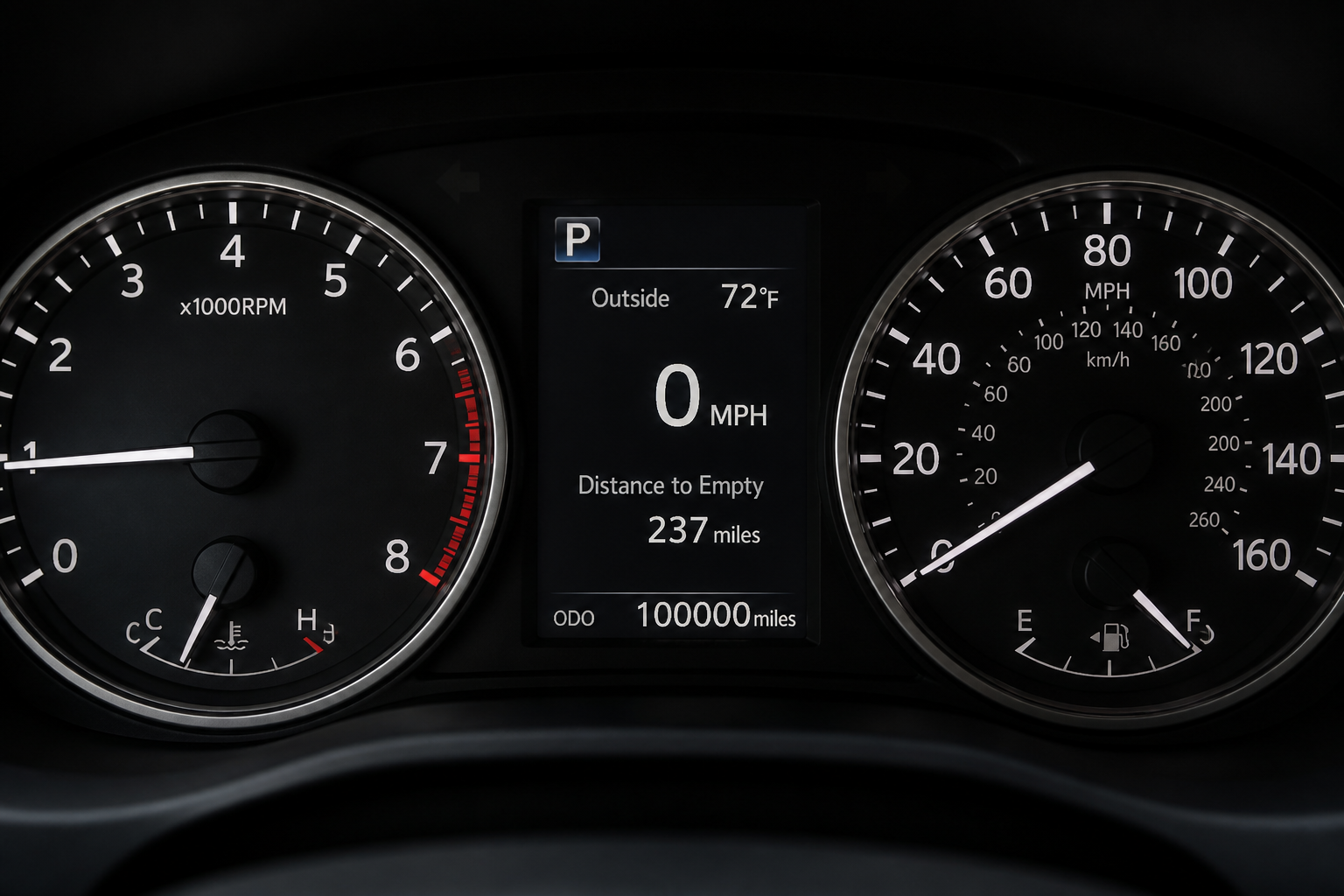
Reaching 100,000 miles used to be treated as a major milestone, but modern vehicles regularly continue well beyond it.
A car with 100,000 miles may still have years of useful life remaining if it has been maintained properly. At this mileage, however, you should pay closer attention to its service history and upcoming maintenance needs.
Components such as brakes, suspension parts, belts, hoses, spark plugs, fluids, and the battery may already have been replaced or could need attention soon.
When shopping for a vehicle with more than 100,000 miles, look beyond the odometer. A documented maintenance history can tell you much more about the car than mileage alone.
Can a Car Last 200,000 Miles?
Yes. Many modern cars can reach 200,000 miles, especially when they have received regular maintenance.
Getting there usually requires more than oil changes. As vehicles age, owners should expect to replace wear items and occasionally make larger repairs.
The real question becomes whether those repairs still make financial sense.
A reliable car that needs a manageable repair may be worth keeping. A vehicle that regularly needs expensive repairs or has serious engine, transmission, structural, or corrosion problems may be approaching the point where replacement makes more sense.
Can Cars Last 300,000 Miles?
Some can.
Reaching 300,000 miles is less common than reaching 150,000 or 200,000 miles, but it is possible. Vehicles that reach this point usually have a combination of good maintenance, favorable driving conditions, durable components, and owners willing to make repairs as the vehicle ages.
At extremely high mileage, it becomes increasingly important to evaluate the vehicle individually.
A 300,000 mile car that has been meticulously maintained could still run well, but buyers should expect a greater possibility of repairs simply because so many components have experienced years of use.
Does High Mileage Mean a Car Is Bad?
No. High mileage alone does not make a car a bad purchase.
A higher mileage vehicle may actually make sense if it has been well maintained, is priced appropriately, and passes a professional inspection.
When evaluating a high mileage used car, pay attention to:
- Maintenance and service records
- Accident history
- Rust and corrosion
- Engine and transmission performance
- Fluid leaks
- Suspension condition
- Tire and brake condition
- Warning lights
- Unusual noises or vibrations
You should also consider the cost of upcoming maintenance. A lower purchase price can be attractive, but it matters less if the vehicle immediately needs several expensive repairs.
Is Age or Mileage More Important?
Neither tells the entire story.
Mileage shows how much a vehicle has been driven, while age shows how long its components have been exposed to time and the environment.
For example, an older vehicle with very low mileage may have spent long periods sitting. That can create its own problems with batteries, tires, seals, fluids, and other components.
A newer vehicle with higher mileage may have accumulated much of that mileage through highway driving and could be in excellent mechanical condition.
The better approach is to consider age, mileage, maintenance, condition, and vehicle history together.
How Can You Make a Car Last Longer?
You cannot control every repair a vehicle will eventually need, but good ownership habits can help extend its useful life.
- Follow the recommended maintenance schedule
- Change the oil at the appropriate intervals
- Keep fluids at the proper levels
- Address warning lights promptly
- Maintain proper tire pressure
- Replace worn brakes and tires when needed
- Avoid aggressive acceleration and braking
- Repair small problems before they become larger ones
- Keep the vehicle clean, especially in areas where road salt is common
One of the biggest mistakes owners can make is ignoring a small problem because the vehicle still drives normally. Strange noises, leaks, warning lights, or changes in performance are often easier and less expensive to address early.
When Is a Car Too Old to Keep?
There is no specific age or mileage when you need to replace a vehicle.
Instead, consider its reliability, safety, repair costs, and overall condition.
If your car needs a $1,500 repair but is otherwise reliable and in good condition, repairing it could make more financial sense than replacing it.
The situation changes when repairs become frequent or when major components begin failing at the same time.
It may be time to consider replacing your car when repair costs consistently outweigh its value, reliability becomes unpredictable, serious rust affects the structure, or the vehicle no longer meets your safety or transportation needs.
What Should You Look for When Buying an Older Car?
Older and higher mileage vehicles can offer strong value, but condition matters more as a car ages.
Start by reviewing the vehicle history and available maintenance records. Look for evidence that routine services were performed consistently rather than only after something went wrong.
A test drive can help you identify unusual noises, vibrations, shifting problems, braking issues, or steering concerns.
For additional peace of mind, consider having the vehicle inspected by an independent qualified mechanic before buying it. A professional inspection can uncover problems that may not be obvious from the listing or test drive.
The Bottom Line
So, how long do cars last?
For many modern vehicles, 150,000 to 200,000 miles is a realistic lifespan, and well-maintained cars can go considerably farther. Some vehicles even reach 300,000 miles.
The odometer should not be treated like an expiration date.
Maintenance history, age, driving conditions, vehicle quality, and overall condition all play a role in determining how much life a car has left. Whether you are keeping your current vehicle or shopping for a used one, looking at the complete picture will give you a much better idea of what to expect.