What Affects Car Prices the Most
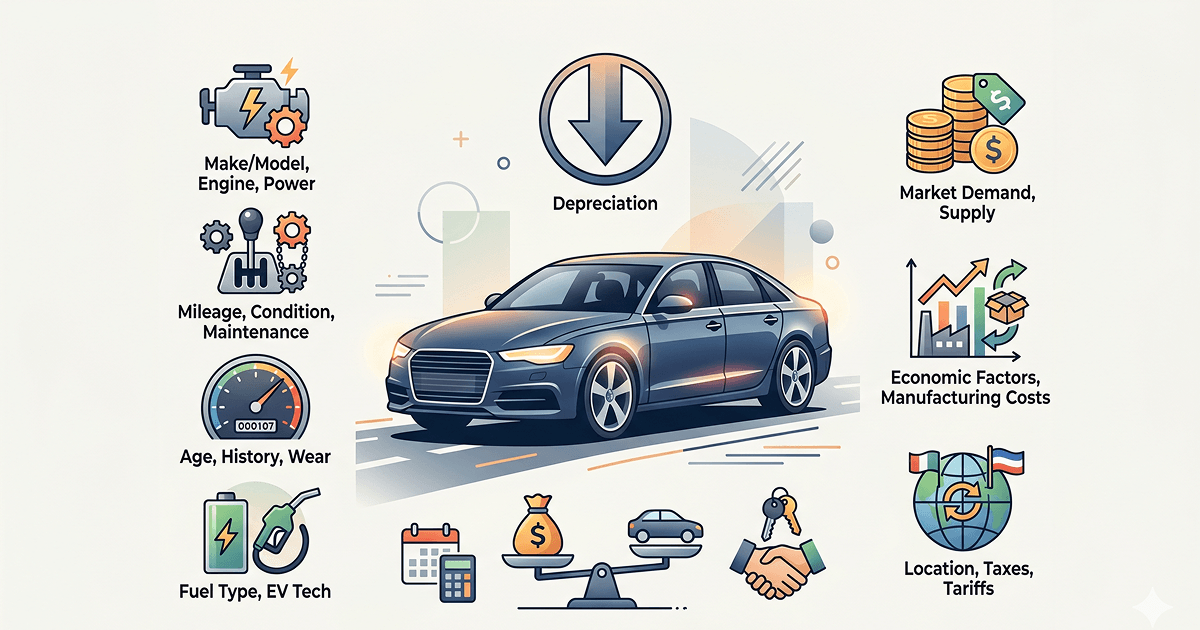
Last updated Jun 11th, 2026Car prices are not random. They are based on a mix of market conditions and vehicle-specific factors.
Here are the biggest drivers:
- Supply and demand
- Mileage and condition
- Vehicle history
- Features and trim level
- Market trends and timing
Once you understand these, pricing becomes much easier to read.
Find Your Best Price
See what others paid and get upfront pricing from local dealers.

Why Car Prices Vary More Than You Expect
Let’s be honest. One of the most confusing parts of car shopping is seeing similar vehicles with very different prices.
Same model. Same year. Totally different numbers.
It makes you stop and think:
“What am I missing here”
The answer is simple. Pricing is not based on one thing. It is a combination of factors that all work together.
Once you understand those factors, the numbers start to make sense.
Supply and Demand Drives Everything
This is the biggest factor behind pricing.
When a car is in high demand and low supply, prices go up.
When there are more options available, prices tend to level out or drop.
This can happen with:
- Popular models
- Fuel-efficient vehicles
- Seasonal demand changes
This is why you might see the same car priced differently depending on where and when you are looking.
Mileage Has a Big Impact
Mileage is one of the first things people notice, and for good reason.
In general:
- Lower mileage increases value
- Higher mileage lowers value
But it is not just about the number. It is about how the car has been used and maintained.
A well-maintained car with slightly higher mileage can still be a strong value.
Condition Tells the Real Story
Two cars can have the same mileage but feel completely different.
That comes down to condition.
Things that impact condition include:
- Interior wear
- Exterior condition
- Maintenance history
- Overall care
Condition is often what separates a fair deal from a great one.
Vehicle History Matters
A clean history adds confidence.
Things like:
- Accident history
- Number of previous owners
- Service records
can all impact pricing.
A car with a strong history often holds its value better, while one with issues may be priced lower.
Features and Trim Level Change Everything
Not all cars are built the same.
Even within the same model, features can vary a lot.
Pricing differences often come from:
- Trim level
- Technology packages
- Safety features
- Interior upgrades
A higher price may reflect added value, not just markup.
Market Trends Play a Role
Car prices do not exist in a vacuum.
They are influenced by:
- Economic conditions
- Fuel prices
- Interest rates
- Inventory levels
These trends can shift pricing across entire categories of vehicles.
This is why staying aware of the market helps you make better decisions.
Location Can Impact Price
Where you are shopping can affect what you see.
Prices may vary based on:
- Local demand
- Regional preferences
- Inventory availability
A car in one area may be priced differently in another simply because of local conditions.
Timing Still Has an Effect
While timing is not everything, it can influence pricing.
Things like:
- End of the month
- End of the year
- New model releases
can create opportunities.
If you want to understand how timing plays into deals, our guide on best time to buy a car in 2026 breaks it down clearly.
Why Understanding This Changes Everything
Once you understand what affects pricing, you stop guessing.
Instead, you start to see:
- Why one car is priced higher
- Why another looks like a deal
- What actually matters
This is where confidence comes from.
How This Helps You Compare Prices Better
Understanding pricing factors makes comparison much easier.
Instead of just looking at numbers, you are evaluating value.
If you want a step by step approach, our guide on how to compare car prices like a pro shows you exactly how to do it.
How This Connects to Getting a Good Deal
All of these factors come together when evaluating a deal.
A price might seem high at first, but make sense once you consider:
- Condition
- Features
- Market demand
If you want to go deeper, our guide on what is a good deal on a car in 2026 helps you understand how all of this fits together.
How AutoFinder Helps You See This Clearly
AutoFinder helps bring all of these factors into one place.
You can:
- Compare similar vehicles
- See pricing patterns
- Understand value quickly
- Connect directly with dealers
It turns what feels complicated into something much more straightforward.
What This Knowledge Feels Like
Once you understand what affects pricing, everything changes.
You feel:
- More confident comparing cars
- Less unsure about pricing
- More in control of your decision
That is the goal.
Final Thought
Car prices are not random. They are built on a set of clear factors that you can learn and understand.
Once you know what drives pricing, you can spot value faster, avoid overpaying, and make better decisions.
With tools like AutoFinder, that process becomes even easier. You are not just looking at prices. You are understanding them.
And that is what turns car shopping into a much more confident experience.
FAQs
What is the biggest factor that affects car prices?
Supply and demand is usually the biggest factor. When a vehicle is popular and inventory is limited, prices tend to increase. When there are more options available, pricing becomes more competitive. This is why the same car can have different prices depending on market conditions.
Does mileage always lower the price?
In most cases, higher mileage lowers the price, but it is not the only factor. Condition, maintenance history, and overall care also matter. A well-maintained vehicle with higher mileage can still offer strong value compared to a lower mileage car in worse condition.
Why do similar cars have different prices?
Even similar cars can vary in price due to differences in condition, features, history, and location. Small details like trim level or service records can impact value. Looking at multiple listings helps you understand what is normal and what stands out.
Does AutoFinder help explain price differences?
Yes, AutoFinder helps you compare multiple vehicles side by side, making it easier to see how pricing varies. This allows you to quickly understand what is driving the differences and identify which vehicles offer the best overall value.





The information provided in this article is for general informational purposes only and may change over time. Vehicle pricing, availability, specifications, incentives, financing terms, interest rates, and other details may vary by vehicle, dealer, lender, location, and individual circumstances. AutoFinder does not guarantee the accuracy or availability of information provided by third parties. Always confirm current vehicle details, pricing, terms, and eligibility directly with the participating dealer or appropriate provider before making a purchase or financial decision.