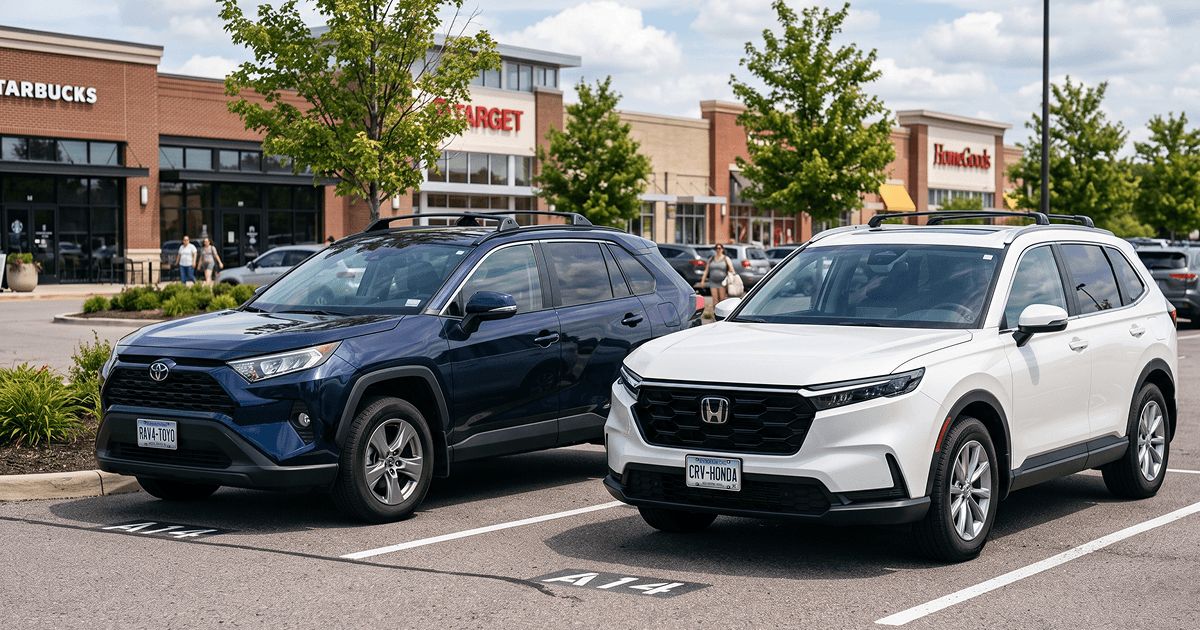
2026 Honda CR-V vs 2026 Toyota RAV4: Which SUV Wins?
Last updated Aug 13th, 2026The 2026 Honda CR-V vs 2026 Toyota RAV4 comparison comes down to cargo room and refinement against electrification and efficiency. The CR-V still gives buyers a choice of a 1.5L turbo gas engine or a 204-hp hybrid, and it carries the most cargo behind its rear seats in the segment. The redesigned 2026 RAV4 goes all-hybrid for the first time, adds a quicker plug-in hybrid trim, and brings a refreshed cabin with Toyota Safety Sense 3.0 standard.
Pick the CR-V if you haul a lot, want a quieter highway ride, or prefer Honda’s cabin feel. Pick the RAV4 if you want a plug-in option, the lowest fuel costs, or Toyota’s longer hybrid battery warranty.
Find Your Best Price
See what others paid and get upfront pricing from local dealers.


The 2026 Honda CR-V vs 2026 Toyota RAV4 matchup is the most consequential one in the compact SUV class. These two account for hundreds of thousands of US sales every year, and for 2026 they have taken meaningfully different paths. Honda kept the CR-V’s formula: a gas turbo on the low trims, a hybrid on the higher ones, and the same roomy cabin that has earned it loyal repeat buyers. Toyota redesigned the RAV4 from the ground up and made every trim a hybrid, with a more powerful plug-in option at the top of the lineup.
We looked at trims, pricing, real-world livability, and the long-run ownership math (insurance, fuel, resale) that actually shapes which one is the smarter buy for a real family. Here is how the two stack up.
Quick Verdict
2026 Honda CR-V
Best for: families who haul gear, want a quieter cabin, and like having the option of a gas-only trim at a lower starting price than the hybrid.
- More cargo space behind the rear seats than any rival in the class
- Refined ride and quieter highway manners than the RAV4
- Choice of gas or hybrid, with the hybrid making 204 hp combined
2026 Toyota RAV4
Best for: shoppers who want a hybrid at the base price, the option of a plug-in trim with around 40 miles of EV range, or Toyota’s long hybrid battery warranty.
- All-hybrid lineup for 2026, with a quicker plug-in hybrid available
- AWD available across the lineup; standard on most trims
- Toyota Safety Sense 3.0 standard, plus a 10-year hybrid battery warranty
Table of Contents
- Quick Verdict
- At a Glance
- Performance & Powertrain
- Fuel Economy
- Interior & Comfort
- Pricing & Value
- Technology & Safety
- Cargo Space & Practicality
- Reliability & Ownership Costs
- Pros & Cons
- Our Verdict
At a Glance
2026 Honda CR-V
- Starting MSRP: around $30,100 (LX FWD)
- Powertrain: 1.5L turbo I-4 (190 hp) or 2.0L hybrid (204 hp combined)
- EPA-estimated MPG: up to 30 combined gas, up to 40 combined hybrid
- Drivetrain: FWD standard; AWD available on every trim
- Cargo: 39.3 cu ft behind rear seats; 76.5 cu ft with seats folded
- Standard tech: 7-inch touchscreen on LX/EX; 9-inch on hybrid trims
2026 Toyota RAV4
- Starting MSRP: around $32,500 (LE Hybrid, all-hybrid lineup)
- Powertrain: 2.5L hybrid (around 226 hp); plug-in hybrid available (around 320 hp)
- EPA-estimated MPG: roughly 39 combined hybrid; plug-in around 40 miles EV range
- Drivetrain: AWD standard on most trims; FWD on the entry trim
- Cargo: 37.5 cu ft behind rear seats; 69.8 cu ft with seats folded
- Standard tech: refreshed infotainment for 2026, larger touchscreen across the lineup
Performance & Powertrain
The CR-V keeps the same dual-track approach Honda has used for a couple of model cycles. LX and EX trims run a 1.5L turbocharged four putting out 190 horsepower through a CVT. The Sport Hybrid and Sport Touring Hybrid trims pair a 2.0L Atkinson-cycle engine with two electric motors for a combined 204 horsepower, and the immediate torque off the line makes the hybrid noticeably quicker than the gas trims in normal driving.
Toyota’s 2026 RAV4 redesign goes all-in on electrification. Every trim is a hybrid now. The standard system uses a 2.5L gas engine and electric motors for around 226 horsepower (a solid bump over the outgoing model). The plug-in hybrid trim, sold separately at the top of the lineup, makes around 320 horsepower combined, with a 0-to-60 time near 5.5 seconds. That is genuinely quick for a family compact SUV.
On the road, the CR-V hybrid feels smoother and quieter; the RAV4 hybrid feels stronger and more responsive, especially with the plug-in trim. If outright power and a PHEV option matter, the RAV4 walks away with this one.
Edge: RAV4. More horsepower across the board, a quick plug-in option, and an all-hybrid lineup at the base price.
Fuel Economy
Both hybrid systems are excellent, and on EPA combined figures they land within a couple of mpg of each other. The CR-V Hybrid sits around 37 to 40 mpg combined depending on FWD vs AWD. The 2026 RAV4 Hybrid sits around 39 combined with AWD standard on most trims, which is impressive given the higher horsepower number.
Where the RAV4 pulls ahead is the plug-in trim. With around 40 miles of EV-only range, a typical commuter can run most weekdays on electricity and only burn gas on longer trips. EPA rates the PHEV near 94 MPGe when charged, then around 38 mpg in hybrid mode after the battery is depleted. There is no CR-V plug-in equivalent for 2026; the CR-V e:FCEV (fuel-cell) is a separate, limited-market vehicle that is not a direct alternative.
If you only look at standard hybrids, this is close to a tie. If you can plug in at home, the RAV4 Prime makes the math lopsided.
Edge: RAV4. A hybrid at the base price, AWD standard on most trims, and a plug-in option that no CR-V can match.
Interior & Comfort
Honda’s cabin has been one of the CR-V’s strongest selling points since the current generation launched. Materials are a small step above the segment average, the layout is calm and uncluttered, and ride quality on the highway is quieter than the RAV4 in side-by-side drives. Rear legroom is 41 inches, easily enough for tall adults or two rear-facing child seats with a third belt-position passenger in the middle.
Toyota redesigned the RAV4 interior for 2026 and the result is the biggest cabin upgrade the model has had in years. Switchgear is cleaner, the dashboard houses a larger touchscreen, and material quality on higher trims is closer to the CR-V than before. The seats are firmer (a Toyota tradition) and feel supportive on long drives, though the ride is busier on rougher pavement than the CR-V.
Both cabins are family-friendly. The CR-V is the quieter, more upscale-feeling of the two. The RAV4 has more visual character and a touch more rugged personality, especially on the Woodland Edition.
Edge: CR-V. Quieter cabin at speed, more rear legroom, and a slightly more refined feel up front.
Pricing & Value
Starting prices tell two different stories. The CR-V LX FWD opens around $30,100, which is a couple of thousand dollars under the RAV4’s new all-hybrid base trim near $32,500. If you only want a gas compact SUV at the lowest possible price, the CR-V wins by default in 2026 because there is no longer a gas-only RAV4.
Compare hybrid trims and the gap narrows. A CR-V Sport Hybrid AWD lands around $36,000 (depending on trim) and a comparable RAV4 hybrid is roughly the same money, sometimes a hair less, with stronger horsepower. The RAV4 Prime plug-in tops out higher, closer to $48,000 fully loaded, but it pays you back at the pump.
Value depends on which trims you cross-shop. For gas-only buyers, CR-V is clearly less expensive. For hybrid-only buyers, the RAV4 gets you a hybrid powertrain at the base trim and more horsepower for similar money.
Edge: CR-V. Lower entry price thanks to the still-available gas trim, and similar money for hybrid trims if you want a quieter cabin.
Technology & Safety
Both SUVs come standard with full driver-assist suites. Honda Sensing on the CR-V includes adaptive cruise with low-speed follow, lane keeping assist, road departure mitigation, automatic emergency braking with pedestrian detection, and traffic sign recognition. Toyota Safety Sense 3.0 on the redesigned RAV4 brings a newer version of proactive driving assist and an updated pre-collision system that performs better on lower-light turn detection in IIHS-style testing.
Infotainment is where the gap shows up most for 2026. The RAV4 redesign brings a fresher interface with a larger standard touchscreen across the lineup; higher trims add Toyota’s newer system with cloud navigation and over-the-air updates. The CR-V still uses a 7-inch touchscreen on LX and EX, with a 9-inch unit on hybrid trims. Both offer wireless Apple CarPlay and Android Auto on most trims.
Crash test scores: both vehicles have a strong track record with NHTSA and IIHS. The 2026 RAV4 was redesigned this year, so its full battery of IIHS scores will roll in through model year testing. The current CR-V is a recent Top Safety Pick.
Edge: RAV4. Newer infotainment after the 2026 redesign, larger standard touchscreen, and the latest Toyota Safety Sense suite.
Cargo Space & Practicality
This is where the CR-V flexes hardest. Behind the second row, the CR-V holds 39.3 cubic feet of cargo. The RAV4 manages 37.5 cubic feet in the same configuration. With the rear seats folded, the CR-V opens up to 76.5 cubic feet vs the RAV4’s 69.8 cubic feet. That difference shows up the first time you load a stroller, a folded playpen, and a weekend of groceries.
The CR-V also has a lower, wider load floor that makes sliding big boxes and dog crates in easier. The RAV4’s cargo opening is a touch narrower because of the boxier exterior shape, though the squarer trunk does have its own packing advantages for tall, narrow loads.
Both come with 60/40-split folding rear seats. Both offer roof rails and similar tow ratings (the RAV4 Hybrid tops out at 1,750 lb; the CR-V Hybrid is rated for 1,000 lb, with the gas CR-V going up to 1,500 lb).
Edge: CR-V. Almost 7 extra cubic feet with the seats folded; that is a real, practical difference every weekend.
Reliability & Ownership Costs
Both nameplates have a long reliability track record. Consumer Reports and J.D. Power put the CR-V and RAV4 near the top of compact SUV reliability rankings year after year. Either should clear 200,000 miles with routine maintenance, and resale value on a 5-year-old example is among the strongest in the class.
The hybrid story is where the differences emerge. Toyota has been building hybrid powertrains in the RAV4 since 2016 and has more accumulated mileage data and field-service experience than any other compact SUV hybrid. The RAV4 Hybrid also carries Toyota’s 10-year/150,000-mile hybrid battery warranty. Honda’s CR-V Hybrid system, built around its two-motor design, is newer to the segment and covered by an 8-year/100,000-mile hybrid battery warranty.
Insurance costs and routine maintenance run similarly between the two. Toyota dealers tend to have stronger nationwide coverage in rural areas, which can matter for warranty work.
Edge: RAV4. A longer hybrid battery warranty and a longer hybrid track record at Toyota dealerships.
Pros & Cons
2026 Honda CR-V
Pros
- Most cargo space in the compact SUV class behind the rear seats
- Quieter, more refined ride than the RAV4
- Choice of a less expensive gas trim or a 204-hp hybrid
- Strong rear legroom at 41 inches
- Excellent resale value reputation
Cons
- No plug-in hybrid trim available
- 7-inch standard touchscreen on lower trims looks dated
- Hybrid battery warranty is shorter than Toyota’s
- Less horsepower than the RAV4 across comparable trims
2026 Toyota RAV4
Pros
- All-hybrid lineup with strong fuel economy across the board
- Plug-in hybrid trim with around 40 miles of EV range
- 10-year/150,000-mile hybrid battery warranty
- Redesigned cabin and infotainment for 2026
- AWD standard on most trims; Woodland Edition adds off-road flavor
Cons
- Less cargo space than the CR-V, especially with rear seats folded
- Ride is busier on rough pavement than the CR-V
- Higher entry price now that gas-only trims have been dropped
- Plug-in trim pushes past $48,000 fully loaded
Our Verdict
Choose the 2026 Honda CR-V if you load up cargo every week, you want a quieter highway ride, or you want to keep the door open to a less expensive gas trim. The CR-V is also the smarter call if your family has tall rear-seat passengers or you keep two rear-facing car seats installed.
Choose the 2026 Toyota RAV4 if you want a plug-in hybrid option, you commute on electricity most days and burn gas only on weekends, or you want Toyota’s longer hybrid battery warranty. The RAV4 is also the better pick if you live somewhere snowy and want AWD as standard, or you like a sportier feel behind the wheel.
Final Thought
Cargo room and a quieter cabin tip the CR-V ahead for families who haul a lot. The new all-hybrid RAV4 and its plug-in option tip the Toyota ahead for shoppers focused on fuel costs and the next decade of ownership. Run real local prices on both at AutoFinder and see which trims your local dealers actually have in stock before you decide.
Want More Car Buying Advice?
Add AutoFinder as a preferred source on Google to help you discover more of our automotive guides and research.
FAQs
Is the 2026 Toyota RAV4 hybrid-only?
Yes. Toyota redesigned the RAV4 for 2026 and dropped the gas-only powertrain. Every trim is a hybrid, and the top of the lineup adds a plug-in hybrid with around 40 miles of EV range and roughly 320 horsepower combined.
Does the 2026 Honda CR-V come with a plug-in hybrid?
No. The 2026 CR-V is offered as a gas turbo or a standard hybrid only. Honda does build a CR-V e:FCEV (fuel cell) variant, but that is a separate, limited-market vehicle and is not a direct plug-in alternative.
Which compact SUV has more cargo space, CR-V or RAV4?
The CR-V. It carries 39.3 cubic feet behind the rear seats and 76.5 cubic feet with seats folded. The RAV4 carries 37.5 cubic feet and 69.8 cubic feet in the same configurations.
Which has better fuel economy, CR-V Hybrid or RAV4 Hybrid?
It is close. The CR-V Hybrid lands around 37 to 40 mpg combined depending on drivetrain; the 2026 RAV4 Hybrid sits around 39 combined with AWD standard. If you can plug in at home, the RAV4 Prime plug-in is rated near 94 MPGe and changes the math considerably.
How do CR-V and RAV4 pricing compare for 2026?
The CR-V starts around $30,100 with the gas LX FWD; the RAV4 starts around $32,500 now that the lineup is all-hybrid. Compare hybrid trims and the two land within a few hundred dollars of each other. The RAV4 Prime plug-in tops out closer to $48,000 fully loaded.
Do both SUVs come with adaptive cruise control and lane keeping?
Yes. Honda Sensing on the CR-V and Toyota Safety Sense 3.0 on the RAV4 both bundle adaptive cruise control with low-speed follow, lane keeping assist, automatic emergency braking with pedestrian detection, and traffic sign recognition as standard equipment.
Which is more reliable long-term?
Both have excellent records and routinely finish near the top of compact SUV reliability rankings. Toyota has more accumulated hybrid mileage data and a longer 10-year/150,000-mile hybrid battery warranty, vs Honda’s 8-year/100,000-mile coverage. Either should clear 200,000 miles with routine maintenance.
Can the RAV4 or CR-V tow a small trailer?
The RAV4 Hybrid is rated to tow up to 1,750 lb. The CR-V Hybrid tops out at 1,000 lb, while the gas CR-V is rated to 1,500 lb. Both can handle a small utility trailer or a pair of jet skis; neither is rated to tow a camper.
Featured Articles
Is the BMW X5 Worth Buying? Performance, Comfort and Value
New and Used Car Reviews: Features, Specs, and Insights
Why the Chevrolet Equinox Is Ideal for Florida
New and Used Car Reviews: Features, Specs, and Insights

Mitsubishi is shaking up the Outlander lineup
New and Used Car Reviews: Features, Specs, and Insights
The information provided in this article is for general informational purposes only and may change over time. Vehicle pricing, availability, specifications, incentives, financing terms, interest rates, and other details may vary by vehicle, dealer, lender, location, and individual circumstances. AutoFinder does not guarantee the accuracy or availability of information provided by third parties. Always confirm current vehicle details, pricing, terms, and eligibility directly with the participating dealer or appropriate provider before making a purchase or financial decision.