Car Basics
Who Makes Volvo Cars? Who Owns Volvo and Where Are They Made?
OVERVIEW
Volvo cars are made by Volvo Cars, a Swedish automotive company headquartered in Gothenburg, Sweden.
But Volvo's ownership story is more international.
Volvo Cars is owned by Zhejiang Geely Holding, commonly known as Geely Holding, a Chinese automotive group that acquired Volvo Cars from Ford Motor Company in 2010. Volvo Cars is also publicly traded on the Nasdaq Stockholm stock exchange under the ticker VOLCAR B.
That does not mean every Volvo is made in China.
Volvo operates a global manufacturing network with vehicle production in Sweden, Belgium, the United States, and China. Its headquarters, much of its product development, and major design and research operations remain in Sweden.
There is another distinction worth understanding.
Volvo Cars and Volvo Group are not the same company.
Volvo Cars makes passenger vehicles such as the XC60 and XC90. Volvo Group is a separate company focused on commercial vehicles and equipment.
So who makes Volvo cars?
Volvo Cars does.
Here is how the ownership, manufacturing, and history behind that familiar badge fit together.
Quick Answer: Who Makes Volvo Cars?
Volvo vehicles are made by Volvo Cars, a Swedish automotive company headquartered in Gothenburg, Sweden.
Today:
- Volvo Cars is headquartered in Gothenburg, Sweden
- Geely Holding is the company's controlling owner
- Volvo Cars is publicly traded
- Vehicles are manufactured in Europe, the United States, and China
- Volvo Cars and Volvo Group are separate companies
- Volvo Cars maintains a stake in electric performance brand Polestar
Volvo has been making cars since 1927. The company behind the badge has changed quite a bit since then, including periods under Swedish, American, and Chinese ownership.
That history can make a seemingly simple question like "Who makes Volvo?" a little more complicated than expected.
Is Volvo a Swedish Car Company?
Yes. Volvo Cars is a Swedish automotive company, and Gothenburg remains the heart of the brand.
The first Volvo car rolled off the production line in Gothenburg in 1927. Nearly a century later, Volvo Cars still has its global headquarters there, along with major product development, research, design, marketing, and administrative operations.
The company's Swedish roots have also shaped its approach to building cars, particularly when it comes to safety.
One of the best-known examples came in 1959, when Volvo engineer Nils Bohlin developed the three-point seat belt introduced in a production Volvo. Instead of keeping the safety benefits exclusive to its own cars, Volvo made the technology available for other automakers to use.
Today's Volvos have little in common with the cars the company was producing in the 1950s, but you can still see that Swedish influence. Safety, Scandinavian design, comfort, and increasingly electrified powertrains remain central to the brand.
Volvo may have an international ownership structure and global manufacturing network, but its roots are still firmly Swedish.
Who Owns Volvo Cars?
Volvo Cars is controlled by Zhejiang Geely Holding Group, a Chinese automotive group.
Geely acquired Volvo Cars from Ford Motor Company in 2010 in a deal valued at approximately $1.8 billion. At the time, Geely acquired 100 percent of Volvo Car Corporation, while Volvo retained its headquarters, European manufacturing presence, and its own management.
The acquisition marked an important new chapter for Volvo. In the years that followed, the company expanded its manufacturing footprint, developed new vehicle platforms, introduced a new generation of models, and invested heavily in electrification.
Volvo Cars became publicly traded in 2021, with shares listed on the Nasdaq Stockholm stock exchange.
Geely remains the controlling owner, but Volvo Cars is no longer a completely privately held company.
What Is Geely?
Geely Holding is a major automotive group headquartered in China with interests across multiple vehicle companies and brands.
For Volvo, Geely's ownership has provided investment and access to the resources of a much larger automotive organization without eliminating Volvo's individual identity.
A Volvo XC60, for example, is not simply a Geely vehicle wearing a Volvo badge. Volvo Cars continues to handle its own vehicle engineering, design, safety development, manufacturing, and product strategy.
There can still be cooperation behind the scenes. Sharing technology, development costs, manufacturing knowledge, and other resources has become common across the automotive industry, especially as companies invest heavily in electric vehicles, software, batteries, and new vehicle platforms.
Was Volvo Previously Owned by Ford?
Yes. Ford Motor Company owned Volvo Cars before Geely.
Volvo Cars originally belonged to Sweden's AB Volvo, the company now known as Volvo Group. Ford purchased the passenger car business in 1999 and owned it for more than a decade before selling Volvo Cars to Geely in 2010.
That gives Volvo a fairly interesting ownership timeline.
It began as part of a Swedish company, spent more than 10 years under an American automaker, and is now controlled by a Chinese automotive group.
Through those changes, Volvo continued to operate as a distinctly Swedish vehicle brand. Ford ownership did not suddenly make Volvo American, just as Geely ownership does not erase the company's Swedish history, headquarters, or engineering presence.
Is Volvo Cars the Same Company as Volvo Trucks?
No. Volvo Cars and Volvo Group are separate companies.
This is one of the easiest parts of the Volvo story to mix up because both companies still use the Volvo name.
Volvo Cars builds passenger vehicles.
Volvo Group focuses primarily on commercial transportation and industrial products, including trucks, buses, construction equipment, and other commercial applications.
The 2 businesses share a common history because Volvo Cars was once part of the original Volvo organization. They separated when Ford purchased the passenger vehicle business in 1999.
There is still a connection between them. The Volvo name itself is owned by Volvo Trademark Holding AB, which is jointly owned by Volvo Cars and Volvo Group.
So they share the name and a piece of their history, but not the same corporate ownership.
An XC90 comes from Volvo Cars. The Volvo semi truck you see on the highway comes from Volvo Group.
Where Are Volvo Cars Made?
Volvo is a global manufacturer, which means the assembly location depends on the vehicle and market.
Volvo Cars currently lists major vehicle production plants in:
- Gothenburg, Sweden
- Ghent, Belgium
- Charleston, South Carolina
- Chengdu, China
- Daqing, China
- Taizhou, China
Volvo also maintains research and design operations in locations including Gothenburg and Shanghai.
So if someone asks where Volvos are made, there is no single country that answers the question. Depending on the vehicle, Sweden, Belgium, the United States, and China can all be correct.
Are Any Volvo Cars Still Made in Sweden?
Yes. Sweden remains an important part of Volvo's manufacturing network.
Volvo's Torslanda manufacturing operation in Gothenburg dates back to 1964 and continues to play a role in vehicle production.
Gothenburg is also home to Volvo Cars' global headquarters and major research, development, and design operations.
For shoppers who associate Volvo with Sweden, the connection goes well beyond the company's history. Modern Volvos are still being developed and built there.
Are Any Volvo Cars Made in the United States?
Yes. Volvo operates a manufacturing facility near Charleston, South Carolina.
The plant expanded Volvo's manufacturing presence into the United States and gives the company the ability to produce vehicles closer to American customers.
That may be surprising if you assume every Volvo sold in the United States arrives from Europe or China.
It is also a good example of how difficult it has become to define a modern vehicle by a single country. Volvo has Swedish roots and headquarters, Chinese ownership, and manufacturing operations spread across several countries, including the United States.
If you want to know where a specific Volvo was assembled, check the information for that vehicle rather than relying on the badge.
Are Volvo Cars Made in China?
Yes, some Volvo vehicles are made in China.
Volvo Cars operates manufacturing plants in Chengdu, Daqing, and Taizhou. The company also has research and development operations in Shanghai.
China became an important part of Volvo's global manufacturing strategy following the Geely acquisition, but Volvo did not simply move all of its production there.
Vehicles continue to be manufactured in Sweden and Belgium, and Volvo has expanded production into the United States as well.
Where a particular Volvo is built can vary by model, market, and production plan.
What Cars Does Volvo Make?
Volvo's current lineup has a strong focus on SUVs and electrified vehicles, with options ranging from compact models to larger three-row family vehicles.
Volvo XC60
The XC60 is a midsize SUV and one of the core vehicles in Volvo's lineup.
Its size makes it a useful middle ground for shoppers who want more passenger and cargo space than a smaller SUV without moving into the larger XC90.
Volvo XC90
The XC90 is Volvo's larger SUV and offers three-row seating.
It is aimed more directly at families and shoppers who need additional passenger space while still wanting the comfort, safety features, and understated design associated with Volvo.
Volvo EX30
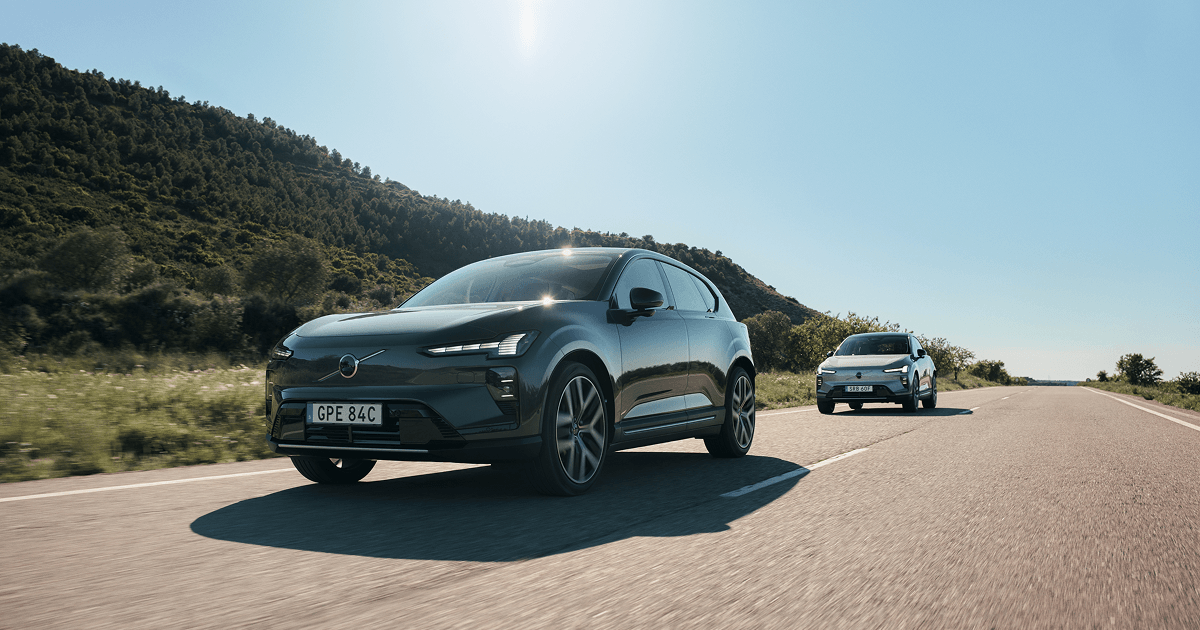
The EX30 sits at the smaller end of Volvo's electric vehicle lineup.
Its compact dimensions give shoppers another way into a Volvo EV without moving into one of the company's larger SUVs.
Volvo EX90
The EX90 is Volvo's electric three-row SUV.
It combines electric power with the passenger space and family practicality expected from a larger Volvo SUV. It is also an important part of the company's move toward a more electrified lineup.
Is Volvo a Luxury Car Brand?
Yes. Volvo generally competes in the premium and luxury vehicle market.
Its approach to luxury is a little different from some of its competitors.
Volvo tends to emphasize:
- Scandinavian design
- Comfortable seating
- Safety
- Clean cabin layouts
- Technology
- Practicality
- Understated styling
Depending on the model, Volvo competes with brands such as BMW, Mercedes-Benz, Audi, Lexus, Genesis, and Acura.
Where Volvo stands apart is in its personality. The interiors generally lean toward simplicity and comfort rather than trying to make the biggest visual statement possible.
For shoppers who prefer a calmer, more understated approach to luxury, that can be a big part of the appeal.
What Is Volvo's Relationship With Polestar?
Volvo and Polestar share plenty of history, but they are separate automotive companies today.
Polestar began with roots in Swedish motorsports and later became a performance partner for Volvo. Volvo Cars acquired Polestar in 2015 before the brand was eventually repositioned as a standalone electrified performance company.
Polestar is now publicly traded, while Volvo Cars continues to own a minority stake. Volvo currently lists its ownership interest at approximately 18 percent.
The companies also share some technology and resources, which helps explain why you may notice similarities between certain Volvo and Polestar vehicles.
Still, a Polestar is not simply a Volvo with different styling and a different badge. The 2 brands have their own identities and target somewhat different buyers.
Does Volvo Make Its Own Engines and Technology?
Volvo handles a substantial amount of its own vehicle engineering and technology development while also working with suppliers and sharing certain resources within its broader automotive network.
Its engineering operations remain heavily centered in Gothenburg, with additional research and development work taking place in locations such as Shanghai.
Volvo Car Group also includes technology businesses such as Zenseact and HaleyTek, which work in areas including assisted driving software and infotainment systems.
Like other major automakers, Volvo does not manufacture every individual component that goes into its vehicles. What matters more is how those components, systems, software, and technologies are developed and integrated into the finished car.
Why Is Volvo So Closely Associated With Safety?
Safety has been central to Volvo's identity for decades.
The three-point seat belt is the most famous example.
Volvo engineer Nils Bohlin developed the design, and Volvo introduced it in a production vehicle in 1959. The company then allowed other manufacturers to use the technology rather than limiting it to its own vehicles.
That decision became a defining part of Volvo's reputation.
Vehicle safety has changed dramatically since then. Modern cars rely on structural engineering, airbags, cameras, radar, sensors, software, and driver assistance technology alongside seat belts.
Volvo's technology has changed with the times, but the emphasis on safety has remained a recognizable part of the brand.
Is Volvo Becoming an Electric Car Company?
Electrification is a major part of Volvo's strategy, although the company currently sells more than just battery electric vehicles.
In 2025, electrified vehicles represented 46 percent of Volvo Cars' global sales. That category includes fully electric models as well as plug-in hybrids.
For shoppers, the current lineup provides some flexibility.
Depending on the model and market, you may be able to choose between a fully electric Volvo and an electrified vehicle that still uses a combustion engine.
That gives shoppers who are interested in electric driving more than one way to make the transition.
Does Geely Ownership Change What a Volvo Is?
Ownership matters, but it does not tell the entire story of a vehicle.
Geely ownership is an important part of understanding modern Volvo, but it is only one part.
Geely has controlled Volvo Cars since 2010. During that period, Volvo has kept its headquarters in Gothenburg, continued building vehicles in Europe, expanded manufacturing into other countries, and introduced an entirely new generation of products.
Describing a modern Volvo simply as a Chinese car leaves out much of that story. Describing the company as entirely Swedish without acknowledging Geely ownership is not quite complete either.
The clearest description is that Volvo Cars is a Swedish automotive company with Chinese ownership and a global manufacturing footprint.
For shoppers, the vehicle itself is usually more important than trying to assign the company to a single country. Where was the particular vehicle built? What features does it have? How does it compare with other options? What should you expect to spend?
Those questions are ultimately more useful when you are deciding what to buy.
Should You Consider Buying a Volvo?
Volvo is worth considering if you want a premium vehicle with an emphasis on comfort, safety technology, practicality, and understated design.
It may be particularly appealing if you are looking for:
- A comfortable daily driver
- Strong safety technology
- Scandinavian styling
- SUV practicality
- Electric or electrified options
- A premium cabin without flashy design
As with any luxury vehicle, ownership costs deserve some attention too.
Insurance, maintenance, and repairs can cost more than they would with some mainstream vehicles. EV shoppers should also consider where and how they plan to charge.
If you are shopping used or plan to keep the vehicle for many years, research the reliability and maintenance expectations for the specific Volvo model and powertrain rather than relying only on the brand's overall reputation.
How AutoFinder Helps You Research Volvo Cars
Once you understand the company behind Volvo, the more useful question becomes which Volvo fits your needs.
AutoFinder can help you research:
- Volvo models
- Vehicle pricing
- Powertrain options
- Electric vehicles
- Available features
- Passenger and cargo space
- Local inventory
- Competing vehicles
Someone shopping for an XC60 may be looking for something completely different from a buyer considering an EX90.
Learning who makes Volvo gives you useful context about the brand. Comparing the actual vehicles is what helps you decide whether one belongs in your driveway.
Final Thoughts
Volvo cars are made by Volvo Cars, a Swedish automotive company headquartered in Gothenburg.
Geely Holding has controlled the company since 2010, and Volvo Cars has been publicly traded on the Nasdaq Stockholm exchange since 2021.
Its manufacturing network now stretches well beyond Sweden. Volvo produces vehicles in Sweden, Belgium, the United States, and China.
Volvo Cars is also separate from Volvo Group, the Swedish company responsible for Volvo commercial trucks, buses, construction equipment, and other industrial products.
So, who makes Volvo cars?
Volvo Cars makes them. Geely owns the company. Sweden remains its home, and the vehicles themselves are now built around the world.