Car Basics
When Is the Best Time to Buy a Car?
OVERVIEW
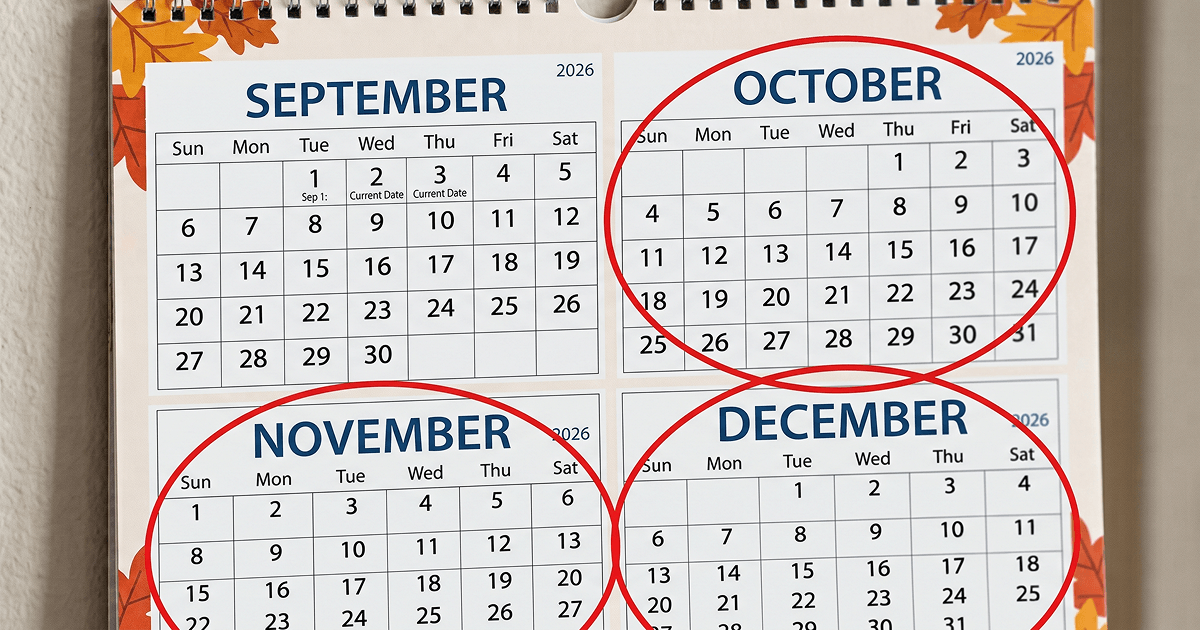
The best time to buy a car is often from October through December, especially when you can combine year-end shopping with the end of the month or a model year changeover. Those periods can give dealers more reason to move certain vehicles and give shoppers more opportunities to compare prices and incentives.
Still, you do not need to wait until December to get a good deal. Inventory matters. So does demand for the vehicle you want, available incentives, financing rates, and how flexible you are about model year, trim, color, and features.
Instead of waiting for one perfect date, give yourself enough time to watch the market. When good inventory, competitive pricing, and the right timing come together, you are in a much better position to buy.
When Is the Best Time of Year to Buy a New Car?
October through December is generally one of the best stretches of the year to shop for a new car. New model year vehicles may be arriving, outgoing models may still be sitting on dealer lots, and year-end sales goals can create additional reasons to make a deal.
There are opportunities at other points in the year too.
| Time to Shop | Why It Can Be a Good Time | What to Know |
|---|---|---|
| January and February | Shopping can slow after the holidays | Selection of outgoing models may be limited |
| Presidents Day | Seasonal incentives may be available | Offers vary considerably by vehicle |
| Memorial Day | Automakers often run promotions | Popular models may still have limited discounts |
| Labor Day | Can overlap with model year transitions | Compare outgoing and incoming model years |
| September and October | New model years often begin arriving | Changeover timing varies by model |
| Black Friday | Promotions may create more opportunities | Compare the full price, not just advertised savings |
| October through December | Model year clearance and year end goals may overlap | Waiting can reduce your choice of vehicles |
| Final days of December | Month end and year end timing come together | Remaining inventory may be limited |
Why October Through December Can Be a Good Time to Buy
Fall is when several useful timing factors can start to overlap.
New model year vehicles may be arriving while dealers still have previous model year versions available. Manufacturers may introduce incentives on certain vehicles, and dealers are getting closer to the end of the calendar year.
That can be particularly useful if you are flexible.
Suppose a dealer has both the outgoing and incoming model year of the same SUV. If the newer version has only minor updates, the previous model year could give you much of the same vehicle for less money.
Waiting has a tradeoff, though. The longer an outgoing model sits, the more motivated a dealer may become to sell it, but there may also be fewer colors, trims, and configurations left.
If you have your heart set on one exact vehicle, shopping earlier may be worth more than waiting for a potentially larger discount.
Is the End of the Year the Best Time to Buy a Car?
The end of the year can be one of the strongest opportunities, particularly during the final days of December.
At that point, several factors can overlap. A dealer may be working toward monthly and annual sales goals while also trying to move outgoing inventory.
But December 30 is not automatically cheaper than December 10.
If the vehicle you want is popular and inventory is tight, the calendar may have very little effect on its price. The better approach is to start shopping before the final week of the year so you already know what vehicles are available and what competitive pricing looks like.
Is the End of the Month Actually a Better Time to Buy a Car?
It can be. The last 2 or 3 days of the month are worth considering if you are ready to buy, but month-end timing does not guarantee a lower price.
Dealerships and sales teams may work toward monthly sales targets. Depending on the dealership and manufacturer programs available, reaching certain sales volumes can sometimes be valuable.
If a dealer is close to a target, one additional sale near the end of the month may carry more weight than it would earlier.
The easiest way to use that timing is to do most of your homework beforehand:
- Research vehicles and pricing earlier in the month.
- Narrow your search to a few serious choices.
- Test drive before you are ready to negotiate.
- Compare similar vehicles from multiple dealers.
- Review your financing options.
- Have serious price conversations during the final few days of the month.
You arrive ready to make a decision instead of trying to research the car, arrange financing, evaluate a trade, and negotiate everything at once.
When Month End Timing May Not Matter
Month end advice sometimes gets treated like a shopping hack. It is better viewed as one possible advantage.
A dealer that has already reached its goals may not have any additional reason to lower the price. And if you are shopping for a vehicle that is difficult to keep in stock, there may be another buyer willing to pay the current asking price.
Look at the vehicle first and the calendar second.
If similar vehicles are widely available and you have several dealers to compare, trying to close during the last few days of the month may be worthwhile.
When Do Dealers Discount Outgoing Model Year Cars?
Dealers may begin offering more competitive pricing on outgoing model year vehicles as newer versions arrive.
For many vehicles, this transition happens around September and October, although model year launches can happen throughout the year.
The reason is fairly straightforward. Once the new model is sitting next to the previous version, shoppers have a choice. If most buyers start gravitating toward the newer model, pricing or incentives can help make the outgoing vehicle more attractive.
The content research for this article identifies potential discounts of roughly 2% to 4% during earlier clearance periods, with savings sometimes reaching 5% to 10% during stronger clearance periods. These are not guaranteed discount levels. Actual pricing depends on the vehicle, demand, local inventory, available incentives, and how motivated a dealer is to move that particular car.
When Timing Factors Overlap
Some of the more interesting buying opportunities happen when you can combine multiple timing factors.
For example, you might find:
- An outgoing model year vehicle
- Several similar vehicles still available
- A manufacturer incentive
- The final few days of the month
- A dealer motivated to move older inventory
That gives you more to work with than simply showing up because it happens to be the 30th.
An outgoing model that is still available near the end of the month or year can be particularly worth investigating because the dealer may have several reasons to complete the sale.
Should You Buy the Outgoing or New Model Year?
Do not choose the older model simply because it has a larger discount.
Compare what actually changed.
If the new model year only gets a new paint color and a few minor updates, saving money on the outgoing version may make plenty of sense.
If the newer model introduces features you care about, better technology, improved efficiency, updated safety equipment, or a major redesign, paying more for it may be worthwhile.
Also compare financing offers. A lower selling price does not automatically mean a lower total cost if one model qualifies for significantly better financing than the other.
Is It Better to Buy When Dealers Have a Lot of Inventory?
Generally, yes. More inventory can give shoppers more choice and make it easier to compare dealers and prices.
Think about shopping for a popular SUV.
If there are 25 similar examples available near you, you can compare trims, colors, equipment, pricing, and dealerships. Walking away from one vehicle is easier because there are alternatives.
If there are only 2 available, your choices are much narrower.
That difference can affect negotiating leverage.
Higher inventory may mean:
- More comparable vehicles to shop
- More flexibility on trim and options
- More dealers competing for the same shopper
- A greater chance of finding incentives
- Less pressure to buy the first vehicle you find
Search AutoFinder for the vehicle you are considering and pay attention to how many similar listings you see. Looking at the broader selection can tell you much more than looking at one advertised price in isolation.
What Is Days Supply?
Days Supply is an inventory metric that estimates how long the current supply of vehicles would last at the current rate of sales.
A higher Days Supply generally means there is more inventory relative to current demand. A lower Days Supply usually indicates tighter supply.
For shoppers, the concept is useful even if you do not have an exact Days Supply figure for every vehicle.
If the model you want appears at many dealerships and similar listings remain available for a while, you may have more room to compare offers.
If new listings disappear quickly and only a handful of vehicles are available, waiting for a large discount could work against you.
Days Supply also varies by brand, model, powertrain, and market. A manufacturer can have plenty of overall inventory while one particular hybrid or high-demand trim remains difficult to find.
That is why the inventory for the specific vehicle you want matters more than a broad national inventory number.
Should You Buy Now or Wait?
If you have found the right car at a competitive price and inventory is healthy, buying now can make more sense than waiting for an unknown future discount.
Waiting makes more sense when you have an actual reason to expect your options to improve.
Buying Now May Make Sense If:
- You found the exact vehicle you want.
- Several comparable vehicles confirm that the price is competitive.
- An incentive you qualify for is currently available.
- Inventory for the vehicle is limited or shrinking.
- You need to replace your current vehicle soon.
- You have a financing option that fits your budget.
Waiting May Make Sense If:
- A new model year is about to arrive.
- Inventory for the vehicle is steadily increasing.
- Current prices are higher than you are comfortable paying.
- You are flexible about model year, trim, color, or features.
- You have time before you actually need another vehicle.
There is an important difference between waiting because conditions appear to be improving and waiting because you hope something cheaper eventually comes along.
Car prices can change, but so can financing rates and manufacturer incentives. The vehicle you want can also sell.
If you have found the right car and the numbers make sense for your budget, you do not need to hold out indefinitely for the possibility of a slightly better deal.
What If the Car You Want Is Becoming Easier to Find?
This is one situation where waiting can sometimes pay off.
Start by watching listings for the same make, model, trim, and model year. Check periodically rather than relying on a single day's inventory.
If you begin seeing more comparable vehicles while prices stay flat or start coming down, the balance may be moving in your favor. You have more choices and less reason to rush.
If inventory increases but prices remain strong, you can still benefit from having more vehicles and dealers to compare.
On the other hand, if attractive listings continue to sell quickly, waiting solely for a future discount may not be worth it.
You do not have to predict where the entire car market is headed. Pay attention to what is happening with the vehicle you actually plan to buy.
How Early Should You Start Shopping for a Car?
If you expect to replace your car within the next 3 months, start researching now.
Three months gives you enough time to figure out what you want, understand pricing, compare inventory, arrange financing, and negotiate without having to rush.
You do not need to spend 90 days visiting dealerships. Most of that time can simply be used to learn the market.
Month 1: Research and Narrow Your Choices
Start with your budget and what you actually need from the vehicle.
Compare body styles, models, trims, fuel economy, features, expected ownership costs, and anything else that matters to you.
Then start looking at real inventory.
Browsing vehicles on AutoFinder can help you see whether your preferred models are common in your area, which trims are readily available, and how pricing varies from one listing to another.
By the end of the first month, try to have 2 or 3 serious options.
Month 2: Shop Real Vehicles
Now you can move beyond research.
Take test drives. Compare similar vehicles. Look at different dealers. Review financing options so you know what kind of rate and monthly payment you are comfortable with.
This is also a good time to start watching inventory more closely.
Are more vehicles appearing?
Are certain trims sitting longer?
Is an outgoing model year becoming easier to find?
Are advertised prices changing?
You do not need to wait until Month 3 if you find a deal that works. The point of starting early is to give yourself that choice.
Month 3: Be Ready to Buy
By now, you should know what you want and have a good sense of what similar vehicles cost.
Focus on the full deal rather than one number.
Compare the vehicle price, financing, applicable taxes and fees, trade value if you have one, and the final out the door price.
If your purchase happens to line up with the end of the month, you can use that timing too.
Most importantly, you should still have enough time to walk away if the deal does not work for you.
What If You Need a Car Within 6 Weeks?
Six weeks is still enough time to shop thoughtfully.
Use the first 1 or 2 weeks to set your budget, narrow your vehicle choices, and start comparing inventory. Spend the next couple of weeks taking test drives, reviewing financing, and talking with dealers.
By the final 2 weeks, you should be prepared to buy when the right vehicle appears.
The closer you get to absolutely needing a replacement vehicle, the less flexibility you have.
Starting early gives you something more useful than any holiday sale: time to compare your options.
What Is the Best Day to Buy a Car?
There is no single day of the week when cars are consistently cheapest.
Shopping on a weekday may mean the dealership is less busy, which can give you more time to look at vehicles and discuss your options. Shopping during the final few days of the month may also be useful if a dealer is working toward a sales target.
Neither factor matters as much as the deal itself.
If you are deciding when to shop, pay more attention to:
- How much inventory is available
- How the vehicle is priced against comparable listings
- Current manufacturer incentives
- Whether a model year changeover is happening
- Whether you are near the end of the month or year
A Tuesday afternoon is not automatically a better time to buy than a Saturday morning. The market for the vehicle matters more.
So, When Should You Buy a Car?
For many shoppers, October through December is a good time to look, particularly when an outgoing model year, healthy inventory, incentives, and month-end timing overlap.
But you should not pass up a good deal in June simply because December sounds better on paper.
The strongest position is having time to shop and enough information to recognize a fair deal. Compare similar vehicles, watch inventory, understand your financing, and know what you are willing to spend before you start negotiating.
When the right vehicle, competitive pricing, and favorable market conditions line up, you have found a good time to buy.
Want More Car Buying Advice?
Add AutoFinder as a preferred source on Google to help you discover more of our automotive guides and research.