Top Picks
Best SUVs for the Money in 2026
OVERVIEW
SUV prices cover a huge range, but spending more does not always get you more of what you actually need.
Some shoppers want as much passenger and cargo space as possible for around $30,000. Others would gladly give up a little room for standard All Wheel Drive, better fuel economy, a nicer interior, or more technology. That makes the best SUV for the money different from simply finding the SUV with the lowest starting price.
For 2026, the Kia Sportage, Volkswagen Taos, Honda HR-V, Mazda CX-50, Subaru Forester, Nissan Rogue, and Mazda CX-5 are worth putting on the shopping list. Each makes a different argument for your budget.
What Makes an SUV a Good Value?
Start with the price of the version you would actually buy.
An SUV with an attractive base price can become much more expensive once you add All Wheel Drive or move up several trims for the features you want. Another SUV may cost a little more from the beginning but already include more of what is on your list.
A useful comparison should consider:
- Starting price
- Standard features
- Passenger space
- Cargo capacity
- Fuel economy
- Available or standard All Wheel Drive
- Driver assistance technology
- Warranty coverage
- Trim pricing
- Powertrain choices
Your priorities will quickly narrow the field.
Someone carrying kids and luggage every weekend should probably put more weight on rear seat and cargo space. A commuter may care more about fuel economy. A shopper dealing with winter weather may decide standard All Wheel Drive is worth paying for.
That is why there is no single value formula that works for every SUV buyer.
Best SUVs for the Money in 2026
| SUV | Best For | Why It Made the List |
|---|---|---|
| Kia Sportage | Space and features | Roomy interior and strong standard technology |
| Volkswagen Taos | Affordable small SUV | Low starting price with impressive cargo room |
| Honda HR-V | Everyday simplicity | Useful standard technology and available AWD |
| Mazda CX-50 | Standard AWD value | Standard AWD with a more premium feel |
| Subaru Forester | AWD practicality | Standard AWD and a roomy, practical design |
| Nissan Rogue | Fuel economy and space | Strong highway efficiency in a compact SUV |
| Mazda CX-5 | More upscale experience | Refined interior and standard equipment around $30,000 |
1. Kia Sportage
1. Kia Sportage
2026 Kia Sportage
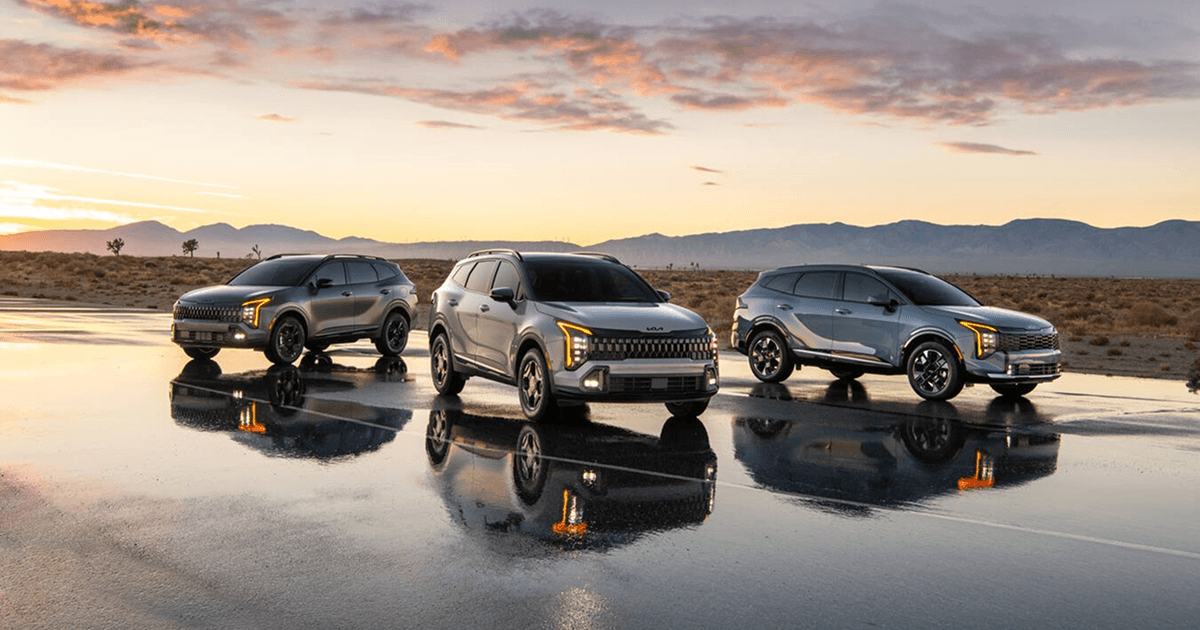
The Kia Sportage makes a strong case for shoppers who want compact SUV space without immediately pushing the budget toward $40,000.
The 2026 Sportage LX starts at $28,790. It comes standard with a 12.3-inch instrument display, 12.3-inch touchscreen, wireless Apple CarPlay and Android Auto, Smart Cruise Control with Stop and Go, front and rear parking sensors, and several driver assistance features. All Wheel Drive is available.
Space is one of the Sportage's bigger advantages. Kia lists 41.3 inches of second-row legroom and describes its passenger and cargo room as class-leading.
The EX may be the more interesting trim for shoppers with room in the budget. Starting at $30,590, it adds heated front seats, a power driver's seat, dual-zone automatic climate control, wireless phone charging, a smart power liftgate, and extra driver-assistance technology.
That is only $1,800 above the LX before destination and other charges.
You could spend considerably more on a Sportage, especially once you reach the upper trims. For a value-focused shopper, the lower and middle trims are where the numbers are particularly appealing.
2. Volkswagen Taos
2. Volkswagen Taos
2026 Volkswagen Taos
The Volkswagen Taos is worth a look if you want SUV cargo room while keeping the purchase price relatively low.
The 2026 Taos starts at $26,500 and comes with a 174 horsepower turbocharged engine. Front Wheel Drive versions are rated at an estimated 28 mpg city and 36 mpg highway.
The number that really helps the Taos stand out is 65.9 cubic feet.
That is its maximum cargo capacity with the rear seats folded, giving this small SUV a surprising amount of room for its footprint and price. A digital cockpit is standard, and Volkswagen's IQ.DRIVE driver assistance technology is available.
This is an SUV that makes sense for someone who wants to stay closer to the mid $20,000s but does not want a tiny cargo area.
The Taos is also a useful reminder that you do not necessarily need to move into a larger compact SUV to get useful interior space.
3. Honda HR-V
3. Honda HR-V
2026 Honda HR-V
The Honda HR-V takes a fairly straightforward approach to value.
The 2026 model starts at $26,500 and is rated at 26 mpg city and 32 mpg highway. Available Real Time AWD gives shoppers another option if additional traction is important.
Honda also includes quite a bit of useful technology without requiring a top trim. The HR-V offers a 9-inch touchscreen, wireless Apple CarPlay and Android Auto compatibility, wireless phone charging, adaptive cruise control with low-speed follow, and lane-keeping assistance.
The Sport starts at $28,300 and adds features including blind spot information with cross traffic monitoring.
Then there is the EX-L at $30,350, which brings leather-trimmed seats, heated front seats, a power driver's seat, parking sensors, dual-zone climate control, and a moonroof.
That gives shoppers 3 fairly easy price points to compare rather than a long trim lineup to sort through.
The HR-V will not be the answer for someone prioritizing maximum power or cargo capacity. Its appeal is more about getting the everyday SUV basics, useful technology, and available All Wheel Drive without making the shopping process complicated.
4. Mazda CX-50
4. Mazda CX-50
2026 Mazda CX-50
The Mazda CX-50 is an interesting step up for shoppers willing to spend a little more for capability and a more premium feel.
The 2026 CX-50 starts at $29,900 for the 2.5 S Select. The lineup also includes a hybrid beginning at $34,750 and turbocharged versions for shoppers who want additional performance.
Unlike several lower-priced SUVs, All Wheel Drive is standard on the CX-50.
That matters when comparing prices.
If AWD is already on your must-have list, comparing a Front Wheel Drive base price from one SUV with the CX-50's starting price does not tell you much. Configure both vehicles the way you would actually buy them before deciding which is less expensive.
The CX-50 also makes sense for someone who cares about how an SUV feels from behind the wheel and does not want the cabin to feel purely budget-driven.
It is not trying to win by being the cheapest SUV here. It earns its place by offering standard AWD and a more upscale experience without requiring luxury SUV pricing.
5. Subaru Forester
5. Subaru Forester
2026 Subaru Forester
For shoppers who already know they want All Wheel Drive, the Subaru Forester makes the comparison easier.
Symmetrical All Wheel Drive is standard across the 2026 Forester lineup. The base model starts at $29,995, while the Premium starts at $31,995.
The standard Forester is rated at up to 26 mpg city and 33 mpg highway. Subaru also offers hybrid versions, with the Premium Hybrid starting at $34,730 and rated at up to 35 mpg city and 34 mpg highway.
That gives shoppers a useful choice.
Someone who wants AWD without spending extra on a hybrid can stay near $30,000. Someone expecting to do a lot of city driving may decide the hybrid's higher price is worth comparing against its improved fuel economy.
The Forester is especially easy to justify for buyers who will use its combination of passenger room, visibility, cargo space, and standard AWD regularly.
If you live somewhere that rarely makes AWD useful, there are less expensive ways to buy an SUV. If AWD was going to be added to your shopping list anyway, the Forester deserves a closer look.
6. Nissan Rogue
6. Nissan Rogue
2026 Nissan Rogue
The Nissan Rogue sits in a useful middle ground for someone who wants a traditional compact SUV without moving immediately into a higher price bracket.
Current 2026.5 Rogue pricing starts below $30,000 for a Front Wheel Drive model, with All Wheel Drive available. Nissan's current specifications list fuel economy as high as 30 mpg city and 37 mpg highway on some Front Wheel Drive configurations.
The Rogue also gives shoppers room to choose how much technology they actually want.
Lower trims keep the price closer to the entry point, while higher versions add features such as larger displays, upgraded materials, and more advanced driver assistance technology.
For a high-mileage driver who still wants the passenger and cargo flexibility of a compact SUV, the Rogue's fuel economy is one of the reasons it belongs in this conversation.
It is also a vehicle worth comparing at the dealership level. Once current offers, available trims, and financing enter the picture, the Rogue may look different against similarly priced competitors than it does from MSRP alone.
7. Mazda CX-5
7. Mazda CX-5
2026 Mazda CX-5
The redesigned 2026 Mazda CX-5 starts at $29,990, placing it almost directly at the $30,000 mark before destination and other charges.
Mazda increased rear seat and cargo space for the new generation, addressing 2 areas that matter quite a bit in a family or everyday SUV. The 2026 model also introduces Google built-in technology and a redesigned cabin.
The pricing structure is relatively easy to understand.
The 2.5 S starts at $29,990, the Select at $31,990, and the Preferred at $34,250. Higher trims move toward $40,000.
The base and Select versions are the ones I would look at first if value is the priority.
The CX-5 is less about getting the absolute most cubic feet or the lowest possible MSRP. Its argument is that around $30,000 can buy an SUV that feels a little more refined while still covering the practical reasons people shop for a compact SUV in the first place.
Is a Small SUV or Compact SUV the Better Value?
This is one of the most useful questions to answer before you start comparing models.
Smaller SUVs such as the Volkswagen Taos and Honda HR-V can keep the purchase price closer to the mid $20,000s. They are easier to park and may provide all the space a single driver, couple, or small family needs.
Move into something like the Kia Sportage, Subaru Forester, Nissan Rogue, or Mazda CX 5 and you are generally paying more, but you may gain passenger space, cargo flexibility, powertrain choices, or additional features.
Do not pay for the larger category simply because it is the more popular one.
Sit in the back seat. Open the cargo area. Think about what normally travels with you.
If the smaller SUV handles it comfortably, keeping several thousand dollars in your budget is a pretty useful feature too.
Is All Wheel Drive Worth Paying More For?
That depends heavily on where and how you drive.
Some SUVs make AWD an option. Others, including the Subaru Forester and Mazda CX-50, include it as part of the package.
If you regularly drive in snow, on loose surfaces, or in conditions where additional traction would be useful, AWD may deserve a place on your must-have list.
For a shopper who spends nearly all of the time on dry paved roads, paying extra solely because AWD is available may not add much practical value.
There can also be fuel economy differences between Front Wheel Drive and AWD versions, so compare the exact configuration rather than assuming the ratings are identical.
Should You Buy an SUV Hybrid to Save Money?
A hybrid can make sense, but the answer depends on the price difference and how much you drive.
The 2026 Forester provides a good example. The gas Premium starts at $31,995, while the Premium Hybrid starts at $34,730. The hybrid improves estimated city fuel economy from 26 mpg to 35 mpg.
That is a meaningful improvement, particularly for someone who spends a lot of time in city traffic.
But the hybrid also costs more upfront.
Instead of treating the hybrid as automatically better, estimate how many miles you drive each year and where most of those miles happen. A driver covering a lot of city miles has more opportunity to benefit from improved efficiency than someone with a short commute dominated by highway driving.
Which SUV Features Are Worth Paying More For?
This is where value becomes personal.
Features worth considering include:
- Blind spot monitoring
- Adaptive cruise control
- Power liftgate
- Heated seats
- All wheel drive
- Parking sensors
- Power driver's seat
- Wireless smartphone connectivity
- Additional cargo features
A panoramic roof might be worth every dollar to one shopper and completely unnecessary to another.
Focus first on features that make the SUV safer, more comfortable, or easier to use in your normal routine.
Then look for the lowest trim that includes them.
That approach is usually more useful than deciding in advance that the base trim is the best bargain or that a fully loaded SUV provides the most value because it has the most equipment.
How Much Should You Spend on an SUV?
Your budget should work outside the dealership too.
Purchase price is only one part of what an SUV costs. Before stretching to a more expensive model or trim, consider:
- Monthly payment
- Interest rate
- Insurance
- Fuel
- Maintenance
- Tires
- Registration
- Expected depreciation
A $35,000 SUV may be completely reasonable for one household and unnecessary for another.
There is also a lot of value clustered around the $27,000 to $32,000 range in the current market. That is where shoppers can find everything from smaller SUVs such as the Taos and HR V to larger options including the Sportage, Forester, Rogue, CX 50, and CX 5.
The question is what you gain as the price moves upward.
How Do You Find the Best SUV Deal?
Once you have narrowed the search to a few models, stop comparing only manufacturer starting prices.
Look at actual inventory.
You may discover that one SUV has plenty of lower trims available nearby while another is mostly represented by expensive configurations. Current manufacturer offers, financing programs, and dealer inventory can also change the comparison.
Pay attention to:
- The exact trim
- Included options
- Drivetrain
- Vehicle price
- Current manufacturer offers
- Financing options
- Availability
If you are comparing similar SUVs at multiple dealerships, getting quotes before visiting can also help you understand your choices.
Dealers can explain current inventory, available incentives, financing options, trade values, and differences between the vehicles you are considering.
How AutoFinder Helps You Find an SUV for Your Budget
Research can tell you that an SUV starts around $30,000. The next step is finding out what $30,000 actually buys near you.
AutoFinder lets you search dealer inventory and narrow your options by make, model, price, trim, features, and other details that matter to your purchase.
That can make comparisons much more practical.
You might start looking at a smaller SUV and discover that a larger model is available within your budget. Or you may find that staying with a lower trim gives you everything you wanted while saving several thousand dollars.
Once you find an SUV you are interested in, AutoFinder can connect you with the dealership to discuss availability, pricing, financing, trade ins, and next steps.
Final Thoughts
The best SUV for the money depends on what you need your SUV to do.
The Volkswagen Taos and Honda HR V are good starting points for shoppers trying to keep the price lower. The Kia Sportage gives you a lot of space and equipment for the money, while the Subaru Forester and Mazda CX-50 make sense when standard All Wheel Drive matters.
The Nissan Rogue brings strong fuel economy into the conversation, and the redesigned Mazda CX-5 gives shoppers another option around $30,000 with a more refined approach.
Pick the size and capabilities you need first. Then compare the trims that actually include the features on your list.
That makes it much easier to see which SUV is giving you more for your money and which one is simply asking you to spend more.